📊 Full opportunity report: Best Quiet Case Fans + the Airflow Setup That Actually Works on ThorstenMeyerAI.com — validation score, market gap, and execution plan.
TL;DR
This article identifies the best quiet case fans for 2026 and explains the airflow setup that ensures effective cooling with minimal noise. It emphasizes large, slow-moving fans and proper configuration for optimal performance.
In 2026, the top quiet case fans recommended for high-performance workstations are the Noctua NF-A12x25 and NF-A14, which combine high airflow with near-silent operation. These fans, paired with an airflow setup emphasizing larger, slower-moving fans, provide effective cooling without excessive noise, according to expert reviews and testing.
Leading the list are the Noctua NF-A12x25 and NF-A14, praised for their engineering excellence, high airflow, and low noise levels. The NF-A12x25 moves over 100 CFM at under 1000 RPM and produces around 16 dB of noise, making it ideal for continuous operation in quiet workspaces. The NF-A14 offers similar performance in a larger 140mm size, suitable for case intake or exhaust.
For budget-conscious builders, Arctic’s P12 Pro and P14 PWM PST fans offer nearly comparable airflow and static pressure performance at a fraction of the cost, around $8.50 each. These fans are recommended for filling cases with multiple units without sacrificing much in noise or cooling efficiency.
In terms of ultra-quiet operation, be quiet!’s Silent Wings 4 stands out, producing about 17 dB while maintaining steady airflow even at higher RPMs. These are suited for users prioritizing silence, such as office setups or noise-sensitive environments.
For radiators, especially in liquid cooling setups, Arctic P12 Pro and Noctua NF-F12 static-pressure fans are recommended for their ability to push air through dense fin stacks quietly and efficiently. Proper selection of fans based on their role—airflow fans for case ventilation, static-pressure fans for radiators—is crucial for optimal thermal performance.
Best quiet case fans
+ the airflow that works.
The best fan won’t help if it’s pointed the wrong way. The whole recipe: big fans, running slowly, in a clean front-to-back path, with slightly more intake than exhaust. Build a config in Part 2 and watch the pressure balance respond.
Impact of Quiet Fans on High-Performance Workstations
Choosing the right quiet fans and airflow configuration directly affects the performance, noise levels, and longevity of high-end workstations. Effective cooling prevents overheating, maintains component longevity, and creates a more comfortable working environment. As AI and data workloads grow more demanding, optimized airflow with quiet fans becomes essential for balancing performance and noise.
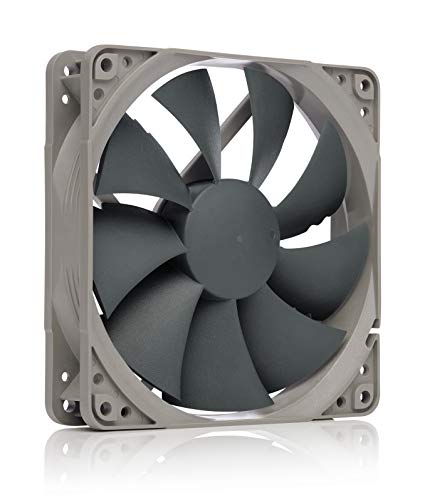
Noctua NF-P12 redux-1700 PWM, Quiet Fan 120mm
- Size: 120x120x25 mm
- Voltage: 12V
- PWM: 4-pin PWM control
As an affiliate, we earn on qualifying purchases.
As an affiliate, we earn on qualifying purchases.
2026 Fan Technology Trends and Proven Setups
Recent developments in fan engineering emphasize larger, slower fans that move more air quietly, countering the misconception that quieter operation means less cooling. Experts recommend a setup that prioritizes 140mm fans where possible, running at low RPMs on a flat fan curve. The importance of matching fan types—airflow for open spaces, static-pressure for radiators—is reinforced by recent testing and user feedback.
Historically, high-performance PCs struggled with balancing cooling and noise, but current designs and fan choices have shifted toward achieving both simultaneously. The recommended fans and configurations in this guide reflect the latest consensus and testing results from 2026.
"Large, slow-moving fans like the Noctua NF-A12x25 deliver high airflow with near-silent operation, making them ideal for quiet, high-performance workstations."
— Thorsten Meyer, AI hardware reviewer

CORSAIR 4000D RS ARGB Frame Modular Mid-Tower ATX PC Case, High Airflow, 3X Pre-Installed RS Fans, InfiniRail™ Mounting System, ASUS BTF, MSI Zero, Gigabyte Stealth, Black
- Modular Frame System: Customizable and upgradeable design
- Pre-Installed ARGB Fans: Three high-performance RGB PWM fans
- Silent Operation: Zero RPM mode for quiet cooling
As an affiliate, we earn on qualifying purchases.
As an affiliate, we earn on qualifying purchases.
Remaining Questions About Long-Term Reliability
While current testing supports the performance of these fans, long-term reliability data, especially for budget models like Arctic P12 Pro, is still emerging. Variations in case design and ambient conditions may influence actual noise and cooling performance over time.
Additionally, the ideal airflow setup may vary depending on specific hardware configurations, and further testing in diverse environments is ongoing.

Noctua NF-A12x25 PWM, High-Performance Quiet Fan 120mm
- Size: 120x120x25mm
- Voltage: 12V
- Connector: 4-pin PWM
As an affiliate, we earn on qualifying purchases.
As an affiliate, we earn on qualifying purchases.
Next Steps for Building and Tuning Quiet PCs
Manufacturers will continue refining fan designs, potentially introducing even larger or more efficient models. Users should focus on implementing the recommended airflow principles—using large fans on flat curves and matching fan types to their roles—to optimize their systems. Future updates may include new fan models or configurations tailored for specific workloads or case designs.

ARCTIC Liquid Freezer III Pro 360 - AIO CPU Cooler,3 x 120 mm Water Cooling
- Contact Frame Compatibility: For Intel LGA1851 and LGA1700
- P12 PRO Fan Performance: Powerful, quiet, high-speed cooling
- Offset Mounting Design: Enhanced heat transfer for CPUs
As an affiliate, we earn on qualifying purchases.
As an affiliate, we earn on qualifying purchases.
Key Questions
Are larger fans always quieter than smaller ones?
Yes, larger fans moving air at lower RPMs generally produce less noise than smaller fans operating at higher speeds, assuming similar airflow requirements.
Can I use budget fans without sacrificing cooling performance?
Budget fans like Arctic P12 Pro offer nearly comparable airflow and static pressure performance at a lower cost, making them suitable for multi-fan setups where noise and budget are considerations.
What is the best way to tune my fans for quiet operation?
Use flat, low RPM fan curves and prioritize larger fans where possible. Match fan types to their roles—airflow fans for open spaces and static-pressure fans for radiators—to optimize cooling and noise levels.
Will these fans work with any case?
Most recommended fans are standard sizes (120mm and 140mm) and should fit most cases. Always check your case’s specifications for compatibility before purchasing.
Source: ThorstenMeyerAI.com