
TL;DR
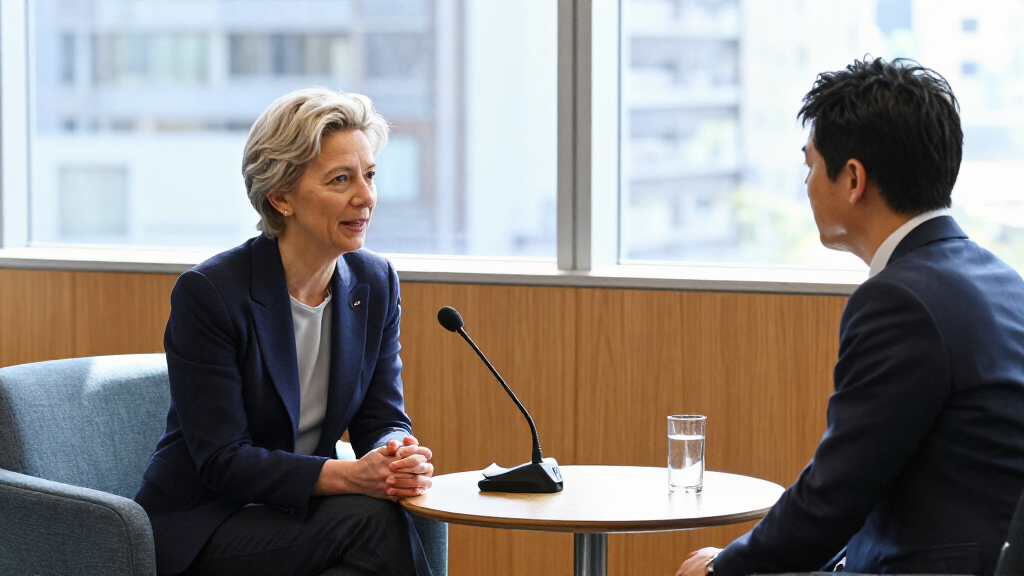
In a November 2026 interview with Japan’s Yomiuri Shimbun, ECB President Christine Lagarde said euro area inflation was 4% in October, with the rise driven largely by energy and food prices. She said underlying inflation indicators were stable, the ECB was not seeing additional wage-driven effects beyond its projections, and policymakers would assess the outlook using incoming data. Lagarde also discussed the ECB’s limited female representation and lessons from the 2021 inflation shock.
European Central Bank President Christine Lagarde said euro area headline inflation reached 4% in October, above what policymakers had expected a few months earlier, while describing underlying inflation measures as stable. In an interview published November 7 by Japan’s Yomiuri Shimbun, she said energy costs were a major driver and that the ECB would examine incoming data before judging the medium-term outlook.
Lagarde attributed much of October’s inflation pressure to energy. She said energy inflation rose to 20.8% from 18.9% in September, citing conflict in the Middle East and reduced global refinery capacity. She also said food inflation had increased. The interview did not provide a detailed breakdown of food price changes or the contribution of individual energy components.
Measures that exclude volatile categories were less elevated: core inflation was 2.5%, unchanged from September, while services inflation edged up to 3.3%. Lagarde said the ECB was still awaiting detailed inflation data to determine whether services price pressure was concentrated in energy-intensive industries such as transport or spreading more broadly through the economy.
She said inflation would remain high in the coming quarters, warning that the risk to the ECB’s medium-term target grows if elevated readings persist. Lagarde reported that policymakers were not seeing signs of second-round effects beyond those already included in their projections. She said the ECB was monitoring indicators such as multi-year wage agreements and companies’ wage expectations.
Energy Prices Complicate ECB Decisions
The interview sets out the tension facing euro area policymakers: headline inflation has risen sharply, but the underlying measures Lagarde cited have not shown a comparable acceleration. Whether the energy increase stays concentrated or feeds into wages and a wider range of prices will shape how officials assess the medium-term inflation path.
Lagarde said energy futures curves were higher than at the time of the ECB’s September projections, a factor that could affect both inflation and economic growth. She also noted that oil prices had fallen more recently and that long-term interest rates were higher. The interview does not establish what policy decision these developments will produce; Lagarde said the ECB’s forecast exercise would assess their combined effects.
Popular right now

Ninja Luxe Café Mini Espresso and Drip Coffee Machine, ES301

Vitamix Touch & Go Advance 32-Ounce Bar Blender, White

De'Longhi La Specialista Opera Espresso Machine with Coffee Grinder
As an affiliate, we earn on qualifying purchases.
Lessons From the 2021 Inflation Shock
Asked about criticism that the ECB was slow to respond to the inflation surge after 2021, Lagarde said central banks had initially treated the shock as a temporary, supply-driven rise. She recalled discussions involving the Federal Reserve, Bank of England, Bank of Japan and ECB, saying participants expected supply pressures to ease and chose to look through them.
In hindsight, she said, that view was misguided because a demand shock was happening at the same time. As economies reopened, consumers spent savings accumulated during the pandemic, adding pressure alongside supply constraints. Lagarde said the experience led central banks to revisit the assumption that the increase was entirely transitory. She linked the current environment to uncertainty, disrupted trade and supply chains, and greater emphasis on security over efficiency.
The interview also addressed women’s representation. Lagarde said the ECB Governing Council had 27 members, including only two women at the time of the interview: herself and Executive Board member Isabel Schnabel. She attributed appointment patterns partly to a developing pipeline of senior women and partly to decision-makers tending to select people similar to themselves. She also praised former Japanese Prime Minister Shinzo Abe’s effort to expand women’s workforce participation, referring to a programme he called “One Million Women.”
„Headline inflation in October was at 4%, which was higher than we had expected a few months ago but in line with market expectations.“
— Christine Lagarde, ECB president
Inflation Drivers Still Need Detail
The interview leaves several points unresolved. Lagarde said the detailed October inflation breakdown was not yet available, so it was not clear whether services inflation reflected transport and other energy-intensive sectors or wider indirect effects. She also did not quantify how much the Middle East conflict or reduced refinery capacity contributed to the energy figure.
Nor did she predict a specific policy response. She said it was not appropriate to pre-empt the ECB’s forecast and described the effects of higher energy futures and long-term rates as matters for the forecast exercise to assess. Her comments that second-round effects were not apparent reflect the indicators available to the ECB at that time; the interview does not provide later data or a new projection.
ECB Forecasts Will Test the Risks
The ECB’s next forecast exercise is the immediate milestone identified in the interview. Lagarde said it would assess how changes since the September projections—including higher energy futures and long-term interest rates, alongside more recent declines in oil prices—affect medium-term inflation and growth.
Policymakers will also examine the detailed inflation breakdown and continue monitoring wage agreements and company expectations for signs of broader price or wage effects. The interview does not specify a date for a policy change or announce one; Lagarde said the ECB would base monetary policy on data and decisions made meeting by meeting.
Key Questions
What did Lagarde say about euro area inflation in October?
She said headline inflation was 4%, above what the ECB had expected a few months earlier but in line with market expectations. She attributed much of the pressure to energy and said food inflation had also increased.
What were the underlying inflation figures she cited?
Lagarde said core inflation was 2.5%, unchanged from September, and services inflation was 3.3%, slightly higher. She described the underlying indicators as stable.
Did Lagarde signal an interest rate increase?
No specific rate decision was announced in the interview. Lagarde said it was not appropriate to pre-empt the ECB’s forecast and that policy would be guided by data and decisions made meeting by meeting.
What did she say about the ECB’s response to the 2021 inflation surge?
Lagarde said central banks initially expected supply-driven inflation to be temporary. In hindsight, she said that assessment was misguided because reopening also brought a demand shock as consumers spent accumulated savings.
What did Lagarde say about women’s representation at the ECB?
She said the 27-member Governing Council had two women at the time of the interview: Lagarde and Isabel Schnabel. She said senior appointments were affected by the still-developing pipeline of women and by decision-makers often selecting people similar to themselves.
Source: ecb.europa.eu