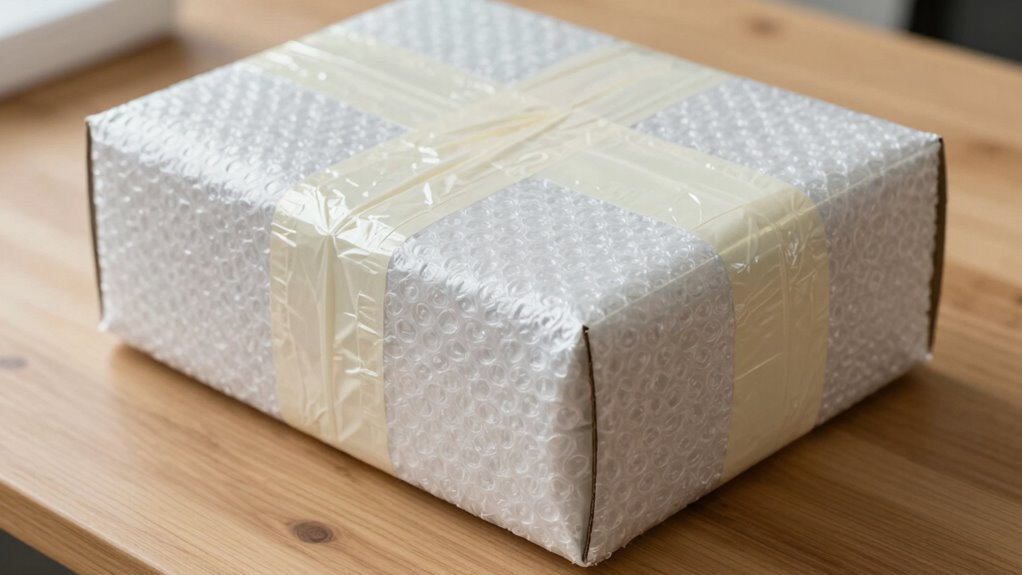

To prevent damage during transit, select sturdy, appropriately sized packaging and fill empty spaces with cushioning materials like bubble wrap, foam, or crumpled paper. Wrap fragile items individually and secure them with dividers or padding to prevent shifting. Seal all openings tightly with quality tape and label clearly. Choose a reliable carrier with a good handling record and track your shipment until it reaches safely. Keep exploring for expert tips to ensure your return arrives pristine.
Key Takeaways
- Use sturdy, appropriately sized boxes and eco-friendly fillers like shredded paper or air pillows to absorb shocks.
- Wrap fragile items individually with bubble wrap or foam padding and secure with quality packing tape.
- Fill all empty spaces with padding to prevent movement, ensuring items stay securely in place during transit.
- Clearly label packages, reinforce seals, and inspect for any damages before shipping for added security.
- Choose reputable carriers with tracking and insurance to monitor delivery and reduce the risk of damage.
Why Proper Packing Matters for Returns and Common Damage Causes
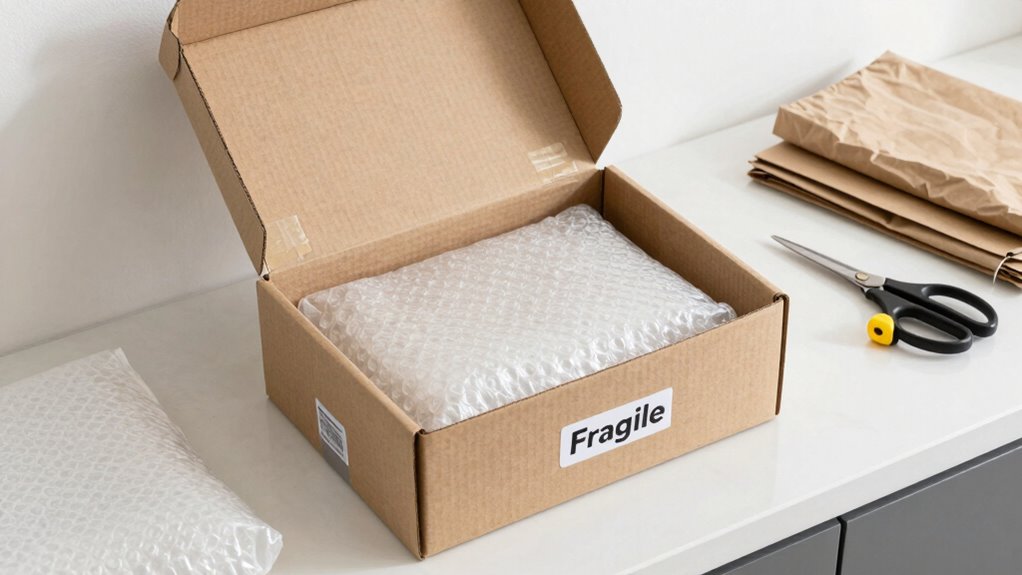
Proper packing is essential because it directly impacts whether your return arrives in good condition. Using the right packaging materials helps absorb shocks and prevents movement inside the box, reducing the risk of damage. Without proper packaging, your items are vulnerable to common damage causes such as impacts, crushing, and tearing during transit. Fragile items, in particular, need extra care, as improper packing can lead to breakage or scratches. Damage prevention relies on selecting sturdy boxes, padding, and fillers that secure your items. Additionally, incorporating protective packing techniques into your logistics planning can enhance tracking and security, ensuring your items are monitored throughout transit. Proper color accuracy in packaging materials can also help in identifying damages early by ensuring labels and markings are clearly visible. Incorporating damage prevention strategies based on proper packing techniques can significantly reduce return damages. Investing in quality packaging materials ensures your items stay protected, arrive safely, and minimize the likelihood of disputes or refunds.
Gather the Right Packing Materials for Safe Shipping
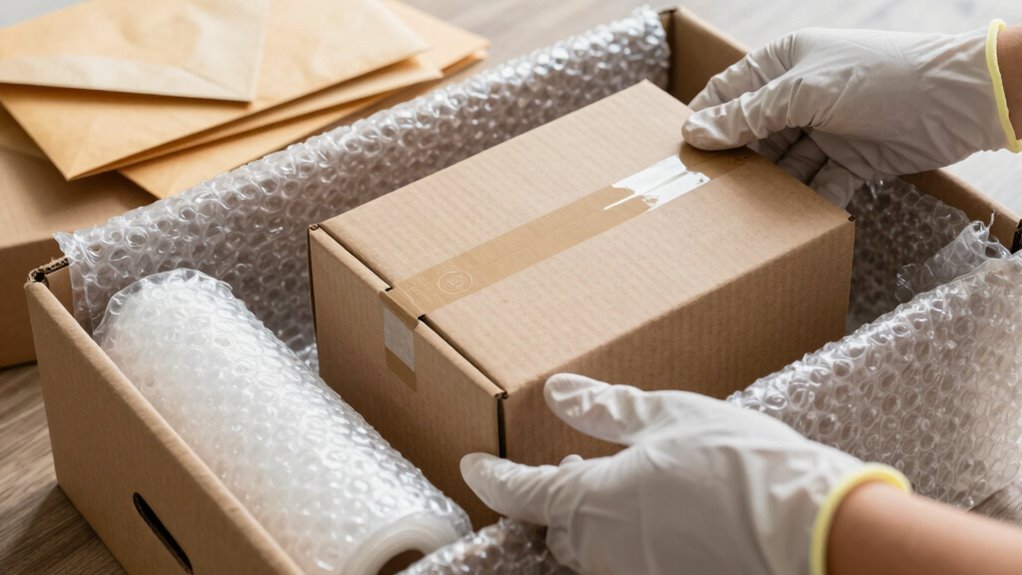
To guarantee your items arrive safely, you need to gather the right packing materials before shipping. Start with sturdy, reusable boxes that can withstand transit wear and tear. Next, choose eco-friendly fillers like shredded paper, biodegradable peanuts, or air pillows to cushion your items. Finally, get quality packing tape to secure everything and ensure the box stays sealed. Using reusable boxes not only reduces waste but also provides extra durability. Eco-friendly fillers protect your items while being environmentally conscious. Make sure your packaging materials fit your specific item’s size and fragility to prevent movement and damage. Being intentional with your packing materials helps make certain your return arrives intact and ready for its next destination. Additionally, considering the impact-resistant materials associated with personal traits can inspire creative packaging designs that resonate with the recipient, making the unboxing experience even more special. Paying attention to sustainable packaging options can further safeguard your items during transit and reduce the risk of damage. Incorporating innovative protective techniques can also enhance the safety of your shipments, especially for delicate or valuable items. For example, using smart cushioning solutions that adapt to different shapes and weights can provide tailored protection for fragile goods.
Choose the Best Return Packaging for Your Items
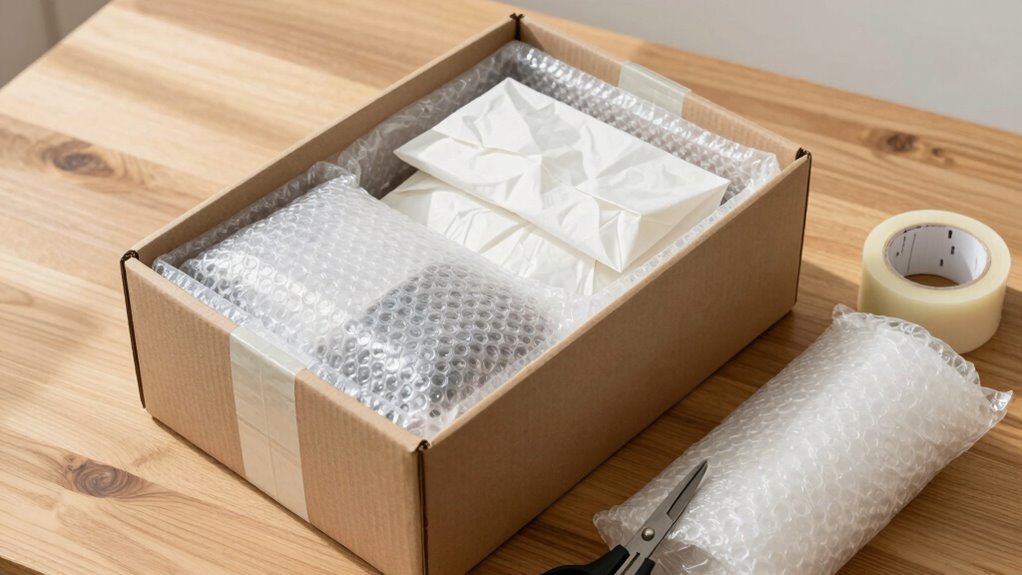
Choosing the right return packaging guarantees your items arrive intact and ready for their next destination. Start by exploring return box options that suit your item’s size and fragility. Durable boxes provide better protection against impacts and crushing. If you want to minimize your environmental impact, consider eco friendly packaging. Many brands now offer recyclable or biodegradable materials that are just as sturdy as traditional options. Avoid using overly large boxes, which can cause movement and damage, or too-small ones that don’t provide enough cushioning. Select packaging that balances protection with sustainability. Using the best return packaging ensures your items stay secure during transit, reduces waste, and reflects your commitment to eco-conscious practices. Proper packaging choices can make a significant difference in preventing damage during transit. Make informed choices to keep your returns safe and environmentally friendly. Additionally, choosing packaging materials that are compatible with shipping standards can help streamline the return process and prevent delays. When selecting your packaging, consider the impact resistance to ensure your items can withstand handling stresses. Incorporating shock absorption features in your packaging can further enhance protection against rough handling. Also, selecting materials with appropriate cushioning can help absorb shocks and reduce the risk of damage.
Secure Items Inside the Package to Prevent Movement
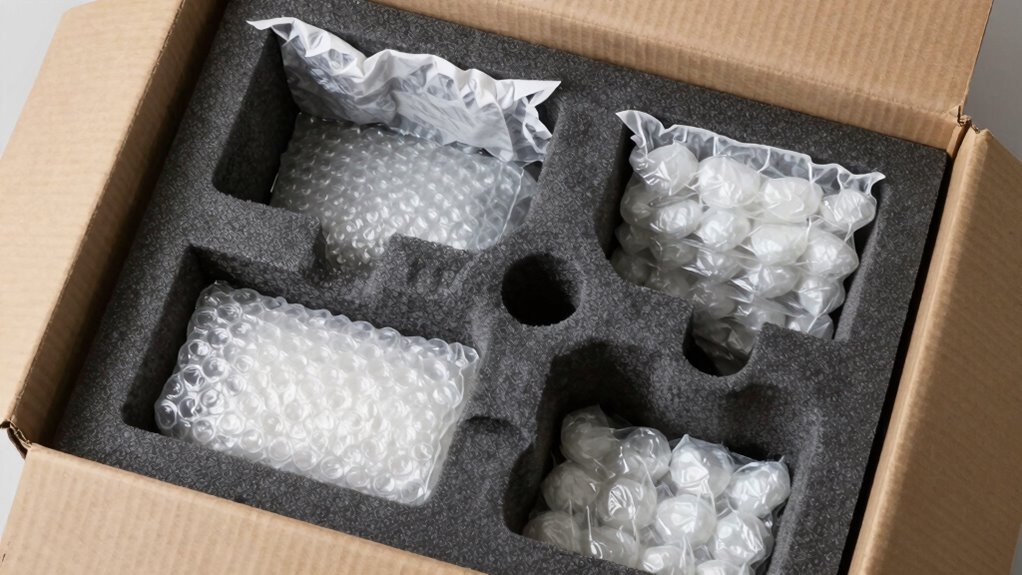
Ensuring your items stay in place during transit is essential to prevent damage. To secure fragile items and minimize movement, consider these cushioning techniques:
- Fill empty spaces with crumpled paper or packing peanuts to prevent shifting.
- Wrap each fragile item individually with bubble wrap or foam for added protection.
- Use dividers or compartments inside the box to keep items separated and stable.
- Additionally, selecting proper packaging materials can enhance overall protection and reduce the risk of damage. Using correct packaging techniques ensures that the packaging meets safety standards and provides optimal cushioning. Incorporating impact-absorbing packaging can further cushion your items against shocks during transit, and choosing appropriate packaging methods can make a significant difference in safeguarding your contents.
- Always consider the recommended weight limits for your packaging to avoid overloading, which can compromise the integrity of the package during transit.
Use Bubble Wrap, Foam, or Padding to Cushion Fragile Items
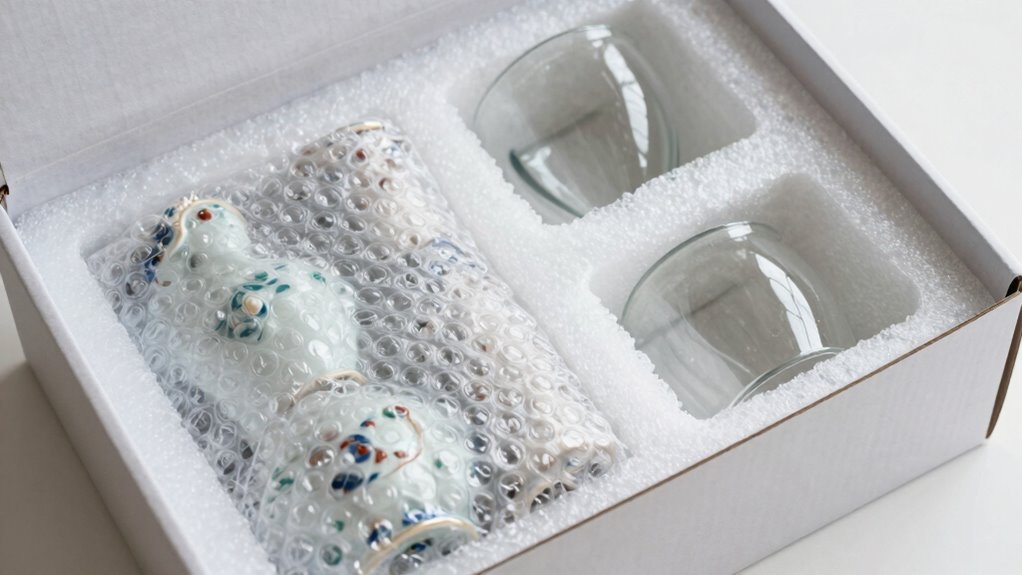
After securing items inside the package, the next step is to add padding to absorb shocks and prevent damage. Wrap fragile items generously with bubble wrap, ensuring all sides are covered. Bubble wrap’s air-filled bubbles provide a cushioning layer that absorbs impacts during transit. For added protection, use foam padding around delicate objects, especially if they’re irregularly shaped or heavy. Place foam padding at the bottom of the box before adding your items, then fill any gaps with more padding to prevent shifting. Be sure to wrap each item individually, and double-layer the bubble wrap or foam padding if needed. Proper cushioning minimizes the risk of breakage and keeps your return safe until it reaches its destination. Additionally, proper packaging techniques are essential for ensuring your items arrive intact.
Label and Seal Your Return Clearly for Safe Transit
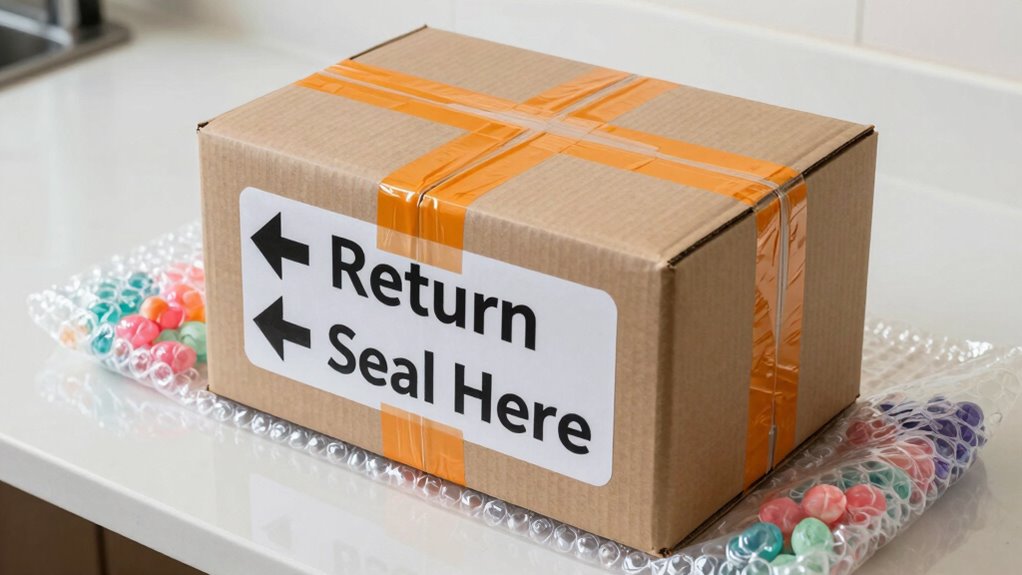
To make sure your return arrives safely, it’s essential to label and seal the package clearly. First, confirm label clarity by writing legibly and including all necessary information, such as your address and the return address. Second, check seal integrity by securely sealing all openings with sturdy tape, avoiding any gaps where the package could open during transit. Third, reinforce the label by affixing it flat to the package’s top surface, making it easily visible and scannable. Additionally, proper labeling techniques ensure handlers can quickly identify your package, reducing the risk of mishandling. Using reliable packaging materials can further prevent damage and ensure your return remains intact. Employing automated handling systems can also facilitate proper processing and reduce errors during transit. To further minimize risks, consider adding protective cushioning inside the package to absorb shocks and prevent internal damage. Incorporating appropriate packaging methods tailored to your item’s fragility can significantly enhance protection during shipping. By focusing on clear labeling and strong sealing, you reduce the risk of delays or damage. Proper label clarity helps handlers identify your package quickly, while good seal integrity prevents accidental openings. These simple steps ensure your return stays safe and intact throughout transit.
Wrap Fragile Items Carefully to Prevent Damage
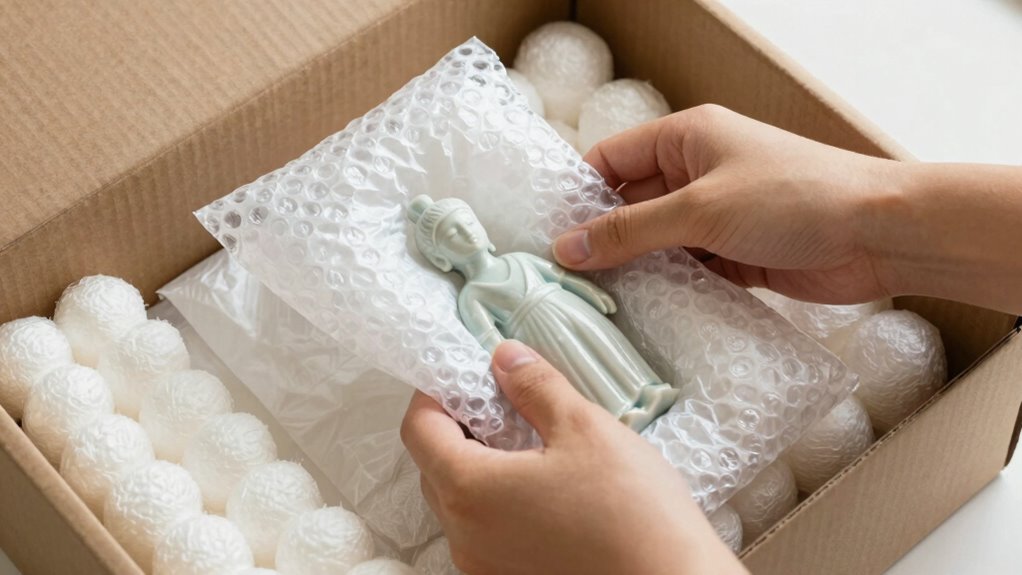
When packing fragile items, taking extra care prevents damage during transit. Proper delicate wrapping ensures your items withstand handling and movement. Use sturdy packing paper, bubble wrap, or foam to cushion each item thoroughly. Wrap each piece individually, securing it tightly to avoid shifting. For added protection, label the package with “Fragile Handling” to alert handlers. Here’s a quick guide:
| Step | Tip |
|---|---|
| 1 | Use ample cushioning materials |
| 2 | Wrap items tightly with bubble wrap |
| 3 | Place delicate items in the center |
| 4 | Seal with strong tape |
| 5 | Label as “Fragile” to ensure careful handling |
This careful approach minimizes the risk of damage and keeps your returns safe during transit.
Double-Check Your Packing for Weak Points Before Shipping
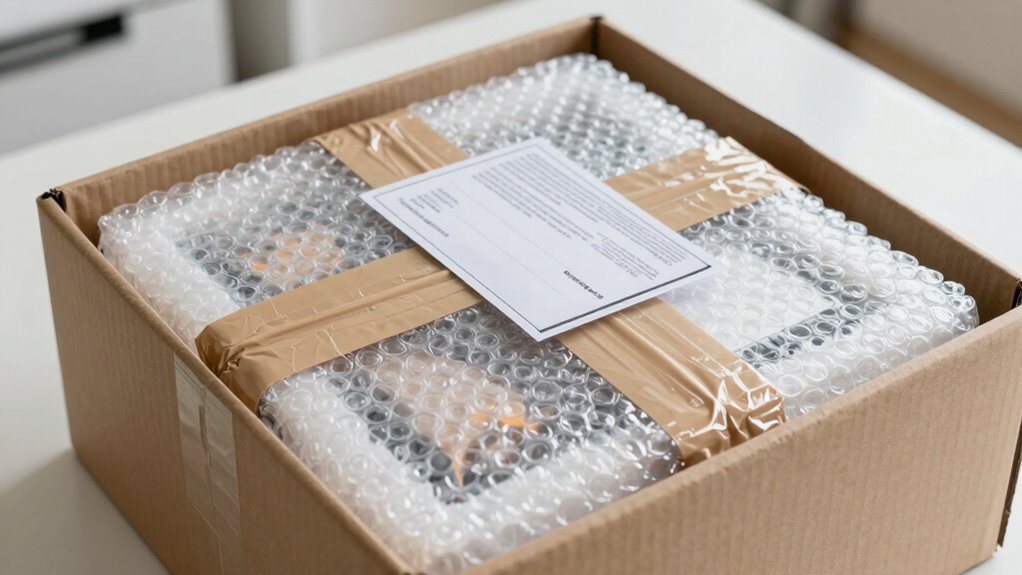
Before shipping, you should carefully inspect your packaging materials for any weak spots. Reinforce areas that look flimsy or poorly secured to prevent damage during transit. Taking these extra steps guarantees your return arrives safely and intact.
Inspect Packaging Materials
Even if your packaging looks secure at first glance, it’s essential to double-check for weak points that could cause damage during transit. Use an inspection checklist to evaluate your packaging materials thoroughly. First, examine the integrity of your boxes, ensuring there are no tears or dents. Second, check that all tapes and seals are firmly applied and won’t come loose. Third, inspect any internal fillers or padding to confirm they’re adequately cushioning your items. This process helps identify vulnerabilities that might compromise your package’s safety. Remember, proper inspection of packaging materials prevents surprises later. Taking these steps guarantees your return shipments are as protected as possible, reducing the risk of damage and ensuring customer satisfaction.
Reinforce Weak Points
After inspecting your packaging materials, it’s time to strengthen any weak points to prevent damage during transit. Check seams, edges, and corners for vulnerabilities. Use additional protective cushioning or sturdy tape to bolster these areas. Proper packaging reinforcement minimizes the risk of tears or breaks. To prioritize reinforcement, consider this table:
| Weak Point | Reinforcement Solution |
|---|---|
| Corners | Bubble wrap or foam padding |
| Seams & edges | Reinforcing tape or extra layers |
| Gaps & open spaces | Fill with protective cushioning |
| Fragile areas | Double-layered packaging |
Focusing on these spots ensures your return items stay secure. Reinforcing weak points is vital for safe transit and helps prevent costly damages.
Select a Reliable Shipping Carrier With Good Transit Records
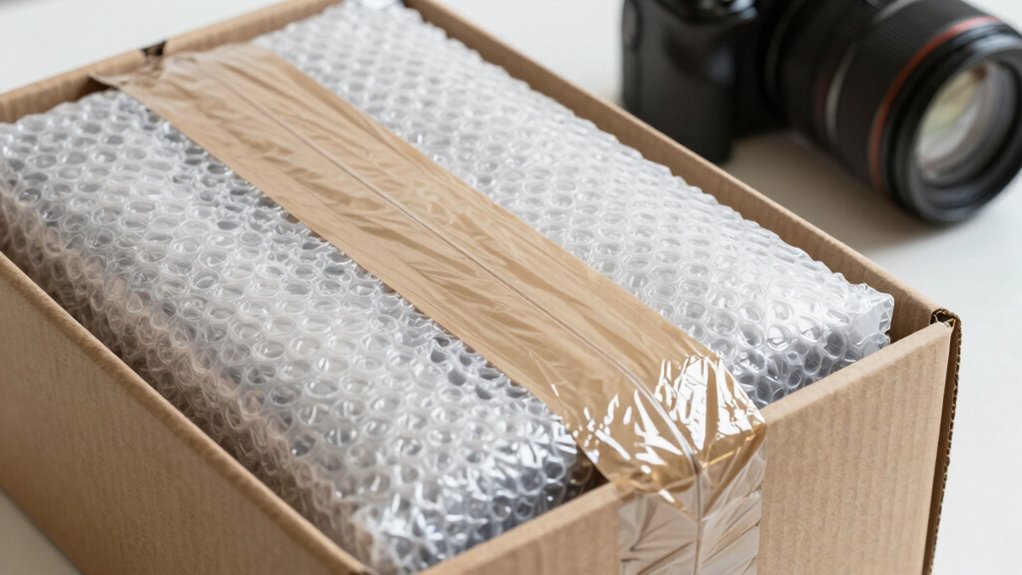
Choosing a reliable shipping carrier is essential to guarantee your return reaches its destination safely and on time. To do this, consider the following:
- Research the carrier’s reputation for timely deliveries and handling fragile items.
- Check if they offer shipping insurance to protect against loss or damage.
- Review their transit records to confirm consistent, positive performance history.
A carrier with a strong reputation reduces the risk of mishandling. Shipping insurance adds an extra layer of security, giving you peace of mind. Choosing a carrier known for reliability helps prevent delays and damages, saving you time and money. Always select a service with proven transit records to ensure your return arrives in perfect condition.
Track and Confirm Delivery to Ensure Your Return Arrives Safely
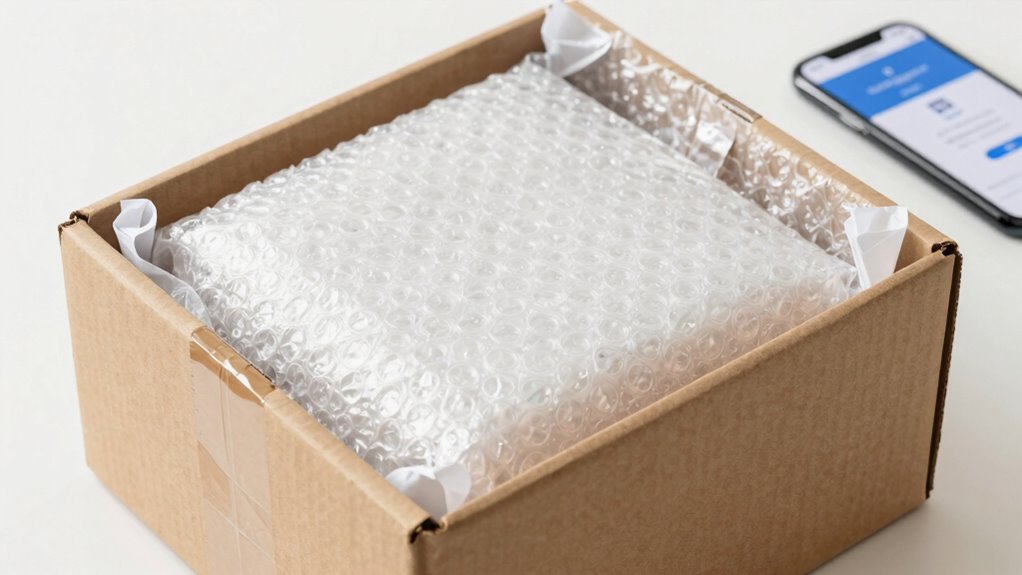
Tracking your return shipment is essential to make certain it arrives safely and on time. Using tracking confirmation allows you to monitor your package’s progress every step of the way. Once you’ve shipped your return, check the tracking details frequently to stay updated on its location. Delivery verification provides peace of mind, confirming that your package has reached its destination. If there’s any delay or issue, you can contact the carrier promptly to resolve it. Keep an eye out for delivery confirmation alerts, especially if your retailer requires proof of arrival. By actively tracking and verifying delivery, you minimize the risk of lost or damaged returns, ensuring your refund or exchange process proceeds smoothly and efficiently.
Frequently Asked Questions
How Can I Prevent Theft or Tampering During Return Shipping?
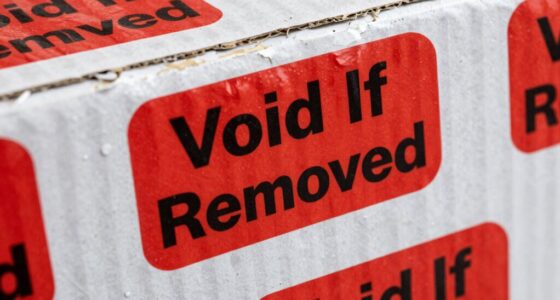
To prevent theft or tampering during return shipping, you should use secure packaging and tamper-evident seals. Guarantee your items are packed tightly in sturdy boxes, and apply seals that show visible signs of tampering if opened. Double-check all seals before shipping, and consider using tracking and insurance for added security. These steps help protect your return from theft and alert you to any unauthorized access.
What Are the Best Practices for International Return Shipments?
Did you know that nearly 30% of international shipments face delays or damages? To guarantee smooth returns, always include accurate customs documentation to prevent hold-ups and surprises. Additionally, purchase return insurance to protect your shipment against loss or damage during transit. Use sturdy packaging and clear labeling, and verify address details. These best practices help safeguard your international return shipments, making the process hassle-free and efficient.
How Do I Handle Returns With Irregularly Shaped or Oversized Items?
To handle returns with irregularly shaped or oversized items, you should use custom foam inserts to securely cradle the items and prevent movement. Reinforced packaging materials, like double-walled boxes and sturdy tape, add extra protection. Wrap delicate parts individually and fill empty spaces with padding. This approach minimizes damage risk during transit, ensuring your oversized or oddly shaped items arrive safely and intact.
What Should I Do if My Return Packaging Gets Damaged in Transit?
If your return packaging gets damaged during transit, don’t panic. First, assess the damage and document it with photos. Then, contact the shipping carrier immediately and file a claim for the damaged return. Keep your return packaging materials and receipts, as they help support your claim. Consider purchasing shipping insurance next time, so you’re protected if similar issues occur again. Act quickly to ensure your rights are preserved.
Are There Specific Labeling Requirements for Fragile or Valuable Items?
Yes, you should use clear fragile labels and valuable markings on your return package. These labels alert carriers to treat your items with care, reducing the risk of damage. Place them prominently on all sides of the package, especially where it might get handled or stacked. Using bold, visible text and durable labels guarantees everyone in transit recognizes the package’s delicate or valuable nature, encouraging careful handling throughout the journey.
Conclusion
Proper packing isn’t just about avoiding hassle—it’s about protecting your items and saving money. Did you know that 30% of returned goods arrive damaged? By choosing the right materials, securing your items, and tracking your shipment, you can reduce damage and ensure your return makes it back safely. Take the time to pack carefully; it’s worth the effort to keep your items in perfect condition during transit.