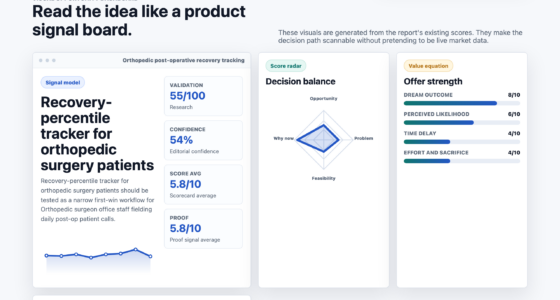
📊 Full opportunity report: How To Document Eczema And Psoriasis Between Dermatology Visits on IdeaNavigator AI — validation score, market gap, and execution plan.
TL;DR
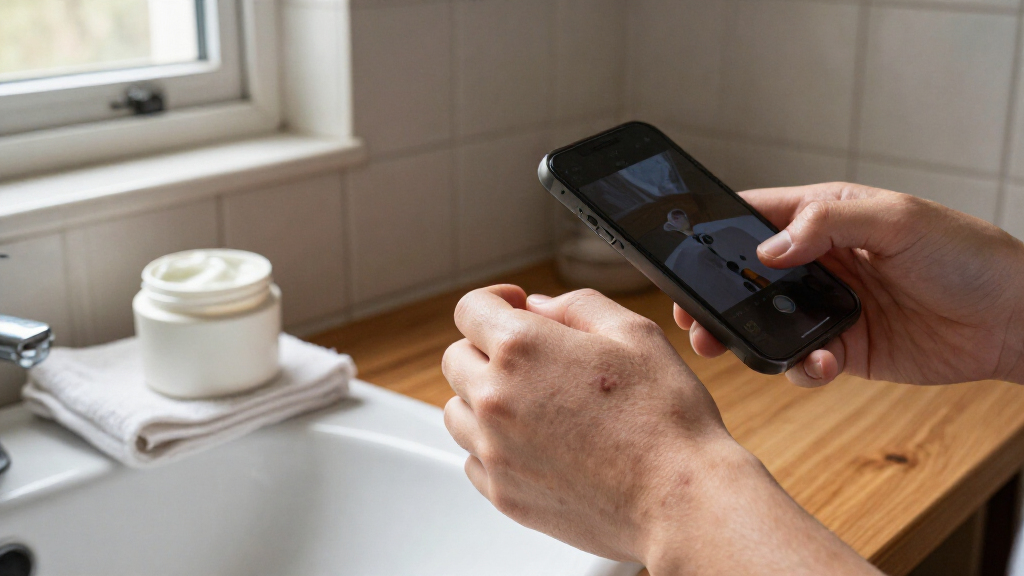
A proposed photo-journal workflow would prompt adults with eczema or psoriasis to take weekly, consistently framed skin photos and record possible triggers between dermatology visits. The idea has not been validated: a proposed test would recruit 15 eczema patients for one month and ask dermatologists whether the records changed appointments.
IdeaNavigator AI has proposed testing a photo journal for adults with eczema or psoriasis who track flares between dermatology visits. The concept would prompt weekly, consistently framed skin photos and a note about possible triggers, but no completed patient study or evidence of clinical benefit is provided.
The proposed tool is intended to address a practical difficulty: patients may have trouble recalling when a flare began, what might have preceded it, and whether treatment seemed to help by the time they see a dermatologist. The idea is to create a dated record that can supplement a patient’s account during an appointment, rather than relying on memory alone.
The suggested minimum product would guide users to take a photo each week using prompts for framing and lighting. Each entry would be dated and paired with a note about a possible trigger. The resulting timeline would let users compare images side by side. A paid subscription is proposed for unlimited history, exports, and a visit-preparation PDF; these are product and business proposals, not features of a launched service confirmed in the material.
To test the idea, IdeaNavigator AI proposes recruiting 15 people with eczema to log photos weekly for one month. The proposed evaluation would ask their dermatologists whether the timeline changed the visit and measure participants‘ willingness to pay. No recruitment results, dermatologist feedback, or payment findings are reported.
A Dated Record for Clinic Visits
A regular photo record could give patients and clinicians a more concrete account of changes between appointments. Dated images may help anchor a discussion about the course of a flare, while trigger notes could help patients describe what they noticed around the same time. That could be particularly relevant when visits are spaced apart or conducted remotely, where patients may be asked to share images.
Those possible benefits remain questions to test, not established outcomes. Photos can vary with lighting, camera distance, angle, and skin tone or appearance, so consistent prompts may make comparisons easier but cannot by themselves establish why a flare occurred or whether a treatment caused improvement. The proposed pilot would help assess whether the records are useful in appointments; its small size and short duration would not settle broader questions about effectiveness or clinical use.
The idea also asks patients to create and store sensitive health-related images. A usable service would need clear information about privacy, storage, access, and deletion. The proposal does not specify how those issues would be handled, so they remain product considerations rather than confirmed safeguards.
As an affiliate, we earn on qualifying purchases.
The Proposed Pilot and Its Limits
The concept is framed as a narrow self-management workflow for adults with eczema or psoriasis, not as a diagnostic tool or replacement for dermatology care. It focuses on the period between existing appointments: capture an image, add a date and a possible trigger note, then bring the record to the next visit.
IdeaNavigator AI presents phone cameras and cloud storage as reasons the workflow may be practical, and points to teledermatology visits as a setting where patients may be asked to provide progress images. These are the proposal’s rationale; the material does not provide data on how commonly dermatologists request images or how often patients currently keep photo records.
The suggested test is an initial feasibility and usefulness check, not a clinical trial. Fifteen eczema patients would log weekly for four weeks, after which researchers would ask whether clinicians felt the timeline changed the consultation and whether participants would pay. Psoriasis patients are included in the intended audience, but the proposed recruitment plan specifically names eczema patients, leaving that group untested in the outlined pilot.
As an affiliate, we earn on qualifying purchases.
Clinical Value and Privacy Questions
The available proposal does not establish whether a photo timeline improves clinical decisions, saves time during appointments, or helps patients judge treatment response. It also gives no completed test results, confirmed development schedule, launch date, or evidence that patients would pay for the suggested subscription. The proposed willingness-to-pay measure is a research question, not a finding.
Other open questions include how users would be prompted to photograph different body areas consistently, whether weekly capture is manageable over longer periods, and how the service would protect sensitive images. The suggested pilot focuses on eczema; it is not clear whether a separate evaluation with people who have psoriasis is planned. Nor is there detail on how clinicians would incorporate these records into care or distinguish a visual change from differences in photo conditions.
As an affiliate, we earn on qualifying purchases.
Testing Before Product Claims
The next stated step is to run the proposed one-month test with 15 eczema patients, collect weekly photos and trigger notes, and seek feedback from their dermatologists. The evaluation would also ask participants about willingness to pay. No start date or recruitment status is provided.
Results from such a small pilot could indicate whether participants can keep up with the routine and whether clinicians find the timeline useful enough to discuss further. Before any broader claims about health benefits, the concept would need clearer evidence on outcomes, longer-term use, psoriasis users, and privacy practices. For now, it remains a proposed workflow awaiting validation.
Source: IdeaNavigator AI
dermatology appointment preparation tools
As an affiliate, we earn on qualifying purchases.
As an affiliate, we earn on qualifying purchases.
Key Questions
Is the eczema and psoriasis photo-journal app available?
The information describes a proposed product idea. It does not confirm that an app has launched or provide an availability date.
How would the proposed journal work?
It would prompt users to take weekly photos with consistent framing and lighting, then add a date and a note about a possible trigger. Entries would be arranged in a side-by-side timeline.
Has the tool been shown to improve dermatology visits?
No results are reported. The proposed pilot would ask dermatologists whether the timeline changed appointments, but its clinical value has not been established.
Who would take part in the suggested test?
The outlined test would recruit 15 people with eczema to log photos weekly for one month. Although the product is intended for people with eczema or psoriasis, the proposed pilot does not specify a psoriasis group.
Would users have to pay?
A subscription for unlimited history, exports, and a visit-preparation PDF is suggested as a business model. Pricing and willingness to pay are unknown; the proposed test would ask participants about payment interest.
Source: IdeaNavigator AI