
📊 Full opportunity report: The Intersection Of Food Safety And Computer Vision Technology on IdeaNavigator AI — validation score, market gap, and execution plan.
TL;DR
A restaurant industry pilot is testing a computer vision system to verify food safety during daily walk-throughs. This technology aims to replace subjective checklists with verifiable, timestamped inspection data, potentially transforming food safety monitoring.
A new computer vision system is being tested in the restaurant industry to automatically detect food safety violations during daily walk-through inspections. This development could significantly improve the accuracy and reliability of food safety monitoring, which has traditionally relied on subjective checklists and manual inspections.
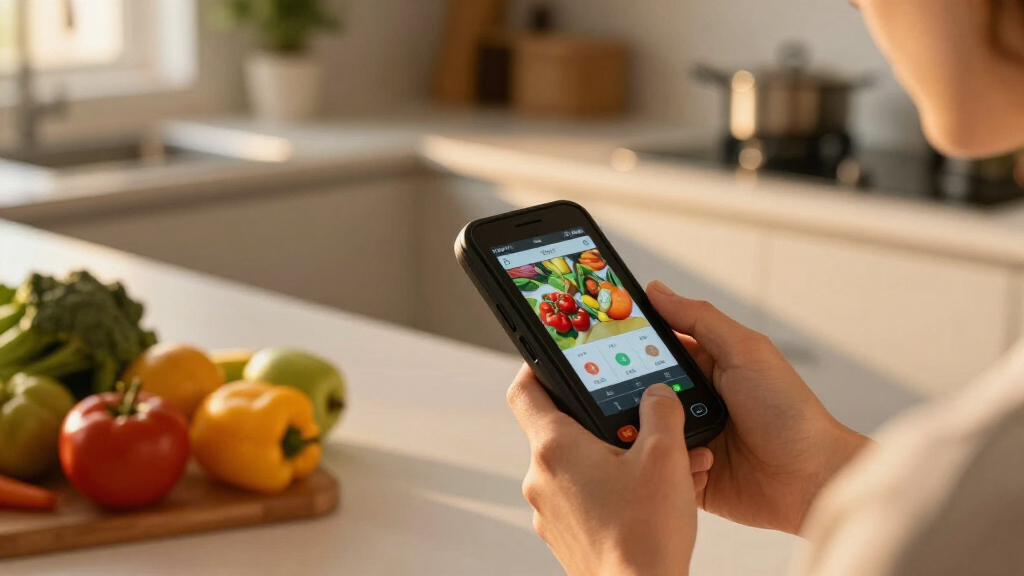
The pilot involves restaurant managers photographing key areas such as prep stations, walk-in coolers, handwash sinks, and storage areas during their morning checks. The AI model then analyzes these images to flag potential violations, such as uncovered containers, propped cooler doors, or missing date labels. The system generates timestamped reports and tracks trends across multiple locations.
According to IdeaNavigator AI, this approach aims to turn routine walk-throughs into verifiable inspection data without requiring new hardware, leveraging existing smartphone cameras. The pilot is being tested at five restaurant locations over a two-week period, with results compared against assessments by a hired health-inspection consultant to validate accuracy.
The Intersection of Food Safety and Computer Vision Technology
A restaurant pilot is testing whether ordinary smartphone photos can replace subjective walk-through checklists with objective, timestamped evidence—without adding new inspection hardware.
From remembered checks to reviewable evidence
Traditional inspections depend on staff attention, manual checklists and snapshots of conditions at one moment. Computer vision introduces a repeatable evidence layer that can be reviewed across time and locations.
Subjective observation
Different staff members may interpret the same condition differently, while busy shifts increase the chance of missed violations.
Visual verification
A trained model reviews photographs for visible cues such as open containers, missing labels or improper storage.
Comparable records
Timestamped reports create an auditable trail and expose recurring patterns across multiple restaurant locations.
How the inspection loop works
The pilot fits image capture into the existing morning walk-through, then compares the model’s findings with assessments from a hired health-inspection consultant.
Capture
Managers photograph prep, cooling, washing and storage areas.
Analyze
The vision model scans visible conditions and labels suspected violations.
Prioritize
Flags receive severity ratings and appear in a timestamped report.
Validate
Model results are compared with an independent human assessment.
Checklist versus vision-assisted monitoring
Computer vision is being tested as an augmentation layer—not as an immediate replacement for trained inspectors or regulatory judgment.
| Capability | Manual checklist | Vision-assisted process | Human consultant |
|---|---|---|---|
| Timestamped visual evidence | ~Optional | ✓Built in | ~Varies |
| Consistent repeat analysis | ✗Subjective | ✓Model-led | ~Expert judgment |
| Cross-location trend tracking | ~Manual work | ✓Scalable | ~Periodic |
| Contextual interpretation | ~Staff-dependent | ~Still limited | ✓Strong |
| Regulatory authority | ✗None | ✗Not established | ~Advisory |
What the camera is looking for
The model focuses on visible, repeatable cues. The bars below represent the pilot’s operational emphasis—not published accuracy scores.
Inspection focus
Relative emphasis within the described use case
One image, a chain of accountability
The strategic value comes from connecting observations to corrective action, validation and long-term operational learning.
Smartphone image
Captured during a scheduled walk-throughVisual cue
A condition is detected and classifiedTimestamped flag
Evidence receives context and severityManager response
The issue is reviewed and correctedLocation trend
Recurring risks become visible over timeWhat happens next?
The pilot’s two-week comparison with human inspection will determine whether the concept is ready for larger, more diverse trials.
Does the system replace inspectors?
Not at this stage. It is designed to augment human review with objective visual records and consistent preliminary flags.
Does it require specialist hardware?
No. The proposed workflow uses smartphone cameras that restaurant managers already carry.
How is success measured?
Model findings are compared against an independent consultant’s assessments to test agreement and identify misses.
When could deployment expand?
Potentially within the following year if validation is successful, although industry and regulatory acceptance remain uncertain.
The opportunity is not merely automated detection. It is the conversion of routine food-safety checks into evidence that can be verified, compared and improved at scale.
Potential Impact on Food Safety Inspection Accuracy
This technology could transform how food safety compliance is monitored in the restaurant industry. By providing objective, timestamped evidence of violations, it reduces reliance on subjective checklists and human memory, potentially leading to fewer food safety incidents and better regulatory compliance. If successful, it may also streamline inspection processes and reduce costs for restaurant operators and regulators.
As an affiliate, we earn on qualifying purchases.
Current Challenges in Restaurant Food Safety Monitoring
Traditional food safety inspections rely heavily on manual checklists completed by staff or inspectors, which can be subjective and prone to oversight. Common issues include missed violations like uncovered food or missing labels, which are only confirmed later during formal inspections. The industry has sought more reliable, automated methods to verify compliance, especially as multi-unit restaurant groups seek scalable solutions.
Recent advances in computer vision have demonstrated the ability to reliably identify food safety violations in photos, opening new possibilities for automated monitoring. The current pilot aims to validate whether this technology can be integrated into daily routines without disrupting operations.
„The vision-model system can reliably flag violations with severity ratings, turning routine walk-throughs into verifiable inspection data.“
— an anonymous researcher
restaurant inspection smartphone app
As an affiliate, we earn on qualifying purchases.
As an affiliate, we earn on qualifying purchases.
Uncertainties About System Effectiveness and Adoption
It is not yet clear how accurately the AI model will perform across different restaurant environments or how staff will adapt to using the technology. The pilot’s results are still pending, and questions remain about integration with existing workflows, data privacy, and regulatory acceptance.
As an affiliate, we earn on qualifying purchases.
Next Steps for Validation and Broader Deployment
The current pilot will run for two weeks, after which results will be analyzed and compared with human inspections. If successful, the system could be rolled out more broadly, with additional features such as trend analysis and automated reporting. Further validation may involve larger sample sizes and diverse restaurant types.
As an affiliate, we earn on qualifying purchases.
Key Questions
How does the computer vision system detect violations?
The system analyzes photos taken during walk-throughs to identify visual cues such as uncovered food, improper storage, or missing labels, and flags violations based on trained AI models.
Will this replace human inspectors entirely?
Currently, the system is designed to augment human inspections by providing objective data. Full replacement would depend on further validation and regulatory acceptance.
What are the privacy implications of using phone photos for inspections?
The system uses timestamped images taken by staff, with data stored securely. Privacy concerns are being considered, especially regarding data sharing and storage policies.
When will broader adoption be expected?
If the pilot proves successful, broader deployment could occur within the next year, pending validation results and industry acceptance.
Source: IdeaNavigator AI