
To install your window AC safely, start by choosing sturdy brackets that match your unit’s weight and position them correctly for even support. Guarantee a slight downward tilt to help with drainage and prevent leaks. Seal gaps around the unit with caulking and insulation to block drafts and improve efficiency. Properly securing the AC and maintaining the right tilt are essential for safety and performance—keep going to get step-by-step details on each of these critical steps.
Key Takeaways
- Select sturdy, properly rated brackets to evenly support the AC’s weight and ensure stable installation.
- Maintain a slight tilt away from the window (about 1/4 inch per foot) to facilitate effective drainage.
- Secure brackets with level alignment, double-check measurements, and tighten screws without over-tightening.
- Seal edges with caulking and insulate gaps with foam or weatherstripping to prevent air leaks and improve efficiency.
- Regularly inspect for wobbling, leaks, or unusual noises, and consult a professional if installation issues persist.
As an affiliate, we earn on qualifying purchases.
Prepare Your Window and Gather Tools

Before installing your window AC, you need to prepare the window and gather all necessary tools. Start by clearing the area around your window, removing any obstructions or curtains. Next, inspect your window’s structure to ensure it can support the unit safely. Gather essential tools, including a power drill and a level tool. The power drill will help you create holes for mounting brackets, while the level ensures your AC sits evenly and securely. Check that you have the right-sized drill bits and screws. Having these tools ready before you begin streamlines the process and reduces frustration. Proper preparation minimizes risks and guarantees a smooth installation. Additionally, reviewing safe installation practices can help prevent accidents during installation. Understanding bracket placement is crucial for ensuring your unit’s stability and safety. With your window clear and tools in hand, you’ll be ready to proceed confidently. Ensuring your installation environment is stable and secure can also contribute to a safer setup.
window air conditioner installation kit
As an affiliate, we earn on qualifying purchases.
As an affiliate, we earn on qualifying purchases.
Choose the Right Brackets for Safety and Stability

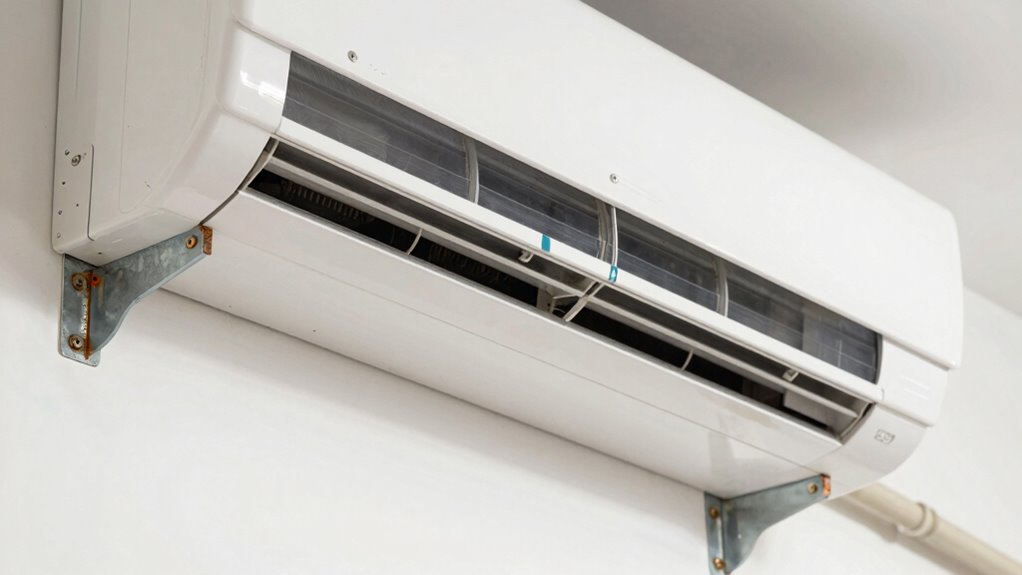
Choosing the right brackets is key to guaranteeing your window AC stays secure and stable once installed. There are various bracket types available, such as L-brackets, support brackets, and mounting brackets, each designed for specific window configurations and weight capacities. When selecting brackets, consider safety considerations like load-bearing strength and material durability to prevent accidents or damage. Properly rated brackets help distribute the weight evenly, reducing stress on the window frame. Ensure the brackets are compatible with your AC unit’s size and weight. Using the correct brackets not only enhances safety but also extends the lifespan of your installation. Additionally, understanding the principles of Free Floating can help in designing a balanced and secure setup that minimizes undue stress on the window structure. Incorporating load distribution techniques into your installation planning can further improve stability and safety. Paying attention to installation guidelines provided by the manufacturer can also help ensure the brackets function as intended. Recognizing the importance of structural support can significantly contribute to a safe and durable installation. Moreover, considering proper weight capacity is essential to prevent overloading and potential failure of your brackets.
AC unit sealing foam and caulking
As an affiliate, we earn on qualifying purchases.
As an affiliate, we earn on qualifying purchases.
How to Properly Place the Brackets?
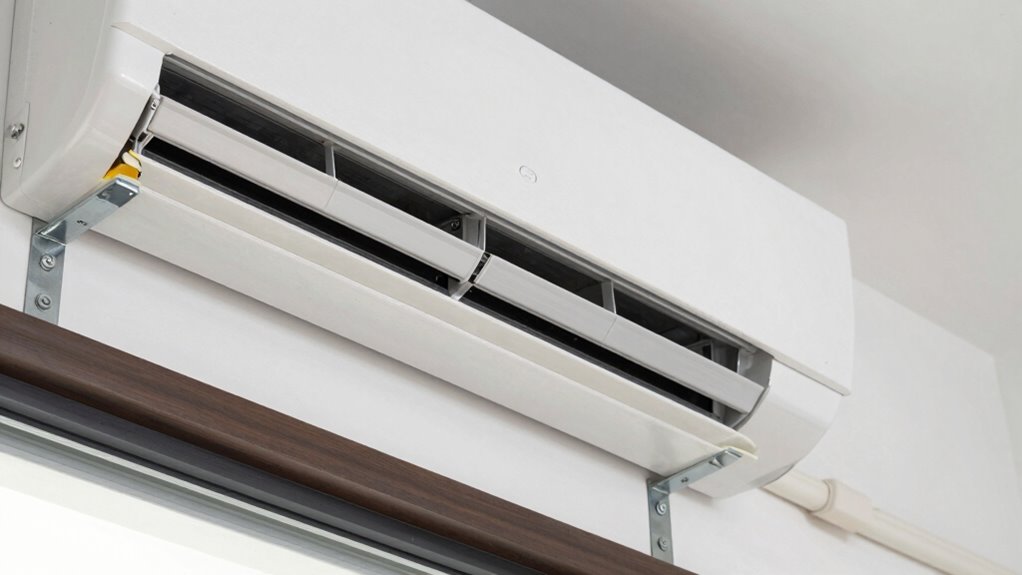
To guarantee your brackets are properly placed, start by positioning them according to your window’s dimensions and the size of your AC unit. Carefully align the brackets so they support the weight evenly, ensuring they sit snugly against the window frame. Proper bracket placement is essential for secure mounting and stability. Use a level to confirm the brackets are straight, preventing any tilting or shifting. Mark the mounting points on the window frame before drilling, and double-check measurements. When attaching the brackets, tighten all screws securely without over-tightening, which could damage the frame. Properly placed brackets provide a stable foundation for your AC unit and help prevent accidents or damage during operation. Take your time to ensure each bracket is secure and correctly positioned. Additionally, consulting installation best practices can help ensure your setup remains safe and stable throughout use. Ensuring proper support is vital for preventing potential safety hazards, especially considering the importance of stability and safety standards in safeguarding investments.
As an affiliate, we earn on qualifying purchases.
Set the Correct Tilt for Drainage and Safety
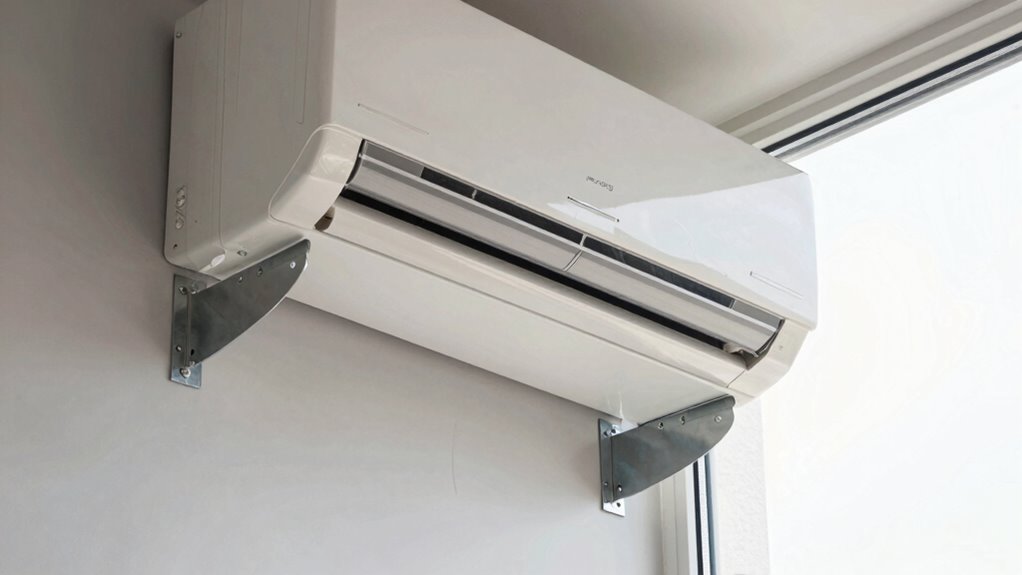
Ensuring the correct tilt of your window AC unit is essential for proper drainage and safety. You want to set the drainage angle so that water flows away from the unit and window frame, preventing leaks and water damage. Usually, a slight tilt toward the outside is ideal. Use a level to check that the unit tilts about 1/4 inch for every foot of width, ensuring efficient drainage. Proper tilt also reduces safety risks like water pooling inside the unit or dripping onto electrical components. Take safety considerations seriously — an improperly tilted AC can lead to water leaks, electrical hazards, or damage to your window frame. Adjust the unit carefully to achieve the correct angle, keeping drainage and safety in mind at all times. Incorporating connected home fitness technology can also help monitor and optimize your installation process for added safety.
Seal and Insulate Your Window Air Conditioner

Proper sealing and insulation keep your window AC secure and energy-efficient. You should focus on using effective sealing techniques to prevent air leaks and drafts. Additionally, applying the right insulation methods helps maintain a comfortable temperature and reduces energy costs. Ensuring your home has good air quality can also enhance overall comfort and health. Incorporating ventilation strategies can further improve indoor air circulation and reduce humidity levels. Proper ventilation not only helps with moisture control but also supports better indoor air circulation, which is essential for a healthier living environment. Regularly checking and maintaining these systems can prevent mold growth and improve your home’s overall safety. Maintaining good indoor air quality through these measures can significantly contribute to your overall well-being.
Proper Sealing Techniques
Sealing and insulating your window air conditioner is essential for efficient operation and energy savings. Proper sealing prevents air leaks, improves cooling, and reduces energy bills. Use these methods:
- Apply caulking techniques around the edges of the unit, filling gaps with a smooth, airtight seal.
- Press foam insulation snugly into any remaining gaps between the window frame and the AC unit.
- Seal gaps at the bottom and sides of the unit to prevent drafts from entering or escaping.
- Check for leaks and reapply caulk or foam insulation as needed, ensuring a tight fit.
- Regularly inspecting and maintaining the seals can optimize energy efficiency and prolong the lifespan of your unit.
Effective Insulation Methods
To keep your window air conditioner running efficiently, you need to effectively insulate it from drafts and temperature loss. Installing proper thermal barriers helps prevent outside air from seeping in and cool air from escaping. Use insulation materials like foam or weatherstripping around the unit’s edges to create a tight seal. These materials act as thermal barriers, maintaining consistent indoor temperatures and reducing energy consumption. Make sure to fill any gaps between the AC and window frame with appropriate insulation to enhance efficiency. Proper insulation not only improves your unit’s performance but also helps lower your energy bills. Regularly inspect and replace worn insulation materials to keep your window AC functioning at its best and ensure a comfortable, cool environment. Additionally, considering backup power options can prevent interruptions during outages, ensuring your cooling system remains operational when you need it most. Implementing proper installation techniques can further improve the effectiveness of your insulation efforts. Incorporating advanced sealing methods can also help maximize energy savings and prevent air leaks.
Step-by-Step Guide to Installing Your Window AC Safely
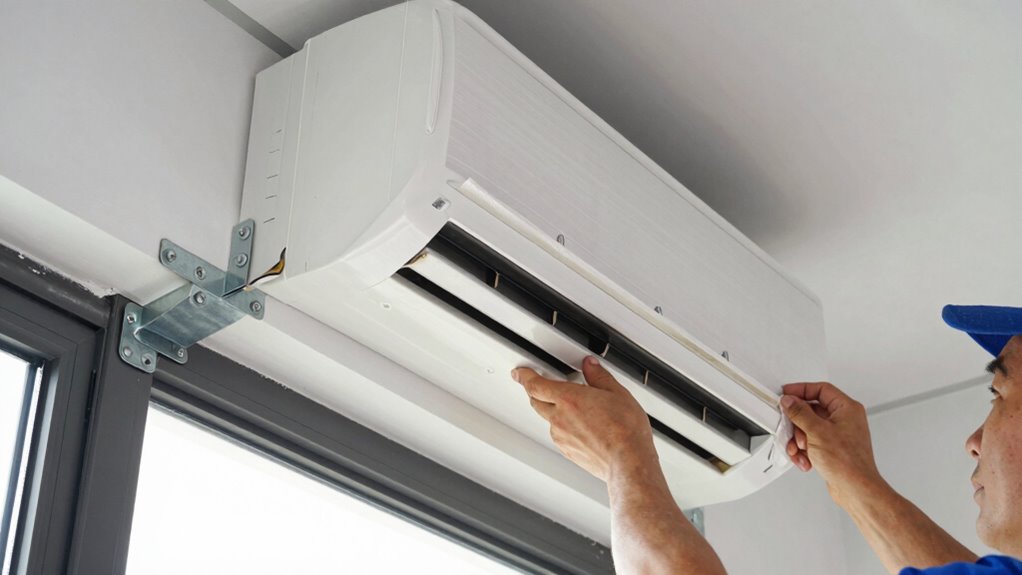
Installing a window AC unit safely begins with careful preparation. First, gather your tools and ensure your window frame is sturdy. Next, follow these steps:
- Attach the mounting brackets securely to the unit, making sure they’re aligned with the window sash. Ensuring proper bracket installation is crucial for unit stability and safety.
- Position the AC in the window, resting it on the brackets, with the unit tilted slightly downward for proper drainage.
- Adjust the tilt to ensure water flows outside, not into your room. Proper installation techniques help prevent leaks and water damage.
- Seal gaps around the unit with weatherstripping or foam to prevent air leaks and improve efficiency.
- Regularly check the top dog beds for Golden Retrievers to ensure your pet’s comfort while you work on the installation.
Common Mistakes That Could Compromise Safety
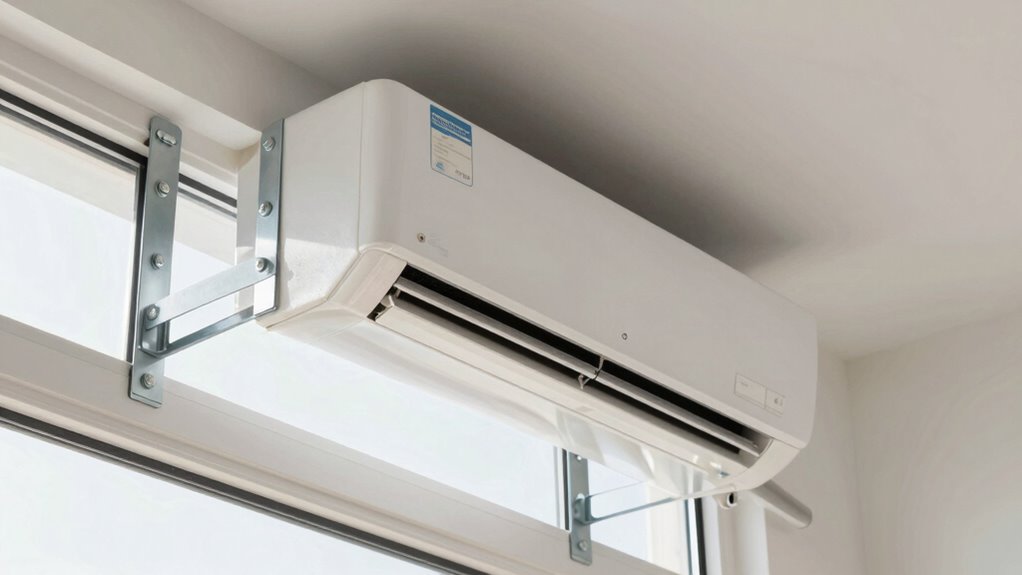
One common mistake is neglecting to double-check the stability of your window frame before installing the unit. Incorrect bracket placement can lead to instability, increasing the risk of the AC falling or causing damage. Make sure brackets are securely anchored and properly aligned to support the weight of the unit. Another mistake is improper tilt adjustment; if the AC isn’t tilted slightly downward, condensation can leak inside your room instead of outside, creating water damage or mold. Always verify that the unit is angled correctly and securely fastened. Failing to address these issues compromises safety, risking injury or property damage. Take the time to double-check bracket placement and tilt, ensuring your installation is both secure and safe for long-term use.
Troubleshooting Installation Issues and When to Call a Professional

Even with careful preparation, installation issues can still occur, and recognizing these problems early is key to ensuring safety. If you notice any of these signs, it’s time to seek professional assistance:
Even with careful prep, installation issues may arise—early detection ensures safety and proper function.
- The AC unit wobbles or feels unstable when you touch it.
- There’s an uneven seal causing air leaks or water drips.
- The unit isn’t cooling effectively despite proper operation.
- You hear strange noises or vibrations during use.
Use troubleshooting tips to check for loose brackets or tilting issues, but don’t hesitate to call a professional if problems persist. Attempting complex repairs yourself can compromise safety. A qualified technician can quickly diagnose and fix installation problems, ensuring your window AC runs safely and efficiently.
Frequently Asked Questions
How Do I Determine the Correct Size of Brackets for My Window AC?
You determine the correct size of brackets for your window AC by considering the bracket weight capacity and your window width. Measure your window’s width accurately, then select brackets rated to support your AC’s weight and match the window size. Make certain the brackets are sturdy enough to hold the unit securely and prevent accidents. Always follow manufacturer guidelines for weight limits and size recommendations to ensure safe installation.
What Are the Signs of Improper Tilt That Could Cause Water Leaks?
Did you know that improper tilt causes over 60% of window AC water leaks? If your unit isn’t angled correctly, you’ll notice drainage issues and water leakage inside your room. Signs include water pooling around the unit or dripping from the back. Check the tilt angle—if it’s not slightly downward toward the outside, you need to modify it to prevent leaks and ensure proper drainage.
Can I Install a Window AC Without Professional Help?
You can attempt a DIY installation of your window AC, but safety considerations are vital. Make certain you understand the proper setup, including securing brackets, tilting the unit correctly, and sealing gaps to prevent leaks. Follow manufacturer instructions carefully, wear protective gear, and consider seeking help if you’re unsure about any step. If you’re uncomfortable or uncertain, consulting a professional guarantees your safety and proper installation.
How Often Should I Inspect the Seals for Wear and Tear?
You should inspect the seals for wear and tear at least once every season. Don’t wait until you notice drafts or leaks—regular seal maintenance helps prevent costly damage and energy loss. Keep a close eye on your AC’s seals, especially after heavy storms or extreme weather. If you detect cracks or gaps, address them immediately. Consistent inspection frequency keeps your unit running efficiently and prolongs its lifespan.
Are There Specific Safety Precautions for Installing in High-Rise Windows?
When installing in high-rise windows, prioritize high-rise safety by securing your window access area properly. Use sturdy brackets and confirm the window is stable before starting. Always wear a harness or safety gear, especially when working at heights, and avoid overreaching. Confirm the window is fully open and secure to prevent falls. Take your time, double-check your setup, and follow safety guidelines to protect yourself during installation.
Conclusion
Think of your window air conditioner as a trusty ship anchored securely in your window harbor. With the right brackets, proper tilt, and tight sealing, you’re steering it safely through the stormy summer months. When you follow these steps, your AC stays steady and secure, preventing leaks or accidents. Remember, a well-installed unit is like a well-anchored ship—ready to weather any tempests that come your way. Stay safe and enjoy cool comfort all season long.