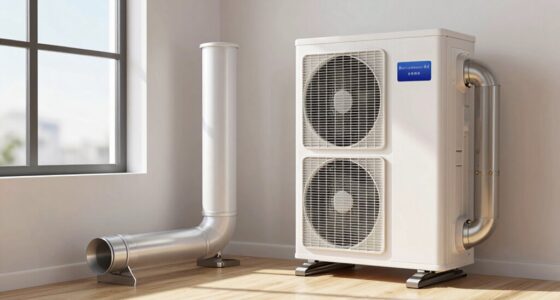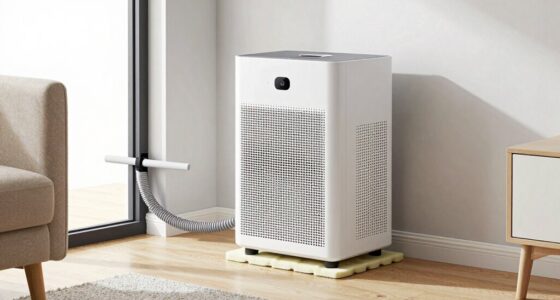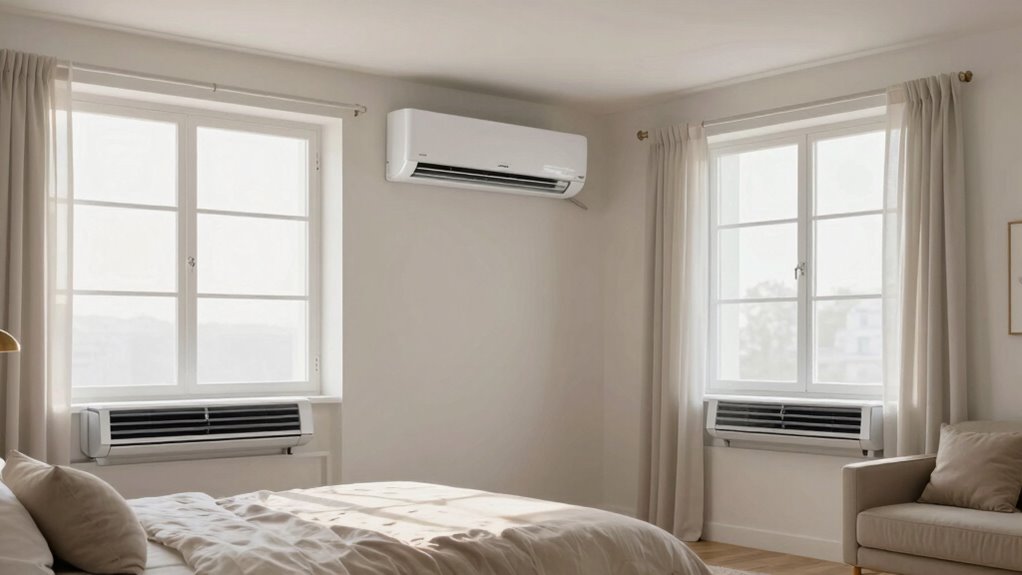

Choosing between one large AC unit or two smaller ones for your big bedroom depends on your comfort needs, energy efficiency, and control. A single unit offers quieter operation and easier maintenance, while two smaller units give you better zoning and targeted cooling. Cost and installation can vary, but multiple small units often save energy by cooling only active areas. To discover which setup suits your space best, explore all the benefits and options available.
Key Takeaways
- Multiple smaller units offer zone control, allowing targeted cooling and improved energy efficiency in different areas of the bedroom.
- A single large unit typically operates more quietly and simplifies maintenance, ideal for consistent noise levels and easier upkeep.
- Consider installation costs: smaller units usually have lower initial expenses but may increase operational costs over time.
- Proper insulation and window placement impact system performance, regardless of whether you choose one large unit or multiple smaller ones.
- Your budget, room layout, and preference for personalized zones will influence the best choice between one large or two smaller cooling units.
As an affiliate, we earn on qualifying purchases.
How Do You Know Your Large Bedroom’s Size and Layout?

To effectively cool a large bedroom, you first need to determine its exact size and layout. Measure the room’s length and width to calculate the total square footage, which helps you choose the right cooling capacity. Pay attention to bedroom decor, as bulky furniture or large wardrobes can affect airflow and cooling efficiency. Also, consider window placement—windows facing the sun can cause heat gain, making cooling more challenging. Note the size and number of windows, as well as their orientation, to decide if additional shading or window treatments are necessary. Understanding your room’s layout will guide you in selecting the most suitable air conditioning solution, ensuring consistent comfort without wasting energy. Accurate measurements and layout assessment are essential for ideal cooling performance, and airflow patterns can significantly influence how well your space cools. Additionally, considering ventilation strategies can improve overall airflow and cooling effectiveness. Properly managing air circulation within the room can help distribute cooled air more evenly and enhance overall comfort. Incorporating airflow optimization techniques can further improve cooling efficiency and comfort levels.
As an affiliate, we earn on qualifying purchases.
Should You Install One Big Air Conditioner or Two Smaller Units?

When choosing between one large air conditioner and two smaller units, consider how cost and energy efficiency affect your budget and monthly bills. Two units offer better zone control and flexibility, letting you cool only the parts you use most. Think about your home’s layout and your comfort needs to decide which option makes the most sense. Additionally, evaluate the reliability and safety of your cooling system to ensure consistent performance and peace of mind. Proper system maintenance can also extend the lifespan of your units and improve overall efficiency. Incorporating energy-efficient technology can further enhance your system’s performance and reduce operating costs over time. Understanding HVAC system design principles can help in choosing the most effective setup for your space. Considering system scalability can provide options for future upgrades or expansions as your needs change.
Cost and Energy Efficiency
Deciding between installing one large air conditioner or multiple smaller units hinges on cost and energy efficiency. A single, bigger unit may have a higher upfront cost but can be more efficient if your window placement allows for ideal airflow and cooling. Proper insulation quality minimizes heat exchange, reducing the load on your AC and lowering energy bills. Two smaller units can provide targeted cooling, potentially saving energy by only cooling active areas, but they might cost more to operate over time. Additionally, multiple units can increase maintenance expenses. Assess your room’s window placement and insulation quality carefully—these factors influence how effectively each setup performs and how much you’ll spend on energy. Considering climate conditions can also impact which system is more suitable for your needs. Ultimately, balancing initial costs with ongoing efficiency determines the best choice for your large bedroom. Incorporating energy-efficient appliances can further enhance your cooling system’s performance and reduce ongoing costs.
Zone Control and Flexibility
Choosing between one large air conditioner and multiple smaller units affects how easily you can control the temperature in different parts of your bedroom. With better zone control and flexibility, you can target specific areas, saving energy and increasing comfort. Good bedroom insulation helps maintain desired temperatures, reducing the need for constant cooling. If your window placement allows for strategic airflow, smaller units can work independently in different zones, giving you tailored comfort. Conversely, a single large unit may struggle to evenly cool the entire space if insulation isn’t *ideal* or windows are poorly placed. Smaller units also let you turn off zones you’re not using, boosting efficiency. Overall, your choice depends on how well you can control airflow and insulation, and whether you want precise temperature management. Proper zoning can enhance comfort and efficiency, especially when using multiple smaller units. Additionally, airflow management plays a critical role in achieving consistent cooling across your space. Understanding air circulation patterns can help optimize your cooling setup for better uniformity and climate adaptability, which is essential for addressing temperature fluctuations effectively.
energy efficient window air conditioner
As an affiliate, we earn on qualifying purchases.
As an affiliate, we earn on qualifying purchases.
What Are the Main Benefits of a Single Large AC Unit?
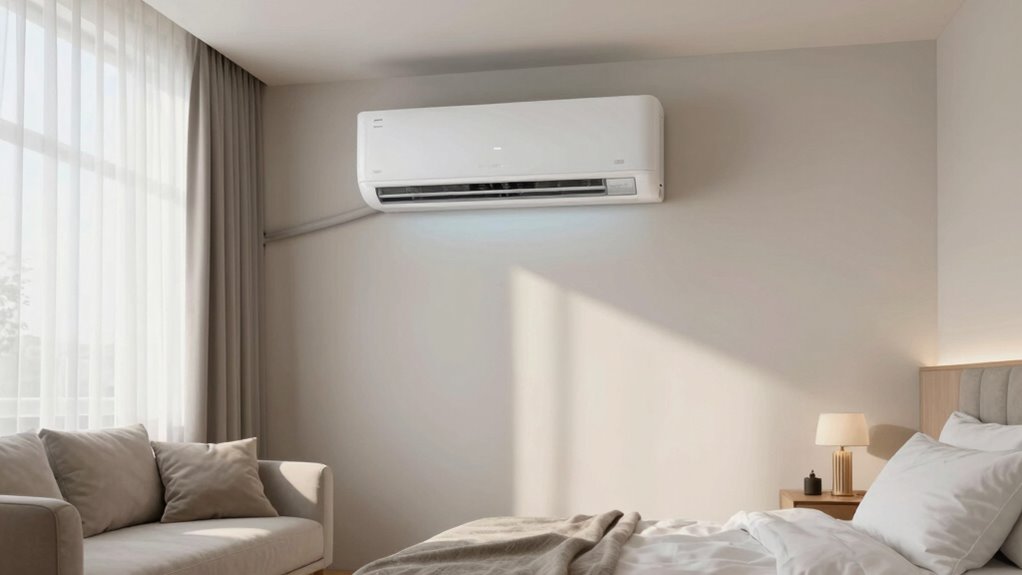
Have you ever wondered why a single large AC unit might be the best choice for cooling a big bedroom? One major benefit is energy savings, as a well-sized unit runs efficiently without frequent cycling. It also simplifies installation, reducing setup time and costs compared to multiple smaller units. A single unit provides consistent cooling across the entire space, eliminating temperature discrepancies. Additionally, maintenance is easier with just one system to service, saving you time and effort. With fewer components, there’s less chance of breakdowns, and repairs tend to be more straightforward. Overall, a large, single AC unit offers an effective, streamlined solution for maintaining a comfortable environment in your spacious bedroom. Wave and wind can influence how efficiently your cooling system operates and should be considered in your overall climate control strategy. Moreover, selecting the right size and capacity of the unit is crucial to ensure optimal performance and energy efficiency. Proper airflow and ventilation are also important factors that can impact cooling effectiveness in large spaces, especially when considering HVAC system design to optimize airflow and temperature distribution. Properly designed air distribution systems can further enhance comfort and efficiency in large bedrooms.
portable air conditioner for large rooms
As an affiliate, we earn on qualifying purchases.
As an affiliate, we earn on qualifying purchases.
How Do Two Smaller Units Compare in Terms of Advantages?
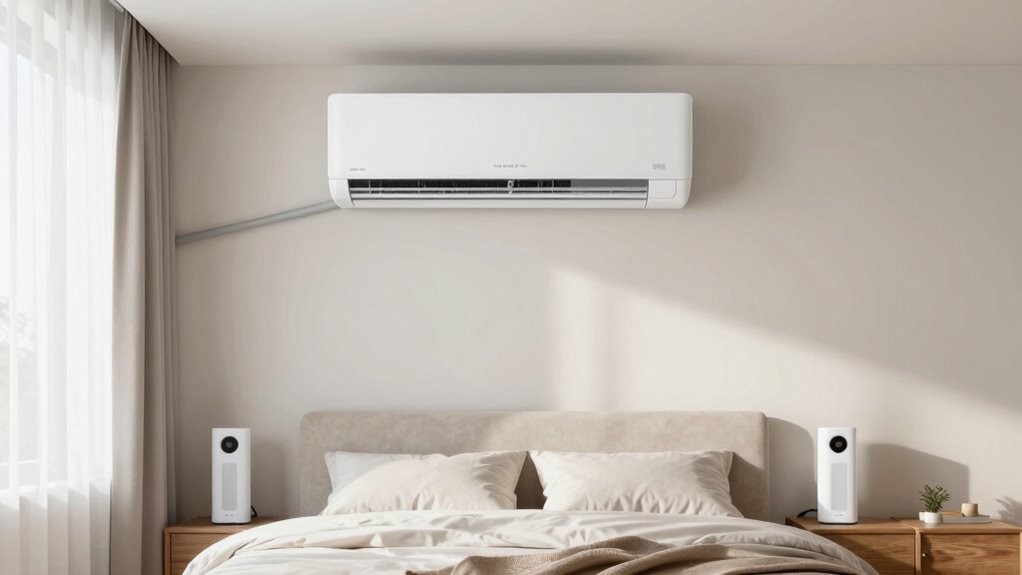
While two smaller units might seem less efficient at first, they offer distinct advantages in managing large bedrooms. One key dual unit advantage is increased cooling flexibility—you can target specific areas or zones, avoiding unnecessary cooling in unoccupied spaces. This setup allows you to customize comfort, especially if parts of your room have different cooling needs. Additionally, using two smaller units can enhance energy efficiency since you only run the unit(s) needed at any given time, reducing overall energy consumption. If one unit needs maintenance or breaks down, the other can still operate, maintaining some level of cooling. This redundancy minimizes disruptions, unlike a single large unit whose failure affects the entire space. Moreover, zoning capabilities allow for more precise temperature control, making two smaller units an effective solution for large bedrooms. Incorporating zone-specific cooling can further optimize comfort and energy savings. Overall, two smaller units provide adaptable, targeted cooling solutions suitable for large bedrooms. Energy management is also improved, helping to lower utility bills and promote sustainable living. Additionally, implementing modular systems can offer scalable solutions as your needs change over time. For instance, some systems feature smart controls, enabling remote adjustments and better integration with home automation.
Which Cooling Setup Is More Cost-Effective to Install and Operate?
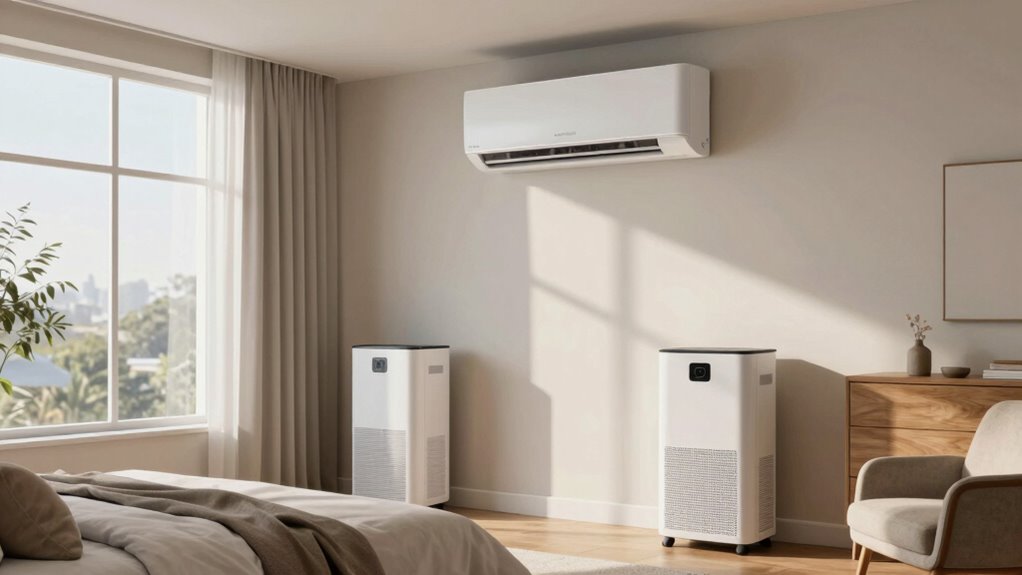
Installing and operating two smaller units can often be more cost-effective than investing in a single large cooling system. This setup allows you to target specific areas, reducing energy waste. With flexible ventilation options, you can improve airflow and efficiency, lowering overall costs. Insulation improvements also help maintain temperature, decreasing cooling needs. Smaller units typically cost less upfront and are easier to repair or replace. Additionally, zoning your cooling reduces unnecessary energy consumption. Consider these factors:
Using multiple smaller units improves efficiency and saves costs through targeted cooling and easier maintenance.
- Lower initial installation expenses
- Reduced energy bills with targeted cooling
- Easier maintenance and repairs
- Enhanced insulation boosts efficiency
Implementing load calculations can further optimize your cooling setup’s performance and savings.
Is One Large Unit or Two Smaller Ones More Energy Efficient?

When choosing between one large unit and two smaller ones, you’ll want to contemplate energy consumption. Smaller units can target specific areas more efficiently, potentially saving you money over time. Let’s compare their cost-effectiveness and how they impact your energy bills.
Energy Consumption Differences
Choosing between one large cooling unit and two smaller ones often hinges on energy efficiency. Generally, two smaller units can offer better energy savings because you can cool only the areas you use, reducing wasted energy. Larger units tend to run continuously, which may increase energy consumption over time. Additionally, smaller systems often have a shorter appliance lifespan, meaning you may need to replace them sooner, but their energy use is more adaptable.
- Smaller units can be turned off when not needed, saving energy
- Multiple units allow for targeted cooling, reducing waste
- Larger units may consume more power during peak operation
- Energy-efficient models in either setup can lower overall costs
In the end, your choice impacts overall energy consumption and long-term savings.
Cost-Effectiveness Analysis
Evaluating the cost-effectiveness of one large cooling unit versus two smaller ones involves analyzing both upfront expenses and ongoing energy costs. A thorough cost comparison helps you determine which option saves you more money over time. Generally, installation costs for a single large unit tend to be higher initially but can be more straightforward to set up. Conversely, installing two smaller units might reduce upfront expenses and allow you to cool specific areas more efficiently. However, running two units simultaneously could increase energy consumption, impacting your long-term savings. Consider the size of your bedroom and your cooling needs. By weighing installation costs against ongoing energy expenses, you’ll make a more informed decision about which setup offers better value and efficiency for your budget.
How Easy Is It to Install and Maintain Each Setup?
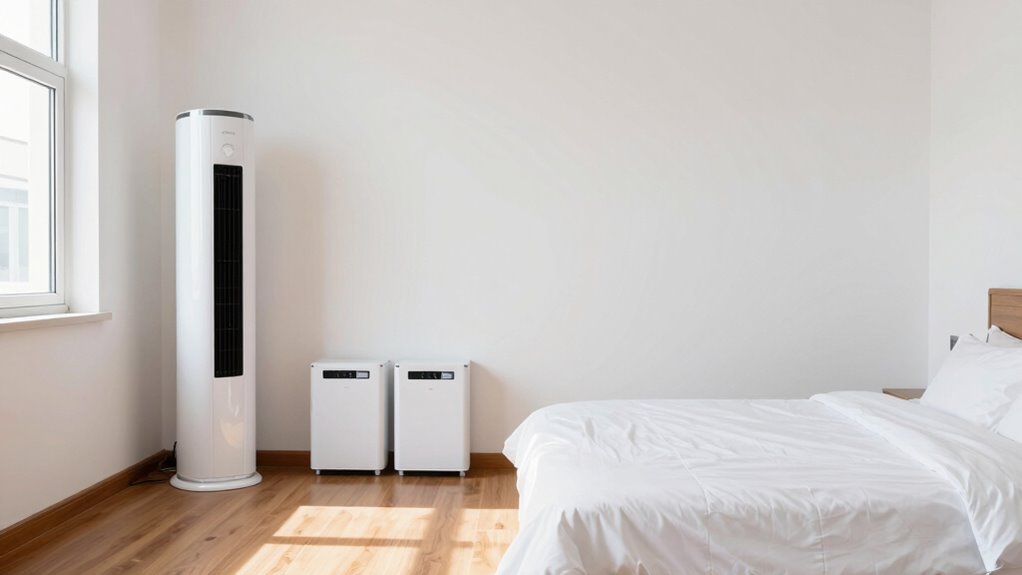
Installing and maintaining different large bedroom cooling setups varies in complexity, but most options are designed for relatively straightforward setup. A single large unit typically involves more installation complexity, often requiring professional help for proper placement and electrical connections. In contrast, two smaller units tend to be easier to install and can be set up individually, saving time and effort. Maintenance ease also varies: a single unit might need more frequent cleaning and filter changes, while two smaller units can be maintained separately, simplifying upkeep.
Installing one large unit is more complex; two smaller units offer easier setup and maintenance.
Key points to contemplate:
- Ease of installation for multiple units vs. one big unit
- Access to filters and parts for routine maintenance
- Electrical requirements and setup complexity
- Frequency and simplicity of ongoing maintenance
Can Using Two Units Offer Better Zoning and Custom Comfort?
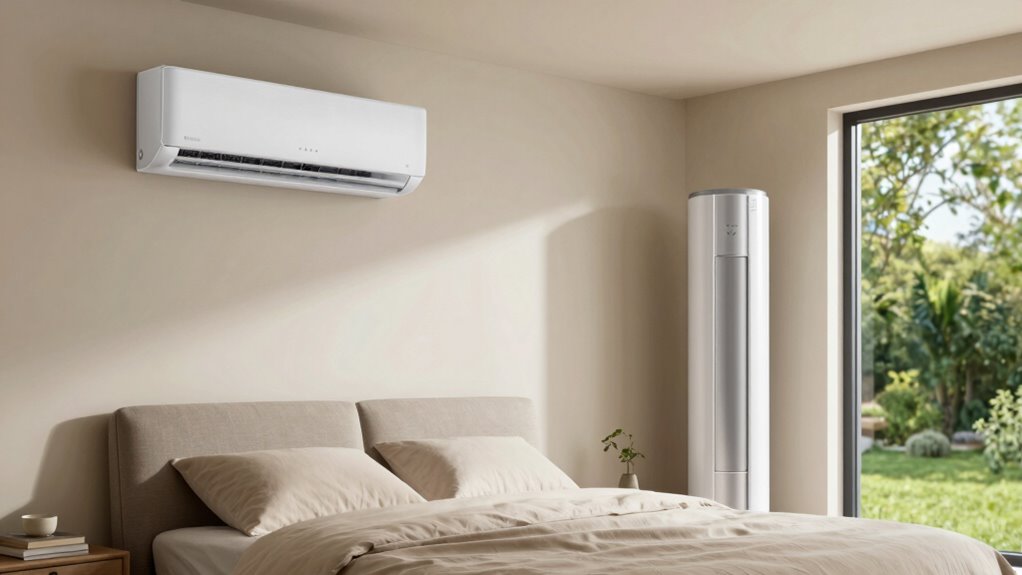
Using two units can give you more precise temperature control and better zone-specific comfort in your large bedroom. You can customize each area to your preferences, avoiding temperature clashes. Plus, this setup often boosts energy efficiency by cooling only where needed.
Precise Temperature Control
When it comes to achieving precise temperature control in a large bedroom, deploying two cooling units can substantially enhance zoning and comfort. With two units, you can set different temperatures for each area, avoiding hot or cold spots. Smart thermostats allow for better control, enabling you to customize settings easily and optimize energy use. Proper window installation also plays a role, reducing heat gain and improving efficiency. Using two units gives you the flexibility to adjust airflow and temperature independently, creating a more tailored environment.
- Fine-tune comfort zones with separate controls
- Reduce energy waste through targeted cooling
- Use smart thermostats for seamless adjustments
- Minimize heat transfer with effective window installation
Zone-Specific Comfort Levels
Employing two cooling units in a large bedroom allows you to create distinct zones with tailored comfort levels. You can position units strategically based on window placement to optimize airflow and temperature control in each area. For example, placing a unit near a window that faces the sun can prevent heat gain, while another can focus on a cooler corner. Ceiling height also plays a role; taller ceilings may require more powerful or directed airflow to ensure even cooling. With two units, you gain the flexibility to adjust temperature settings independently, ensuring each zone matches your comfort preferences. This zoned approach helps prevent hot spots and keeps every part of your large bedroom consistently comfortable.
Energy Efficiency Benefits
While installing two cooling units might seem like an increase in energy use, it can actually lead to greater efficiency when zoning your large bedroom. Using two smaller units allows you to target specific areas, reducing unnecessary energy consumption. This setup offers better control over temperature, minimizing waste and lowering overall energy bills. With precise zoning, you avoid overcooling unoccupied sections, which benefits both your comfort and the environment. Additionally, energy savings from optimized operation can reduce your carbon footprint, making your cooling system more eco-friendly. You’ll also experience fewer fluctuations in temperature, which enhances comfort.
- Minimize energy waste with focused cooling
- Reduce overall electricity consumption
- Lower environmental impact through efficient use
- Achieve tailored comfort for different areas
Which Option Is Quieter During Operation?

Have you ever wondered which cooling option operates more quietly in a large bedroom? When comparing a single large unit to two smaller ones, noise levels play a key role. Generally, a single, well-designed unit tends to have better operational quietness because it doesn’t require multiple compressors or fans running simultaneously. Smaller units might produce more noise individually, and running two at once can increase overall sound levels. However, modern units—regardless of size—are built with noise reduction features, so differences can be subtle. Your choice depends on the specific models and their noise ratings. Ultimately, if quiet operation is a priority, carefully compare decibel levels and look for units with sound-dampening technology, regardless of whether you opt for one big unit or two smaller ones.
How Do You Decide Which Cooling Solution Is Best for Your Large Bedroom?

Choosing the right cooling solution for your large bedroom depends on several factors, including your budget, room layout, and personal preferences. To decide, consider how duct placement affects airflow and aesthetics, as well as noise levels during operation. If you prefer minimal disruption, a single large unit might be quieter, but multiple smaller units can target specific zones more effectively. Think about whether your space allows for proper duct installation or if portable options suit your needs. Also, assess how each system impacts duct placement to avoid airflow issues. Noise levels are vital—some units are quieter than others. Finally, evaluate energy efficiency and maintenance requirements for long-term comfort and convenience.
Frequently Asked Questions
What Is the Typical Lifespan of a Large AC Unit Versus Two Smaller Ones?
A large AC unit typically lasts around 10-15 years, while two smaller units might last slightly longer, around 12-15 years, due to less strain on each. You should consider energy efficiency and installation costs; smaller units often cost more upfront but can save energy in specific zones. Proper maintenance extends lifespan for both options, so choose based on your budget, space, and long-term energy savings.
Can Two Smaller Units Help Reduce Energy Consumption During Peak Hours?
Using two smaller units can indeed lower energy consumption during peak hours. Zoning systems let you target specific areas, avoiding unnecessary cooling, while smart thermostats optimize settings for efficiency. This approach prevents the entire space from cooling when only certain zones need it, saving energy and costs. So, splitting cooling between two units offers more control, reduces strain on each unit, and helps you save during those high-demand periods.
How Do Different Cooling Options Affect Indoor Air Quality?
Different cooling options impact indoor air quality by influencing air circulation and pollutant control. A single, efficient unit often improves air circulation, reducing stagnant air and filtering pollutants more effectively. Multiple smaller units can target specific areas, enhancing localized pollutant control. However, if not maintained properly, they might circulate dust and allergens. Regular filter changes and good ventilation practices are essential to maintain healthy indoor air quality regardless of your cooling setup.
Are Maintenance Costs Higher for One Large Unit or Multiple Smaller Units?
Think of your cooling system as a fleet of ships. A single large unit is like maintaining one massive vessel, which often has higher maintenance costs and complex installation challenges. Multiple smaller units resemble a convoy, spreading out costs and easing installation. The cost comparison favors smaller units for easier maintenance, but they may require more frequent service. Overall, smaller units often lead to lower maintenance costs and manageable installation challenges.
Which Setup Offers Better Flexibility for Future Room Modifications?
A setup with two smaller units offers better flexibility for future room modifications. You can easily adjust or relocate one unit if you remodel or expand the space, without affecting the other. This configuration allows for tailored cooling in different areas, accommodating future expansion or design changes more efficiently. With two units, you gain greater modification flexibility, making it simpler to adapt your cooling system as your needs evolve over time.
Conclusion
Ultimately, choosing between one big unit or two smaller ones depends on your specific needs and preferences. Think about your room’s layout, budget, and desired comfort. Sometimes, it’s best to weigh the pros and cons carefully—don’t put all your eggs in one basket. By considering these factors, you can find the right cooling solution that keeps your large bedroom comfortable without breaking the bank. After all, it’s better to be safe than sorry.