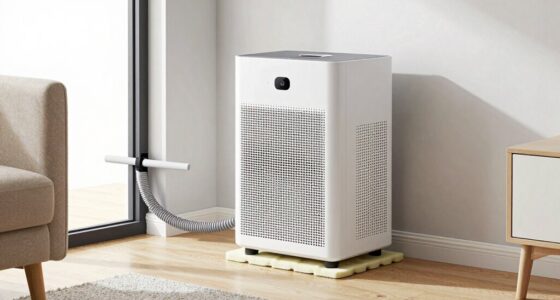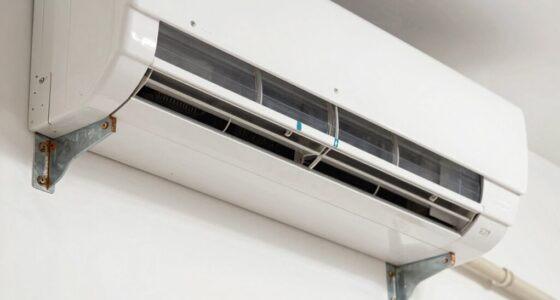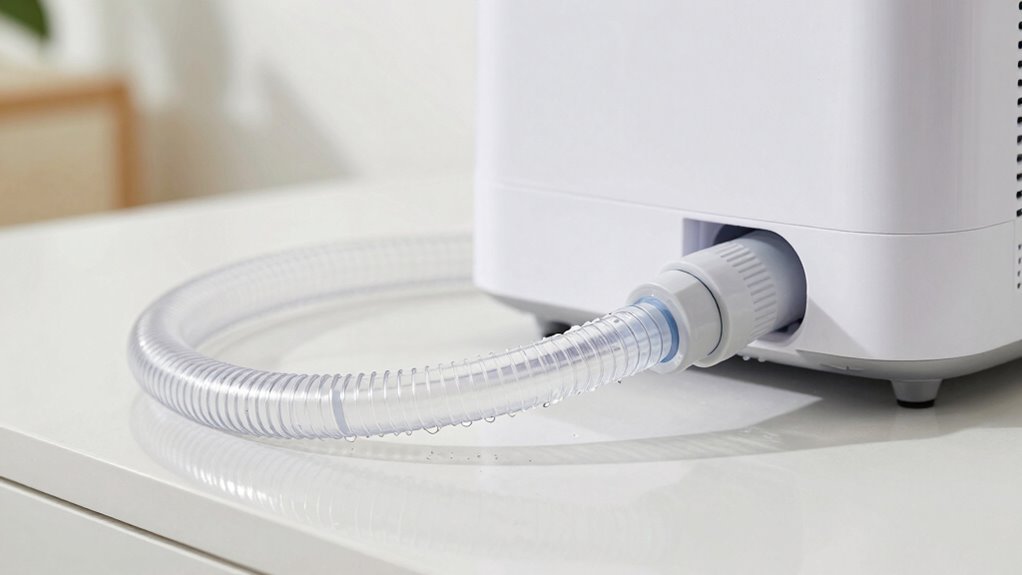

Condensate in your AC is the water formed when humid air cools over the coil. Traditional systems drain it through a hose via gravity, requiring regular maintenance to prevent clogs. Self-evaporation technology uses heat to turn water back into air, reducing the need for external drainage—though it’s less effective in humid environments. Understanding these methods helps you choose the right system; more insights await if you want to learn more.
Key Takeaways
- Drain hoses use gravity to channel condensate outside, while self-evaporation reabsorbs moisture into the air through heat transfer.
- Self-evaporation reduces external drainage needs but is less effective in high humidity or low temperatures.
- Proper maintenance, regardless of method, is essential to prevent mold, leaks, and system inefficiencies.
- Drain hoses require regular cleaning and inspection; self-evaporation depends on optimal environmental conditions for effectiveness.
- Self-evaporation is not a complete replacement for drainage; both systems have limitations and may need combined approaches.
As an affiliate, we earn on qualifying purchases.
What Is Condensate and Why Does Your AC Need to Drain It?
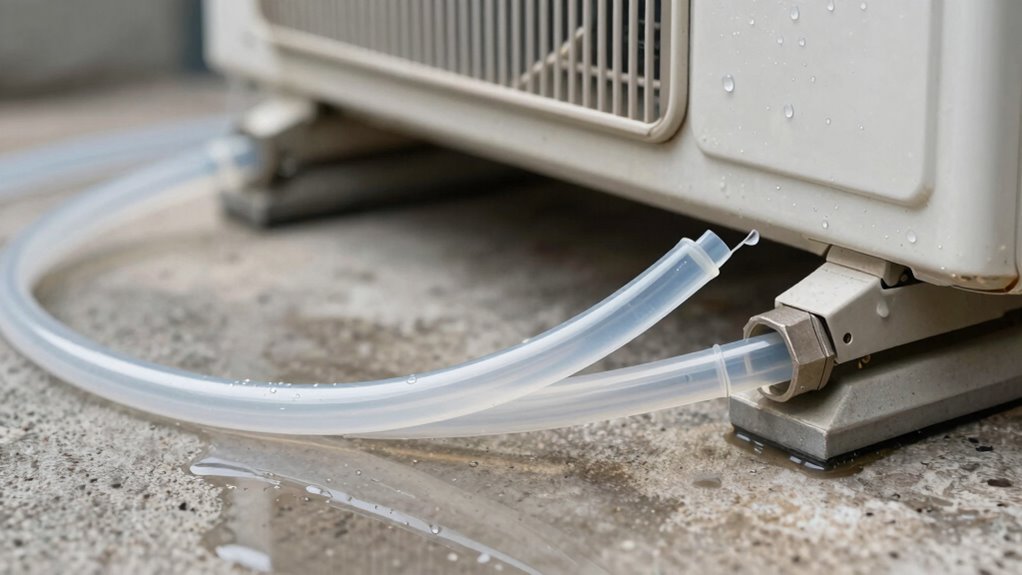
When your air conditioner runs, it cools the air and removes moisture from it through the dehumidification process. As warm, humid air passes over the evaporator coil, the moisture condenses into liquid water, creating condensate. This water needs to be drained to prevent buildup and maintain efficient operation. Your AC system often uses condensate sensors to detect water levels and ensure proper drainage. If these sensors fail or aren’t functioning correctly, excess condensate can cause leaks or system shutdowns. Draining the condensate is essential because it prevents water damage and mold growth inside your unit. Proper drainage systems are vital components that help prevent issues related to condensate buildup. Additionally, some systems claim to utilize ‘self-evaporation’ to reduce the need for manual drainage, but this process may not be effective in all conditions or system types. [Understanding the limitations of self-evaporation] can help you make informed decisions about your system’s maintenance. Effectively managing this moisture is crucial for the longevity and efficiency of your AC, preventing potential costly repairs. By effectively managing this moisture, your AC can operate smoothly, providing cool, comfortable air without the risk of excess humidity or system malfunction.
self-evaporating portable air conditioner
As an affiliate, we earn on qualifying purchases.
As an affiliate, we earn on qualifying purchases.
How Do Drain Hoses Remove Condensate From Your AC?
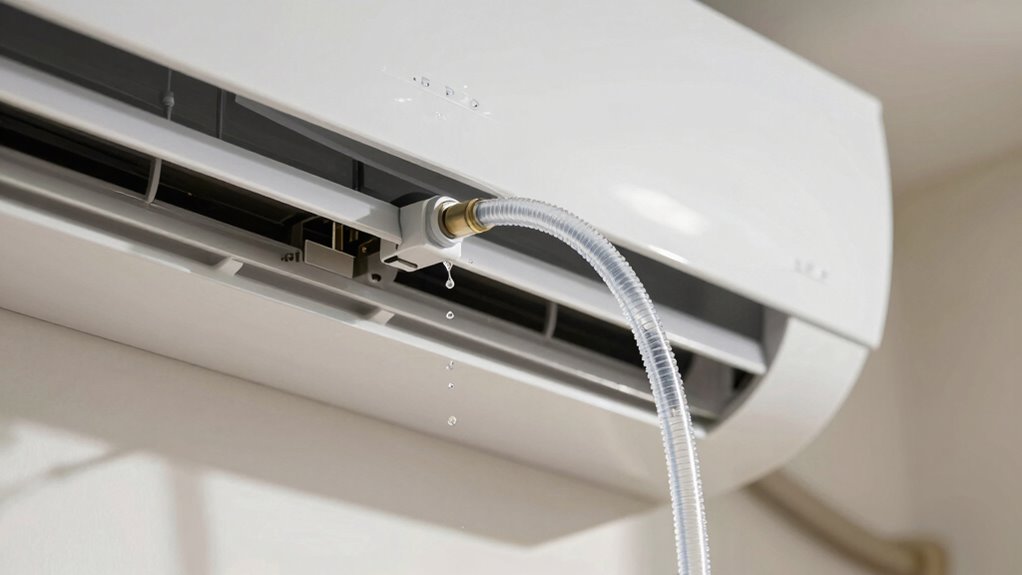
Drain hoses carry condensate away from your AC unit through gravity, ensuring water doesn’t pool inside. However, they rely on proper positioning and clear pathways, since self-evaporation can only handle small amounts of moisture. If the hose gets clogged or misaligned, excess water can cause issues. Proper installation and calibration of the drainage system can improve condensate removal efficiency and prevent potential water damage. Additionally, understanding the water removal methods can help you choose the most effective solution for your system. Recognizing the importance of energetic alignment in maintaining your system’s efficiency can further enhance overall performance and longevity. Regular maintenance and system checks can also prevent clogs and ensure proper drainage, maximizing the effectiveness of condensate removal. Implementing proper drainage design can further optimize water flow and prevent backups, safeguarding your system from water-related issues.
Drain Hose Functionality
A drain hose works by directing the condensate, which forms on your air conditioner’s cooling coils, away from the unit to prevent water buildup. The hose connects to a drain pipe that carries the water outside or to a drain. In some systems, a pump system is used to actively move the condensate if gravity alone isn’t enough, especially in setups where the drain pipe can’t be positioned lower than the unit. The pump system ensures continuous removal, preventing overflow or water damage. This setup keeps your AC functioning efficiently by preventing excess moisture from accumulating inside the unit. Proper drainage is crucial for maintaining the longevity and performance of your AC system, as it helps avoid issues like mold and corrosion that can result from standing water. Whether relying on gravity through a drain pipe or a pump system, the drain hose effectively transports condensate away, maintaining reliable operation and preventing issues caused by water pooling.
Self-Evaporation Limitations
While drain hoses effectively remove most condensate, their ability to do so relies on natural evaporation processes that have limitations. Self-evaporation depends on heat transfer, which must warm the collected moisture enough for it to evaporate into the air. However, if the ambient temperature is low or humidity is high, evaporation slows considerably. This hampers moisture management, causing water to accumulate instead of evaporate. Additionally, poor airflow or insufficient heat transfer reduces evaporation efficiency. As a result, self-evaporation may only work reliably under specific conditions, primarily in warmer, drier environments. When these conditions aren’t met, condensate can build up, risking water damage or mold growth. That’s why drain hoses are often necessary, especially in cooler or more humid spaces. Understanding condensation is essential for proper AC maintenance and preventing potential issues.
As an affiliate, we earn on qualifying purchases.
What Is Self-Evaporation Technology in Air Conditioners?
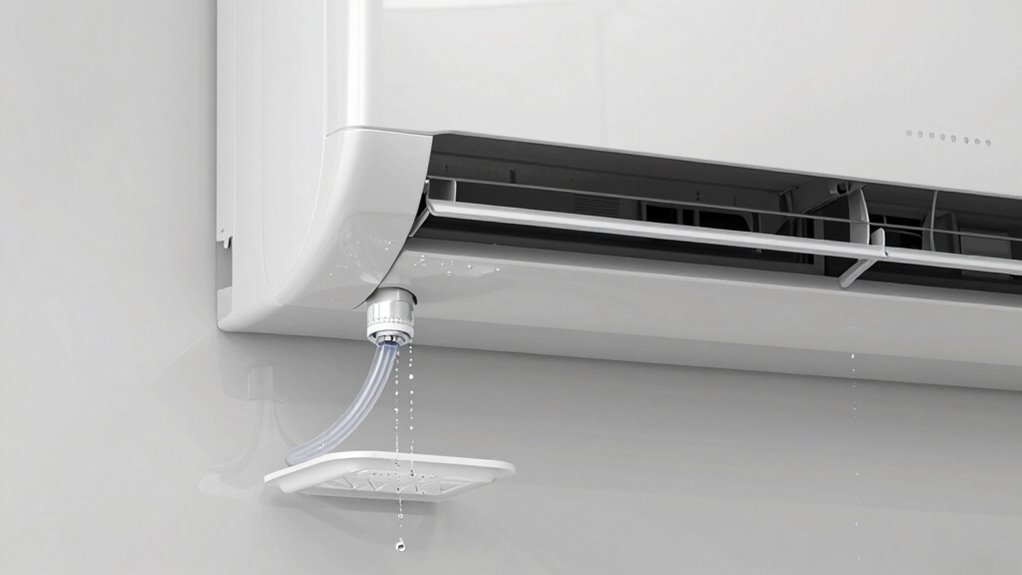
Self-evaporation technology in air conditioners is designed to improve efficiency by automatically handling moisture removal without the need for a traditional drain pan or external drainage system. This system uses heat to evaporate condensed water, reducing the chance of leaks and lowering energy consumption. By minimizing the need for external drainage, your unit runs more effectively and requires less maintenance. To keep your AC performing ideally, follow maintenance tips like regularly cleaning filters and vents, ensuring proper airflow. This technology helps prevent water buildup that can cause mold or damage, ultimately saving you time and money. Additionally, some units incorporate condensate management systems that further enhance moisture control and reliability. Understanding how self-evaporation works allows you to maximize energy efficiency and extend your air conditioner’s lifespan. Moreover, the evaporation process in modern units is optimized to work under various environmental conditions, enhancing overall performance. The self-evaporation feature also minimizes the need for user intervention, making maintenance simpler and more convenient. Proper design and system integration ensure these units operate efficiently across different climates, providing consistent comfort. Incorporating innovative moisture removal methods, these units are increasingly adaptable to diverse humidity levels, further improving efficiency and reliability.
air conditioner drain line cleaning kit
As an affiliate, we earn on qualifying purchases.
As an affiliate, we earn on qualifying purchases.
Does Self-Evaporation Eliminate the Need for Drain Hoses?
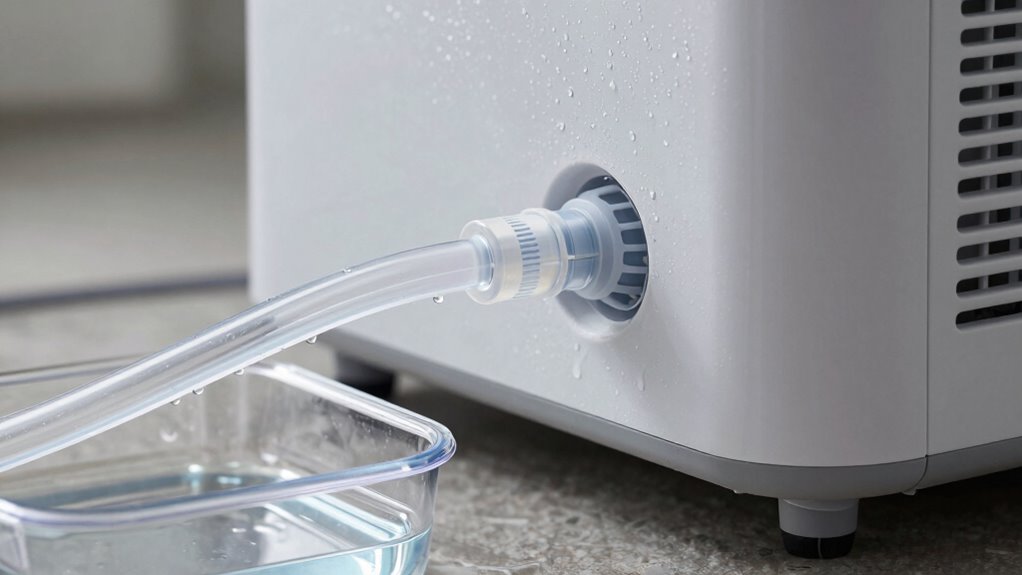
Self-evaporation technology helps remove condensate without a drain hose by recycling moisture into the system. However, it has limitations, especially in high humidity or heavy use, where it can’t handle all the water produced. Understanding how it works and its limits can help you decide if a drain hose is still necessary.
How Self-Evaporation Works
Ever wondered if self-evaporation can replace traditional drain hoses? It works through evaporative cooling, where warm, moist air contacts cooler surfaces inside your unit. This causes the moisture to undergo the condensation process, turning into liquid water. Instead of draining through a hose, the condensate collects in a tray or reservoir. When the water reaches a certain level, some units automatically evaporate it into the surrounding air, reducing the need for a drain hose. This self-evaporation relies on the cycle of condensation and evaporation happening inside the appliance. It’s a clever way to manage moisture without plumbing, but it’s not foolproof. Understanding how this process functions helps you see why some units claim to operate without a drain hose, relying instead on evaporation to handle condensate. Incorporating smart technology and connected equipment can further optimize moisture management and overall efficiency in modern appliances.
Limitations of Evaporative Drainage
While evaporative drainage offers a convenient way to manage condensate, it’s not a perfect solution that completely eliminates the need for drain hoses. Its drainage efficiency can vary depending on humidity levels, temperature, and unit design, often leading to overflow or residual water buildup. Self-evaporation isn’t always dependable in humid environments or during extended use, reducing its effectiveness. Additionally, maintenance requirements remain important; you’ll need to regularly check and clean the unit to prevent mold, bacteria, or mineral buildup that can impair drainage. Relying solely on evaporation might save on initial setup, but it doesn’t guarantee consistent performance. Proper sizing and load‑planning are essential to prevent drainage issues and ensure your system operates reliably. Understanding evaporative capabilities can help set realistic expectations about how well self-evaporation works under different conditions. Recognizing the environmental factors that influence evaporation can help you optimize your setup for better performance. Furthermore, knowing the limitations of self-evaporation can guide you in implementing appropriate backup drainage solutions to avoid potential water damage.
Should You Use Drain Hoses or Self-Evaporation Systems? Pros and Cons
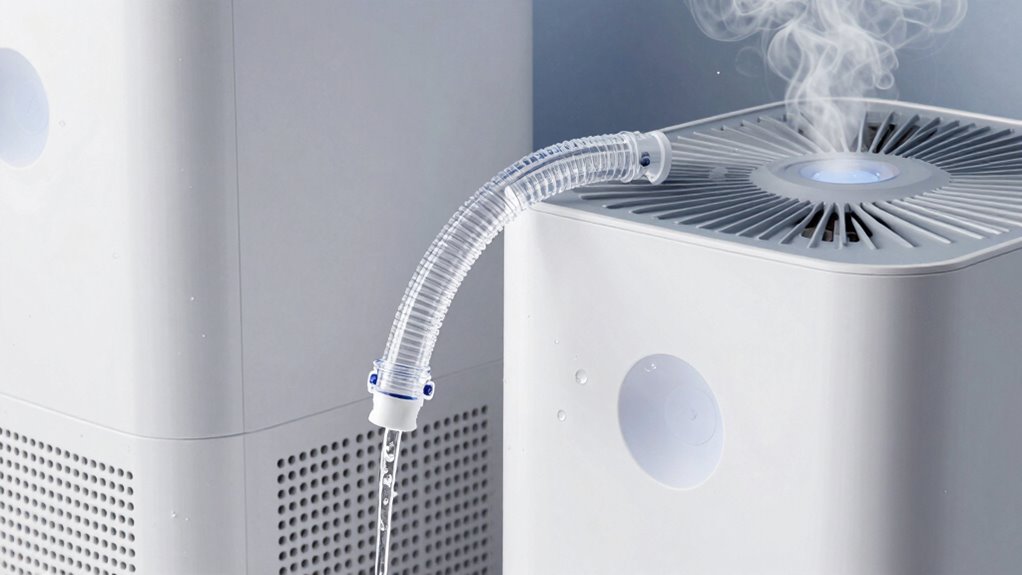
Choosing between drain hoses and self-evaporation systems depends on your specific needs and setup. Drain hoses are simple and cost-effective, often with low installation costs, but they require an accessible drain location and can be less energy-efficient if they cause increased humidity or temperature issues. Self-evaporation systems are designed to reduce drainage needs by evaporating condensate internally, improving energy efficiency and reducing clutter. However, they tend to have higher initial costs and may not work well in humid environments or with larger units. If you prioritize low upfront expenses and straightforward installation, drain hoses are suitable. If you want a cleaner, more energy-efficient solution and are willing to invest more initially, self-evaporation systems could be your best choice. Understanding condensate management can help you choose the most suitable system for your situation. Additionally, proper maintenance practices can extend the lifespan and efficiency of your chosen system. Regular inspection and cleaning of components are essential to prevent clogs and ensure optimal performance. Ensuring proper installation procedures are followed can also prevent potential issues and optimize performance.
Common Myths About AC Condensate Drainage
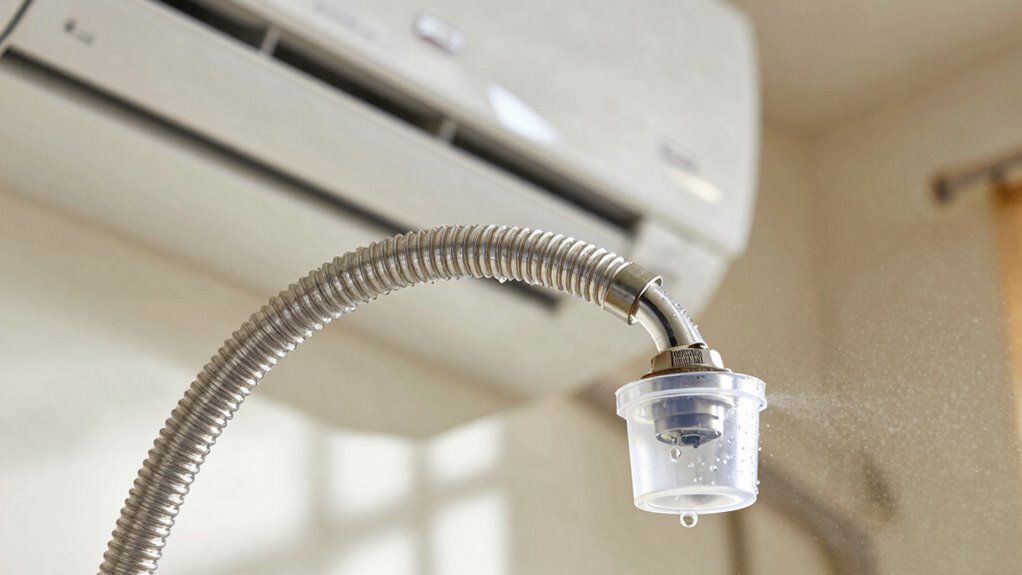
Many people believe that AC condensate drainage is a straightforward process, but several common myths can cause misunderstandings about its operation and maintenance needs. One myth is that a working drain automatically guarantees energy efficiency; however, clogged or improperly maintained drains can reduce system performance and increase energy consumption. Another misconception is that condensate removal requires minimal maintenance, when in reality, regular inspection and cleaning are essential to prevent mold, odors, and water damage. Some assume self-evaporation systems eliminate the need for upkeep, but they still need occasional checks to ensure proper function. Understanding these myths helps you prioritize the right maintenance requirements, keeping your AC running efficiently and avoiding costly repairs caused by overlooked drainage issues.
Troubleshooting Your AC’s Condensate Drainage Problems
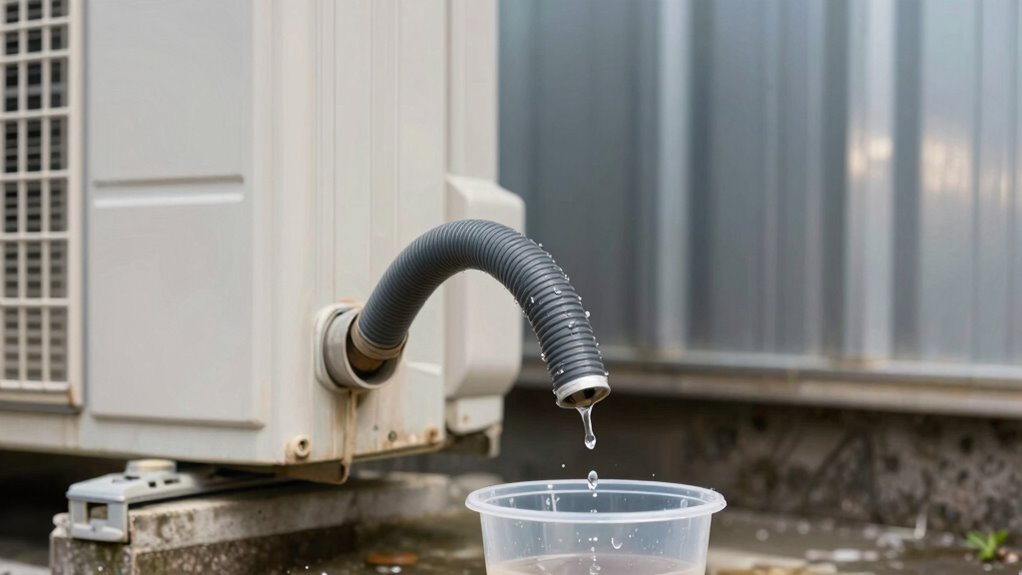
Even though understanding common myths about AC condensate drainage helps prevent misconceptions, real issues often arise from drainage problems that require troubleshooting. If your unit isn’t draining properly, you might notice excess humidity or humidification issues inside your space. Start by inspecting the drain hose for clogs or obstructions—clear any debris or buildup. Ensure the drain pan is clean and free of mold or algae. Regular maintenance tips include flushing the drain line with a mixture of bleach and water to prevent blockages. If water leaks or pooling persists, you may need to check the condensate pump or consider professional cleaning. Addressing these drainage problems promptly helps maintain proper humidity levels, prevents water damage, and keeps your AC functioning efficiently.
Which System Is Best for Your Home or Office?
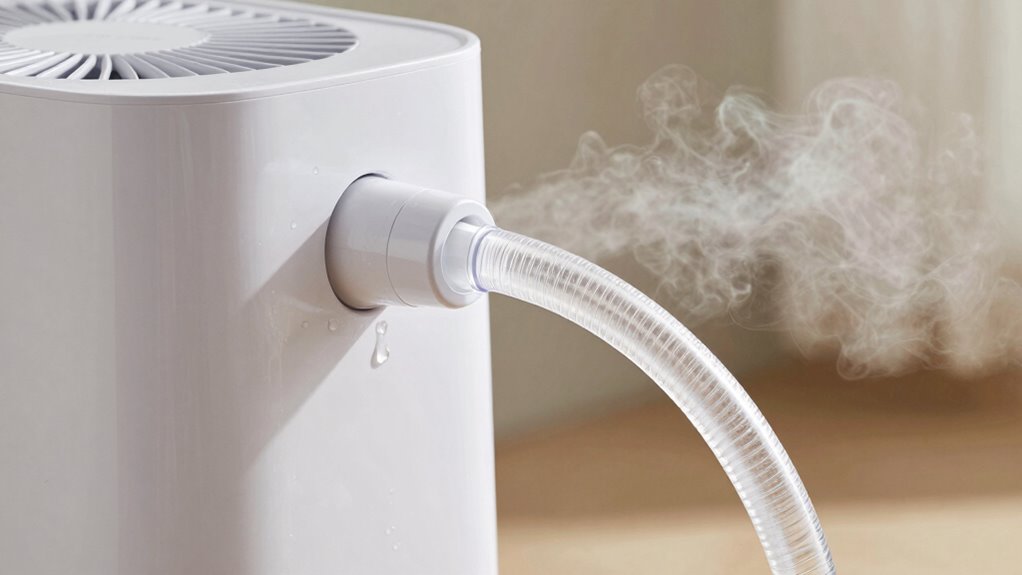
Selecting the right cooling system depends on your specific needs, space size, and budget. If energy efficiency is a priority, a self-evaporating unit reduces ongoing costs but may require more initial investment. For minimal maintenance, drain hose systems are simpler, with fewer parts to service. Consider the following:
- Energy efficiency: Self-evaporating units often save energy by reducing condensate buildup.
- Maintenance requirements: Drain hose systems need regular checks for blockages or leaks.
- Space considerations: Compact units suit small spaces, while larger systems handle bigger areas more effectively.
- Budget: Balance upfront costs with long-term savings on energy and maintenance.
Frequently Asked Questions
Can Condensate Drainage Systems Affect Indoor Air Quality?
Yes, condensate drainage systems can influence indoor air quality. If drainage is blocked or leaks occur, excess moisture can lead to higher humidity levels, creating a perfect environment for airborne mold growth. Properly functioning systems help control humidity, reducing mold risks and improving air quality. Regular maintenance ensures your drainage system works effectively, protecting you from mold and maintaining a healthier indoor environment.
How Often Should I Clean or Maintain My Condensate Drain System?
Your condensate drain system needs regular attention to avoid chaos—think a tiny disaster! You should perform drain maintenance and cleaning at least every 3 to 6 months, depending on usage and environment. Regular cleaning frequency prevents mold, clogs, and water damage, ensuring your system runs smoothly. Check for blockages or algae buildup, and clear them promptly to keep your indoor air quality safe and your AC functioning perfectly.
Are There Energy Efficiency Differences Between Drain Hoses and Self-Evaporation?
Yes, there are energy efficiency differences between drain hoses and self-evaporation. Drain hoses require you to run a pump or drain, which can consume more energy and reduce operational efficiency. Self-evaporating systems, on the other hand, save energy by eliminating the need for drainage or pumping. If you want better energy savings and improved operational efficiency, a self-evaporating system is typically the better choice.
What Are Potential Signs of Condensate Drainage System Failure?
Your condensate drainage system acts like a fragile river—when it fails, warning signs emerge. Watch for blockage buildup that causes water to pool or leak, and mold growth around the unit, signaling moisture escape. These signs indicate your system’s weak link, risking water damage and mold spreading. Act quickly to clear obstructions and prevent costly repairs, keeping your system flowing smoothly like a healthy stream.
Do Different Climate Zones Influence the Choice of Condensate Removal Method?
Yes, different climate zones influence your choice of condensate removal method. In warmer, humid regions, you need climate adaptation by opting for drain hoses to prevent mold and water damage. Conversely, in cooler or dry climates, self-evaporating units may suffice, simplifying regional design. Understanding your climate helps you select the most effective condensate removal system, ensuring efficiency and longevity of your HVAC system.
Conclusion
Understanding how your AC handles condensate is key to avoiding leaks and damage. While self-evaporation sounds convenient, it doesn’t function in all conditions—especially in humid climates where 30% of units still require drainage. Using the right system guarantees efficiency and longevity for your AC. Remember, proper drainage can reduce indoor humidity by up to 50%, making your space more comfortable and healthier. Choose wisely to keep your system running smoothly year-round.