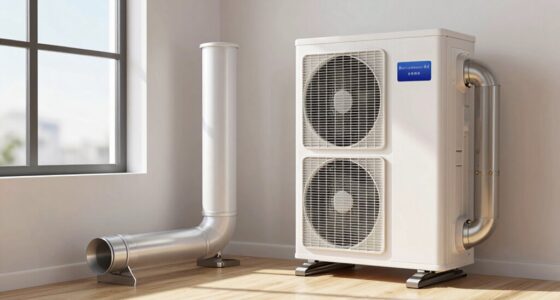
Keeping your AC in top shape is simple when you regularly change filters, clean coils, and prevent odors. Replace filters every 1-3 months to improve airflow and indoor air quality. Clean coils to maintain heat transfer and efficiency, and watch out for odors from mold or dirt—use dehumidifiers or odor neutralizers as needed. Staying on top of these tasks helps your AC run smoothly. For more tips, you’ll discover easy steps to keep your system performing its best.
Key Takeaways
- Regularly replace or clean air filters every 1 to 3 months to improve airflow and indoor air quality.
- Clean evaporator and condenser coils to maintain heat transfer efficiency and prevent system strain.
- Check for ice buildup on coils and ensure refrigerant levels are adequate to avoid cooling issues and odors.
- Maintain proper ventilation and humidity control to prevent mold, mildew, and musty odors inside your home.
- Schedule professional inspections for electrical, refrigerant, and coil cleaning issues to ensure optimal AC performance.
As an affiliate, we earn on qualifying purchases.
Why Changing Your AC Filters Regularly Boosts Performance

Changing your AC filters regularly is one of the simplest ways to improve your system’s performance. The air filter lifespan varies depending on usage, but typically, filters should be replaced every 1 to 3 months. Sticking to a consistent filter replacement schedule guarantees your system runs efficiently and reduces strain on components. When filters become dirty or clogged, airflow drops, forcing your AC to work harder, which increases energy consumption and wear. Regularly swapping out filters keeps indoor air quality high and helps prevent dust, allergens, and debris from circulating. By maintaining a regular filter replacement schedule, you extend your AC’s lifespan, lower energy bills, and avoid costly repairs down the line. It’s a simple step that delivers long-term benefits. Proper maintenance is essential for efficient operation and avoiding unexpected breakdowns, ensuring your system remains reliable during peak usage times. Additionally, choosing the right filters based on your environment, such as high-efficiency HEPA filters, can further enhance air quality and system performance. Regular filter changes also help in reducing dust accumulation, which can negatively impact your AC’s efficiency. Incorporating filter material quality into your selection process can further optimize airflow and filtration efficiency.
As an affiliate, we earn on qualifying purchases.
How to Clean and Maintain Your AC Coils for Maximum Efficiency
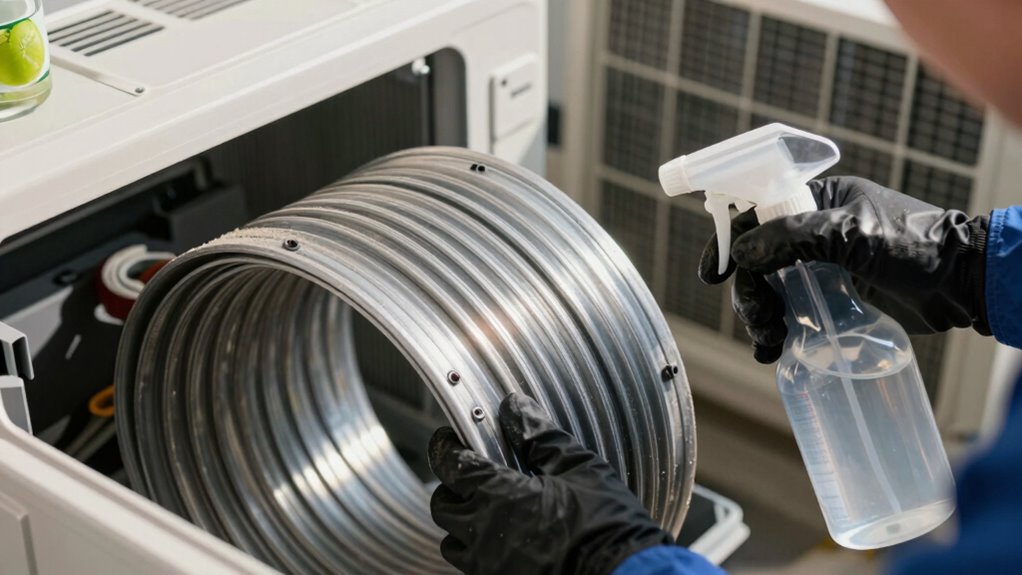
Keeping your AC filters clean helps your system run smoothly, but paying attention to your coils is equally important for efficiency. Coil cleaning removes dirt, dust, and debris that can hinder heat transfer, reducing your system’s performance. Turn off the power before inspecting the coils, then gently clean the fins with a soft brush or coil cleaner. Be careful not to damage the fins, as bent fins can impair airflow. Also, check refrigerant levels to ensure your system isn’t low on coolant, which can cause the coils to freeze or work harder. Proper maintenance of your coils improves heat exchange and helps your AC run efficiently, saving energy and prolonging its lifespan. Regular coil cleaning and refrigerant checks keep your system operating at peak performance. Additionally, inspecting HVAC system components periodically can help identify potential issues before they become costly repairs. For comprehensive system care, consider consulting whole-house water filtration system options to ensure optimal indoor air quality and system longevity. Regularly inspecting and maintaining your AC can prevent the buildup of dirt and debris, further enhancing system efficiency. Incorporating coil fin maintenance into your routine helps prevent fin damage and maintains proper airflow for maximum cooling performance. Furthermore, understanding the importance of coil heat transfer efficiency can lead to better maintenance practices and improved system lifespan.
refrigerant level gauge for HVAC
As an affiliate, we earn on qualifying purchases.
As an affiliate, we earn on qualifying purchases.
Easy Tips to Prevent Odors and Improve Indoor Air Quality
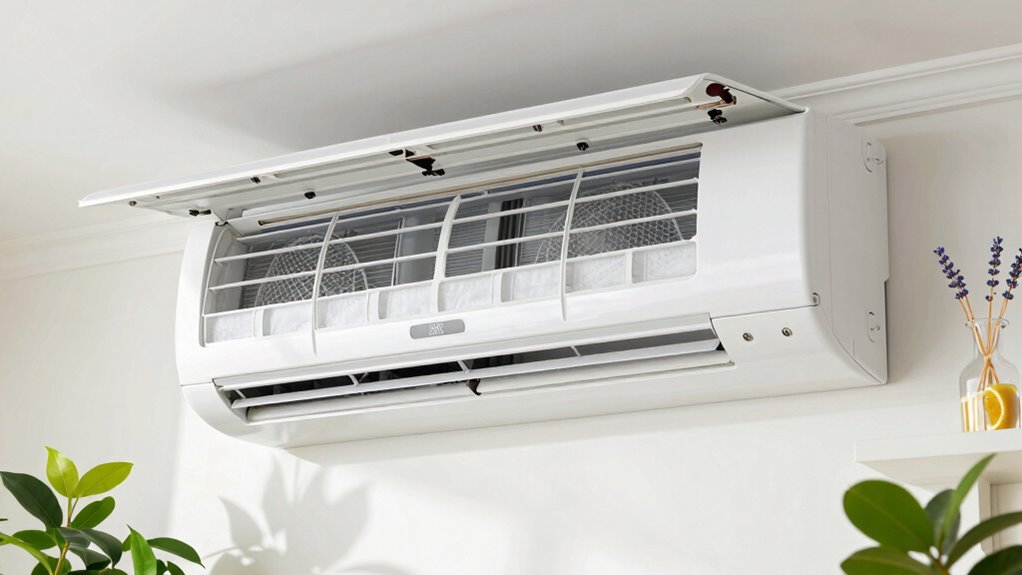
To prevent odors and boost indoor air quality, simple habits can make a big difference. Regularly changing your air filters ensures optimal air purification, reducing odors and airborne pollutants. Keep humidity levels in check with a dehumidifier or humidifier, preventing mold and musty smells. Ventilate your home daily by opening windows or using exhaust fans to refresh indoor air. Use natural air purifiers like houseplants to absorb toxins. Avoid smoking indoors and limit the use of strong chemicals or fragrances. Maintaining proper air circulation is also essential for preventing stale smells and ensuring fresh indoor air. Additionally, understanding how air quality can be affected by indoor activities helps you make informed decisions to maintain a healthier environment. Monitoring indoor air pollutants can help identify sources of poor air quality and address them promptly. Recognizing the influence of dark psychology tactics can also help you stay aware of subtle manipulations that could compromise your mental well-being. Implementing regular maintenance of HVAC systems further enhances overall air quality and reduces potential pollutant buildup.
odor neutralizer for air conditioning
As an affiliate, we earn on qualifying purchases.
As an affiliate, we earn on qualifying purchases.
Routine Maintenance and Troubleshooting Common AC Problems

Regular maintenance is essential to keep your AC running efficiently and prevent common problems. Start by understanding evaporator basics—clean coils guarantee proper heat absorption and airflow. Dirty or frozen evaporator coils can cause your system to work harder, leading to higher energy bills and reduced cooling. Check refrigerant levels regularly; low refrigerant can result in insufficient cooling and ice buildup on coils. If your AC isn’t cooling properly, listen for unusual noises or notice inconsistent airflow, which may indicate a clogged filter or a problem with the blower. Always inspect the thermostat settings and ensure vents are unobstructed. Additionally, ventilation considerations play a crucial role in maintaining optimal system performance. Proper airflow management ensures that your AC operates at peak efficiency. Maintaining air quality also contributes to system longevity and comfort. For optimal performance, consider incorporating outdoor unit maintenance to prevent debris accumulation and ensure proper operation. Regularly inspecting and replacing air filters can significantly improve system efficiency and indoor air quality. Troubleshooting these issues early helps avoid costly repairs and keeps your system operating smoothly. When in doubt, consulting a professional is the safest course.
Signs You Need a Professional for AC Repairs or Service

Recognizing when to call a specialist can save you time, money, and frustration. If your AC isn’t cooling effectively, it’s time to seek expert help. Signs include unusual noises, frequent cycling, or inconsistent temperatures. You might notice your thermostat calibration is off, causing inaccurate readings and inefficient cooling. Low refrigerant levels can also be a red flag, often resulting in reduced performance and higher energy bills. Additionally, if your system struggles to turn on or keeps shutting down, professional diagnosis is necessary. Don’t ignore lingering odors or excessive humidity, which might indicate mold or drainage issues. Proper system diagnostics and navigation and mapping of your system can help identify underlying problems early. Being aware of diagnostic tools and their proper use can further streamline the troubleshooting process. Consulting a professional can also help you determine if filter replacement or coil cleaning is needed to improve efficiency. Addressing these problems early prevents costly repairs and ensures your AC runs smoothly all season. Trust a professional to handle complex tasks like refrigerant recharge or thermostat adjustments, especially when refrigerant levels are low or fluctuating.
Frequently Asked Questions
How Often Should I Replace My AC Filters During Peak Usage?
During peak usage, you should replace your AC filters every 30 to 60 days to maintain ideal filter lifespan and air quality. If you have pets, allergies, or live in a dusty area, consider changing them more frequently. Regular filter replacements prevent dust buildup and improve airflow, ensuring your system runs efficiently. Keep an eye on the filter’s condition and replace it promptly to keep your indoor air fresh and healthy.
Can Duct Sealing Improve My AC System’s Efficiency and Air Quality?
Irony strikes—sealing your ducts can actually boost your AC’s efficiency and air quality. By reducing air leakage through duct sealing, you’ll notice cooler, cleaner air and lower energy bills. It’s a smart move that minimizes wasted cool air, helping your system run smoothly. So, don’t overlook duct sealing; it’s the simple fix that transforms your home’s comfort and air cleanliness effortlessly.
What Are the Best Natural Odor Prevention Methods for My AC?
To naturally prevent odors in your AC, try air freshener alternatives like essential oils or simmering herbs to keep your space smelling fresh. Regularly clean your filters and coils to prevent mold buildup, which causes musty smells. Additionally, guarantee proper humidity levels and fix leaks promptly, as these mold prevention tips stop mold growth that contributes to odors. These simple steps keep your AC smelling clean without harsh chemicals.
How Does Humidity Affect AC Performance and Maintenance Needs?
Humidity levels directly impact your AC’s performance and maintenance needs. When humidity control is off, high moisture levels make your system work harder to cool and dehumidify the air, increasing wear and tear. You’ll notice more frequent filter changes, coil cleaning, and potential mold growth. To keep your AC running efficiently, maintain proper moisture levels, use a dehumidifier if needed, and guarantee your system is well-maintained for ideal humidity control.
Are There Eco-Friendly Options for AC Filters and Cleaning Products?
Yes, eco-friendly filters made from sustainable materials like activated charcoal or plant-based fibers are available, helping you reduce environmental impact. For cleaning, opt for natural cleaning products that contain no harsh chemicals, ensuring safer air quality. These eco-friendly options are effective at maintaining your AC’s performance while minimizing your carbon footprint. Incorporating eco-friendly filters and natural cleaning methods makes your AC maintenance more sustainable and healthier for your home environment.
Conclusion
Keeping up with your AC maintenance is key to avoiding unexpected breakdowns and costly repairs. Regularly changing filters, cleaning coils, and preventing odors can extend your system’s life and improve air quality. But what if a hidden issue is lurking, waiting to strike when you least expect it? Stay vigilant, follow these simple steps, and keep your cool—because when that surprise problem hits, you’ll want to be ready. Don’t wait—your comfort depends on it.