
🔍 Read the full analysis: The 12 Questions About AI That Everyone's Curious To Know on ThorstenMeyerAI.com
TL;DR
This article covers the 12 most asked questions about AI, explaining how AI systems like ChatGPT work, their capabilities, limitations, and what remains uncertain. It provides a comprehensive overview for general readers.
A virtual museum created by Thorsten Meyer AI has addressed the 12 most common questions about artificial intelligence, offering clear, accessible explanations for a general audience. This initiative aims to demystify AI’s workings, limitations, and implications, helping users understand what AI can and cannot do today.
The museum explores fundamental questions such as what AI actually is, how systems like ChatGPT generate responses, and whether they understand or feel. It explains that most AI today is based on machine learning, which involves training on vast amounts of data to recognize patterns. Chatbots like ChatGPT generate answers by predicting the next word based on learned probabilities, rather than understanding or consciousness. The training process involves billions of adjustments to improve accuracy, but AI models lack genuine understanding or feelings. They can produce convincing but incorrect information—known as hallucinations—because they predict words that sound plausible, not necessarily true. Their knowledge is limited to the data they were trained on, often ending at a fixed cutoff date, unless they have web-search capabilities. The way to ask AI questions effectively is to provide clear, detailed prompts, as they cannot read minds. Despite these capabilities, AI systems do not possess consciousness or emotions, and their responses are purely computational. Ongoing developments include improving accuracy, reducing hallucinations, and enabling real-time web searches, but many questions about their true understanding and future roles remain open.AI, explained · A field guide
The 12 Questions About AI That Everyone’s Curious To Know
A clear guide to what artificial intelligence does, how tools like ChatGPT produce answers, and where their limits still matter. Explore the basics, the risks, and the questions that remain open.
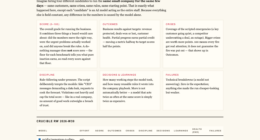
How AI works, in plain language
Modern AI learns patterns from examples. Those patterns help it generate useful responses, but they do not guarantee understanding or accuracy.
What is AI?
Software that performs tasks associated with intelligence. Most current systems learn patterns from data rather than follow only hand-written rules.
How does machine learning work?
A model studies many examples and adjusts billions of internal values to improve its predictions.
How does ChatGPT answer?
It predicts likely next words from the conversation and learned patterns, building a response one piece at a time.
Does AI understand what it says?
Current models can use context in sophisticated ways, but they do not have human-like comprehension or conscious awareness.
Can AI feel emotions?
No evidence shows that today’s AI experiences feelings. Emotional-sounding language is generated computation.
Does AI know everything?
No. A model’s built-in knowledge reflects its training data and may stop at a cutoff; web search can add current sources.
What happens when you ask?
AI output is a learned prediction process. Clear instructions help shape the result, while verification remains a human task.
Give context
State the goal, audience, background, and any useful source material.
Predict patterns
The model calculates likely continuations from learned language patterns.
Generate text
It assembles a fluent answer that fits the prompt and its probabilities.
Check important claims
Confirm facts with reliable sources, especially when stakes are high.
“AI models predict words that sound right, not facts they have checked.”
That is why a confident tone is not proof. Models can produce plausible but incorrect claims, often called hallucinations. Clear prompts improve relevance; they cannot guarantee truth.
Capabilities, limits, and practical risks
AI can help draft, summarize, explain, and explore ideas. Its output still needs context, judgment, and oversight.
How do I get better answers?
Be specific. Include context, constraints, desired format, and examples; refine the prompt when the first response misses the mark.
Why does AI make things up?
It predicts plausible language rather than checking every claim against reality or an authoritative source.
Can AI use current information?
Some tools search the web or connect to live sources. Without that access, answers may rely on older training data.
What risks should I watch for?
Misinformation, privacy exposure, bias, and overreliance can cause harm without careful use and oversight.
Who stays responsible?
People and organizations remain responsible for decisions, especially in education, work, health, and public services.
What remains uncertain?
Reliability, social effects, regulation, and whether machines could ever have genuine understanding remain debated.
Progress is real; the big questions remain
Researchers and policymakers are working on more reliable, explainable systems and clearer rules for responsible deployment.
Better accuracy, fewer hallucinations, stronger context handling, and easier access to real-time information.
Whether AI could ever be conscious, how it should be governed, and how its effects on daily life and work will unfold.
Why Understanding AI’s Capabilities and Limits Matters
Understanding how AI systems like ChatGPT function is crucial for users, developers, and policymakers. It helps prevent overreliance on AI for factual accuracy, highlights potential risks such as hallucinations, and informs responsible use. Recognizing AI’s limitations also guides expectations about its role in workplaces, education, and decision-making, ensuring that humans remain in control. As AI continues to evolve rapidly, awareness of its true nature can prevent misconceptions and foster informed discussions about regulation, ethics, and future applications.
As an affiliate, we earn on qualifying purchases.
Foundations and Recent Advances in AI Knowledge
Artificial intelligence, particularly machine learning, has advanced significantly over the past decade. Most current AI models are large language models trained on enormous datasets of text, enabling them to generate coherent responses. Early systems were rule-based, but modern AI learns from examples, improving versatility and performance. Recent developments include web-search integration and better prompt engineering. The field remains dynamic, with ongoing research into making AI more reliable, explainable, and capable of understanding context better. However, fundamental questions about AI consciousness and true understanding remain unresolved, with experts divided on whether AI can ever possess genuine cognition.
„Most AI today is a computer program that learns from examples instead of following rules a person wrote.“
— Thorsten Meyer
As an affiliate, we earn on qualifying purchases.
Unanswered Questions About AI’s Future and Understanding
Many questions about AI remain open. It is unclear whether future AI will develop genuine understanding or consciousness, or if current limitations like hallucinations and knowledge cutoff dates will be fully overcome. The potential for AI to acquire self-awareness or emotional capacity is still speculative, with experts divided on whether this is possible or desirable. Additionally, the long-term societal impacts and regulatory frameworks are still evolving, leaving many uncertainties about how AI will integrate into daily life and work.
As an affiliate, we earn on qualifying purchases.
Upcoming Developments in AI Capabilities and Regulation
Expect ongoing improvements in AI accuracy, contextual understanding, and real-time web integration. Researchers are working on reducing hallucinations and making responses more reliable. Regulatory efforts are also intensifying globally to establish standards for safe and ethical AI deployment. Public education initiatives aim to improve understanding of AI’s true capabilities and limitations. In the near term, AI tools will become more integrated into everyday applications, but key questions about consciousness, ethics, and societal impact will continue to be debated and studied.
As an affiliate, we earn on qualifying purchases.
Key Questions
Can AI systems truly understand what they say?
No, current AI systems do not possess genuine understanding or consciousness. They generate responses based on pattern recognition and probability, not comprehension.
Why do AI models sometimes produce false information?
This occurs because AI predicts words that sound plausible rather than verifying facts, leading to hallucinations or confident but incorrect answers.
Will AI ever develop feelings or consciousness?
There is no consensus among experts. Most agree that current AI lacks true consciousness or emotions, and whether it will develop these remains an open question.
How can I improve my interactions with AI chatbots?
Providing clear, detailed prompts with context and specific instructions helps AI generate better responses. Avoid vague questions for more accurate answers.
What are the biggest risks of AI today?
Risks include misinformation from hallucinations, privacy concerns, and overreliance on automated systems without proper oversight. Responsible use and regulation are essential.
Source: ThorstenMeyerAI.com