
A first-person report by Thorsten Meyer.
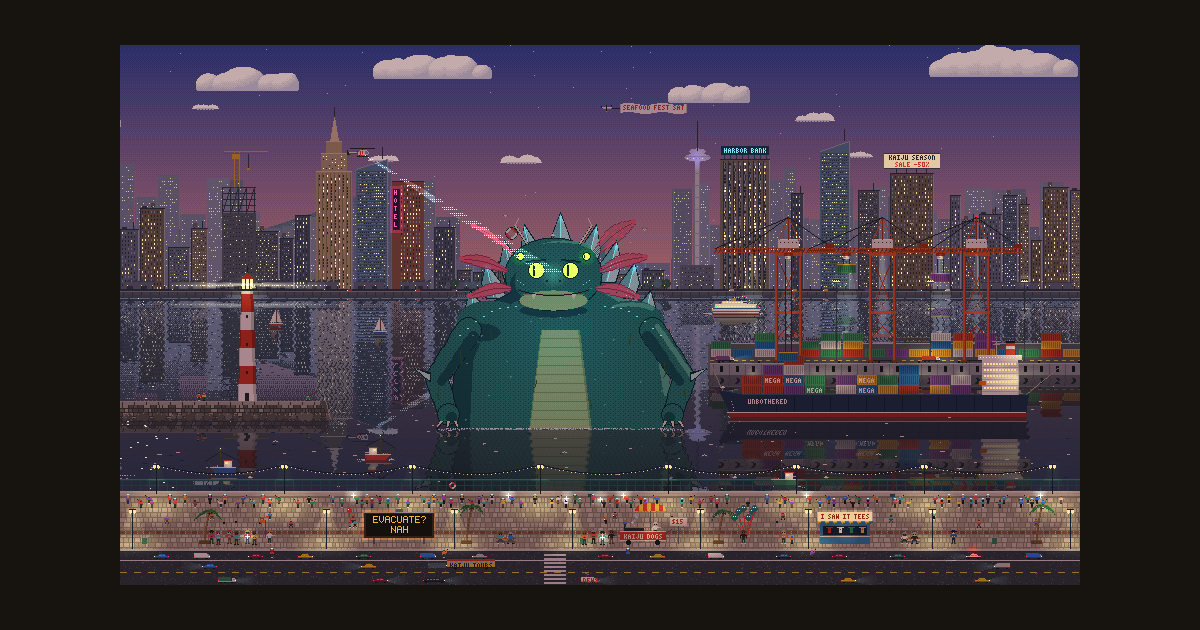
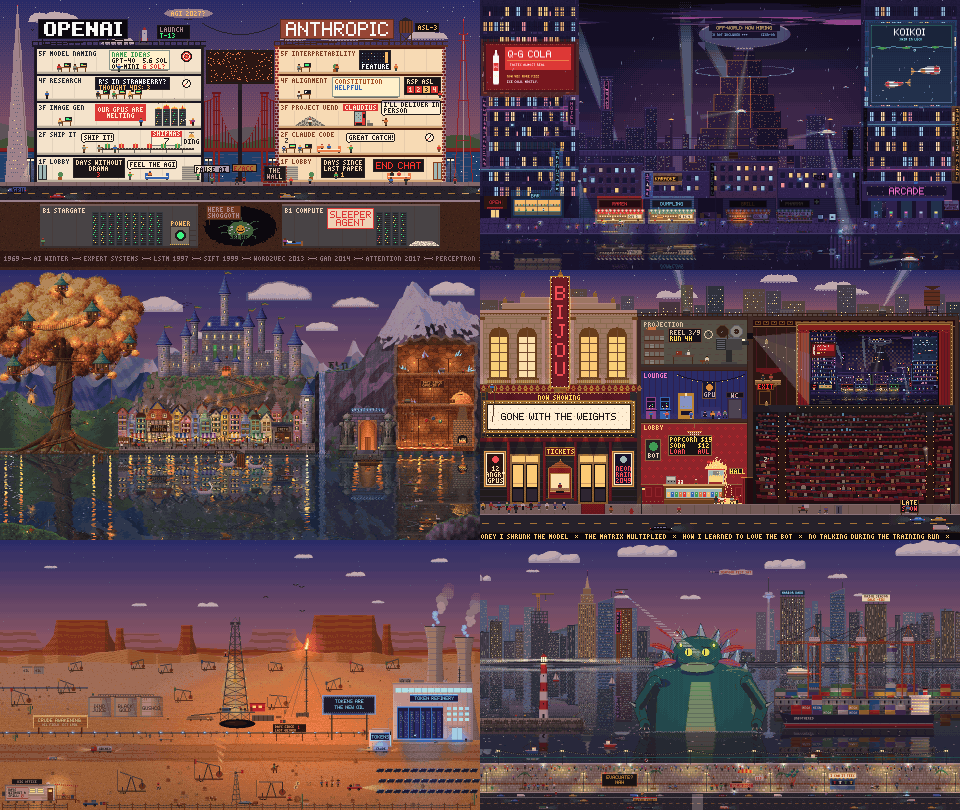
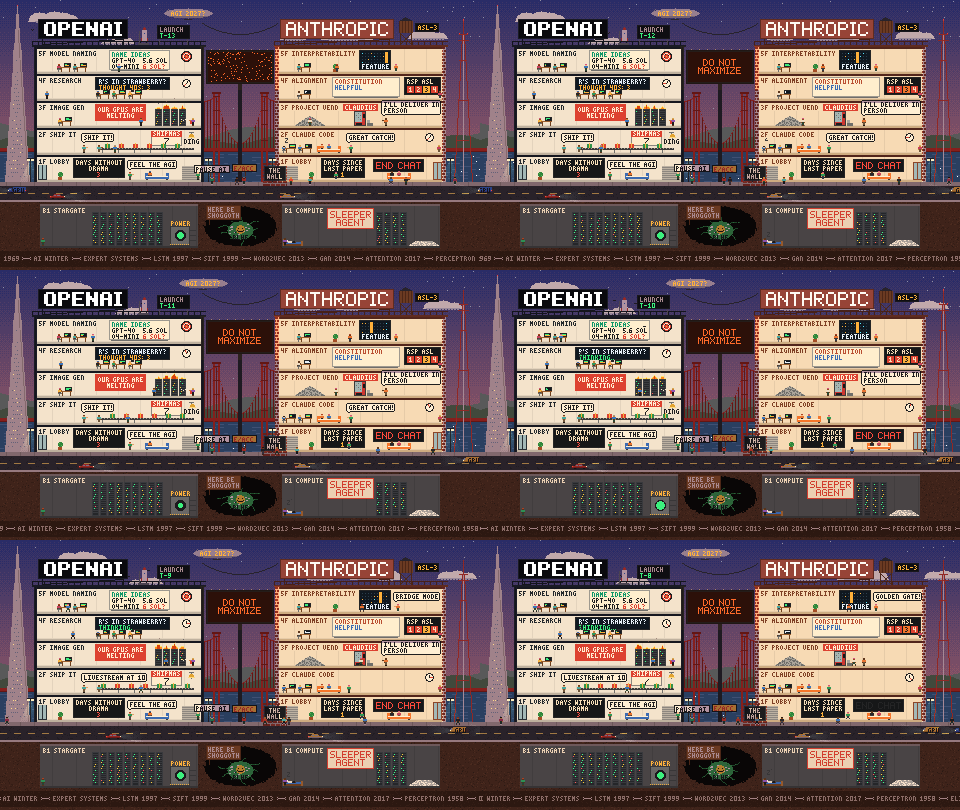
Two AI labs as waterfront towers, Apple and Microsoft under opposite weather, a neon megacity in the rain and a sea monster the whole harbour is filming: Pixel Rivals is a gallery of eleven pixel-art dioramas that run live in the browser, day and night.
I built it with an AI coding assistant, starting from eight reference images and a wish list of rivalries and movie nights. About a day later there was a pixel engine written from scratch and eleven living scenes. Today they go live at pixelrivals.com.
What you will find
- Frontier Row: OpenAI and Anthropic as two waterfront towers. A model-naming whiteboard, „R’s in strawberry?“, GPUs that are melting, a vending-machine AI promising to deliver in person, and a shoggoth in the cave under the street.
- Infinite Loop vs Redmond: Apple and Microsoft side by side. Sunshine and a „Courage“ lab on one side, drizzle, a Clippy memorial and an update stuck at 99 % on the other.
- Neon Rain 2049: a rain-soaked neon megacity with noodle stalls, flying cars and a blimp that is always hiring.
- The Bijou: an old movie palace whose big screen plays the Neon Rain scene live, a scene inside a scene.
- Crude Awakening: an oil field at sunset, until the data centre next door starts pumping TOKENS into the same pipeline.
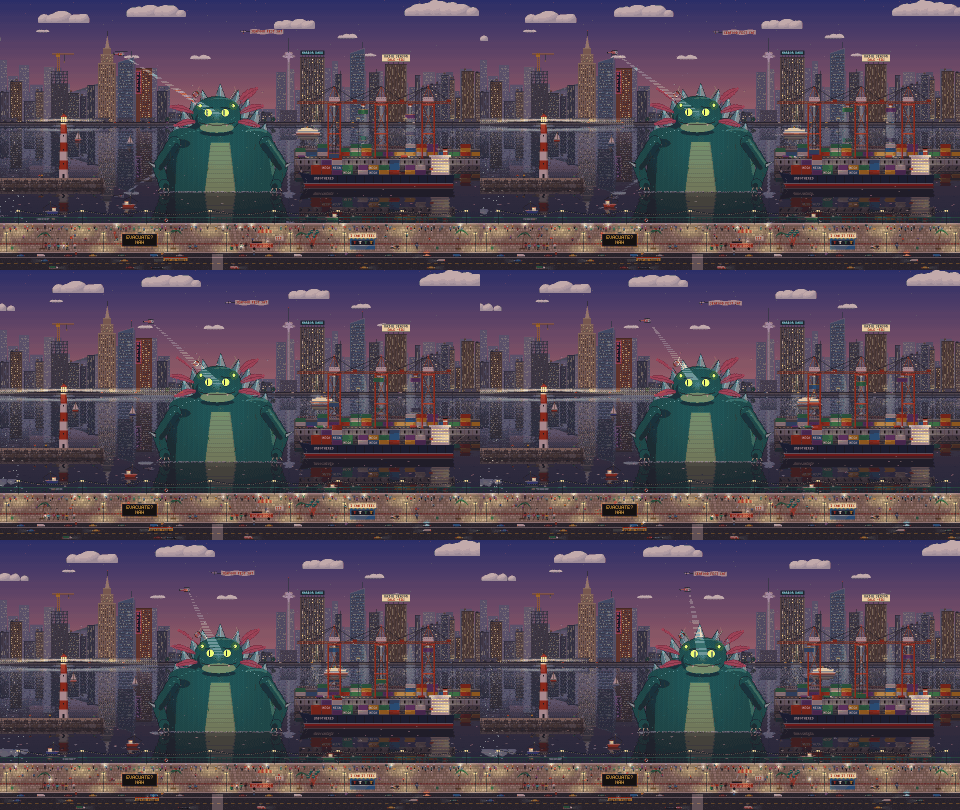
- Kaiju Harbor: once a loop a sea giant surfaces in the bay, and the whole promenade takes selfies.
- Plus a cozy toy tower, a fantasy kingdom with a dwarf hall under the mountain, a corner bar, an awards night and a casino heist that runs its plan every sixty seconds.
Built in code, not generated
There is no image generator involved. Every building, raindrop and pedestrian is drawn by code, pixel by pixel, from a small engine the AI wrote for this project. That is why the scenes can run forever without a video file, change from day to night in real time, and still export as crisp 1080p clips.
Nine of the scenes were built in parallel by separate AI agents, each allowed to touch only its own diorama. A lead agent reviewed every result and ran fourteen automatic checks before accepting it: the loop has to be seamless, the scene has to keep moving, and nothing may go pitch-black at midnight.
Gossip, with footnotes
The company duels are parody, but the jokes are not invented. Each factual gag is listed with its source on the scene page, so you can read the original story. There are no real logos and no named individuals, just the running jokes of an industry that takes itself very seriously.
A new scene every Thursday
Pixel Rivals grows by one diorama a week, alternating company duels with movie and place scenes. Daily clips run on X at @pixelrivalsart. If you know a rivalry that deserves its own towers, write to contact@pixelrivals.com.