
📊 Full opportunity report: Your Coding Agent Is an Attack Surface: The Claude Code Security Reckoning on ThorstenMeyerAI.com — validation score, market gap, and execution plan.
TL;DR
Multiple security flaws in Claude Code have been disclosed, allowing attackers to hijack tokens and execute malicious code. While some issues are patched, a critical chain remains unpatched by design, highlighting risks for developer tools near production environments.
Security researchers have identified multiple vulnerabilities in Claude Code, a developer agent tool, that enable silent token theft and remote code execution, posing significant security risks for organizations integrating it into their workflows. While the company has patched some issues, a critical attack chain remains unpatched by design, raising concerns about the security of agent-based developer tools.
Research from Mitiga Labs and Check Point Research revealed three main flaws in Claude Code: a silent token hijacking via malicious npm packages, pre-prompt code execution vulnerabilities, and exposure of source code that facilitates social engineering attacks. The token theft flaw involves a malicious package that rewrites the tool’s configuration file, allowing attackers to intercept OAuth tokens used for SaaS integrations, with activity appearing legitimate to logs and network monitoring. Anthropic responded quickly to some disclosures, patching the code execution vulnerabilities, but the token hijacking chain remains unpatched because Anthropic considers it out of scope, citing user-installed packages as the cause. Meanwhile, a source code leak has been exploited for social engineering, with attackers creating fake repositories to deliver malware. All these issues highlight that configuration files and repository artifacts in developer tools are active attack surfaces, blurring the line between passive settings and live execution paths. The core concern is that these vulnerabilities allow malicious actors to operate within the trust boundaries of developer environments, which are closer to production systems than traditional browser sessions.Your Coding Agent Is an Attack Surface
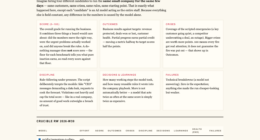
● SecurityThree disclosed flaws turned Claude Code’s local config and MCP integrations into silent paths for token theft and code execution. Some fixes are yours to make — and the lesson applies to every agentic dev tool, not one.
The config files most teams treat as passive metadata are, in practice, active execution paths.
~/.claude.json, reroutes MCP traffic, and intercepts long-lived OAuth tokens for GitHub, Jira, Confluence.How the unpatched Mitiga path works — at the level its researchers published. (Defensive overview, no exploit detail.)
~/.claude.json.For teams running Claude Code — or any coding agent — in production.
~/.claude.json/permissions; disconnect what you don’t use.Anthropic patched the Check Point CVEs fast — responsible disclosure worked. The npm post-install hook is an industry-wide supply-chain risk class, not Anthropic’s invention.
Anthropic calls the Mitiga chain „out of scope.“ But consenting to install a package isn’t consenting to having your SaaS credentials intercepted — and plaintext tokens in the router file turn a generic risk into a specific one.
Independent commentary, produced with AI assistance under human editorial oversight; the views are the author’s own and may change. This is security analysis and opinion, not professional security, legal, or financial advice; verify specifics against vendor advisories and the primary research before acting. It describes publicly disclosed vulnerabilities at the level reported by their researchers and is for defensive purposes only — no exploit code or attack instructions. Sources: Computerwoche (Anjali Gopinadhan Nair), Mitiga Labs, Check Point Research, SecurityWeek, all-about-security, and Anthropic’s documentation, read as of June 2026. References to companies, researchers, and CVEs are factual and analytical and imply no affiliation or endorsement.
Implications for Developer Security and Supply Chain Risks
The vulnerabilities in Claude Code underscore a broader security challenge: developer tools that integrate deeply with cloud services and local environments can become silent attack vectors. As organizations increasingly rely on AI-assisted development tools, these flaws highlight the need for stringent security measures, including better control over configuration files, supply chain vetting of packages, and monitoring for unusual activity. The fact that some flaws remain unpatched by design raises questions about the security assumptions behind agent-based development workflows. If these attack surfaces are exploited, it could lead to credential theft, unauthorized code execution, and potentially, supply chain compromises that impact multiple organizations.
As an affiliate, we earn on qualifying purchases.
Broader Trends in AI Developer Tool Security
The disclosures come amid growing awareness of security vulnerabilities in AI-assisted development environments. Previous incidents involved similar issues with code execution and credential leaks, often related to supply chain risks and misconfigured integrations. Notably, the vulnerabilities in Claude Code echo broader patterns: configuration files and repository hooks are active, executable paths that can be manipulated by malicious actors. The recent leaks of source code further fueled attackers’ ability to craft convincing social-engineering campaigns. While Anthropic has responded to some disclosures, the ongoing presence of unpatched attack chains illustrates the inherent risks in tightly coupled developer tools that operate with high trust and broad access.
„The core issue is that configuration files and repository artifacts are not passive metadata; they are active execution paths that can be hijacked to route traffic or run malicious code.“
— Thorsten Meyer, security researcher
As an affiliate, we earn on qualifying purchases.
Unpatched Attack Chain and Broader Industry Implications
It is not yet clear whether Anthropic will patch the remaining token hijacking flaw or if other agent-based developer tools face similar vulnerabilities. The broader industry response to these findings and the adoption of stricter security controls remain ongoing developments.
As an affiliate, we earn on qualifying purchases.
Next Steps for Mitigating Agent-Based Developer Tool Risks
Organizations should review their use of AI developer tools, especially configurations and repository hooks, for potential active attack surfaces. Developers and security teams are advised to monitor for unusual activity and consider implementing stricter controls on package installations and configuration management. Industry-wide, there may be increased scrutiny on supply chain security practices and the development of standardized safeguards for agent-based development environments. Anthropic is expected to release further patches or guidance as the security community continues to evaluate these vulnerabilities.
developer environment security software
As an affiliate, we earn on qualifying purchases.
As an affiliate, we earn on qualifying purchases.
Key Questions
What specific vulnerabilities were found in Claude Code?
Researchers identified three main issues: a silent token theft via malicious npm packages, pre-prompt code execution vulnerabilities, and exposure of source code used for social engineering.
Why are some vulnerabilities still unpatched?
Anthropic considers certain flaws, like the token hijacking chain, out of scope because they involve user-installed packages, and has prioritized patching other issues.
How can organizations protect themselves now?
Organizations should audit their configuration files, monitor for suspicious activity, and enforce controls on package installations and repository access.
Could these vulnerabilities affect other developer tools?
Yes, the pattern of active configuration files and repository hooks being exploited as attack surfaces is common across many agent-based development tools, not just Claude Code.
Source: ThorstenMeyerAI.com