

📊 Full opportunity report: Anonymous daily check-ins for 12-step sponsors on IdeaNavigator AI — validation score, market gap, and execution plan.
TL;DR
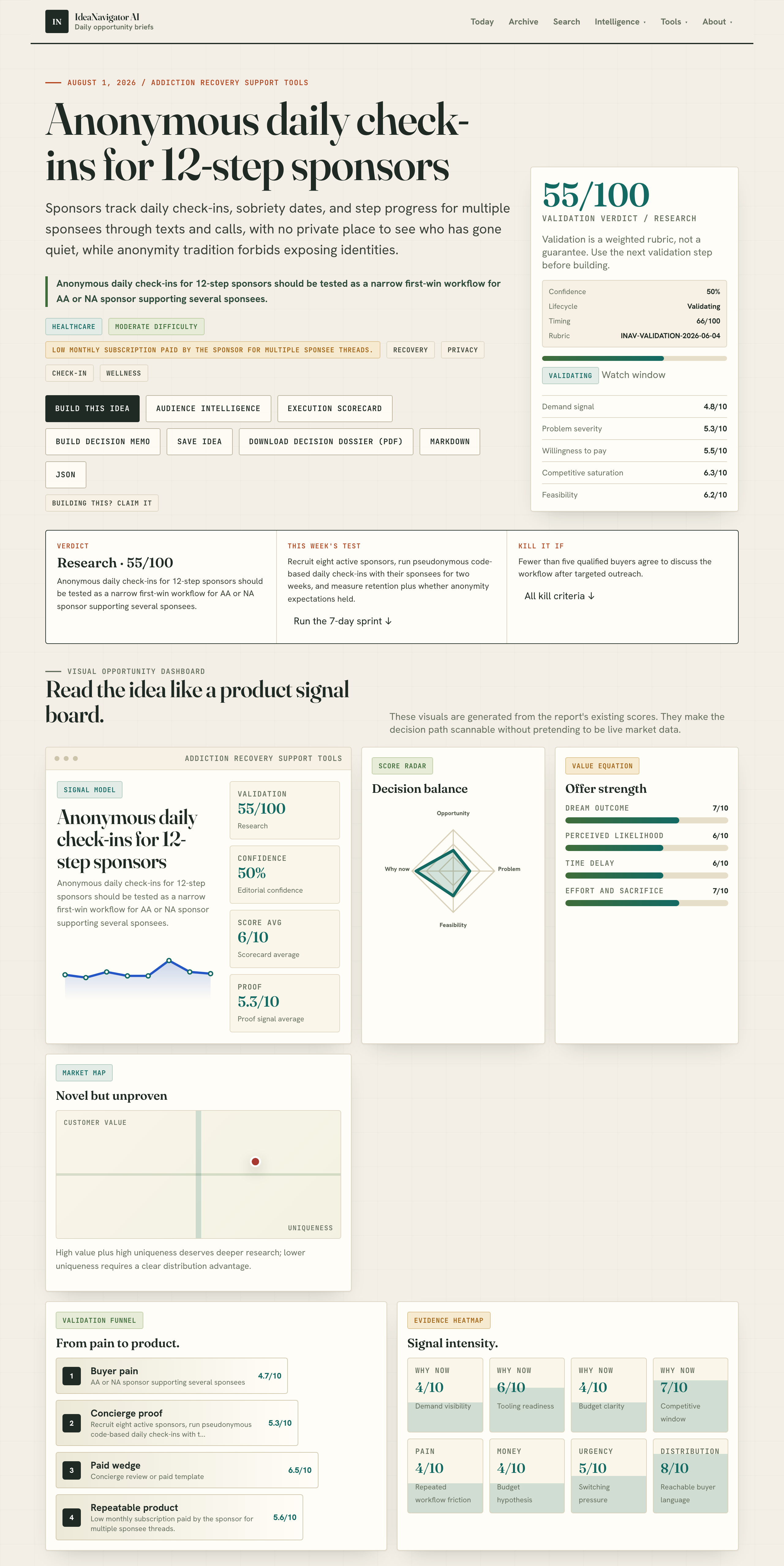
Researchers are testing a new system enabling 12-step sponsors to conduct daily check-ins with sponsees anonymously via pseudonymous codes. The pilot aims to improve tracking while preserving anonymity, addressing privacy concerns in recovery support tools.
Researchers are testing a new system that allows 12-step sponsors to conduct anonymous daily check-ins with multiple sponsees using pseudonymous codes, aiming to improve privacy and support tracking in recovery programs. This development could address longstanding privacy concerns while leveraging digital tools for addiction recovery support.
The initiative involves a prototype platform where sponsors can invite sponsees via one-time codes, enabling daily check-ins that display only a simple green or red indicator, along with optional notes. No personal identifiers or phone numbers are stored, maintaining anonymity in line with 12-step traditions.
The pilot is currently recruiting eight active sponsors who will run the system with their sponsees for two weeks. The goal is to measure retention, adherence to anonymity expectations, and the system’s effectiveness in supporting recovery monitoring without compromising privacy.
This approach is designed to address challenges faced by sponsors who currently track check-ins and progress through texts and calls, often without a private, centralized platform that respects anonymity. Mainstream messaging apps risk exposing identities, conflicting with AA and NA’s core principles.
Potential Impact on Privacy and Support in Recovery
If successful, this system could significantly improve how sponsors support multiple sponsees by providing a private, easy-to-use digital tool that preserves anonymity. It could set a precedent for safer, more confidential recovery communication, especially as digital reliance increases.
Such a tool might also influence the development of other recovery support applications, emphasizing privacy and simplicity. However, it remains to be seen whether the system will meet the needs of sponsors and sponsees and how well it maintains trust in anonymity traditions.
As an affiliate, we earn on qualifying purchases.
Digital Privacy Challenges in 12-Step Support
As addiction recovery increasingly moves onto digital platforms, privacy concerns have grown. Mainstream messaging apps often leak contacts or real names, creating risks for participants who value anonymity, a core principle of AA and NA.
Current methods involve manual tracking via texts and calls, which can be inefficient and insecure. The idea of pseudonymous check-ins is a response to these issues, aiming to combine digital convenience with privacy safeguards.
Previous efforts to digitize recovery support have faced resistance due to confidentiality concerns, making this pilot a notable step toward balancing technology with tradition.
„This pilot aims to test whether pseudonymous check-ins can provide a secure, private way for sponsors to support multiple sponsees without risking exposure.“
— an anonymous researcher
As an affiliate, we earn on qualifying purchases.
Unanswered Questions About System Effectiveness
It is not yet clear whether the pseudonymous check-in system will be adopted widely or prove effective in real-world recovery settings. The pilot’s short duration limits insights into long-term usability and trust.
It remains uncertain how participants will perceive privacy, ease of use, and whether the system can integrate seamlessly into existing support routines.
digital privacy tools for addiction recovery
As an affiliate, we earn on qualifying purchases.
As an affiliate, we earn on qualifying purchases.
Next Steps in Pilot Evaluation and Potential Rollout
Following the two-week pilot, researchers will analyze retention rates, user feedback, and adherence to anonymity standards. If results are positive, further testing and development will be planned, potentially leading to a broader rollout for recovery groups interested in secure digital check-ins.
Additional iterations may include features like automated reminders or integration with existing recovery apps, depending on user feedback and technical feasibility.
As an affiliate, we earn on qualifying purchases.
Key Questions
How does the pseudonymous check-in system work?
Participants receive a one-time code to identify themselves, enabling daily status updates with simple green or red indicators and optional notes, without sharing personal information.
Will this system replace traditional support methods?
It is designed as a supplement, providing a private digital option for daily check-ins, not a replacement for face-to-face or phone support.
Is this approach compliant with AA and NA traditions?
Yes, it aligns with the core principle of maintaining anonymity, as no personal identifiers or contact details are stored.
When will the results of the pilot be available?
Results are expected after the two-week testing period, with analysis likely to take several weeks afterward.
Could this system be expanded beyond the pilot?
If successful, developers may consider broader implementation, possibly integrating with existing recovery apps or platforms.
Source: IdeaNavigator AI