
📊 Full opportunity report: The Role Of Computer Vision In Home Boxing Metrics on IdeaNavigator AI — validation score, market gap, and execution plan.
TL;DR
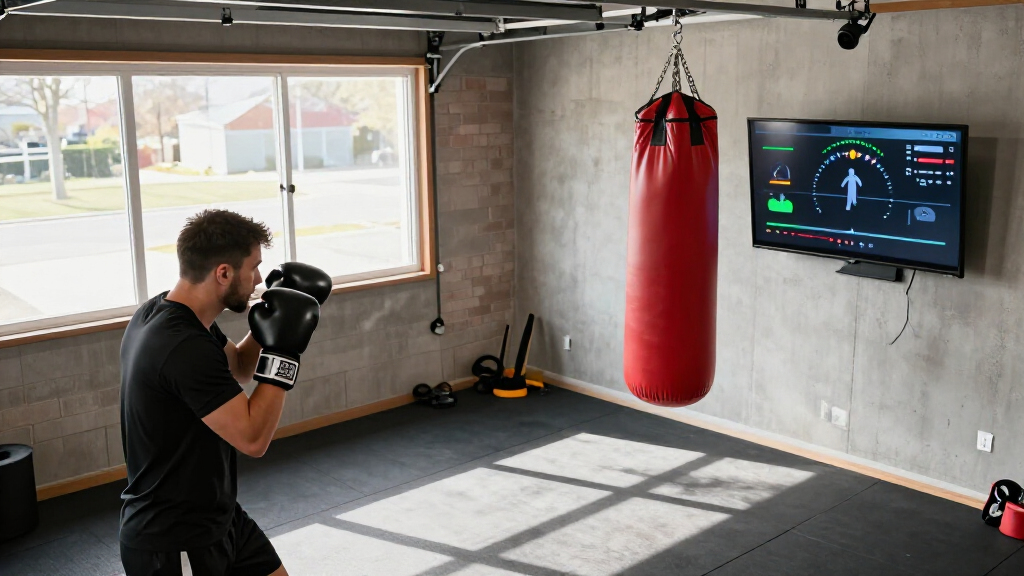
IdeaNavigator AI has proposed testing an app that uses a phone camera to score home shadowboxing rounds, count punch types and track selected movement cues. The concept is a product opportunity, not a report of a launched or validated service; its accuracy, retention and subscription demand have not been established.
IdeaNavigator AI’s proposal for a phone-camera boxing app describes a tool that would count punches, estimate speed and flag guard drops during home shadowboxing rounds. The proposal targets people training without a coach or gym, but it describes an unvalidated product idea—not a launched service or confirmed performance result.
In its proposal, IdeaNavigator AI suggests a first version that would ask users to prop up a phone and follow a scored round. The app would report punch counts by type, provide a speed signal and identify instances when a boxer’s guard drops. The proposal also describes coached combinations with real-time feedback and benchmarks across sessions. It does not specify which phone models, camera views or boxing techniques the system could reliably assess.
IdeaNavigator AI frames the need as a lack of feedback for people shadowboxing at home. The proposal argues that without a coach or training partner, users may have little information about how often they punch, whether their movement changes over time or whether they maintain their guard. Its concept aims to provide a repeatable feedback loop using a phone rather than dedicated wearables or other hardware.
For the business model, IdeaNavigator AI proposes a free scored-round tier and a paid subscription for coached combinations. Its suggested initial test is a soft launch that tracks week-four retention against fitness-app benchmarks and tests conversion to the coached-combo tier. The proposal supplies no benchmark, target conversion rate, user study or test outcome.
Feedback Without a Boxing Coach
If it works reliably, camera-based scoring could give solo trainees a way to structure practice and see changes between sessions without buying boxing sensors or attending a gym. Punch counts and round histories are relatively concrete measures; feedback about speed or guard position could be more useful for technique, but also depends on what the camera can observe and how the app interprets movement.
That distinction matters for potential users. A count may help someone track activity, but it does not by itself establish that punches are technically sound or that training is safe. The proposal’s value therefore rests not only on producing scores, but on whether those scores are consistent, understandable and useful enough to keep people training. The retention and subscription tests recommended by IdeaNavigator AI would address demand, not necessarily prove that the coaching assessments are accurate.
As an affiliate, we earn on qualifying purchases.
The Proposed Phone-Camera Workflow
IdeaNavigator AI’s proposal points to phone-camera pose tracking as an alternative to asking users to wear sensors. It describes detection of punch types, speed and guard position in real time as an enabling capability. The proposal includes no technical evaluation, accuracy figures or independent validation, so those functions should be understood as proposed product features rather than demonstrated results.
The proposal narrows the initial audience to home boxers without a coach or gym and the initial product to scored rounds. Its stated rationale is that this focus would let a test examine whether users return to sessions and pay for more structured combinations before the product expands into a broader home-fitness offering. The material gives no release schedule, named developer or details of a finished application.
As an affiliate, we earn on qualifying purchases.
Accuracy and Demand Still Untested
IdeaNavigator AI reports no app launch or trial results. Its proposal does not establish how accurately a phone camera could distinguish punch types, estimate speed or detect a dropped guard across different rooms, lighting conditions, camera angles, body types and boxing styles. It also does not say whether feedback would be immediate, how errors would be communicated or what safeguards would prevent users from treating an imperfect score as expert coaching.
Commercial and user outcomes remain unknown. The proposal provides no evidence about week-four retention, willingness to pay, conversion from free scored rounds to a subscription, or whether users would prefer camera-based feedback to a coach, a gym or wearable equipment. Its description of motivation fading and technique drifting is a problem statement, not a measured finding about a tested user group.
shadowboxing training app with feedback
As an affiliate, we earn on qualifying purchases.
As an affiliate, we earn on qualifying purchases.
Retention and Paid-Tier Tests
IdeaNavigator AI’s proposed next step is a soft launch of scored rounds. A test would need to define its user group, the benchmark used for week-four retention and the criteria for judging whether camera-generated scores are dependable. It could then assess whether users return after initial sessions and whether coached combinations lead to paid subscriptions.
Until such testing is reported, the concept remains a product hypothesis. Evidence on measurement accuracy, user retention and subscription conversion would clarify whether phone-camera scoring can serve as practical support for people boxing at home, or whether the proposed workflow needs changes before wider release.
Source: IdeaNavigator AI’s shadowboxing-scoring app proposal
As an affiliate, we earn on qualifying purchases.
Key Questions
Has a home boxing app using this approach launched?
No launch is reported. IdeaNavigator AI describes a proposed product and a possible soft-launch test, not an available app.
What would the phone camera measure?
In IdeaNavigator AI’s proposal, the app would count punches by type, estimate speed and flag guard drops during rounds. The accuracy of those measurements has not been reported.
Would users need special equipment?
The concept described by IdeaNavigator AI is designed around a propped-up phone and aims to avoid dedicated wearables or hardware. Phone compatibility and setup requirements have not been specified.
How would the proposed app make money?
IdeaNavigator AI suggests a free scored-round tier with a subscription for coached combinations. Whether users would pay has not been tested in the information provided.
What evidence would show whether the idea works?
IdeaNavigator AI’s proposed test would track week-four retention and conversion to the coached-combo tier. Separate testing would be needed to establish how reliable the camera’s movement assessments are.
Source: IdeaNavigator AI