To reduce fire risks from chargers and cables, look for products with safety features like overheating, short circuit, and overcurrent protections. Choose certified items with labels like UL, CE, or FCC, indicating they’ve passed strict safety tests. Use high-quality, fire-resistant materials, check electrical ratings, and avoid overuse or damage. Proper maintenance and following safety tips can greatly lower fire hazards. For more tips on safe charging, keep exploring key safety specs and standards.
Key Takeaways
- Choose chargers and cables with safety certifications like UL, CE, or FCC for verified fire safety standards.
- Use high-quality, fire-resistant materials and durable construction to prevent melting and ignition risks.
- Ensure electrical ratings match device specifications and utilize protections against overcurrent and overvoltage.
- Regularly inspect cables for damage, avoid stress or bending, and replace compromised components immediately.
- Follow proper usage practices such as unplugging after charging, organizing cables, and keeping charging areas clean.
What Safety Features Should Chargers and Cables Have?
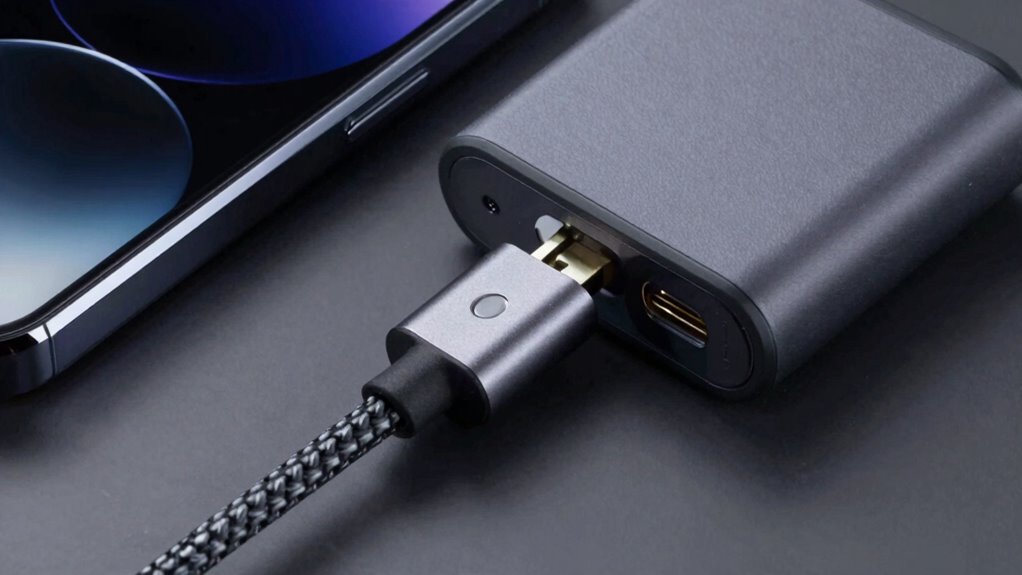
To guarantee safety during charging, your chargers and cables should include essential features that prevent overheating, short circuits, and electrical faults. For wireless charging, look for safety mechanisms like temperature regulation and foreign object detection to avoid overheating and ensure efficient power transfer. Smart features, such as automatic shut-off or device recognition, help prevent electrical faults and protect your device from damage. These features not only improve safety but also enhance user convenience, alerting you to issues before they become hazards. A charger with built-in safety protocols, including surge protection and overcurrent prevention, offers peace of mind. Incorporating thermal management features helps maintain optimal operating temperatures and reduces the risk of overheating. Additionally, understanding the technology specifications of chargers and cables can help you select products that meet safety standards. Choosing chargers with safety certifications and smart safety features minimizes risks and keeps your devices safe during every charge. Proper adherence to industry safety standards further ensures reliable and secure charging experiences.
Why Material Quality Is Key to Fire Resistance and Safety
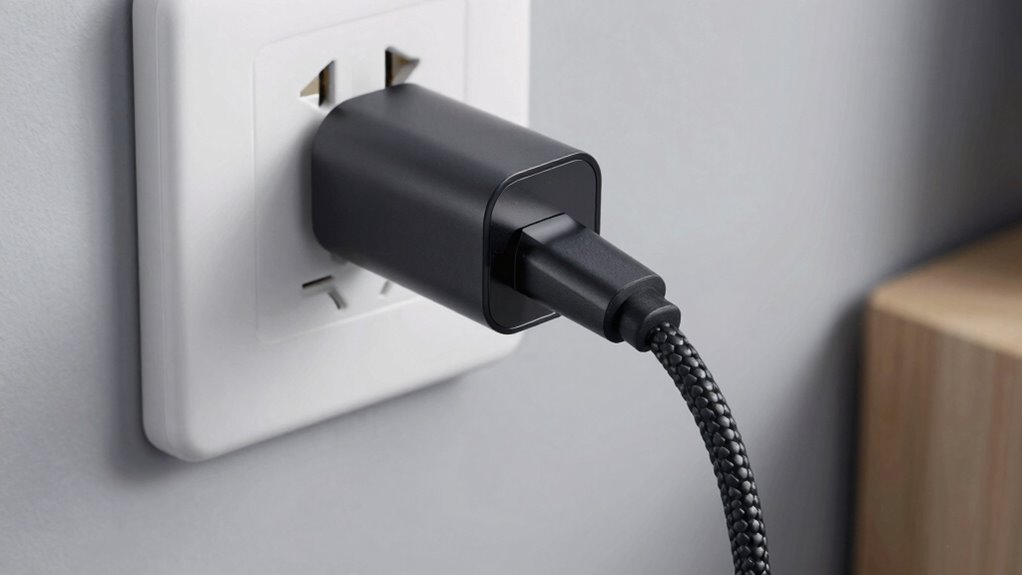
The quality of materials used in chargers and cables directly impacts their fire resistance and overall safety. When you choose products with high material integrity, you reduce the risk of overheating, melting, or catching fire. Fire resistant materials are essential because they can withstand high temperatures without degrading or igniting, providing an extra layer of protection. Fire-resistant materials are designed to maintain their integrity even under stress, which is crucial for safety. Poor-quality plastics and compromised insulation can fail unexpectedly, leading to dangerous situations. Investing in cables made from durable, fire-resistant materials ensures that your devices are safer during regular use or in case of electrical faults. Proper material selection is vital in manufacturing, as it directly influences the durability and safety of electrical components. Using high-quality plastics that meet safety standards further enhances fire safety and reduces hazards. Additionally, compliance with safety standards ensures that materials meet rigorous testing for fire resistance, further safeguarding users. Ultimately, material quality is a critical factor in preventing fires and safeguarding your home and loved ones. Always opt for chargers and cables that prioritize high-quality, fire-resistant materials for maximum safety. Material integrity plays a crucial role in ensuring electrical safety and reducing fire hazards.
What Do Current and Voltage Ratings Mean for Safe Charging?
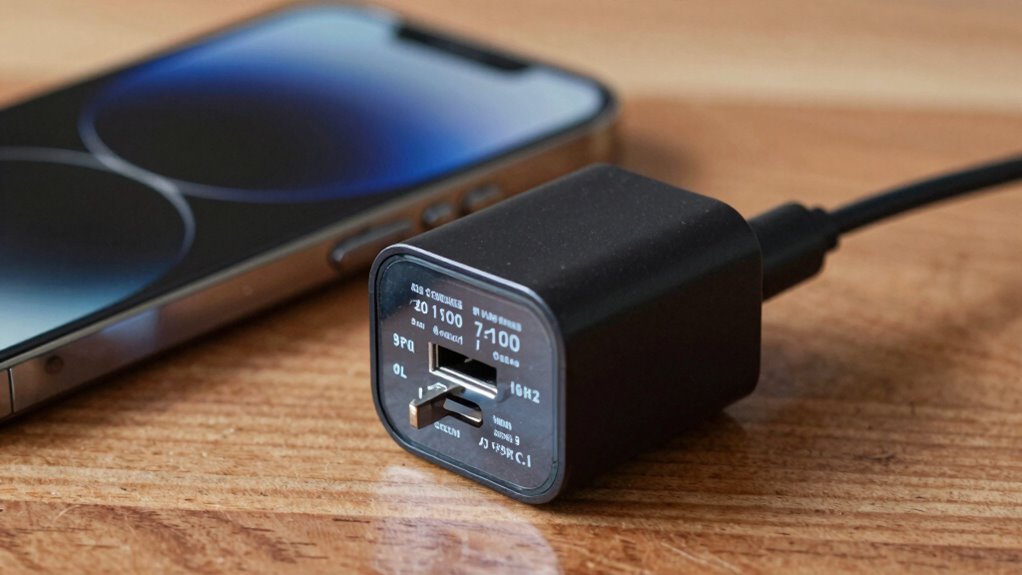
Understanding current and voltage ratings is essential for safe charging because they determine how much power your device can handle without damage or risk. Current ratings specify the maximum amperage the charger can supply, ensuring it doesn’t push too much current into your device. Voltage ratings indicate the correct voltage level the charger provides, preventing overvoltage that could harm your device or create fire hazards. Using a charger with appropriate current ratings and voltage ratings ensures compatibility and safe operation. If the ratings are too high, your device might draw more current than it can handle, increasing overheating or fire risk. Conversely, ratings too low might result in slow charging or insufficient power. Always match your device’s specifications with the charger’s current and voltage ratings for safe, efficient charging. Additionally, understanding electrical safety considerations, such as proper wiring and grounding, is crucial to prevent hazards. Ensuring that your charger’s electrical specifications align with your device’s requirements minimizes the risk of electrical faults or damage. A thorough understanding of power capacity can also help prevent overloads that could lead to fires or damage. Being aware of standard safety practices can further enhance safe handling and maintenance of charging devices.
How Do Overcurrent and Overvoltage Protections Reduce Fire Risks?
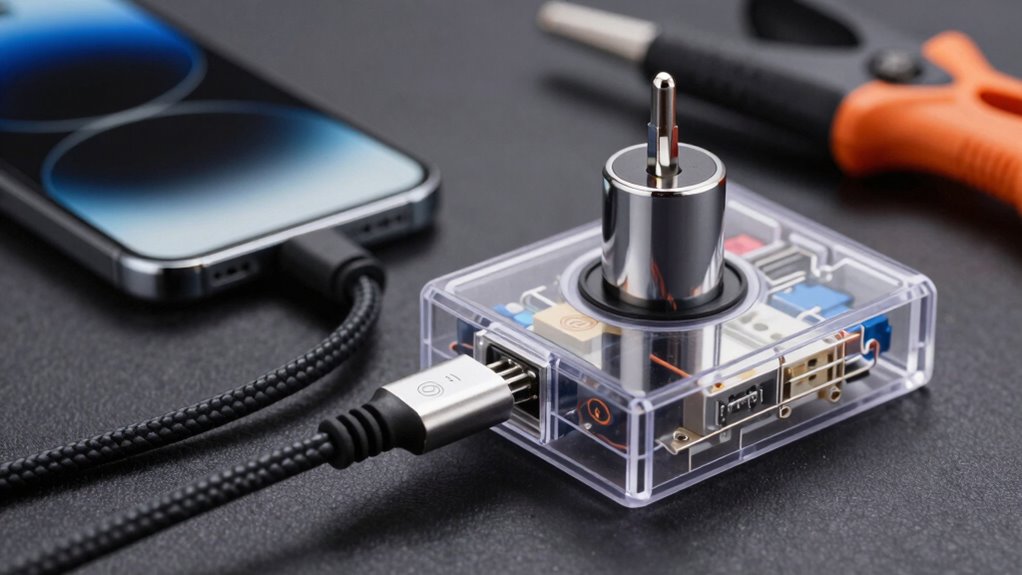
Overcurrent and overvoltage protections act as safety barriers that prevent electrical faults from turning into fires. When a charger or cable detects excessive current or voltage, these protections shut off power, reducing the risk of battery degradation and thermal runaway. Battery degradation can weaken internal components, making the battery more vulnerable to overheating. Overvoltage can cause the battery to overheat and accelerate damage, increasing the chance of a fire. By limiting abnormal electrical flow, these protections help maintain safe operating conditions, preventing sparks or overheating that could ignite nearby materials. Proper filter maintenance and timely replacement can further enhance safety by reducing dust and debris buildup that might contribute to electrical faults. Additionally, manufacturers often include overcurrent protection mechanisms that automatically disconnect power during fault conditions, providing an extra layer of security. Recognizing the importance of high-quality components, many devices also incorporate overvoltage protection to guard against power surges. Implementing fault detection systems can offer early warnings before faults develop into dangerous situations. Incorporating proper wiring practices and regular inspections can further reduce the risk of faults and fires. In essence, they act as a safeguard that interrupts dangerous conditions before they escalate into catastrophic failures, keeping you and your devices safer from potential fire hazards.
How to Spot Safe and Reliable Chargers and Cables?
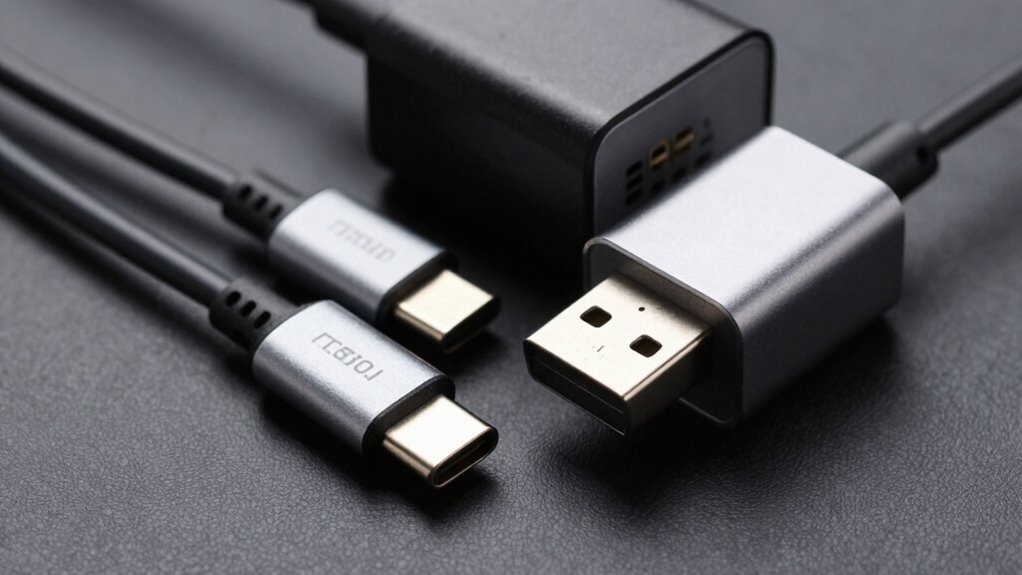
Choosing a safe and reliable charger or cable starts with checking for quality indicators and certifications. Look for labels like UL, CE, or FCC marks, which verify safety standards. For wireless charging compatibility, ensure the charger is certified for your device to prevent overheating or fire risks. When inspecting cables, assess their durability by checking for reinforced connectors and sturdy insulation, reducing the chance of fraying or short circuits. Proper cable construction prevents accidents and ensures long-term safety. Additionally, selecting cables made with fire-resistant materials can further reduce potential hazards in case of malfunction. Avoid cheap, counterfeit products, as they often lack essential safety features. Reliable cables should also support proper charging speeds without excessive heat buildup. By paying attention to these indicators, you minimize fire risks and guarantee your device charges safely and efficiently.
Why Certifications and Safety Standards Matter?
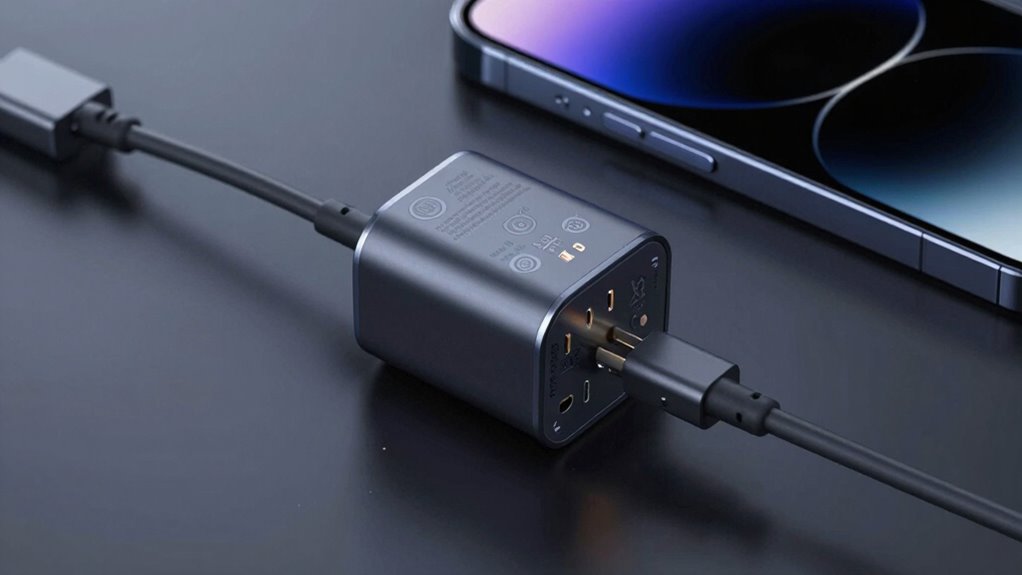
Certifications and safety standards guarantee your chargers and cables meet strict safety requirements, giving you peace of mind. They help confirm that products are compliant and unlikely to cause electrical issues. By choosing certified options, you considerably reduce the risk of fire hazards. Additionally, selecting products with proper safety standards ensures durability and reliable performance over time. Implementing performance cookies in quality control processes can further ensure that only safe, effective products reach consumers. Incorporating industry-specific certifications demonstrates a commitment to safety and quality assurance, which is especially important for products like textile line that require precise manufacturing standards.
Ensuring Product Compliance
Ensuring product compliance is essential because safety standards and certifications verify that chargers and cables meet strict requirements designed to prevent hazards. When products adhere to compliance standards, you reduce the risk of fire safety issues caused by faulty components or poor manufacturing. Certifications like UL, CE, or FCC demonstrate that the product has been tested and approved for safety and performance. Use this table to understand key compliance elements:
| Certification | Focus Area | Benefits | Validity Period | Notable Standards |
|---|---|---|---|---|
| UL | Fire safety | Ensures fire-resistant design | 3 years | UL 60950-1, UL 62368-1 |
| CE | Safety in EU | Meets European safety laws | Varies | EN 60950-1, EN 62368-1 |
| FCC | Electromagnetic interference | Minimizes interference | Ongoing | Part 15 |
| RoHS | Hazardous substances | Reduces toxic materials | As specified | Directive 2011/65/EU |
| IEC | International standards | Global acceptance | Varies | IEC 60950-1, IEC 62368-1 |
Reducing Fire Hazards
Because fire hazards from faulty chargers and cables can have devastating consequences, adhering to safety standards and obtaining proper certifications is essential. Certified products are designed to meet strict safety criteria, reducing risks like overheating and short circuits that threaten battery longevity. When you choose certified chargers, you boost device safety and extend battery life, saving you money and inconvenience. Additionally, user awareness plays a key role—by understanding safety features and avoiding cheap, uncertified alternatives, you minimize fire risks. Proper certifications indicate that a product has undergone rigorous testing, ensuring it operates safely under normal conditions. Staying informed about safety standards empowers you to make smarter choices, ultimately protecting your devices, your home, and yourself from fire hazards related to faulty chargers and cables.
Tips for Proper Use and Maintenance to Prevent Fires
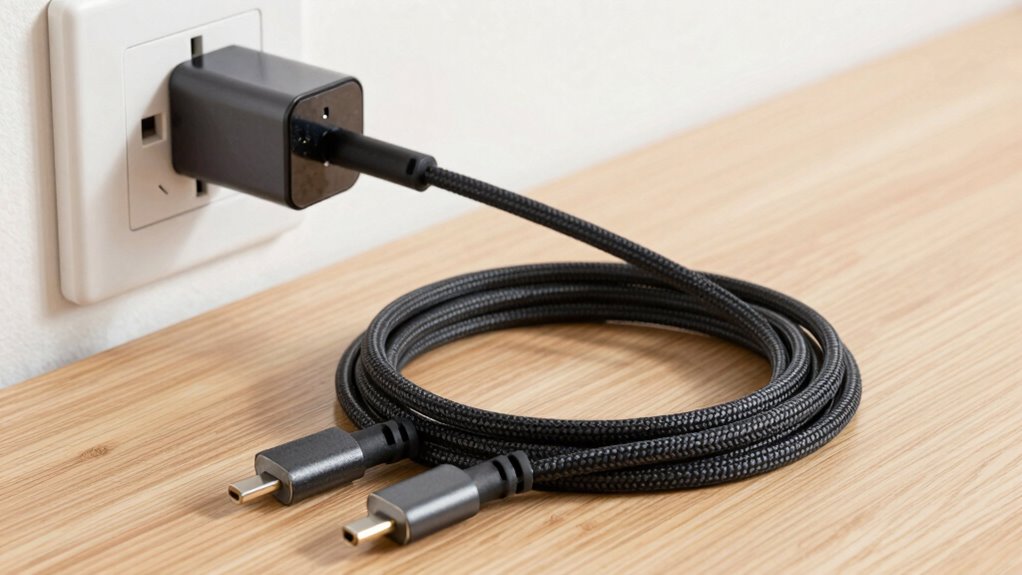
To keep your chargers safe, practice proper charging habits by unplugging devices once fully charged and avoiding overuse. Regularly inspect your cables and chargers for signs of damage, such as fraying or exposed wires. Staying attentive to these practices helps prevent potential fire hazards before they occur.
Proper Charging Habits
Proper charging habits are essential to prevent fires and keep your devices safe. Practicing good charging etiquette helps avoid overloading outlets and using incompatible chargers. Always unplug devices when fully charged, and don’t leave chargers plugged in unnecessarily. Proper cable management reduces stress on cords and prevents damage that could lead to short circuits. To improve safety, consider these tips:
- Keep cables untangled and organized to reduce wear and tear
- Avoid bending or pinching cords tightly
- Use chargers and cables that meet safety standards
Regular Inspection Practices
Regularly inspecting your charging cables and devices is essential for preventing fires and ensuring safe operation. Check for signs of damage like frayed wires, cracks, or exposed conductors, which can compromise port compatibility and increase fire risk. A damaged cable can also affect your device’s battery lifespan, leading to overheating or failure. Make sure connectors fit snugly without forcing them, as loose or incompatible ports can cause sparks or short circuits. Keep cables clean and free from dust or debris that might interfere with charging. If you notice any damage, replace the cable immediately. Regular inspections help you catch issues early, maintain proper port compatibility, and extend your device’s battery lifespan, all of which reduce fire hazards and promote safer charging practices.
Frequently Asked Questions
Can Using Damaged Cables Cause Fire Hazards?
Using damaged cables can definitely cause fire hazards. When the cable insulation is compromised, it exposes electrical faults that increase the risk of sparks and overheating. These faults can ignite nearby materials, leading to fires. Always inspect your cables regularly, replace any with visible damage, and avoid using damaged cables to guarantee safety and prevent potential fires. Proper maintenance reduces the risk and keeps your environment safe.
How Often Should I Replace My Charging Cables?
You should replace your charging cables every 6 to 12 months, as most cables have a lifespan of about a year. Studies show that worn or damaged cables are responsible for nearly 25% of charging-related fires. Regular replacement reduces fire hazards and guarantees safe, efficient charging. Check for frayed wires, bent connectors, or exposed wiring, and swap out damaged cables promptly to stay safe and prevent accidents.
Are Wireless Chargers Safer Than Wired Ones?
Wireless charging is generally safer than wired charging because it reduces the risk of electrical faults and exposed wires. With wireless charging, you avoid direct contact with electrical components, which lowers the chance of fire or short circuits. Plus, many devices come with built-in safety features, like temperature control and overcharge protection, offering you added safety benefits. Just make certain your wireless charger meets safety standards for maximum protection.
What Signs Indicate a Charger or Cable Is Unsafe?
You can spot an unsafe charger or cable by looking for signs like frayed wires, exposed internal components, or melted plastic. Cheap materials often lead to overheating or fires. If it feels hot to touch or shows damage despite proper use, it’s a red flag. Always choose products made with quality materials and adhere to strict manufacturing standards—these are key to reducing fire risks and ensuring safety.
Do Cheap Chargers Pose Higher Fire Risks?
Cheap chargers often pose higher fire risks because they may lack proper safety features and quality materials. When you use inexpensive chargers, you’re more likely to experience overheating, short circuits, or electrical failures. These hazards increase the chance of fire and damage to your devices. To stay safe, always opt for chargers that meet safety standards and have reputable certifications. Avoid cutting costs on chargers to protect yourself and your devices from potential fire hazards.
Conclusion
Remember, safety isn’t just a precaution—it’s a necessity. Always choose chargers and cables with proper safety features, quality materials, and trustworthy certifications. Use them correctly and maintain them well to prevent fire hazards. As the saying goes, “A stitch in time saves nine.” Taking these simple steps now can save you from bigger problems later. Stay vigilant, prioritize safety, and keep your devices and home secure.