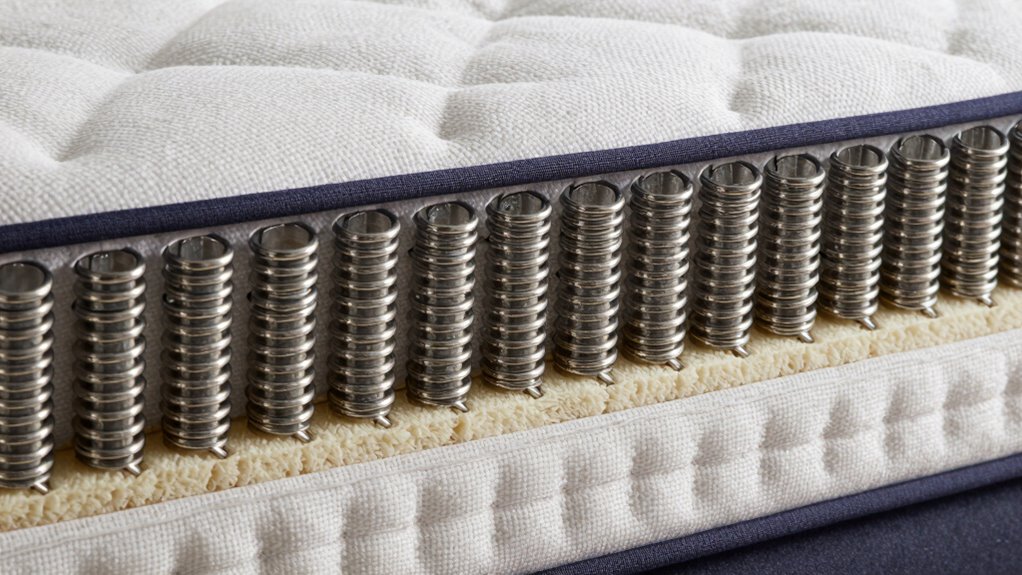

Many believe that higher coil counts make innerspring mattresses better, but that’s not true. What truly matters is coil quality, gauge, and construction. Strong, durable steel coils, lower gauge for thicker wires, and thoughtful manufacturing weigh more than just the number of coils. By focusing on these factors, you can find a supportive, long-lasting mattress. Keep exploring—there’s much more to discover about choosing the right innerspring mattress for you.
Key Takeaways
- Higher coil count doesn’t guarantee better support; quality, gauge, and tension are more important factors.
- Coil gauge and material strength impact durability more than coil quantity.
- Focus on coil quality, construction, and layer design instead of just coil count.
- Proper manufacturing and reinforcement features enhance support and prevent sagging.
- Material durability and engineering details are key to a mattress’s longevity and comfort.
Does Coil Count Really Matter for Mattress Support?
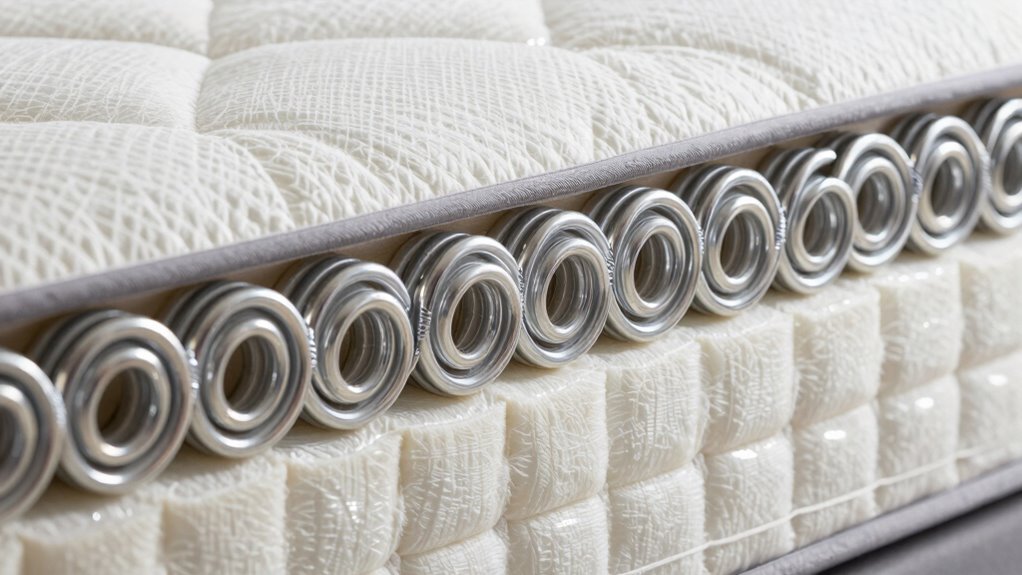
While many people believe that a higher coil count automatically means better support, the truth is more nuanced. Coil count alone doesn’t guarantee comfort or durability. Instead, pay attention to coil gauge and spring tension. A lower coil gauge indicates thicker wires, which often means stronger support and longer-lasting durability. Spring tension also plays a key role; higher tension coils provide firmer support, while lower tension coils offer a softer feel. These factors influence how well the mattress contours to your body and how evenly it distributes weight. Material quality also significantly impacts overall mattress performance and longevity. Additionally, understanding how coil gauge and spring tension work together can help you choose a mattress that offers optimal support and comfort for your specific needs. For example, spring design can affect how evenly weight is distributed across the mattress surface, further influencing comfort and support. Moreover, coil count can be less relevant if the other components are not designed for durability and support, so it should not be the sole consideration when selecting a mattress. So, rather than focusing solely on coil count, consider how coil gauge and spring tension work together to determine support, comfort, and longevity in an innerspring mattress.
What Factors Actually Make an Innerspring Mattress Supportive and Lasting

Several key factors determine whether an innerspring mattress will be supportive and durable over time. First, the materials quality plays a vital role; high-quality steel coils resist sagging and maintain their shape longer. Look for well-constructed, sturdy materials that can handle regular use without losing support. The manufacturing process also matters: a precise, consistent coil formation and proper assembly ensure the mattress maintains its supportiveness. Techniques like better coil bonding and reinforced edges prevent premature sagging or edge collapse. Additionally, the layer of comfort materials above the coils influences how well the mattress supports your body and distributes weight. Smart manufacturing techniques also contribute to consistent support and longevity by ensuring each coil is properly formed and assembled. Together, these factors—materials quality and manufacturing process—are what truly determine a mattress’s supportiveness and longevity, rather than just coil count.
How to Evaluate Innerspring Mattresses Without Relying Only on Coil Count
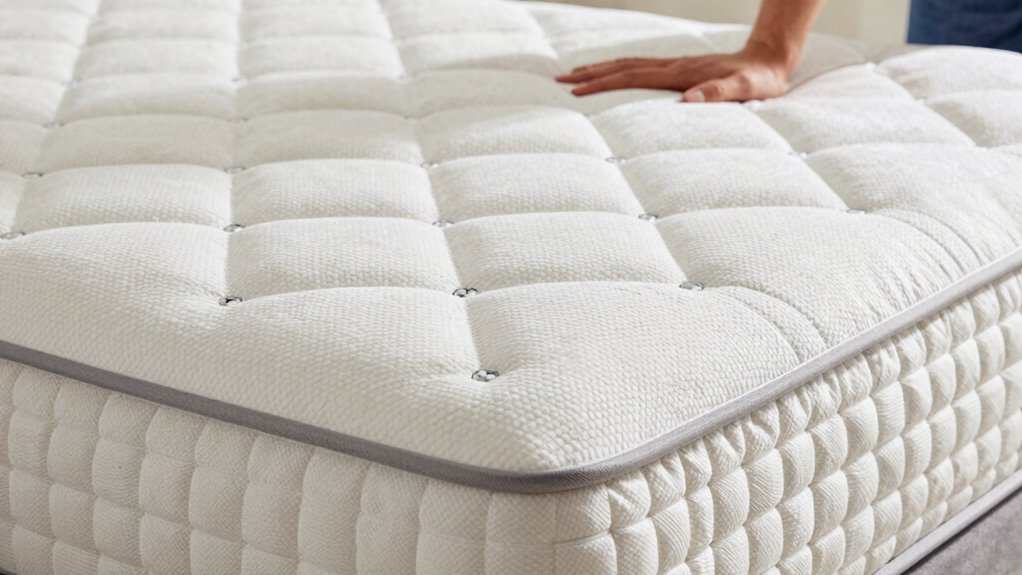
Instead of focusing solely on coil count, you should examine other key factors that influence an innerspring mattress’s quality. First, assess the coil quality—look for high-quality steel that’s durable and resistant to sagging. The gauge of the wire matters; a lower gauge indicates thicker, stronger coils. Additionally, consider mattress firmness, which affects comfort and support; a balanced firmness suits your sleep position and preferences. Test the mattress by lying down to feel its support and responsiveness. Check for proper coil engagement and how well the layers work together. Avoid relying only on coil count, as it doesn’t guarantee comfort or durability. Instead, focus on the construction details and feel, which better indicate how well the mattress will support you long-term. Pay attention to the coil design and layer arrangement, which can significantly impact comfort and longevity beyond just the coil count. Understanding layer materials and construction techniques can also help you select a mattress that offers optimal support and durability. Additionally, inspecting the ventilation and airflow features can improve comfort by reducing heat retention and moisture buildup.
Tips for Choosing the Best Innerspring Mattress for Your Sleep Needs
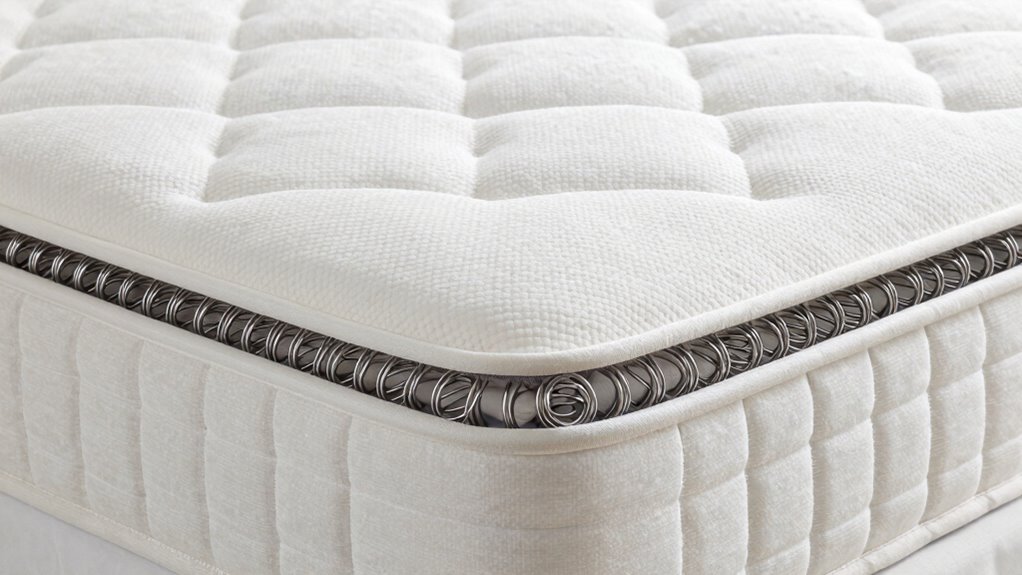
Choosing the right innerspring mattress begins with understanding your specific sleep needs and preferences. Focus on mattress firmness levels that suit your comfort, whether you prefer soft support or firm stability. Make certain the mattress is compatible with your bed frame to avoid issues with support and durability. To find the best fit, consider:
- Your preferred sleeping position and pressure points
- The level of firmness that keeps you comfortable all night
- Compatibility with your existing bed frame or foundation
- Any special features like reinforced edges or pillow tops
- Proper support is essential to ensure your mattress maintains its shape and longevity over time. Additionally, understanding the importance of artistic expression can inspire you to customize your sleep environment for better relaxation and comfort. Incorporating environmental considerations into your choice can also promote a healthier sleep space and support sustainable practices.
Common Myths About Innerspring Mattresses : Busted by Experts
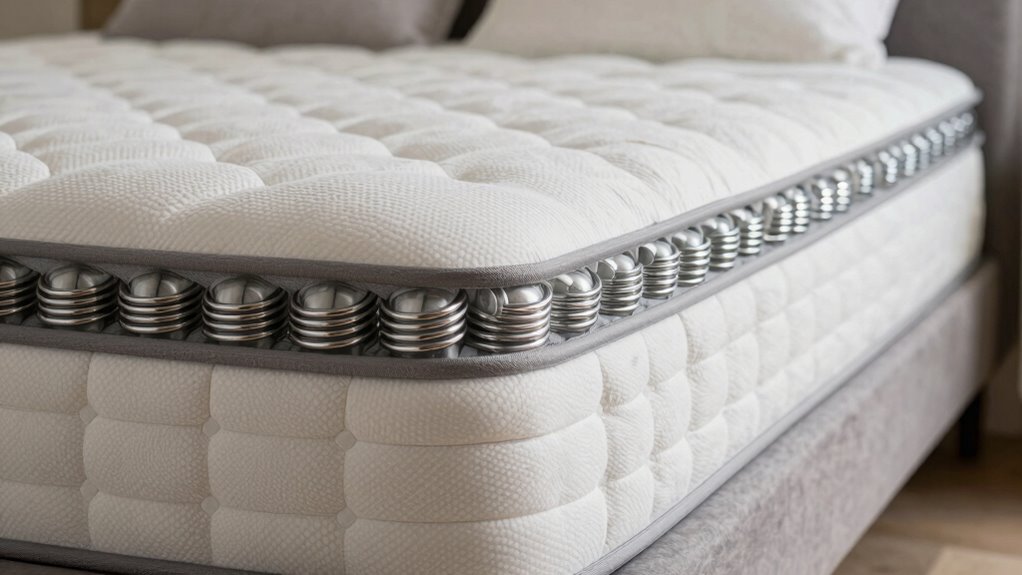
Many common beliefs about innerspring mattresses are actually misconceptions that experts have debunked. One myth is that higher coil counts always mean better support; in reality, coil durability and quality matter more. Another false idea is that innersprings are unattractive, but modern designs blend mattress aesthetics with comfort seamlessly. Some think that coil count impacts longevity directly, but factors like material quality play a larger role. Finally, people assume softer mattresses lack support, which isn’t true if the coils are well-designed. Additionally, the coil count alone does not determine a mattress’s overall comfort or durability, making it essential to consider other factors such as materials and construction. Understanding the manufacturing process can help consumers make more informed choices about their mattress investments, especially when considering coil design and construction techniques. Recognizing the importance of quality materials can lead to a better overall sleeping experience.
Frequently Asked Questions
How Does Coil Gauge Affect Mattress Comfort and Durability?
A lower coil gauge means thicker coils, which generally make your mattress more durable and supportive, while a higher coil gauge indicates thinner coils that may feel softer but less sturdy. Coil gauge also depends on coil material—stronger materials like steel provide better longevity. You want the right balance for your comfort and durability needs, ensuring the coils support your body without sacrificing longevity or softness.
What Role Does the Material of the Coils Play in Support?
The coil material greatly influences your mattress support and durability. Steel coils, especially high-quality ones, provide strong support and resist sagging over time, ensuring your mattress maintains its shape. Some coils are coated or reinforced to enhance longevity. When choosing a mattress, look for sturdy coil material that offers consistent support, as this directly impacts how well your mattress supports your body and how long it lasts.
Are Pocketed Coils Better Than Traditional Interconnected Coils?
Pocketed coils are generally better than traditional interconnected coils because they offer superior coil compatibility and individualized support. Each pocketed coil moves independently, reducing motion transfer and conforming better to your body. Manufacturing standards ensure these coils meet quality benchmarks, enhancing durability and comfort. Look for mattresses with high-quality pocketed coils that adhere to strict standards, so you get consistent support and longevity without sacrificing comfort or support.
How Does Edge Support Influence Overall Mattress Performance?
Edge support is vital because it guarantees your mattress maintains edge stability and perimeter reinforcement, which keeps you from feeling like you’re about to roll off. A sturdy edge allows you to sit or sleep close to the sides without sagging or instability. Good edge support enhances overall mattress performance by extending its lifespan and providing consistent comfort across the entire surface. Don’t overlook it—solid edges make a world of difference.
Can Mattress Firmness Be Accurately Determined by Coil Count Alone?
No, coil count myths suggest it can’t accurately determine mattress firmness. While a higher coil count might provide more support, firmness factors depend on the gauge of the coils, the coil design, and the comfort layers. You should consider these elements rather than just coil count when choosing your mattress. Focus on firmness preferences and overall construction to find a supportive, comfortable sleep surface tailored to your needs.
Conclusion
So, next time you’re shopping for an innerspring mattress, forget the coil count myth. Focus on the materials, support layers, and overall construction instead. These factors truly impact your sleep quality and mattress longevity. But here’s the twist—there’s one more secret that could change everything. Curious? Uncover what really makes a mattress last and support you better. The truth might just surprise you—and your sleep will thank you.