Many couples assume a full bed offers enough space, but a queen provides an extra 6 inches in width and 5 in length—significant for comfort. Underestimating how much space you actually need can lead to cramped movement or clutter. To make the right choice, measure your room, consider your sleep habits, and think about future needs. Keep exploring to discover how proper sizing can improve your sleep and room layout.
Key Takeaways
- Queen beds are 6 inches wider and 5 inches longer than full beds, significantly affecting room space and layout.
- Larger beds reduce available floor space, potentially making rooms feel cramped and impacting feng shui.
- Proper room measurement ensures the bed fits comfortably without overcrowding or sacrificing essential space.
- Bigger beds may require repositioning furniture and scaling decor to maintain balance and functionality.
- Choosing the right size depends on room dimensions, sleep habits, and storage needs, not just bed comfort.
What Are the Dimensions of Full and Queen Beds?

Have you ever wondered how the sizes of full and queen beds compare? The answer lies in their bed dimensions and mattress measurements. A full bed, also called a double, typically measures 54 inches wide by 75 inches long. It’s a compact option, perfect for smaller rooms or single sleepers. In contrast, a queen bed offers more space, with mattress measurements of 60 inches wide by 80 inches long. This extra 6 inches in width and 5 inches in length makes a significant difference, providing more room to stretch out or share with a partner. Understanding these precise dimensions helps you choose the right bed for your space and sleep needs, ensuring comfort without sacrificing room layout. Additionally, knowing the size differences can help in selecting compatible bedding and furniture arrangements. Recognizing the space requirements for each bed type ensures optimal room design and comfort. Being aware of bed dimensions also aids in planning bedroom layouts more effectively. For example, taking into account the appropriate clearance space around the bed can improve overall room functionality and flow. Moreover, considering the market options available for each size can assist in making an informed purchasing decision.
How Bed Size Affects Your Sleep Comfort and Room Layout

Choosing between a full and queen bed changes how much space you have to sleep comfortably and how your room feels. A larger bed requires more room, which can make layout more challenging, especially in smaller spaces. These differences can also impact your sleep quality, so it’s important to contemplate both comfort and room design. Additionally, selecting an energy-efficient cloud server can optimize your overall living environment by reducing power consumption and creating a more sustainable space. Understanding sleep environment factors such as bed size helps you make informed decisions that enhance both rest quality and room functionality. Furthermore, considering room layout and furniture placement can help maximize your space while maintaining comfort. Being aware of space efficiency strategies can also aid in making the most of limited room size without sacrificing comfort.
Space Requirements Increase
As bed sizes increase, so do the space requirements, which can considerably impact both your sleep comfort and your room layout. A larger bed like a queen demands more floor space, influencing bedroom feng shui by reducing open areas that promote tranquility. You’ll need to contemplate how the mattress material affects not only comfort but also space efficiency; memory foam and hybrid mattresses tend to be thicker, further increasing the bed’s footprint. This means you might sacrifice storage or walking space, making your room feel cramped. Before upgrading, measure carefully to verify the bed fits comfortably without overcrowding the room. Proper space planning helps maintain a balanced environment, where your bed size enhances sleep without compromising the overall room flow. Additionally, maximizing your space can help you make smarter choices about bed size and layout to optimize both comfort and functionality. Considering bed placement strategies can further improve room flow and overall harmony. Being aware of room dimensions ensures that your furniture choices support a comfortable and functional bedroom environment. Moreover, understanding the power tools and equipment available can assist in making precise measurements and modifications for a better fit.
Room Layout Challenges
When you opt for a larger bed like a queen, it naturally takes up more space in your room, which can considerably impact your layout and comfort. This change demands careful furniture arrangement to avoid clutter and ensure easy movement. You might need to reposition nightstands, dressers, or other furniture to optimize space. Additionally, decor compatibility becomes a challenge; larger beds often dominate the room, so choosing appropriately scaled furniture and accessories helps create a balanced look. Without thoughtful planning, your room can feel cramped or cluttered, reducing comfort and functionality. Proper Space planning is essential to maintain a comfortable and functional bedroom environment, especially when considering how bed size impacts room layout. Paying attention to furniture proportions can help you achieve a harmonious and inviting space. Moreover, understanding spatial awareness can significantly improve your ability to design a room that feels open and comfortable. Incorporating bed size considerations during planning ensures your room remains both functional and aesthetically pleasing.
Sleep Quality Differences
The size of your bed directly influences how comfortably you sleep and the quality of your rest. A larger bed like a queen provides more space to move, reducing disturbances and promoting better sleep. Your choice of bed height and mattress firmness also impacts sleep quality; a higher bed might be easier to get in and out of, while a firmer mattress offers better support. Consider this table:
| Aspect | Impact on Sleep | Tips |
|---|---|---|
| Bed Height | Affects ease of movement and comfort | Choose an ideal height for ease |
| Mattress Firmness | Influences spinal alignment | Select firmness based on sleep style |
| Bed Size | Determines space and movement freedom | Opt for enough room to stretch |
Balancing these factors helps improve sleep quality and overall rest. Additionally, proper piercing care and hygiene can prevent discomfort that might interfere with restful sleep. Maintaining a comfortable sleep environment, including appropriate bedroom layout, can further enhance sleep quality. Ensuring your mattress support system is adequate also contributes significantly to restfulness and can reduce discomfort during sleep. Furthermore, being aware of how sleep position interacts with your bed setup can help optimize comfort and support throughout the night.
How to Calculate the Space You Need for a Good Night’s Sleep

To determine the ideal amount of space for a good night’s sleep, start by considering your personal comfort and sleeping style. Think about how much room you need to stretch out without feeling cramped. Your bedroom decor can influence your choices—opting for a larger bed can enhance comfort and style. Pay attention to mattress materials, too; some materials are thicker or more supportive, affecting how much space you actually need. Measure your current sleeping area and add a few extra inches on each side to allow for movement and easy bed-making. Remember, the goal is to create a restful environment where you don’t feel boxed in or restricted, ensuring you wake up refreshed and ready for the day. Additionally, choosing the right bed size can improve your sleep quality and overall comfort. Considering sleep environment factors such as lighting, noise, and temperature can also contribute to a more restful night. Incorporating sleep space optimization techniques can further enhance your overall sleep experience.
Are Full and Queen Bed Space Myths Busted?
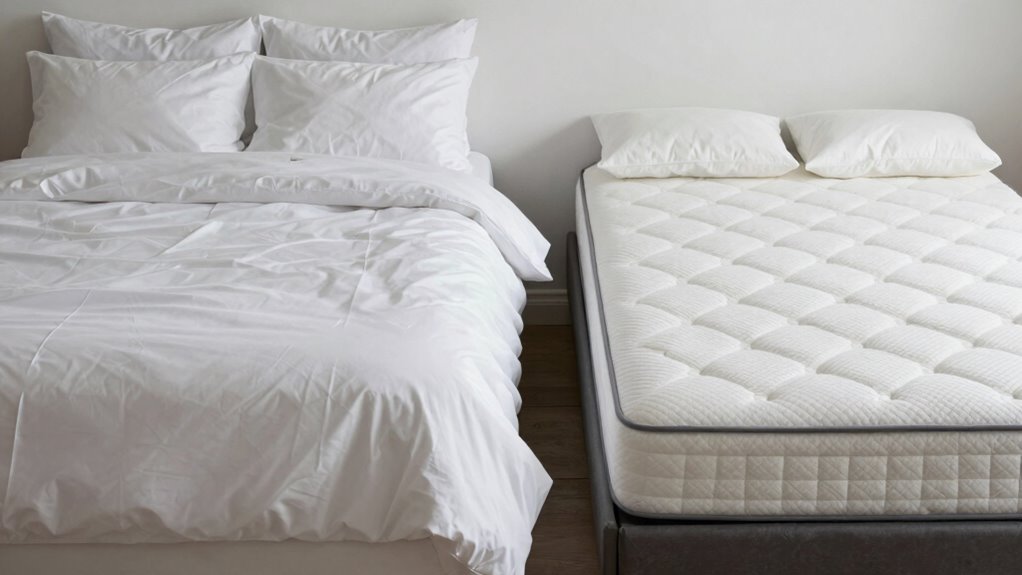
Many people believe that a full bed provides just enough space for a single sleeper or a cozy couple, but this idea isn’t entirely accurate. The truth is, bed frame designs can influence how much space you actually have, and many underestimate how much room a queen offers. Full beds often seem space-efficient, but they can feel cramped, especially when you add bedding accessories like thick comforters or multiple pillows. Queen beds, on the other hand, offer considerably more room for movement without overwhelming your bedroom. It’s a common myth that full beds are perfect for tight spaces, but the extra space of a queen makes a noticeable difference in comfort. So, don’t let misconceptions guide your decision—measure your room and consider your sleep needs carefully.
Which Bed Size Is Best for Your Room and Lifestyle?

Choosing the right bed size depends on your bedroom space, sleep habits, and storage needs. If you move around a lot or share your bed, a larger size might be better, but only if your room can handle it. Consider how your lifestyle and furniture fit together to find the perfect match.
Space Requirements for Bedrooms
Selecting the right bed size starts with understanding how much space you need for comfort and movement. Your bedroom’s size and layout influence whether a full or queen fits best. Consider bed frame styles, as some designs add extra width or height, affecting available space. A larger bed, like a queen, requires more room to avoid feeling cramped, especially if you share the bed. Mattress firmness also plays a role; a plush mattress might take up more perceived space than a firm one, impacting your comfort. Measure your room carefully, accounting for at least 24 inches of clearance on each side of the bed for easy movement. Choosing the right size guarantees your bedroom feels spacious and functional without sacrificing comfort.
Sleep Style and Movement Needs
Your sleep style and movement habits directly influence the ideal bed size for your room. If you tend to move a lot during sleep or share your bed with a partner, a larger bed like a queen can enhance bed sharing comfort and reduce disturbances. More space allows you to stretch, shift, and change positions without feeling cramped or disturbing your partner. Conversely, if you sleep mostly still or have a smaller bedroom, a full-size bed might suffice, offering sufficient space without overcrowding the room. Consider how much space you need to sleep comfortably and how movement impacts your rest. Choosing the right size ensures you get restful sleep, promotes better sleep movement, and creates a more comfortable sleep environment tailored to your habits.
Lifestyle and Storage Considerations
The size of your room and your storage needs play a crucial role in determining the best bed size for your lifestyle. If space is limited, a full bed might fit better, but consider bed frame compatibility to guarantee your chosen frame works without overcrowding. Larger rooms can comfortably accommodate a queen, providing extra space without feeling cramped. Think about bedding storage solutions—under-bed drawers or storage beds can maximize room efficiency, especially if you need to store linens or clothing. Additionally, lifestyle factors like having pets or children in bed, or wanting extra space for reading or lounging, influence your choice. Ultimately, balancing room dimensions and storage options helps you select a bed size that enhances comfort while maintaining a functional, organized space.
Tips for Choosing the Perfect Mattress Size for Couples
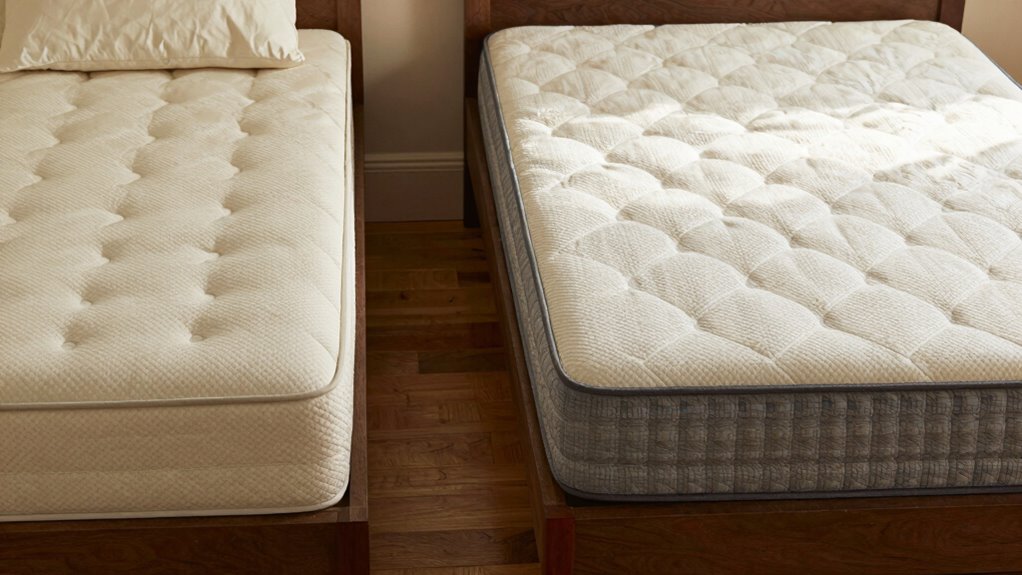
Choosing the right mattress size is crucial for couples to guarantee both partners sleep comfortably without feeling cramped or overwhelmed. Start by considering mattress firmness—if one person prefers a softer feel while the other likes firmer support, look for a size that offers enough space to accommodate both preferences. Next, check bed frame compatibility; not all frames fit every mattress size, so measure your frame before purchasing. A larger size, like a queen, provides extra room for movement and helps reduce disturbances caused by tossing and turning. Conversely, if space is limited, a full might suffice, but ensure it still meets your comfort needs. Prioritizing size, firmness, and compatibility ensures you select a mattress that promotes restful sleep for both of you.
Frequently Asked Questions
How Do Bed Sizes Vary Internationally?
You’ll notice bed size differences vary internationally due to different standards. In the US, a full bed measures 54×75 inches, while a queen is 60×80 inches. In Europe, standard sizes are often smaller, with a double bed around 55×79 inches. Always check international standards when buying or shipping beds to guarantee proper fit. These differences can impact comfort and bedding choices, so understanding them helps you make informed decisions.
Can Using a Larger Bed Improve Sleep Quality?
A larger bed can improve your sleep quality by enhancing sleep ergonomics, giving you more space to move freely and maintain comfortable positions. It also positively influences bedroom feng shui, creating a more balanced and calming environment. You might find yourself waking less and feeling more rested. Just make certain your room has enough space for the larger size; otherwise, it could disrupt the overall harmony and comfort.
What Are Common Space Mistakes Couples Make?
You often make space mistakes by cluttering your bedroom, which hampers sleep hygiene and causes restless nights. Keeping your space organized allows for better airflow and relaxation, improving sleep quality. Avoid pushing furniture against walls or cramming too much into your room. Instead, opt for a clean, spacious layout that promotes comfort and tranquility, helping both of you rest better and wake up refreshed.
How Does Bed Size Influence Bedroom Decor?
Ironically, choosing a larger bed might seem like a space saver, but it impacts your bedroom aesthetics more than you think. A bigger bed often dominates the room, limiting your storage solutions and making the space feel cluttered. Smaller beds create a balanced look, giving you room to add decor and keep everything organized. So, size influences not just comfort but how stylish and functional your entire bedroom feels.
Are There Health Benefits to Choosing a Bigger Bed?
Choosing a bigger bed can improve your sleep comfort, which offers notable health benefits. With more space to move and stretch, you reduce tossing and turning, leading to better rest. Better sleep supports your immune system, mental health, and overall well-being. By upgrading to a larger bed, you invest in improved sleep quality, helping you wake up refreshed and healthier every day.
Conclusion
Choosing the right bed size is about balancing space, comfort, and lifestyle. It’s about understanding your needs, evaluating your room, and making informed decisions. It’s about prioritizing restful nights, maximizing your space, and embracing comfort. Remember, the perfect bed size isn’t just a number; it’s a foundation for better sleep, a better day, and a better life. Make your choice wisely, sleep soundly, and wake up refreshed every morning.