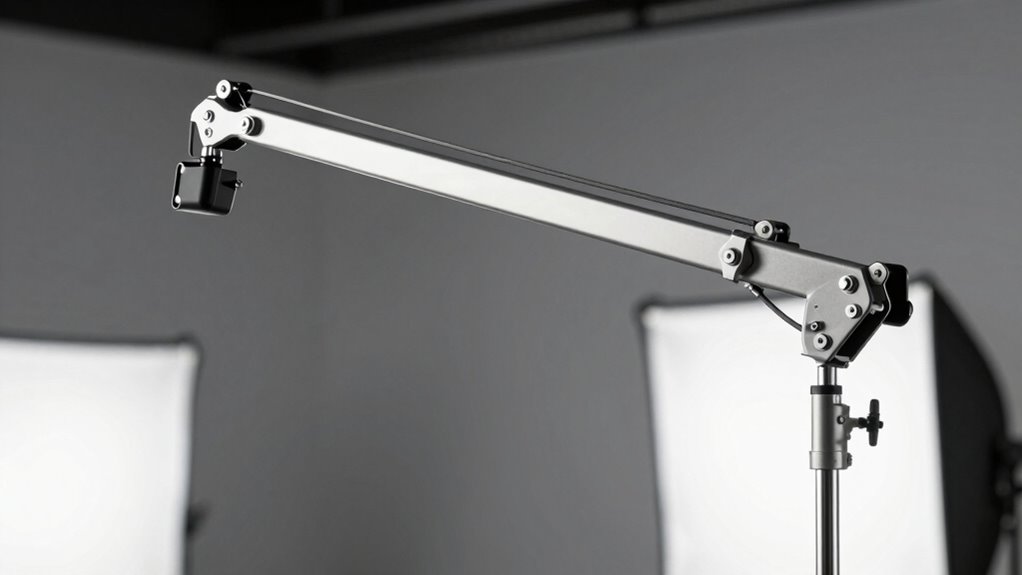

To prevent sag and shake with your overhead filming boom arm, choose a sturdy, high-quality model made of steel or reinforced aluminum. Securely mount it to a stable support system, and always use proper counterweights to balance the arm and reduce wobbling. Regularly tighten joints and inspect for wear, and add vibration dampers for extra stability. Keep setup consistent to ensure smooth footage; if you continue, you’ll discover more tips to keep your shots steady.
Key Takeaways
- Use heavy-duty, rigid materials like steel or reinforced aluminum for the boom arm to minimize flex and sag.
- Properly balance the boom arm with appropriately placed counterweights close to the mounting point.
- Securely mount the boom arm to stable, solid supports and verify all connections regularly.
- Incorporate vibration dampers and supports to absorb shocks and reduce shake during filming.
- Perform routine maintenance by tightening joints, inspecting for wear, and adjusting tension to ensure stability.
Why Sagging and Shake Ruin Overhead Shots
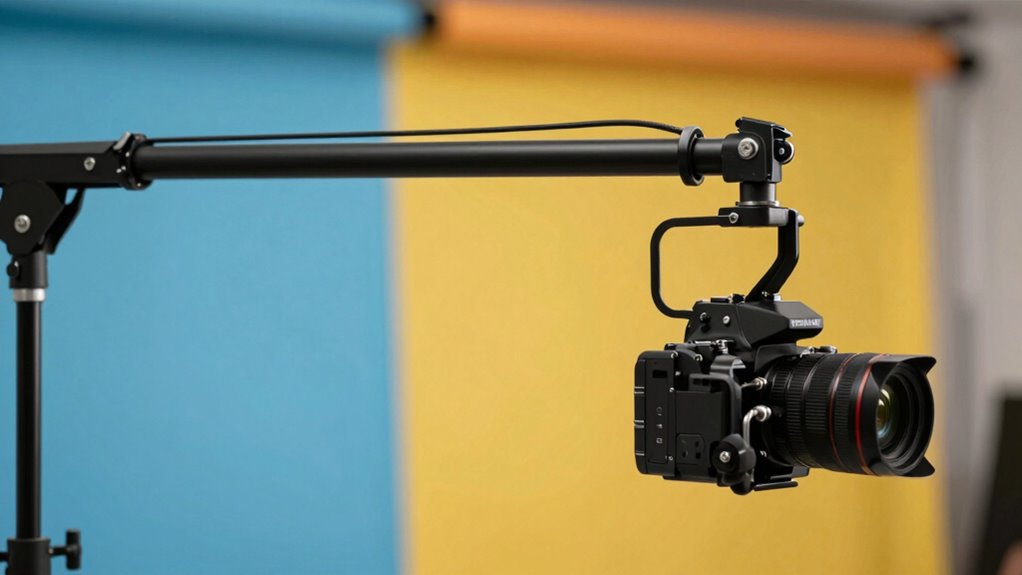
Sagging and shake can ruin your overhead shots because they introduce unwanted movement and instability. When your camera isn’t steady, it’s nearly impossible to achieve clean, professional-looking footage. This instability affects your camera angles, making shots appear jittery or unprofessional. Additionally, shake can interfere with your lighting setups, causing uneven illumination or flickering that distracts viewers. If your boom arm sags, you lose control over the shot’s framing and composition, forcing you to redo scenes or settle for subpar results. Overhead filming demands precision and stability, so any movement caused by poor support can compromise your entire project. Ensuring your equipment stays firm helps maintain sharp, smooth shots and allows your lighting and camera angles to work together seamlessly. Using proper support systems can also help prevent sag and shake, making your overhead shots much more reliable. Investing in high-quality, energy-efficient support hardware can further enhance stability and reduce the risk of equipment failure during critical shoots. Regular maintenance and adjustments to your support equipment can extend its lifespan and maintain consistent performance throughout your filming sessions. Incorporating vibration dampers can also help absorb shocks and further stabilize your setup.
Choose a Stable, Durable Boom Arm for Filming
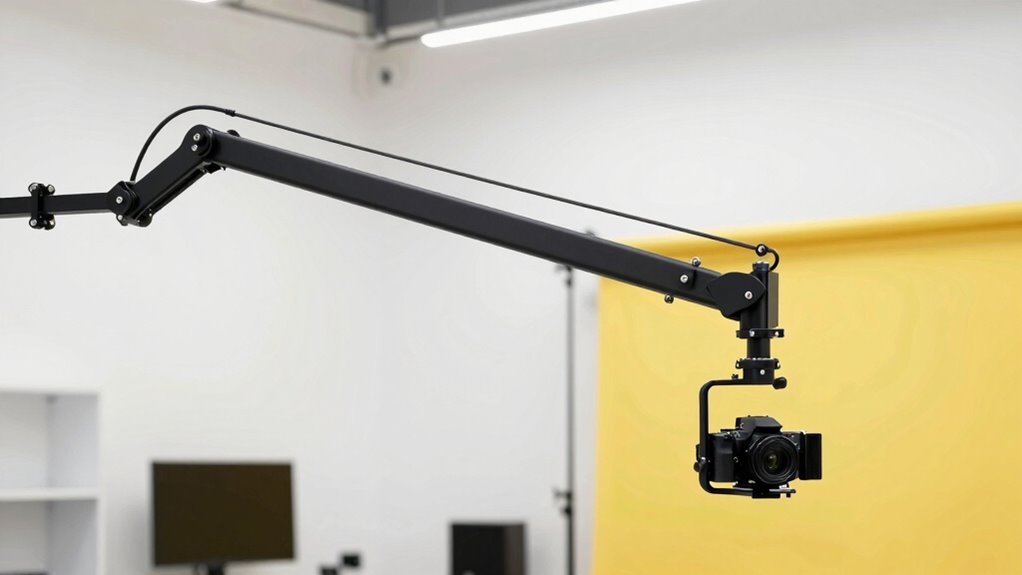
When selecting a boom arm, prioritize heavy-duty materials that offer stability during filming. Make sure it has secure mounting options to prevent shifting or shaking. Proper installation techniques are also essential to ensure the setup remains steady throughout recording sessions. A durable, well-mounted boom arm keeps your shots steady and professional. Additionally, implementing performance cookies can help analyze the stability of your equipment during recording sessions to optimize setup. Incorporating rigid materials can further enhance overall stability and reduce unwanted movement, especially when dealing with high-pressure situations in filming environments. Paying attention to structural integrity is crucial for maintaining consistent shot quality under dynamic conditions.
Heavy-Duty Materials for Stability
Choosing a boom arm made from heavy-duty materials guarantees your overhead filming setup remains stable and reliable. Heavy-duty materials like steel or reinforced aluminum provide the strength needed to support cameras and accessories without bending or sagging. These durable components enable advanced stabilization, minimizing shake and vibrations during filming. When selecting your boom arm, make certain it’s constructed from high-quality materials that resist wear and tear over time. Material durability plays a crucial role in maintaining long-term stability and performance. Investing in a sturdy construction not only enhances stability but also ensures safety during operation, especially when working with heavier equipment. Additionally, the material composition directly affects the overall lifespan and resilience of the boom arm in demanding environments. Beyond just initial stability, choosing materials with corrosion resistance can extend the life of your equipment, even in challenging conditions. Considering maintenance requirements can help ensure your boom arm continues to perform optimally over the years. By investing in a robust boom arm built from durable materials, you reduce the risk of sagging and shaking, resulting in cleaner, more professional footage. Stability starts with the right materials—choose wisely for seamless overhead filming.
Secure Mounting Options
A stable mounting system is essential to guarantee your overhead filming remains secure and steady. When selecting a boom arm, ensure it attaches firmly to a sturdy support that can handle the weight of your camera and lighting setups. A reliable mount prevents unwanted movement, allowing you to achieve precise camera angles without shake or sag. Consider mounting options like clamp mounts or weighted bases that provide extra stability, especially when adjusting for different lighting setups. Secure mounting options also help maintain consistent framing, which is critical when switching between various camera angles. Investing in a robust mounting system reduces vibrations and ensures your footage stays smooth, professional, and free from distracting wobble. Incorporating stability principles can further enhance your setup’s reliability and performance. Additionally, selecting equipment with adjustable tension can help fine-tune the stability based on your specific gear and filming environment. Proper secure mounting is the foundation for high-quality overhead filming, providing a stable platform that minimizes movement and enhances overall footage quality. Applying structural support techniques can also significantly improve the durability and steadiness of your setup.
How to Properly Set Up Your Boom Arm for Stability
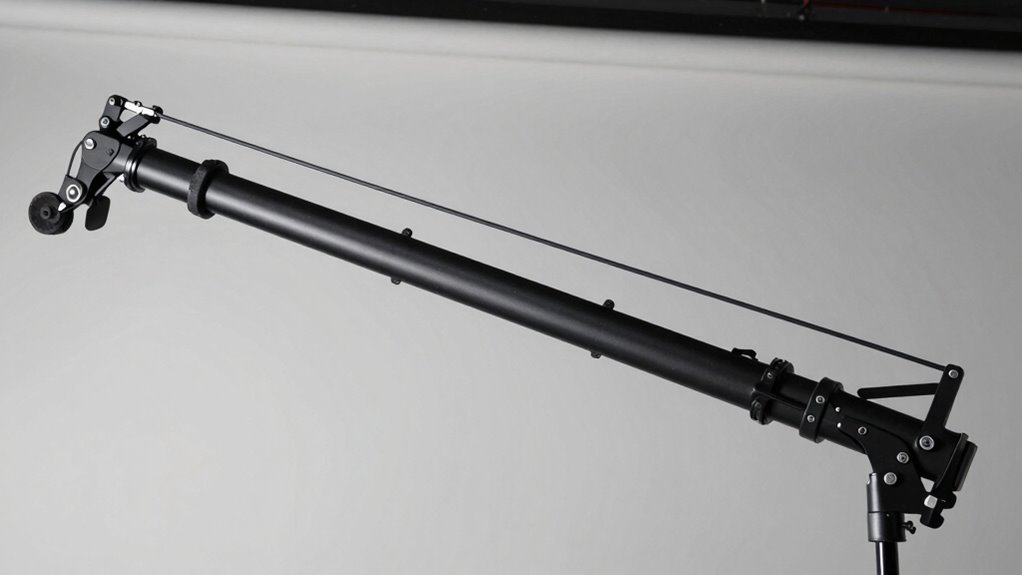
To guarantee your boom arm stays steady during filming, start by securing it properly to a solid mount using the right techniques. Next, balance the arm carefully with appropriate counterweights to prevent sagging or wobbling. When you combine secure mounting with proper balancing, you’ll achieve a stable setup that supports smooth overhead shots. Additionally, regularly inspecting your kitchen tools for wear and damage helps maintain safety and optimal performance. Ensuring your equipment is well-maintained and trusted can also prevent unexpected issues during filming, especially when using reliable cables and hardware to connect your equipment efficiently. Incorporating advanced materials into the design of your boom arm can further enhance its stability and durability, reducing the risk of sag and shake over time. Using sturdy mounting hardware designed for heavy-duty use can provide an extra layer of stability to your setup.
Secure Mounting Techniques
Ensuring your boom arm is securely mounted is essential for stable overhead filming. Proper mounting prevents unwanted shake and sag, keeping your camera steady for ideal shots. Use sturdy clamps and ensure the mount is anchored to a solid support, like a ceiling beam or a heavy-duty stand. Check that all connections are tight before adjusting camera angles or lighting setups. A secure mount allows you to focus on framing your shot without worrying about movement. Consider the weight of your equipment when choosing mounting hardware to avoid slipping or collapsing. Proper setup also helps maintain consistent lighting and camera angles, making your footage look professional and polished. Additionally, understanding mounting hardware compatibility is crucial for ensuring a secure and reliable setup. Confirm that your hardware supports the weight capacity of your equipment to prevent accidents. When selecting hardware, it’s also important to verify that it is suitable for the type of support you are using to ensure maximum stability.
Balance and Counterweights
Have you properly balanced your boom arm to prevent sagging or wobbling during filming? Using effective balance techniques is essential for stability. Start by adjusting the counterweight options; many boom arms have adjustable weights or plates. Place the counterweights close to the mounting point to counteract the load at the arm’s end. Move the weights gradually until the arm feels balanced when extended horizontally. Ensure the arm stays level and doesn’t drift when you let go. Proper balancing reduces strain on the motor and minimizes shake in your footage. Keep checking the balance after making adjustments, especially when switching cameras or accessories. A well-balanced boom arm with the right counterweight options guarantees smoother operation and steadier shots during overhead filming.
Add Counterweights and Supports to Prevent Sag
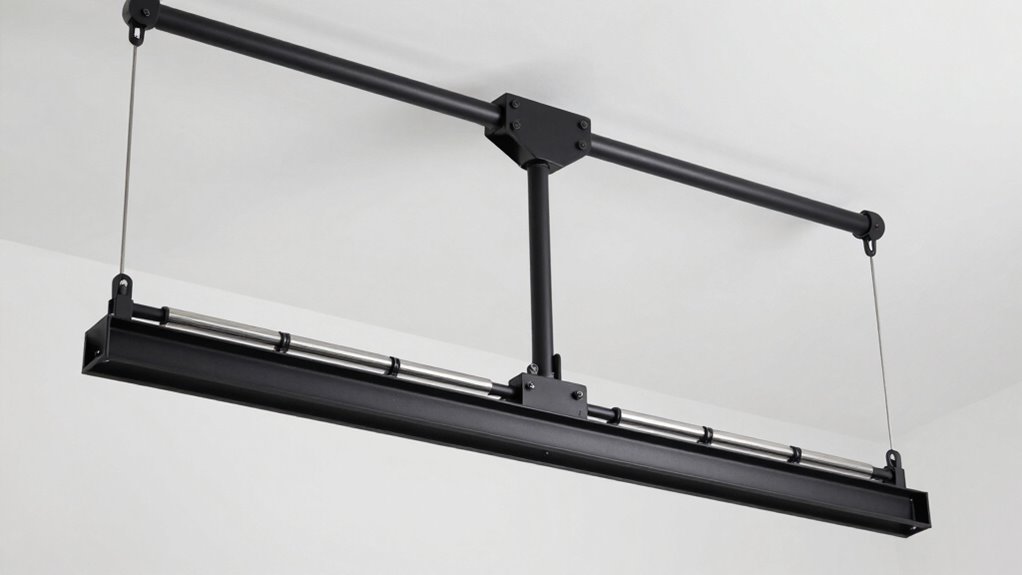
Adding counterweights and supports is essential to prevent your boom arm from sagging under the weight of the camera and accessories. Proper counterweight placement balances the load, reducing strain on the arm. Support brackets can provide extra stability, especially for heavier setups. Use the table below to understand how different supports can help:
| Support Type | Purpose | Best Use Cases |
|---|---|---|
| Counterweights | Balance the load on the arm | Heavier cameras and accessories |
| Support Brackets | Reinforce weak points and prevent sag | Long reaches or extended setups |
| Clamps | Secure supports and counterweights | Ensuring stability during filming |
| Adjustable Supports | Customize tension and support | Versatile setups and weight variations |
Tips to Minimize Shake During Filming
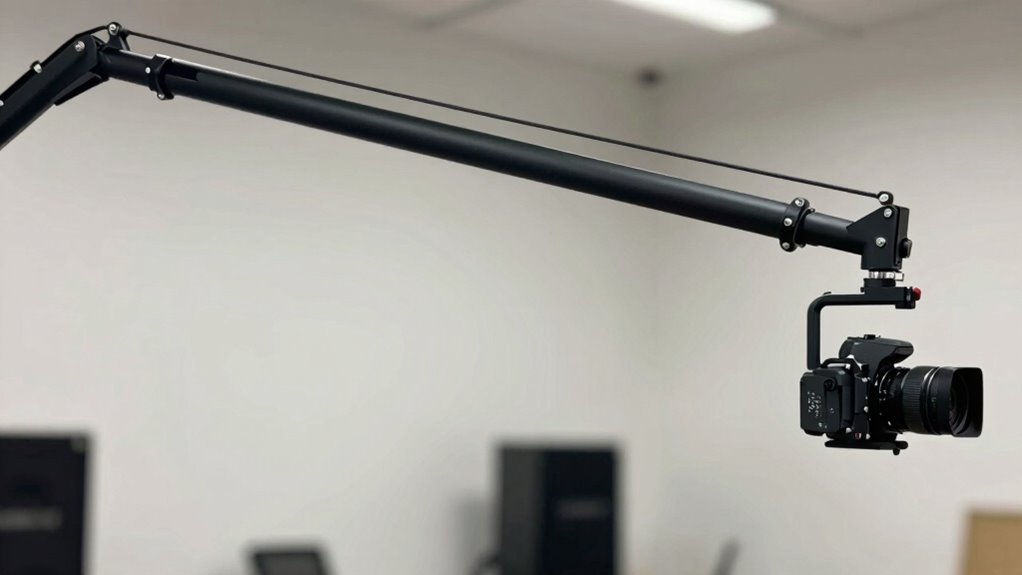
To keep your footage smooth and professional-looking, focus on minimizing shake during filming. Start by stabilizing your boom arm with proper counterweights and supports, reducing unwanted movement. Pay attention to your lighting setup; make sure lights are securely mounted to avoid vibrations that can transfer to your camera. Use smooth, deliberate camera angles to minimize abrupt movements—avoid quick pans or tilts that can cause shake. When adjusting your camera, hold it steady and consider using a tripod or stabilizer if possible. Keep your workspace free of vibrations or drafts that could jostle your equipment. Practicing controlled, steady movements and double-checking your setup before recording will help produce cleaner, more stable footage.
Maintain and Adjust Your Equipment for Long-Term Stability
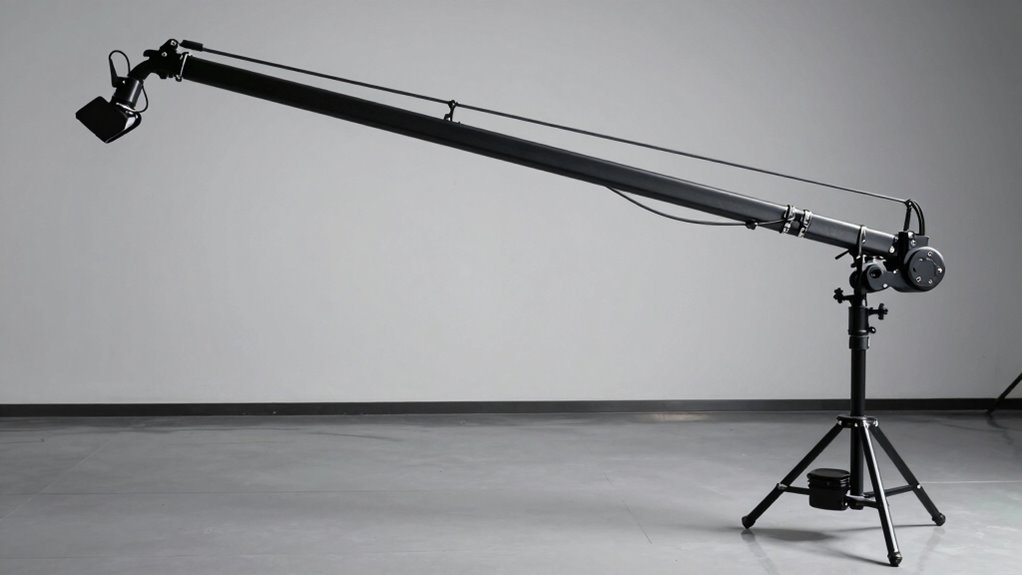
Regularly inspecting and tightening all components of your boom arm and supporting equipment is essential for long-term stability. This maintenance guarantees your camera angles stay precise and your lighting adjustments remain consistent. Check joints, clamps, and counterweights weekly to prevent loosening that can cause sag or shake over time. Adjusting the tension helps maintain smooth movement and reduces unwanted vibrations. Keep a checklist to track these tasks and avoid neglect. Consider the table below to help prioritize your maintenance:
| Component | Inspection Frequency | Adjustment Tips |
|---|---|---|
| Joints & Clamps | Weekly | Tighten screws and bolts |
| Counterweights | Monthly | Ensure even distribution |
| Mounting Hardware | Every 2 weeks | Lubricate if needed |
| Camera Mounts | Weekly | Verify secure connection |
| Lighting Attachments | After each shoot | Adjust for ideal angles |
Troubleshoot Common Overhead Filming Stability Issues
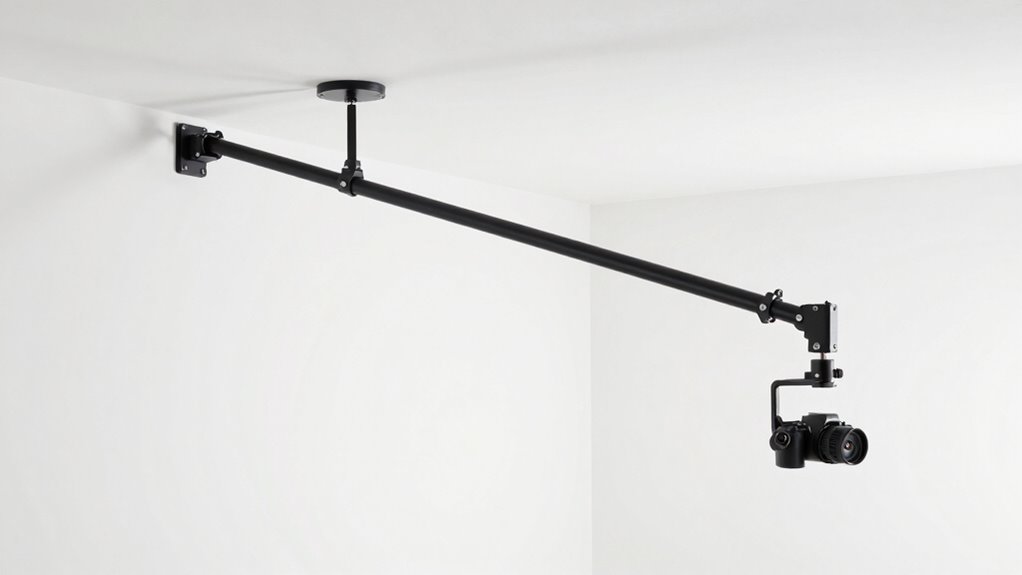
Even with proper maintenance, stability issues can still arise during overhead filming. If your boom arm shakes or sags, start by checking your lighting setup—loose fixtures or uneven weight distribution can cause instability. Make sure your camera angles aren’t putting excessive strain on the arm; awkward or top-heavy positions can lead to wobbling. Tighten any loose clamps or joints, and verify that the mounting surface is secure. If sag persists, consider adding counterweights or adjusting the arm’s positioning to balance the load better. Sometimes, the issue stems from the boom arm’s design itself, so inspecting for wear or damage helps. Troubleshooting these common problems ensures your overhead shots stay steady and professional.
Frequently Asked Questions
What Materials Are Best for Durable Boom Arm Construction?
You should choose materials with high durability, like steel or aluminum, for your boom arm. Steel offers strength and longevity, while aluminum keeps the arm lightweight yet sturdy. Use construction techniques such as reinforced joints and thick gauges to enhance durability and stability. These materials and methods work together to prevent sag and shake, ensuring your overhead filming remains smooth and reliable over time.
How Often Should I Check My Boom Arm for Wear?
Think of your boom arm like a vintage camera—regular care keeps it running smoothly. You should check your boom arm for wear every couple of months or sooner if you notice any instability or unusual noises. Follow a consistent maintenance schedule and inspection tips, like tightening joints and looking for cracks or rust. This way, you’ll catch issues early, ensuring your setup stays stable and safe during filming.
Can Specific Camera Weights Affect Boom Arm Stability?
Yes, your camera weight definitely affects boom stability. If you attach a camera that’s too heavy, it can cause sag and shake, making your footage less steady. To prevent this, always check that your boom arm can handle your camera’s weight comfortably. Use counterweights if necessary, and make sure your boom arm is rated for your camera’s weight to maintain ideal stability during filming.
Are There Automatic Stabilization Systems for Overhead Filming?
Yes, there are automatic stabilization systems for overhead filming that help reduce shake and keep your shots steady. These systems use advanced auto stabilization technology, such as gyroscopic sensors and motorized gimbals, to automatically adjust the camera’s position. When you use these, you can focus on your shot without worrying about vibrations or sag, making your overhead filming smoother and more professional-looking.
What Are Common Mistakes to Avoid When Setting up a Boom Arm?
When setting up a boom arm, avoid poor balance techniques and improper mounting options. Always guarantee the arm is balanced correctly to prevent sag and shake. Use counterweights where needed, and double-check your mounting points for stability. Don’t tighten everything too quickly; take time to adjust for smooth movement. Properly balancing and choosing the right mounting options help maintain stability, ensuring your overhead shots stay steady and professional-looking.
Conclusion
By balancing your boom arm with robust supports, strategic counterweights, and proper setup, you prevent pesky sag and shake from spoiling your shots. Stay vigilant with maintenance, make quick adjustments, and master stability for flawless filming. With these tips, you’ll confidently capture crisp, consistent overhead footage, turning shaky struggles into smooth success. Remember, a well-wielded, well-watched boom arm is your best bet for perfect, professional shots every time.