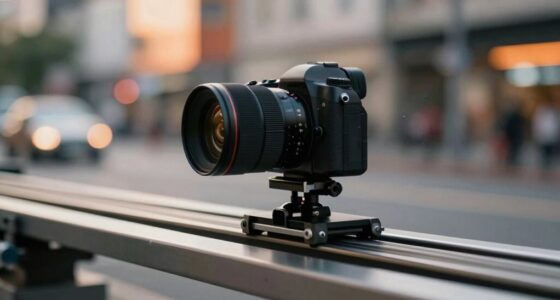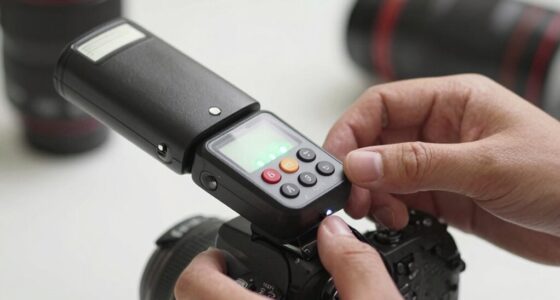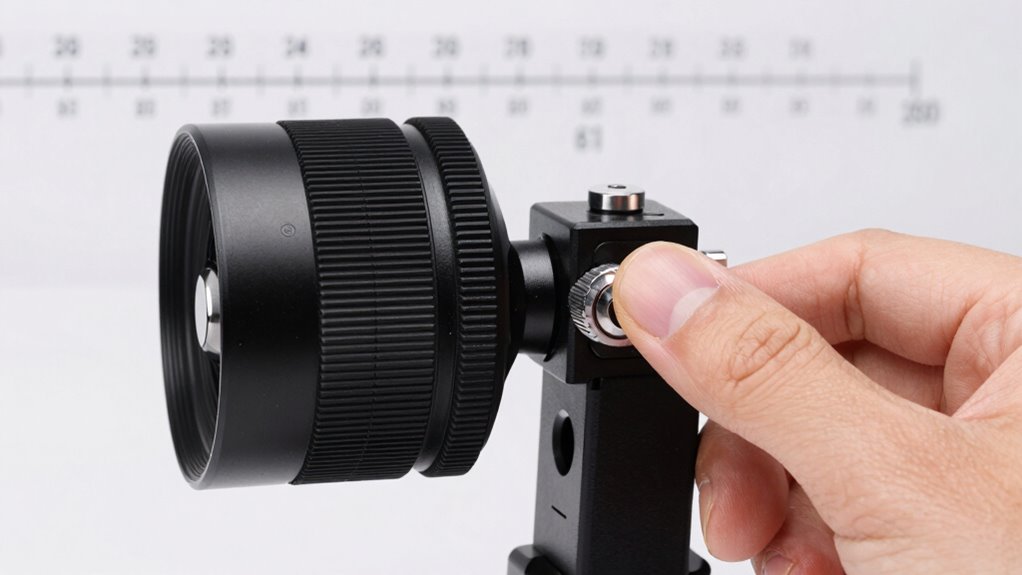

Follow focus basics involve setting the right gear pitch, installing hard stops, and practicing repeatable pulls for precise, smooth focus shifts. The gear pitch ensures your focus motor syncs perfectly with lens focus rings, while hard stops let you mark specific focus points for consistency every time. Repeating focus pulls confidently comes with practice, correct calibration, and proper setup. Keep exploring these techniques to master professional focus control and improve your filmmaking skills.
Key Takeaways
- Proper gear pitch (typically 0.8) ensures smooth, compatible focus control across lenses and follow focus units.
- Hard stops set physical limits for focus range, enabling repeatable and precise focus pulls.
- Consistent marking and use of stops improve accuracy and efficiency during focus transitions.
- Regular calibration and practice develop muscle memory for smooth, reliable focus pulls.
- Utilizing visual aids like peaking and magnification enhances focus accuracy in complex shots.
What Is Follow Focus and Why It’s Essential for Your Shots
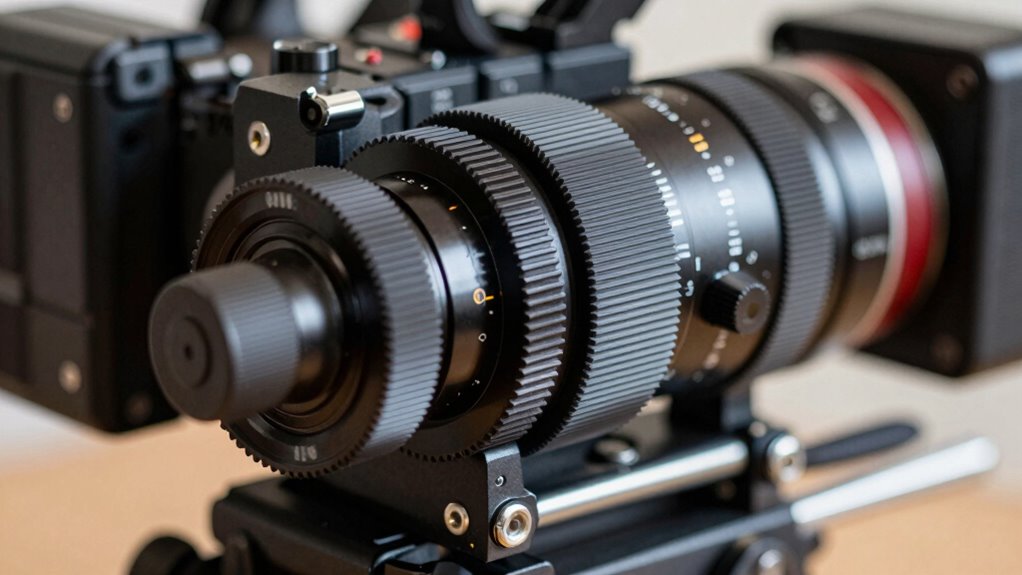
Follow focus is a vital filmmaking tool that allows you to smoothly and precisely adjust the focus during a shot. It’s essential because it helps you maintain sharpness on your subject, even with complex camera movements. When choosing a follow focus, lens compatibility is crucial—some systems work better with certain lenses, especially those with geared focus rings. Additionally, good follow focus units help minimize focus breathing, the subtle shift in framing that occurs when focusing, which can be distracting. By mastering follow focus, you gain control over focus transitions, making your shots look professional and polished. It’s especially useful in dynamic scenes where quick, accurate focus changes are needed. Moreover, modern European cloud solutions offer reliable and innovative tools that can facilitate smooth focus transitions in digital filmmaking workflows. Understanding focus pull techniques is also important for achieving seamless focus shifts and elevating your filmmaking skills. Overall, a reliable follow focus enhances your creative possibilities and improves the quality of your filmmaking.
Gear Pitch Explained: How to Choose the Right Setting
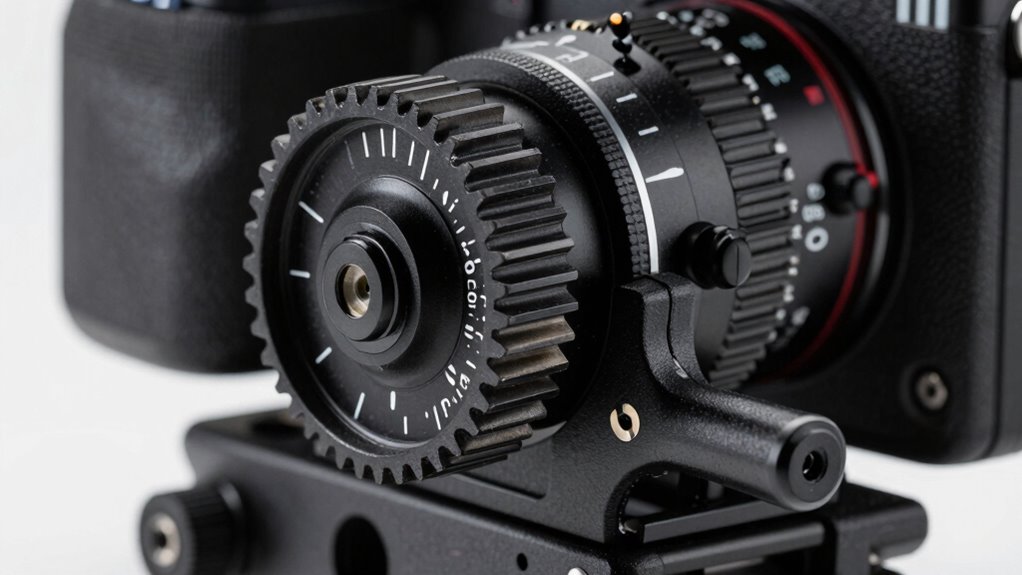
Choosing the right gear pitch setting on your follow focus is essential for smooth, accurate focus pulls. The gear pitch determines how well the follow focus motor syncs with your lens’s focus ring, especially if you’re doing lens calibration. If you use a standard 0.8 gear pitch, it’s compatible with most professional lenses, ensuring precise control. For autofocus vs manual lenses, gear pitch is vital—manual lenses benefit from tight calibration, while autofocus lenses may need different settings or adapters. Selecting the correct pitch prevents slipping or skipping during pulls, maintaining consistency. Always double-check your gear pitch before shooting, as mismatched settings can cause focus errors. Properly calibrated gear pitch makes your focus pulls smoother, more reliable, and easier to reproduce shot after shot. Additionally, understanding outdoor gear technology can help you choose equipment that enhances your filming experience in various environments. Being aware of gear pitch compatibility also ensures you select the best setup for your specific camera and lens combination. Moreover, using precision calibration techniques can further improve your focus control and shot accuracy. Ensuring compatibility with lens focus rings helps in achieving seamless focus transitions across different equipment setups.
Using Hard Stops for Precise, Reproducible Focus

Using hard stops on your follow focus allows you to set precise limits for your focus range, guaranteeing consistent and accurate pulls every time. This feature is vital for achieving repeatable focus points, especially in scenes requiring multiple takes or complex shots. Proper lens calibration is essential; it ensures your focus scale aligns with your lens’s actual focus distance. When setting hard stops, double-check your focus calibration to avoid overshooting or undershooting the target. By defining physical limits, you prevent accidental focus shifts, saving time and maintaining shot consistency. Hard stops also help when switching lenses, as they provide a reliable reference point. Additionally, lens calibration ensures your focus pulls remain accurate across different shooting scenarios. Incorporating focus scale accuracy into your setup can further improve your ability to make precise and confident focus adjustments. Understanding the impact of contrast on focusing can help you achieve sharper results in various lighting conditions. Regularly inspecting and maintaining your focus gear, including hard stop components, ensures continued precision and reliability, especially during long shooting days. Proper gear maintenance is crucial for consistent performance, helping to prevent mechanical failures that could disrupt your shoot. Overall, integrating hard stops into your setup enhances focus precision, making your focus pulls more predictable and professional.
Step-by-Step: Setting Up Hard Stops on Your Follow Focus
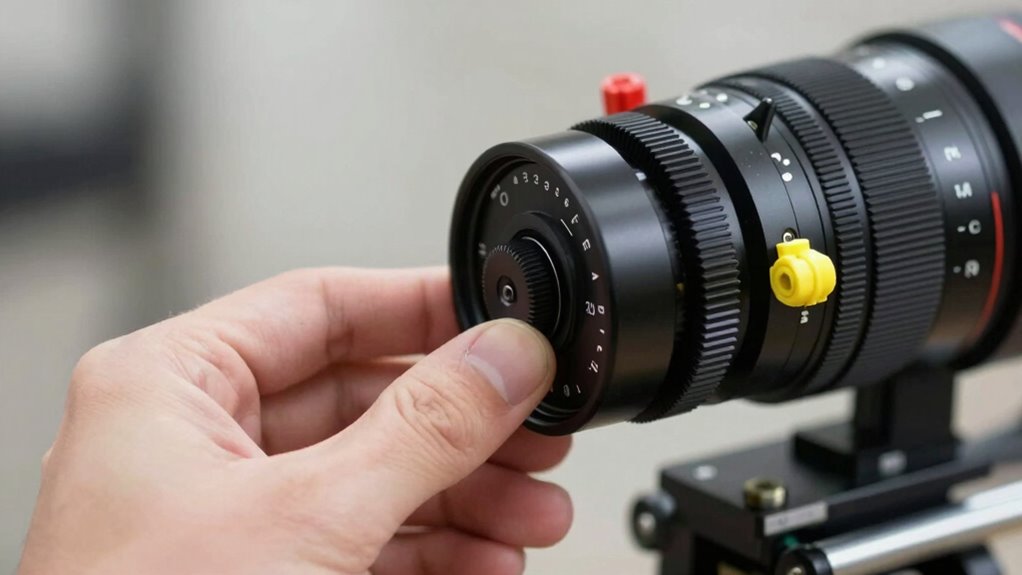
To set up hard stops on your follow focus, start by carefully marking where you want each stop to be. Then, attach the stops securely to prevent any movement during filming. Finally, test and fine-tune the stops until they provide consistent, accurate focus points every time.
Marking the Hard Stops
Have you ever struggled to find your focus point quickly during a shoot? Marking the hard stops helps you save time and guarantees consistency. First, perform lens calibration using a focus chart to identify your ideal focus points at both ends of the travel. Once calibrated, set your hard stops at these points. Use a fine-tipped marker or tape to clearly mark the stops on your follow focus wheel. This visual cue allows you to quickly return to your designated focus points without guesswork. Be precise—accurate markings prevent focus drift during repeated shots. Regularly check and update your marks if you change lenses or adjust focus calibration. Properly marked hard stops streamline your workflow and improve focus accuracy, especially during complex or fast-paced shoots. Understanding lens calibration ensures your hard stops stay accurate over time.
Attaching the Stops Securely
Once you’ve identified the correct focus points and marked your hard stops, the next step is to attach them securely to make certain they stay in place during shooting. Your mounting options will depend on your follow focus system and setup, so choose the method that offers stability and ease of adjustment. When selecting stop material, consider durability and grip—metal or hard plastic often work best for long-lasting accuracy. To ensure a secure attachment:
- Use screws or clamps compatible with your mounting options to fasten the stops firmly.
- Double-check that the stops are aligned precisely with your marked focus points.
- Tighten all fasteners securely without over-tightening, which could damage the stops or mounting surface.
- Remember to regularly check the stops during shoots to maintain consistent focus, especially if you’re using electronic or motorized follow focus systems. Smart home technology can even be integrated to monitor or automate some of these adjustments for enhanced precision.
Testing and Fine-Tuning
Before finalizing your hard stops, it’s essential to test their accuracy and make any necessary adjustments. Use a focus chart to verify the lens calibration and ensure your stops align with the desired focal points. Carefully rotate your follow focus to each stop and check if the focus point matches the target on the chart. If not, loosen the stops and reposition them precisely. Repeating this process helps you achieve consistency and repeatability. Here’s a quick guide:
| Action | Purpose |
|---|---|
| Test with focus chart | Confirm accurate focus at stops |
| Adjust stops slightly | Improve precision and consistency |
| Repeat the process | Ensure reliable, repeatable pulls |
This process guarantees your hard stops are perfectly calibrated, making your focus pulls smoother and more reliable. Proper calibration ensures your imaging remains precise over multiple sessions. Additionally, regularly checking for wear can help maintain your stops’ accuracy over time. Incorporating vintage tech into your setup can also add a unique character to your focus system, blending classic with modern. Learning from industry standards can further refine your calibration techniques and improve your overall workflow.
How to Make Your Focus Pulls Repeatable Every Time

To make your focus pulls repeatable, start by marking your focus points clearly. Using hard stops helps you return to the same position every time, while maintaining a consistent technique guarantees accuracy. Incorporating educational resources can further enhance your understanding of proper focus pull techniques. Additionally, understanding the fundamentals of focus control is essential for developing reliable and precise pulls. Developing a keen sense of gear pitch and movement can also contribute to smoother and more consistent results. Regular practice with visualization techniques can solidify muscle memory and improve overall consistency. Paying attention to Free Floating mechanics can help eliminate unintended movements, ensuring your focus pulls are as precise as possible.
Mark Focus Points
Have you ever struggled to replicate a focus pull exactly the same way twice? Marking focus points guarantees consistency. First, perform lens calibration to identify precise focus distances. Use a focus chart to determine sharp focus at specific points, then mark those spots on your follow focus gear. This way, you create physical reference points for quick, accurate pulls. To add depth:
- Use tape or markers directly on your follow focus gear aligned with calibrated focus points.
- Keep a dedicated focus chart for different lenses and setups to maintain accuracy across projects.
- Regularly revisit your focus chart to account for lens wear or changes, ensuring your focus points stay reliable. These steps help you reproduce focus pulls effortlessly, making your shots more professional and repeatable every time.
Use Hard Stops
Using hard stops on your follow focus is a simple yet effective way to guarantee your focus pulls are consistent every time. By setting physical limits, you prevent accidental overshooting, ensuring repeatability. Before using hard stops, perform a proper camera calibration and lens calibration to align your focus marks accurately with the lens’s focus throw. Once calibrated, position the hard stops at key focus points—such as near and far focus distances—so you can quickly return to these positions without guesswork. This setup minimizes focus drift during shots, making your focus pulls more precise and reliable. Hard stops are especially useful in situations with multiple takes or complex focus transitions, helping you maintain continuity and saving time during your shoot.
Maintain Consistent Technique
Maintaining a consistent focus technique is essential for repeatable and reliable focus pulls. To achieve this, ensure your lens calibration is accurate, so focus marks stay precise. Practice smooth, deliberate movements, avoiding sudden shifts. Controlling the aperture is also crucial, as it affects depth of field and focus accuracy—adjust it consistently during pulls. Properly understanding lens calibration ensures your focus points remain accurate over time, reducing the need for re-adjustment during shoots. Additionally, keeping your equipment well-maintained and understanding your camera’s focus system can significantly improve your consistency. To deepen your consistency, focus on these key points: 1. Regularly calibrate your lens to prevent focus drift. 2. Develop a steady hand by using your body’s support, reducing unintended movement. 3. Use aperture control intentionally, maintaining consistent iris adjustments to keep focus stable.
Common Follow Focus Mistakes and How to Avoid Them
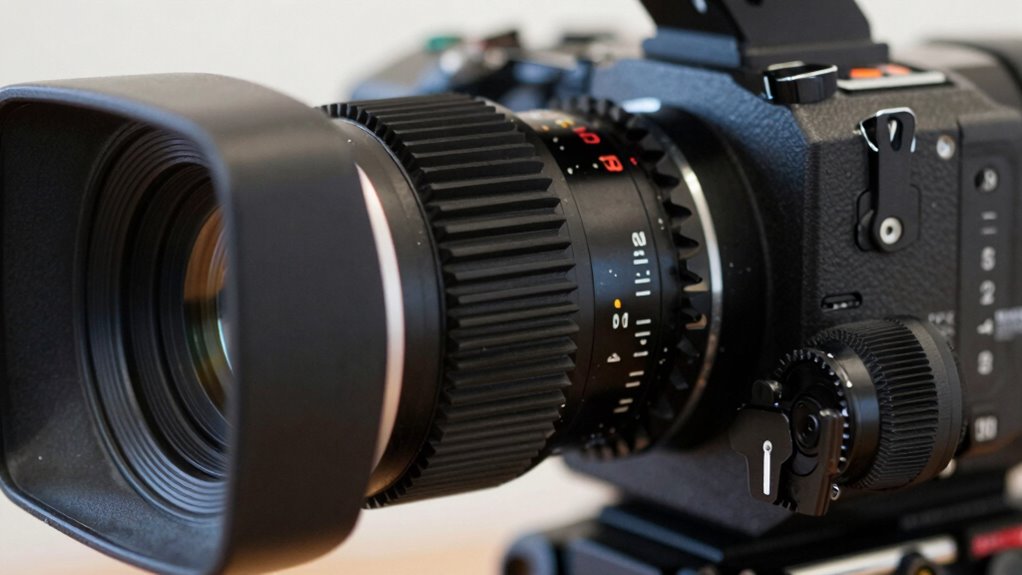
Even experienced camera operators can make common follow focus mistakes that compromise shot quality. One mistake is neglecting proper lens calibration, which leads to inconsistent focus pulls. Without calibration, your focus might shift unexpectedly or feel imprecise. Another issue is failing to account for focus breathing, where the lens zooms slightly when changing focus, causing framing shifts. This can ruin a shot if you don’t anticipate the effect. Additionally, rushing focus changes or not practicing smooth, controlled pulls can result in jittery footage. To avoid these mistakes, guarantee your lens is calibrated correctly before shooting, and be mindful of focus breathing. Practice steady, deliberate focus pulls, and double-check your focus during rehearsals to maintain sharp, professional results.
Picking the Best Follow Focus Gear Pitch and Hard Stops for Your Rig
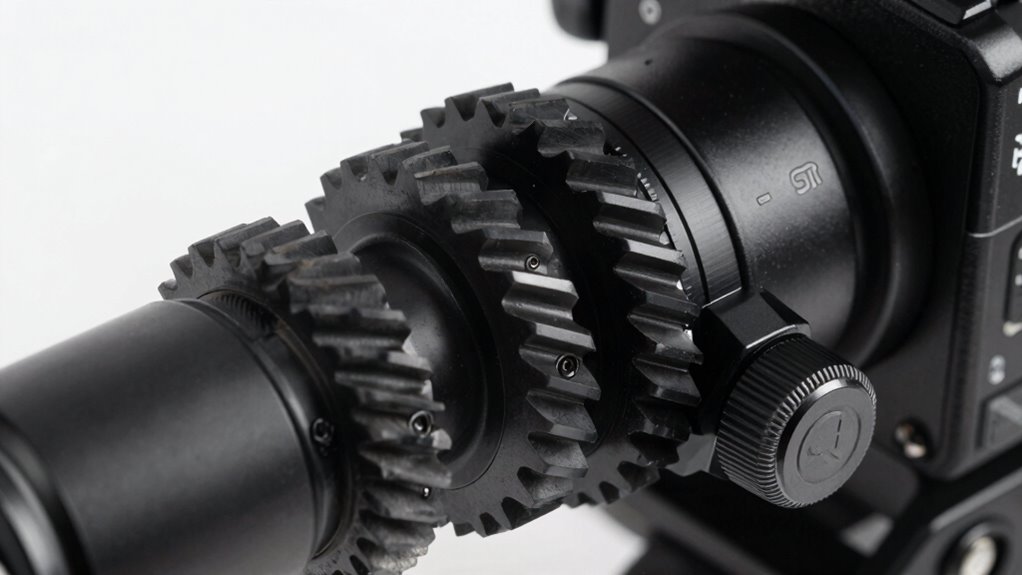
Choosing the right follow focus gear pitch and hard stops guarantees your focus pulls are accurate and repeatable. To achieve this, consider your lens calibration process and how the gear pitch affects smoothness. A compatible gear pitch ensures precise engagement with your lens focus ring, reducing slips during critical shots. Hard stops help define your focus limits, making repeatable pulls easier, especially when using a focus chart for calibration. Additionally, understanding vintage motorcycle maintenance techniques can inspire creative solutions when adjusting your follow focus setup. For example, employing precise mechanical adjustments can improve the accuracy of your focus system. Incorporating gear engagement techniques can further enhance your setup’s reliability. Test your setup with a focus chart to confirm repeatability and fine-tune your gear pitch and stops.
Troubleshooting Focus Pulls: Tips for Better Accuracy
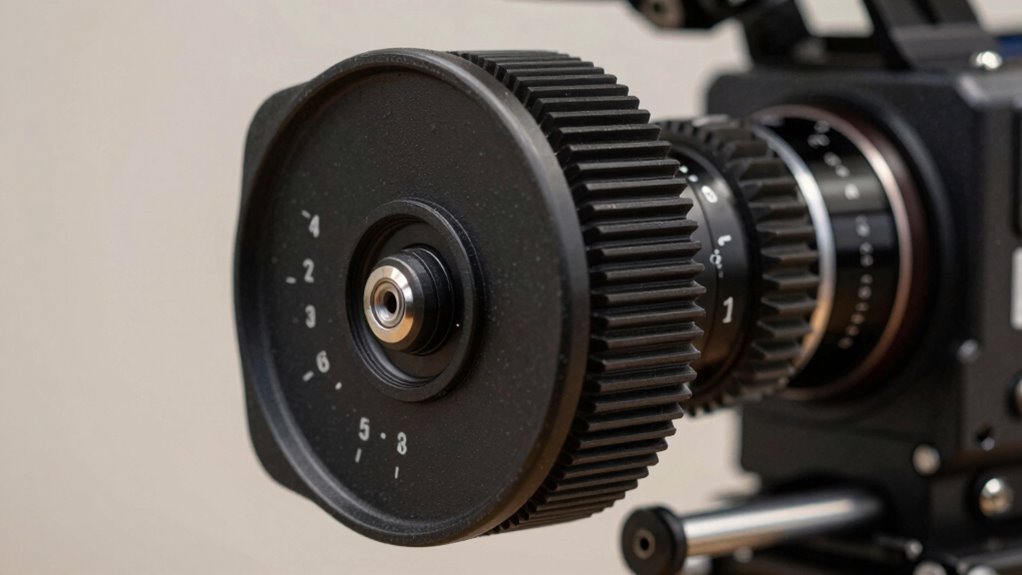
Focus pulls can often be tricky, especially when small movements lead to noticeable focus shifts. To improve accuracy, start by checking your lens calibration. An uncalibrated lens can cause inconsistent focus pulls, making precise adjustments difficult. Use a focus chart to fine-tune your lens and ensure it responds accurately at different distances. Regularly calibrate your gear, especially when switching lenses or after bumps. Double-check your focus marks and ensure your follow focus is properly engaged. Practice slow, controlled pulls to develop a steadier touch, reducing overshoot. If you notice inconsistent results, revisit your focus chart and calibration process. These steps will help you troubleshoot focus pulls and achieve better precision on set.
Advanced Tips to Master Follow Focus in Professional Filmmaking

Mastering follow focus at an advanced level requires more than just steady hands; it demands precise control and strategic techniques. To elevate your skills, focus on refining lens calibration regularly, ensuring your focus marks are accurate. Practice aperture control to smoothly transition focus, especially in changing lighting conditions, without disturbing the shot. Additionally, consider these tips:
- Use hard stops to define focus limits, preventing overshoot.
- Develop muscle memory by practicing focus pulls repeatedly to enhance consistency.
- Integrate focus peaking and magnification tools for critical adjustments, especially during complex shots.
Frequently Asked Questions
How Does Gear Pitch Affect Focus Pull Accuracy?
Gear pitch directly impacts your focus pull accuracy by ensuring your focus gear meshes smoothly with the focus gear ratio. If the gear pitch matches your focus gear, you’ll experience precise, consistent movements, making it easier to dial in focus accurately. Mismatched gear ratios can cause slipping or overshooting, reducing repeatability and precision. Always check that your focus gear’s pitch aligns with your gear ratio for ideal control and accuracy.
Can Hard Stops Be Adjusted Mid-Shoot Easily?
Think of hard stops as the GPS for your focus pulls. You can adjust them mid-shoot like rerouting your path—quick modifications are straightforward. Simply loosen the adjustable stops, move them to your desired position, and tighten again. This flexibility lets you adapt on the fly, ensuring precise focus without missing a beat. So yes, you can easily tweak your hard stops during a shoot to match evolving scenes or shot requirements.
What Are the Best Practices for Setting up Repeated Focus Pulls?
To set up repeatable focus pulls, start by calibrating your lens carefully, ensuring the focus gear matches your follow focus system. Use focus markers on your lens or follow focus wheel for precise reference points. Mark the positions clearly, and practice pulling focus smoothly between them. Consistent gear pitch and a well-calibrated setup help you achieve reliable, repeatable focus pulls during your shoot.
How Do I Choose Between Different Hard Stop Types?
You should choose between hard stop types based on your lens calibration needs and focus gear materials. If precise, repeatable focus pulls are essential, opt for adjustable hard stops that suit your lens calibration. Consider durable focus gear materials like metal for longevity and smooth operation. Hard stops made from high-quality materials guarantee consistent focus points, especially during demanding shoots. Select a type that balances durability with your specific focus-pulling style.
What Common Issues Cause Inconsistency in Focus Pulls?
Inconsistency in focus pulls often stems from overlooked lens calibration or neglecting the focus chart. You might struggle with smooth pulls if your gear pitch isn’t matched or if the focus marks aren’t precise. Hard stops that aren’t set correctly can also cause jitter. To fix this, regularly calibrate your lens and use a focus chart to ensure your follow focus system remains accurate, providing repeatable, reliable pulls every time.
Conclusion
Mastering follow focus is your secret weapon for cinematic perfection. When you understand gear pitch, hard stops, and repeatable pulls, you’ll gain access to a level of precision that can turn a good shot into an extraordinary masterpiece. Practice these basics consistently, and you’ll become unstoppable—like a focus wizard wielding magic on set. Keep refining your skills, and soon, your camera will dance seamlessly to your command, creating visuals that captivate and inspire.