
Even though stainless steel resists rust, environmental factors like moisture, salt, and pollutants can weaken its protective chromium oxide layer and cause stains. Surface scratches or contamination can also speed up corrosion. To keep your items looking new, clean regularly with gentle products and avoid harsh chemicals. Proper maintenance and protective coatings help prevent rust, but if persistent stains appear or damage worsens, it’s time to explore effective removal methods and when to seek help.
Key Takeaways
- Stainless steel can stain or rust when its protective chromium oxide layer is damaged or compromised by scratches, chemicals, or environmental factors.
- Exposure to salt, moisture, pollutants, and acidic substances accelerates corrosion despite its “stainless” reputation.
- Regular cleaning with non-abrasive, pH-neutral products and proper maintenance help prevent stains and rust formation.
- Applying protective coatings, such as nanotechnology-based sealants, enhances resistance to environmental damage.
- For existing rust or stains, gentle cleaning with vinegar or baking soda, followed by professional treatment if severe, restores surface integrity.
What Causes Rust and Stains on Stainless Steel?
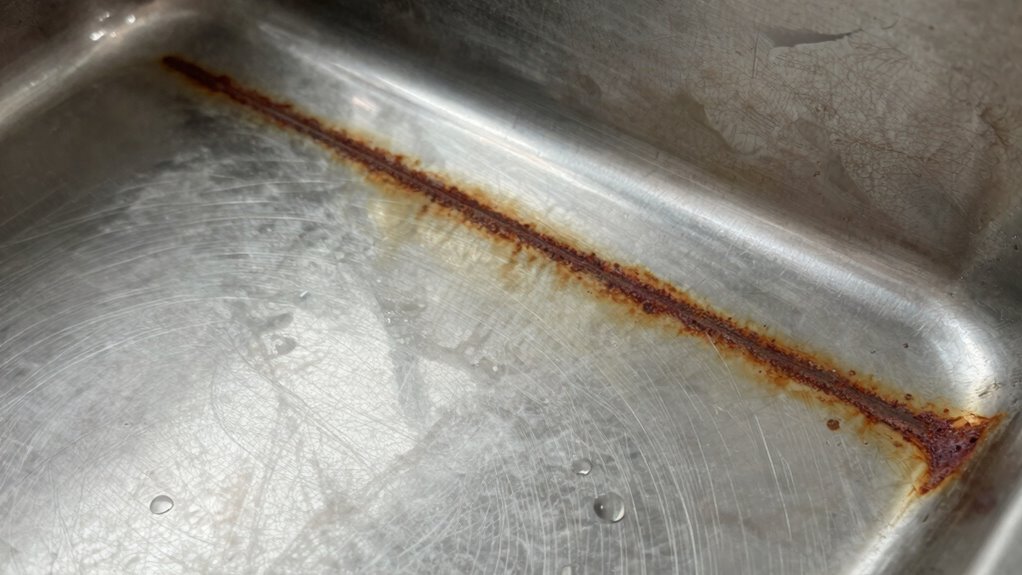
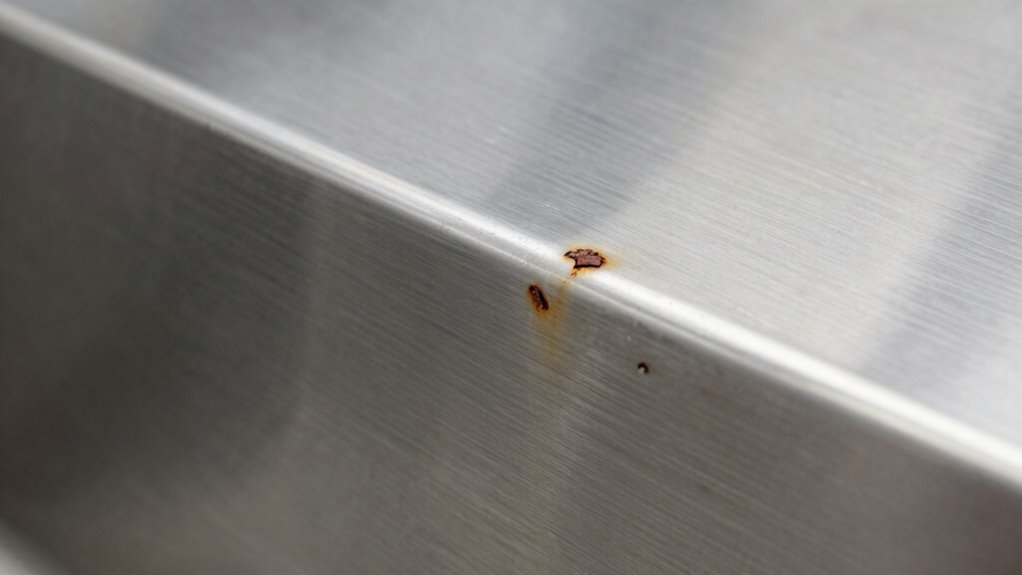
Even though stainless steel is highly resistant to rust, it can still develop stains and corrosion under certain conditions. This happens because of specific corrosion mechanisms that weaken the protective chromium oxide layer. When this layer is compromised—due to exposure to harsh chemicals, salt, or moisture—iron particles within the steel can oxidize, leading to rust. Stain formation often results from these oxidation processes, where minerals or contaminants settle on the surface, creating discoloration. Additionally, improper cleaning or prolonged contact with corrosive substances accelerates these mechanisms. Understanding how corrosion occurs helps you prevent stains, as it highlights the importance of keeping stainless steel surfaces clean, dry, and free from harsh chemicals to maintain their integrity and appearance. Regular maintenance and using appropriate cleaning methods can further help preserve the protective layer and reduce the risk of staining. Recognizing corrosion mechanisms also aids in selecting suitable cleaning agents to prevent deterioration, emphasizing the significance of surface protection in preserving stainless steel’s appearance. Employing protective coatings can act as an extra barrier against external corrosive elements, and choosing the right coating can significantly extend the lifespan of stainless steel surfaces.
Are Stainless Steel Items Truly Rustproof? Debunking Common Myths
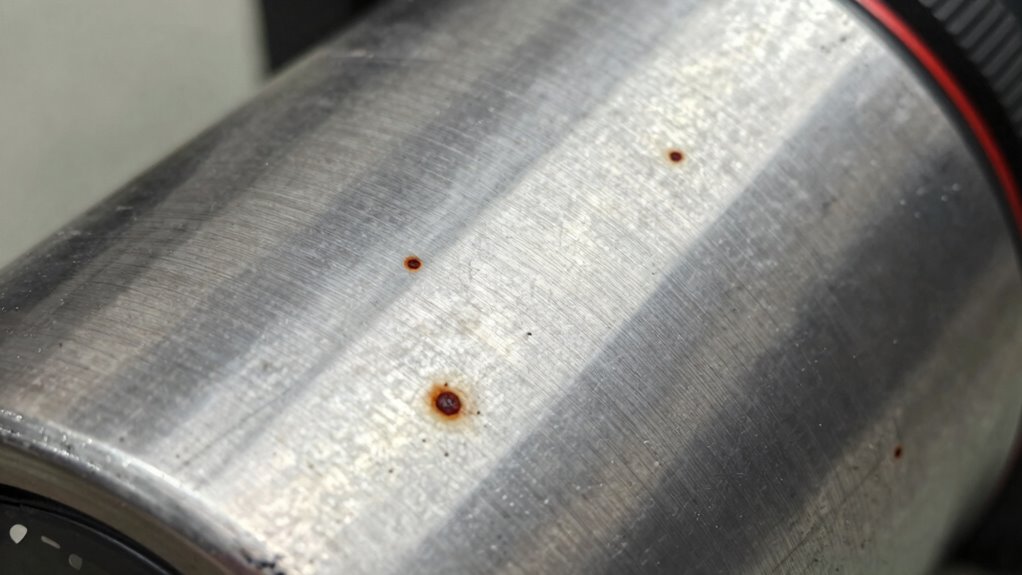
Many people assume that stainless steel is completely immune to rust, but this isn’t entirely accurate. Stainless steel contains chromium, which forms a thin, protective oxide layer that resists corrosion. However, this layer isn’t foolproof. If the surface gets scratched or exposed to harsh environments, rust can still form. Material facts show that while stainless steel is highly resistant, it’s not entirely rustproof. Different grades offer varying levels of corrosion resistance, so choosing the right type matters. Proper maintenance, like regular cleaning and avoiding harsh chemicals, helps preserve its integrity. Additionally, understanding the sustainability practices involved in manufacturing and maintaining stainless steel can contribute to its longevity. For example, eco-friendly production methods can reduce environmental impact and support sustainable manufacturing practices. Recognizing the role of material grades in corrosion resistance enables you to select the most suitable stainless steel for your needs. Furthermore, researching corrosion-resistant alloys can help you make more informed choices. Understanding these facts helps you set realistic expectations and properly care for your stainless steel items, preventing unnecessary rusting.
How Do Environmental Factors Speed Up Rusting?

Environmental factors such as moisture, salt, and pollutants directly accelerate the rusting process by creating ideal conditions for corrosion. These corrosion accelerators interact with the metal surface, increasing the likelihood of oxidation. For example, salty environments, like coastal areas, promote rust formation by enhancing electrochemical reactions. Pollutants, such as sulfur compounds or acid rain, lower the pH level, making metals more vulnerable to corrosion. Moisture provides the necessary water molecules for rust to form, especially when combined with oxygen in the air. Understanding corrosion science helps you better protect your metal surfaces from premature deterioration. Recognizing the impact of environmental conditions can help you take preventative measures to reduce rust formation. These environmental impacts amplify the natural corrosion process, transforming stainless steel from a rust-resistant material into one susceptible to stains and degradation. Additionally, the effect of temperature fluctuations can cause expansion and contraction of metal surfaces, further weakening protective layers and increasing rust susceptibility. The presence of air pollutants can also produce corrosive compounds on metal surfaces, accelerating rusting. Understanding how environmental factors influence rust helps you better protect your metal surfaces from premature deterioration.
Tips to Prevent Rust and Keep Your Stainless Steel Looking New
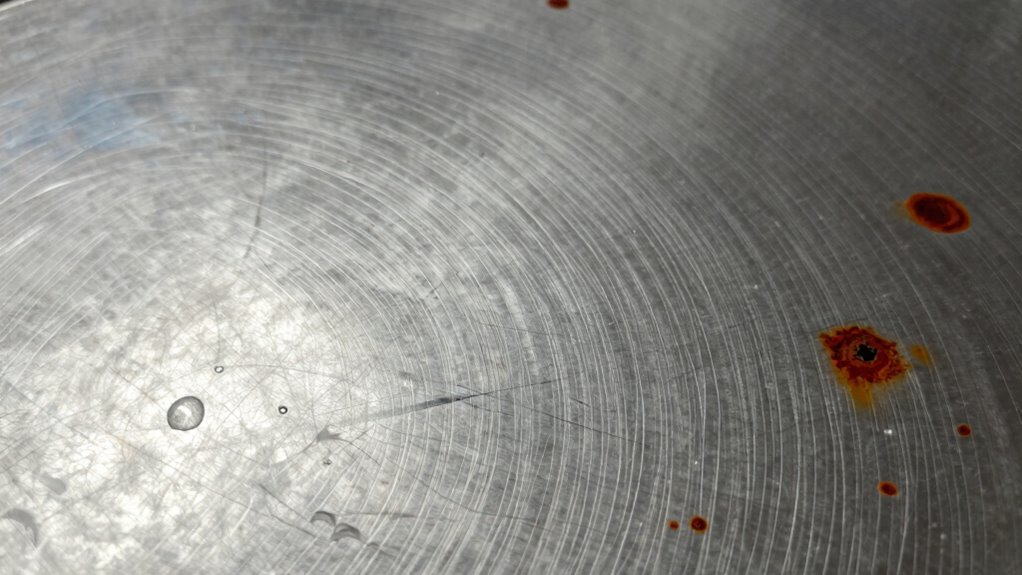
To keep your stainless steel looking new and prevent rust, regular cleaning is essential. Use products specifically formulated for stainless steel to avoid damaging its surface. Opt for rust resistant finishes when selecting stainless steel alloys, as these provide added protection against corrosion. Wiping down surfaces after exposure to water or moisture helps prevent buildup that can lead to rust. Avoid harsh abrasives or chlorine-based cleaners, which can damage the protective layer. Applying a thin coat of mineral oil or a stainless steel conditioner periodically can enhance the surface’s resistance to rust. Ensuring proper ventilation and drying in storage areas also minimizes rust formation. Proper storage conditions, such as keeping items in dry, low-humidity environments, further reduce the risk of rust development. Choosing the right stainless steel alloys and maintaining a consistent cleaning routine will help prevent rust and keep your surfaces looking shiny and new longer. Additionally, being aware of aero purifier maintenance dos and don’ts can help you maintain your environment to reduce moisture and humidity, which are factors that contribute to rust formation.
Best Cleaning Practices for Stainless Steel Surfaces
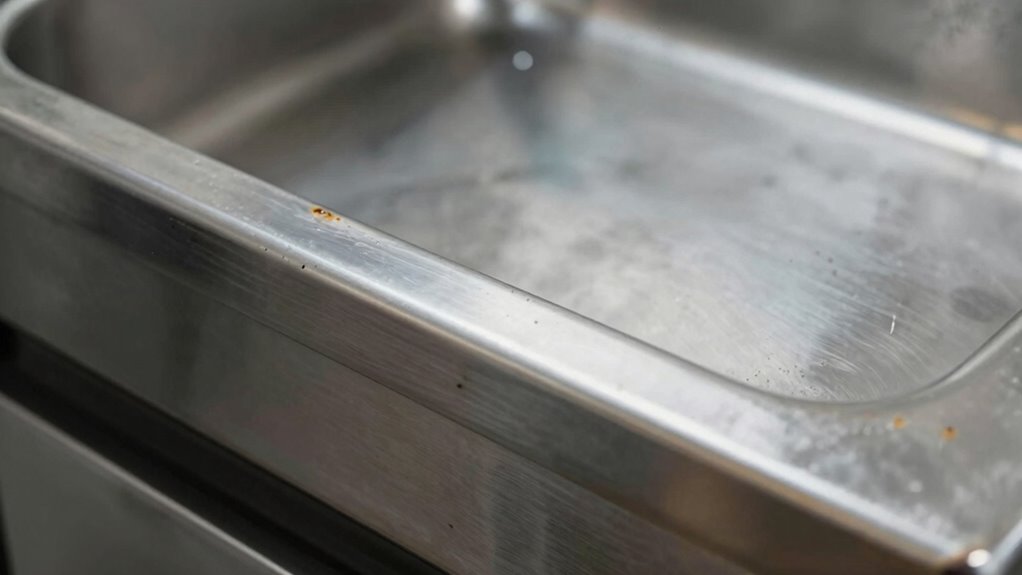
The key to maintaining pristine stainless steel surfaces is adopting proper cleaning practices. Regular cleaning helps prevent stains and corrosion, so establish an appropriate cleaning frequency based on usage. Use gentle cleaning solutions like warm water and mild soap, avoiding harsh chemicals that can damage the surface. When polishing, employ soft cloths and non-abrasive techniques to avoid scratching. Consistent polishing techniques help restore shine and remove fingerprints or smudges. Be sure to wipe in the direction of the grain for the best results. Schedule cleanings based on how often the surface is used or exposed to contaminants. Additionally, understanding the importance of proper maintenance schedules can extend the lifespan of your stainless steel surfaces. Incorporating ventilation considerations can also help reduce moisture buildup that may lead to staining or rust. Implementing nanotechnology-based coatings offers an innovative way to enhance corrosion resistance and ease cleaning efforts. Proper surface preparation before applying coatings can further improve longevity and stain resistance. Recognizing moisture management as a critical aspect can prevent the formation of rust and stains over time. By sticking to these best cleaning practices, you’ll keep your stainless steel looking new and resist staining or rust formation over time.
How to Repair or Remove Rust and Stains When They Occur

When rust or stains appear on stainless steel surfaces, prompt and proper action can prevent permanent damage. Start by cleaning the area with a gentle detergent and water to remove surface dirt. For rust spots, chemical treatments like rust removers containing phosphoric or oxalic acid can be effective—just follow the product instructions carefully. DIY remedies, such as applying a paste of baking soda and water or white vinegar, can also work to lift stains and rust. Use a soft cloth or non-abrasive scrubber to gently work the solution into the stain, then rinse thoroughly. Avoid harsh abrasives that could scratch the surface. Regular maintenance with these methods can keep your stainless steel looking its best and help prevent future rust formation.
When Should You Call a Professional for Severe Rust Damage?

If you notice rust causing structural damage or weakening metal, it’s time to call a professional. Safety should always come first if you suspect rust has compromised the integrity of your property or equipment. Ignoring these signs can lead to serious risks and costly repairs later on.
Signs of Structural Damage
Severe rust damage can compromise the safety and stability of your structure, making it essential to recognize early warning signs. Look for corrosion indicators such as flaking paint, bubbling surfaces, or dark spots, which suggest ongoing deterioration. If you notice sections where metal feels soft or crumbles easily, it’s a clear sign your structural integrity is at risk. Warped or bowed materials, cracks near rusted areas, or sagging components also signal severe damage. Ignoring these signs can lead to sudden failures or collapses. When you observe multiple corrosion indicators or suspect that rust has penetrated deeply, it’s time to call a professional. Addressing severe rust early can prevent costly repairs and ensure the safety of everyone around your structure.
Safety Concerns and Risks
Detecting rust damage early is essential because ignoring it can lead to sudden structural failures that put lives at risk. Severe rust can compromise integrity, increasing personal injury hazards and chemical exposure risks during repairs. You should call a professional if:
- Rust has penetrated deeply, weakening load-bearing structures.
- Rust is near electrical wiring or plumbing, risking electrical shocks or leaks.
- Surface rust is extensive, requiring specialized removal and treatment methods.
Attempting DIY fixes on severe rust can release harmful chemicals or cause injury if the material crumbles unexpectedly. Professionals have the proper safety gear and expertise to handle these hazards safely. When in doubt, consult an expert to prevent accidents, injuries, or further damage. Proper safety procedures should always be followed to minimize risks during repair work. Safety should always come first.
Frequently Asked Questions
Can Stainless Steel Rust Under Extreme Weather Conditions?
Yes, stainless steel can rust under extreme weather conditions. While it offers excellent corrosion resistance, prolonged exposure to harsh elements like heavy rain, snow, or saltwater can compromise its surface. Weather effects may cause stains or minor rust spots, especially if the protective layer is scratched or damaged. To prevent this, regularly clean your stainless steel and apply protective coatings, ensuring its durability even in extreme environments.
Do All Stainless Steel Grades Resist Staining Equally?
Not all stainless steel varieties resist staining equally; some are like armor, warding off corrosion, while others are more vulnerable. Imagine a shiny, resilient shield that withstands harsh weather, versus a weaker one that stains easily. Your choice of stainless steel grade directly impacts its corrosion resistance. For lasting beauty, opt for higher grades like 316, which offer superior protection against stains and corrosion, especially in tough environments.
How Long Does Stainless Steel Typically Last Before Rust Appears?
Stainless steel can last decades before rust appears if you follow proper maintenance tips. Regular cleaning, avoiding harsh chemicals, and keeping it dry help prevent stains. Material comparisons show that higher-grade stainless steels, like 316, resist corrosion longer than lower grades. You’ll notice less staining and longer lifespan when you choose the right grade and maintain it regularly, ensuring your stainless steel stays looking good for years to come.
Are DIY Rust Removal Methods Safe for Stainless Steel?
DIY rust removal methods can be safe for stainless steel if you use proper cleaning techniques and avoid harsh chemicals. You should opt for gentle approaches like vinegar or baking soda, which cause minimal chemical reactions that could damage the surface. Always test a small area first, and avoid abrasive scrubbers. Properly rinsing and drying the surface guarantees no residue remains, helping to keep your stainless steel looking its best.
What Are the Signs That Rust Damage Is Beyond Simple Repair?
When rust spotting and corrosion patterns become widespread or deep, it’s a sign the damage is beyond simple repair. If you notice pitting, flaking, or peeling surfaces, it’s time to face the music. These signs indicate rust has penetrated the material, compromising its integrity. Don’t ignore these symptoms; continuing repairs won’t hold. At this point, replacing the affected part or consulting a professional is your best bet.
Conclusion
Even the sturdiest stainless steel can fall victim to rust if you’re not careful. Think of it like a knight’s armor—still vulnerable if exposed to relentless enemies like salt and moisture. But with the right care and quick action, you can keep your steel shining like a polished sword. Stay vigilant, clean regularly, and don’t hesitate to call in the pros when the rust threatens to take over. Your steel’s sparkle depends on your vigilance!