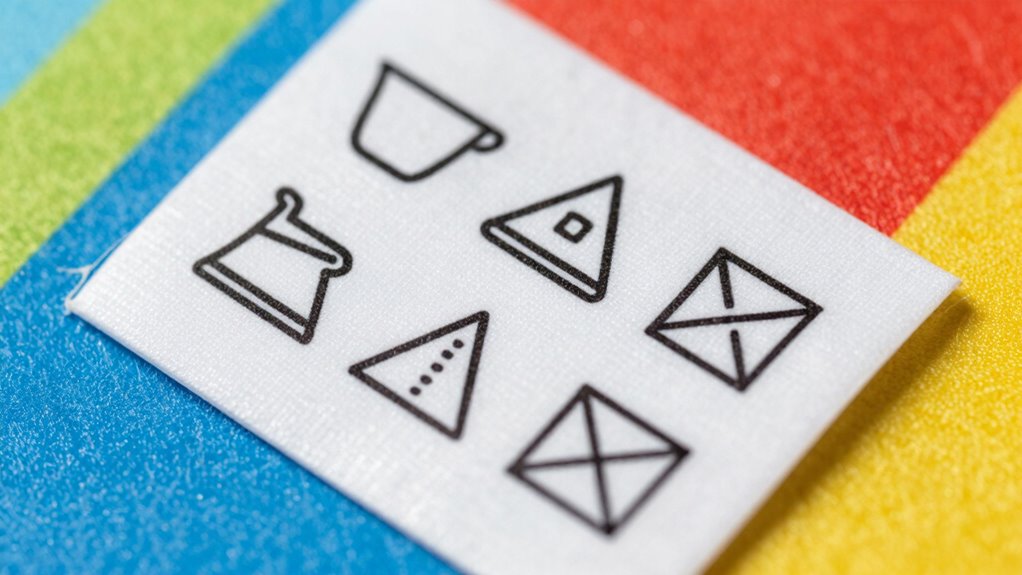

Understanding fabric care symbols is your key to avoiding laundry mishaps. These symbols tell you how to wash, dry, bleach, and iron clothes correctly, helping you prevent damage and extend their lifespan. With a quick reference guide, you can easily interpret labels and ensure proper treatment of your garments. Keep these symbols in mind, and you’ll handle your laundry more confidently—if you keep going, you’ll discover all the secrets to perfect clothing care.
Key Takeaways
- Familiarize yourself with standardized symbols for washing, drying, bleaching, and ironing to ensure proper garment care.
- Recognize specific icons like tubs, triangles, and irons to interpret care instructions quickly and accurately.
- Understand temperature indicators and cycle symbols to prevent damage and extend clothing lifespan.
- Use the correct symbols to identify delicate fabrics needing gentle handling or special cleaning methods.
- Create a personal cheat sheet by organizing common symbols and notes for easy reference during laundry routines.
What Do Fabric Care Symbols Really Mean?

Have you ever wondered what those symbols on your clothing labels actually mean? They’re part of fabric label language, designed to communicate care instructions quickly and efficiently. Each textile symbol meaning is standardized, so no matter the brand, a triangle or a square has a specific purpose. For example, a circle indicates dry cleaning instructions, while a bucket signifies washing details. Understanding these symbols helps you care for your clothes properly, preventing damage. The symbols often combine with numbers or lines that specify temperature or cycle type. Learning the standardized textile symbols makes laundry simpler and ensures your garments stay in good condition longer. Once you familiarize yourself with these symbols, you’ll handle your laundry with confidence and avoid accidental mishaps. Recognizing these symbols empowers you to choose the right clothing care methods and extend the life of your wardrobe. Mastering fabric care symbol interpretations can also help you avoid costly mistakes and maintain your clothes’ appearance over time. Additionally, being aware of local laundry practices can improve your garment care routine.
How to Decode Washing and Drying Symbols to Avoid Laundry Mistakes

Learning to recognize common symbols helps you avoid laundry mishaps. Interpreting temperature indicators guarantees you don’t damage delicate fabrics, and understanding drying icons guides you to the right method. Mastering these symbols keeps your clothes looking their best and saves you time and money. Additionally, familiarizing yourself with Free Floating concepts can help you adapt your laundry routines to different fabric types and environmental conditions.
Recognize Common Symbols
Understanding washing and drying symbols is essential to prevent damage and keep your clothes looking their best. These symbols have a rich symbol history rooted in textile symbolism, which dates back decades. Recognizing common symbols like the tub for washing, a triangle for bleaching, or a square for drying helps you quickly interpret care instructions. Most symbols are standardized, making it easier to decode regardless of the brand or label language. For example, a tub with wavy lines indicates a gentle wash, while a circle signifies dry cleaning. Familiarity with these symbols allows you to avoid mistakes like over-washing or improper drying, ultimately extending the life of your garments. Learning to recognize these common symbols empowers you to care for clothes confidently and correctly. Standardized symbols facilitate consistent understanding across different brands and regions, ensuring proper garment care everywhere.
Interpret Temperature Indicators
Interpreting temperature indicators on care labels is essential for maintaining your clothes’ quality. By understanding the symbols, you prevent damage caused by incorrect washing or drying temperatures. These symbols follow fabric heat guidelines, guiding you on the right temperature to use for each garment. For example, a single dot indicates cold water, while three dots suggest hot water. Here’s a quick reference:
| Temperature Level | Symbol | Suitable Fabrics |
|---|---|---|
| Cold | ● | Delicates, wool, silk |
| Warm | ●● | Polyester, blends |
| Hot | ●●● | Cotton, linen, sturdy fabrics |
| Very Hot | ●●●● | Heavy-duty cleaning, towels |
| Do not wash | 🚫 | Items requiring dry cleaning |
Matching symbols with fabric heat guidelines helps you avoid laundry mistakes.
Understand Drying Icons
Drying methods are just as important as washing temperatures when it comes to caring for your clothes. Understanding drying icons helps prevent damage and keeps your garments looking their best. A circle inside a square indicates tumble drying; if there’s no line or dots inside, tumble drying is usually safe at any heat. A circle with a cross means no tumble drying, while one with a single dot suggests low heat. If you see a line beneath the icon, it indicates flat drying or drip drying. Using fabric softener during the wash can make clothes softer and reduce static, but always check the drying symbols before tumble drying. Following these cues ensures you avoid shrinking or damaging your clothes while maintaining their quality longer.
Recognizing Special Care Symbols for Delicate Fabrics and Items
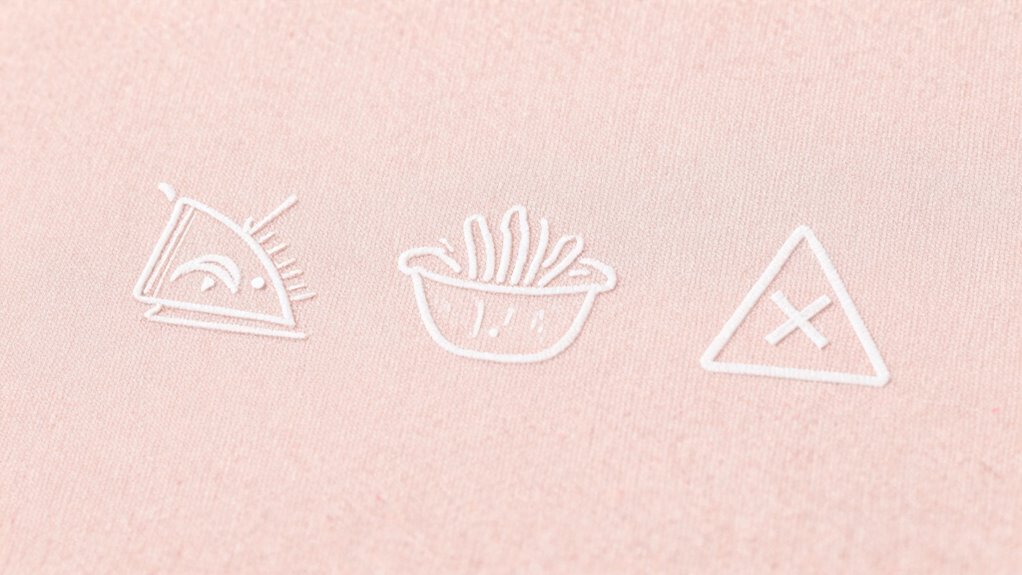
Recognizing special care symbols for delicate fabrics and items is essential to preserving their quality and longevity. These symbols guide you in maintaining fabric softness and ensuring color preservation. Look for icons like a hand in a tub, indicating hand wash only, which helps protect delicate fibers from damage. Symbols with a crossed-out bleach sign prevent color fading and preserve vibrancy. For fabrics requiring gentle handling, a symbol resembling a feather or a specific washing temperature can prevent stretching or shrinking. Paying attention to these icons ensures you don’t compromise the fabric’s texture or hue. Additionally, understanding fabric care symbols helps you select the appropriate cleaning method to avoid unintentional damage. Recognizing and interpreting these symbols also supports proper laundry practices, reducing the risk of mishandling delicate items. Being familiar with care symbols can also guide you in choosing suitable detergents and conditioners for different fabrics. Knowing the manufacturer’s symbols can help you follow specific instructions tailored to each item. Properly interpreting care symbols can also assist in identifying special instructions for drying or ironing delicate fabrics. By following these cues, you maintain the integrity of your delicate items, keeping them soft and colorful for longer periods. Mastering these symbols helps you care for delicate fabrics effectively and confidently.
How to Interpret Ironing Symbols and Keep Your Clothes Wrinkle-Free

Understanding ironing symbols is key to keeping your clothes looking sharp without damage. These symbols guide you on the right temperature and methods to prevent wrinkles while avoiding scorching fabrics. For example, a single dot indicates low heat, while three dots mean high heat. An iron with a cross shows you shouldn’t iron at all, helping you avoid accidental damage. To keep clothes wrinkle-free, follow these tips:
- Use the correct temperature based on the symbol
- Employ proper ironing techniques, like smooth, even strokes
- Don’t press too hard, especially on delicate fabrics
- Use steam when appropriate to relax fibers and reduce wrinkles
When and How to Use Bleaching and Whitening Symbols Safely
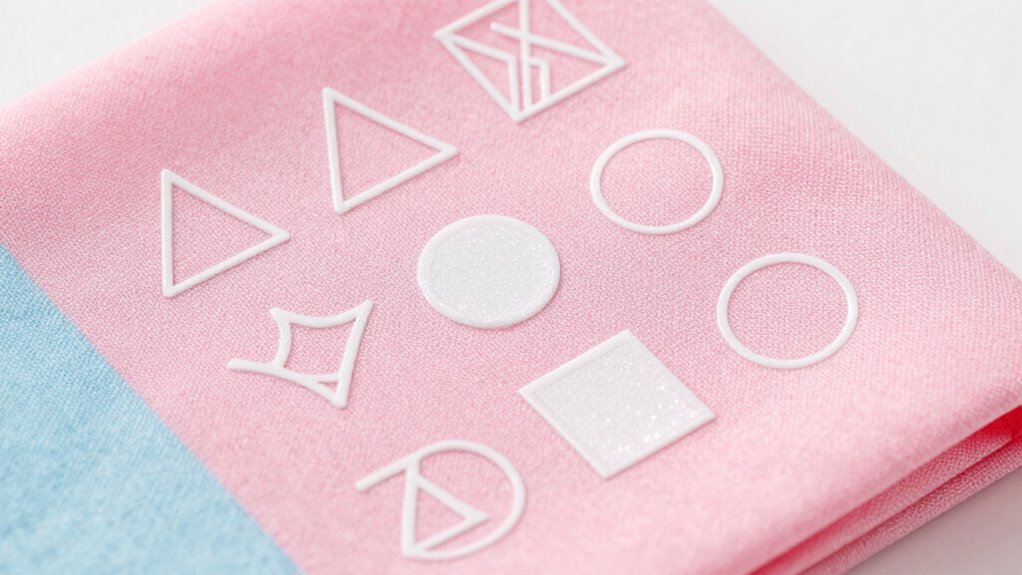
Knowing how to recognize bleaching symbols helps you prevent damage, so always check your care labels. Using the right whitening methods guarantees your clothes stay bright without harm. Developing a methodical approach to laundry routines ensures consistent results and reduces the risk of mistakes. Additionally, understanding color accuracy in your washing process can help maintain the vibrancy of your clothing colors.
Recognize Bleaching Symbols
Have you ever wondered when it’s safe to use bleach on your clothes? Recognizing bleaching symbols helps you follow proper bleaching safety and avoid damage. Look for a triangle with a diagonal cross — this means bleaching isn’t permitted. A plain triangle indicates bleach can be used safely. A triangle with “CL” or “bleach” inside signals that non-chlorine bleach is safe. If you see a triangle with two lines inside, it’s for oxygen-based or gentle bleaching only. Understanding these symbols ensures you use the right method for stain removal without risking discoloration. Always follow the symbols closely to protect your garments and maintain their quality. Correct recognition of bleaching symbols makes stain removal safer and your clothes last longer.
Use Correct Whitening Methods
Using whitening and bleaching products safely depends on knowing when and how to follow the symbols on your care labels. If your label shows a triangle with or without lines, it indicates whether bleaching is permitted. For clothes that can handle bleach, use a fabric softener along with whitening agents to prevent damage and maintain softness. Always follow the recommended water temperature—usually cold or warm—to avoid weakening fibers. For stain removal, apply bleach carefully and only on suitable fabrics. Never use bleach on delicate or colored fabrics unless the symbol indicates it’s safe. Overusing whitening products can weaken fabrics or cause discoloration, so adhere to the symbols and instructions. Proper use ensures your clothes stay bright, soft, and in good condition longer. Additionally, understanding fabric care symbols helps prevent accidental damage and prolongs the lifespan of your garments. Recognizing the cultural significance of traditional dyeing methods can also guide you in choosing eco-friendly and gentle whitening options. Being aware of safe bleaching techniques can further ensure you preserve the integrity of your clothing while maintaining their brightness. Consulting professional laundry advice can provide personalized tips for delicate or valuable items.
Tips for Reading Less Common and International Care Symbols

When you encounter less common or international care symbols, it can seem confusing at first, but with a few simple tips, you can decipher them easily. Recognize that symbol variations exist across different countries, so understanding international standards helps you interpret these icons correctly. For example, exquisite post standards help identify specific care instructions across global markets. Additionally, familiarizing yourself with standardized shapes and lines can make decoding these symbols more straightforward. – Look for standardized shapes and lines, which often follow global norms. – Refer to a trusted guide or chart that explains international standards for fabric care. – Pay attention to subtle differences, like dots or lines, which indicate temperature or cycle variations. – Consider context; some symbols combine multiple instructions, so interpret each part carefully. Moreover, understanding how these symbols relate to Indigenous Wellness Essentials and traditional practices can deepen your appreciation for cultural approaches to care, even when applied to textiles and clothing. To further aid your understanding, exploring resources on international fabric care standards can provide clarity on these symbols’ meanings across different regions.
How to Create a Personal Fabric Care Cheat Sheet for Quick Reference

Creating a personal fabric care cheat sheet is a practical way to quickly access essential washing and drying instructions tailored to your wardrobe. Start by reviewing the fabric label icons on your clothes, paying close attention to the laundry symbols guide. Note common symbols such as machine wash, dry clean, or tumble dry, and record their meanings alongside any special instructions like temperature or drying method. Organizing this information in a clear, easy-to-reference format—either on paper or digitally—can streamline your laundry routine. Use symbols and brief notes to make it quick to scan. Keep the cheat sheet updated as you add new clothing items or encounter unfamiliar symbols. Incorporating proper care guidelines from reliable sources can also extend the lifespan of your garments and prevent damage. Understanding laundry safety practices helps ensure your clothes are cared for correctly without risk of mishaps. Familiarizing yourself with fabric care symbols can further enhance your ability to care for different textiles properly. To make the process even more effective, consider creating visual references that quickly communicate the necessary care steps. This customized reference, combined with clear organization, saves time, minimizes mistakes, and helps you care for your clothes correctly every time.
Troubleshooting Laundry Mishaps Using Care Symbols

When laundry mishaps happen, start by recognizing problematic symbols that might be causing issues. Match these symbols to your fabric types to guarantee proper care and avoid damage. Correct common errors by understanding what each symbol means and adjusting your washing process accordingly.
Identifying Problematic Symbols
Identifying problematic symbols on your laundry care labels is essential for preventing mishaps and preserving your clothes. Sometimes, symbols are misunderstood due to fabric symbol myths or outdated laundry symbol updates that cause confusion. Recognizing these issues helps you avoid damage and ensures proper care. For example, a crossed-out triangle might seem like a warning, but it could mean “no bleach,” not “do not wash,” if misunderstood. Similarly, an iron symbol with dots might be misread if you’re unaware of recent updates. To avoid mistakes, look for symbols that are faded, ambiguous, or inconsistent across labels. Understanding these problem areas empowers you to interpret labels correctly, preventing mishaps and keeping your clothes in top condition. Stay informed about laundry symbol updates to keep your knowledge current.
Matching Symbols To Fabrics
Matching symbols to fabrics is crucial for preventing laundry mishaps and ensuring your clothes stay in top condition. Proper fabric labeling helps you identify the right care symbols to follow, which is essential for symbol matching. Different fabrics react uniquely to washing, drying, and ironing processes, so understanding which symbols correspond to specific materials can save you from damage. For example, delicate silks require gentle cycles, while sturdy cottons tolerate more aggressive cleaning. By learning to associate care symbols with fabric types, you reduce the risk of shrinkage, color fading, or tearing. Always check the fabric content label first, then match the symbols accordingly. This approach keeps your laundry routine safe, effective, and tailored to each fabric’s unique needs.
Correcting Common Errors
Even with careful attention to care symbols, laundry mishaps can still happen if you misinterpret or overlook their meaning. If you notice fabric softener causing buildup or colors fading, check the symbols for proper usage. To correct issues:
- Rewash stained clothes with appropriate stain removal techniques, avoiding harsh chemicals that could damage the fabric.
- Use the correct cycle and temperature indicated, ensuring delicate fabrics aren’t overexposed to heat.
- Rinse thoroughly if leftover fabric softener causes stiffness or residue.
- Adjust your drying method based on symbols—air dry or low heat—to prevent shrinkage or damage.
Understanding these symbols helps you troubleshoot common errors, keep clothes looking their best, and avoid costly mistakes. Proper care guarantees your fabrics stay soft, vibrant, and well-maintained.
How Properly Decoding Care Symbols Can Save Your Clothes and Money

Understanding care symbols on your clothing labels can help you avoid costly mistakes that damage your garments. When you decode these symbols correctly, you protect both fabric durability and your wallet. For example, knowing the proper washing temperature prevents fiber weakening, extending the life of your clothes. It also guides you on stain removal techniques without risking damage, saving you from costly repairs or replacements. Recognizing symbols for drying and ironing ensures you don’t accidentally shrink or scorch fabrics, which can lead to early disposal. Properly caring for your clothes based on these symbols reduces the need for frequent replacements, ultimately saving money. Mastering how to read care labels empowers you to maintain your wardrobe’s quality, keeping clothes looking new longer and avoiding unnecessary expenses.
What Next? How to Remember and Record Fabric Care Symbols for Easy Use

Keeping track of all those care symbols can seem overwhelming, but developing simple methods to remember and record them makes caring for your clothes much easier. To improve label interpretation and symbol memorization, consider creating a quick reference system. You could:
- Make a personalized chart with common symbols and their meanings.
- Take photos of labels and store them in a dedicated album or app.
- Use mnemonic devices or color codes to associate symbols with actions.
- Keep a printed cheat sheet in your laundry area for easy consultation.
These strategies help solidify your understanding of fabric care symbols and ensure you follow proper instructions. Recording and reviewing symbols regularly makes it easier to recall their meanings, saving your clothes and time in the long run.
Frequently Asked Questions
How Can I Identify Unfamiliar or Unclear Fabric Care Symbols?
To identify unfamiliar or unclear fabric care symbols, start by carefully examining the label and focusing on the symbol interpretation. Use a fabric care symbols chart or cheat sheet to help you with label deciphering, which clarifies what each symbol signifies. If you’re still unsure, look for trusted online resources or ask a professional. This approach guarantees you follow proper care instructions and keep your clothes in great shape.
Are There Differences in Care Symbols Across International Laundry Labels?
Yes, there are differences in care symbols across international laundry labels due to regional variations. While international standardization aims to unify symbols for clarity, regional variations still exist, so you should always check the label carefully. You might notice differences in washing, drying, or ironing symbols. Being aware of these regional differences helps you properly care for your clothes and avoid damage, especially when washing items from different countries.
What Should I Do if Symbols on My Garment Are Faded or Damaged?
If fabric label deciphering becomes difficult due to faded or damaged symbols, rely on common care practices like hand washing, air drying, and gentle detergents to preserve your garment. You can also look up similar symbols online or consult the store where you bought it for guidance. Following these garment preservation tips helps prevent further damage and extends the life of your clothes, even when care labels are unclear.
How Do Fabric Care Symbols Apply to Eco-Friendly or Sustainable Laundry Practices?
Think of fabric care symbols as your map in the eco-friendly laundry journey. They guide you toward sustainable washing methods, like cold water cycles and air drying, reducing energy and water use. When you follow these symbols, you embrace eco-conscious detergents and practices that protect the planet. By respecting these icons, you turn laundry into a mindful act that keeps your clothes—and Earth—beautiful and healthy.
Can Fabric Care Symbols Indicate Specific Treatments for Stain Removal?
Yes, fabric care symbols can indicate specific treatments for stain removal. Treatment symbols, like a hand or spot, guide you on how to handle stains properly, whether by gentle washing, spot cleaning, or avoiding harsh chemicals. By paying attention to these symbols, you guarantee effective stain removal without damaging your clothes, making your laundry routine safer and more eco-friendly. Always follow these symbols for best results.
Conclusion
By mastering these fabric care symbols, you’ll keep your clothes looking fresh and save money—no need to rely on a magic potion or a wizard’s spell. Think of this cheat sheet as your trusty compass, guiding you through laundry land. Remember, decoding symbols isn’t just for knights of old; it’s your modern-day armor against ruined garments. Keep practicing, and soon laundry day will feel like a breeze—no time-travel necessary!