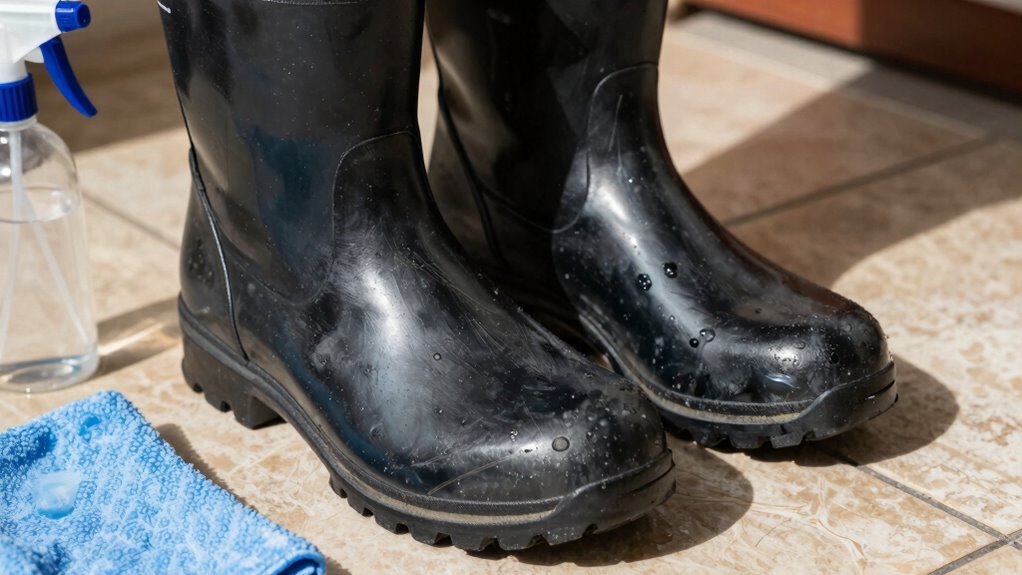

The cleaning mistake that quietly ruins waterproof products is using harsh chemicals like bleach, strong solvents, or regular laundry detergents instead of specialized cleaners. These substances can break down or strip away the waterproof coating over time, leaving your gear less effective and more prone to water damage. If you want to keep your waterproof gear in top shape, paying attention to proper cleaning methods is essential. Keep exploring to learn how to do it right.
Key Takeaways
- Using harsh chemicals or bleach can break down the waterproof coating, reducing its effectiveness.
- Relying on regular detergents instead of specialized waterproof fabric cleaners can strip or weaken the protective layer.
- Abrasive scrubbing causes micro-tears in the coating, compromising water resistance over time.
- Skipping the reapplication of waterproof treatments after cleaning diminishes the product’s water repellency.
- Fabric softeners and softening agents can impair the waterproof layer, leading to decreased water resistance.
What Is Waterproof Fabric Coating and How Does It Keep Things Dry?
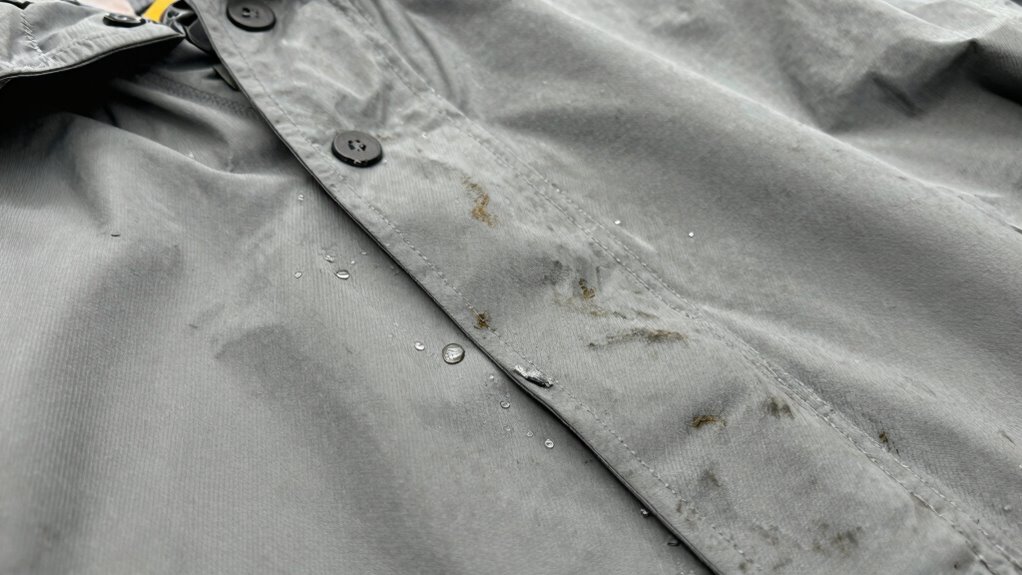
Waterproof fabric coating is a specialized treatment applied to textiles to prevent water from penetrating the material. This fabric treatment creates a barrier that enhances water resistance, keeping you dry in wet conditions. The coating forms a thin, protective layer on the fabric’s surface, blocking water molecules from seeping through. It’s often made from durable materials like polyurethane or silicone, which bond to the fibers and maintain flexibility. When properly applied, this coating preserves the fabric’s breathability while ensuring water stays out. By adding this water-resistant layer, your waterproof products can withstand rain, snow, and spills without losing their effectiveness. However, frequent cleaning or improper maintenance can compromise this protective coating, reducing its ability to keep water at bay. Proper maintenance methods help preserve waterproof coatings and extend the lifespan of your water-resistant gear. Regularly cleaning your gear with gentle methods helps maintain the integrity of the coating, ensuring it continues to perform effectively over time. Additionally, understanding the durability of coatings can guide better care practices to prolong their effectiveness. Advances in nanotechnology are leading to even more durable and long-lasting waterproof treatments, further enhancing the performance of water-resistant fabrics. Staying informed about care guidelines is essential for maximizing the waterproofing benefits of your gear.
How Cleaning Can Damage Waterproof Layers (And What to Avoid)
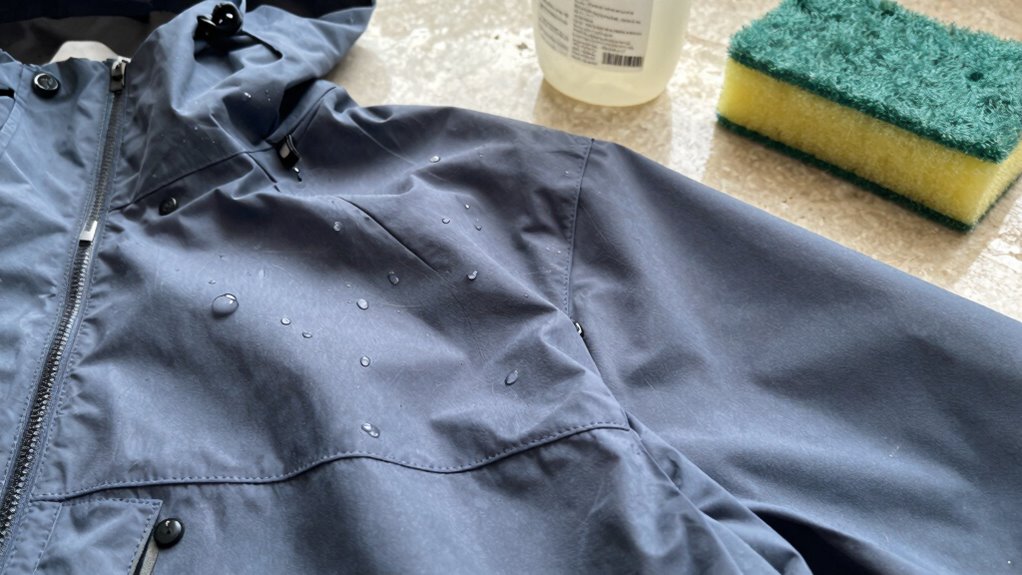
Proper cleaning is key to maintaining the water resistance of your waterproof fabrics, but many common cleaning mistakes can damage the protective coating. Using harsh chemicals can trigger unwanted chemical reactions that break down the waterproof layer over time. Avoid strong solvents or bleach, as they can weaken or strip away the coating. Additionally, abrasive cleaners or scrubbing tools can physically damage the fabric’s surface, causing micro-tears that compromise water resistance. These mistakes may seem harmless but can lead to reduced effectiveness and shorter lifespan of your waterproof gear. To protect your investment, stick to gentle, fabric-specific cleaners and avoid scrubbing aggressively. Proper cleaning preserves the integrity of the waterproof layer, ensuring your gear stays dry and functional longer. Being aware of the horsepower of electric dirt bikes can help you understand the importance of maintaining your gear’s performance and protective features. Moreover, understanding the waterproofing process can help you better care for and extend the life of your waterproof products.
Common Mistakes When Cleaning Waterproof Gear
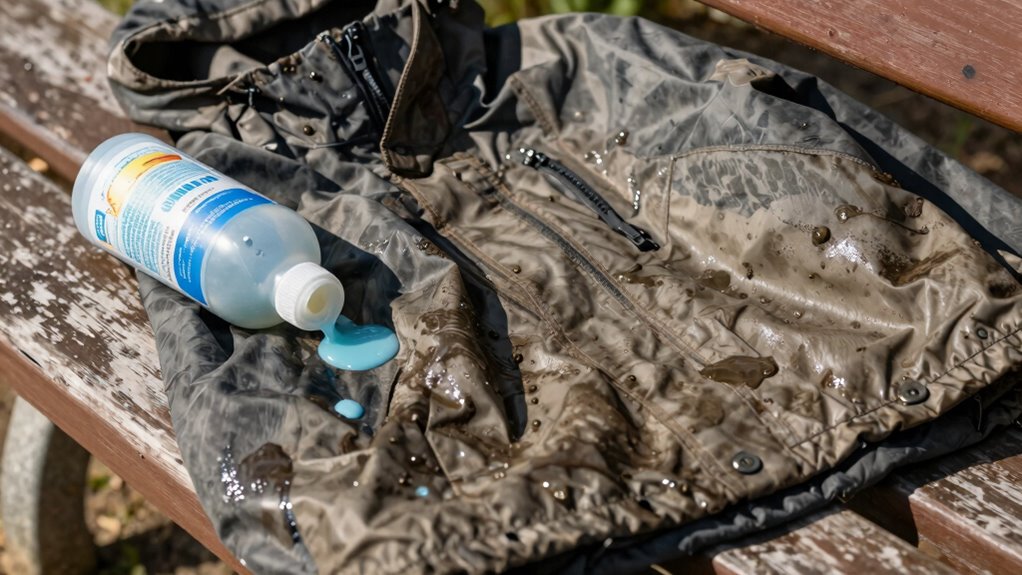
Many people make simple mistakes when cleaning their waterproof gear that can considerably reduce its effectiveness. One common error is using harsh chemical cleaners, which can strip away the fabric treatment that maintains water resistance. Additionally, relying on regular laundry detergents instead of specialized products can weaken the waterproof layer. Another mistake is not following manufacturer instructions, risking damage to the fabric or coating. Proper cleaning techniques are essential to prevent damage and preserve waterproofing. To help you avoid these pitfalls, consider this table:
| Mistake | Effect | Better Approach |
|---|---|---|
| Using chemical cleaners | Damages waterproof coating | Use gentle, waterproof-specific cleaners |
| Not cleaning properly | Dirt and grime weaken fabric | Follow proper cleaning steps |
| Ignoring fabric treatment | Reduced water resistance | Reapply fabric treatment as needed |
| Using fabric softeners | Impairs waterproofing | Skip softeners during cleaning |
Proper cleaning and maintenance require understanding fabric properties so you can select the right methods to preserve waterproofing. Recognizing the importance of proper maintenance techniques can greatly extend the lifespan of your waterproof gear. For example, using appropriate cleaning methods ensures that the coating remains intact and effective. Choosing the correct cleaning method can also prevent coating deterioration, which is vital for maintaining water resistance over time. Avoid these mistakes to keep your waterproof gear effective longer.
The Best Way to Clean Waterproof Gear Without Ruining It
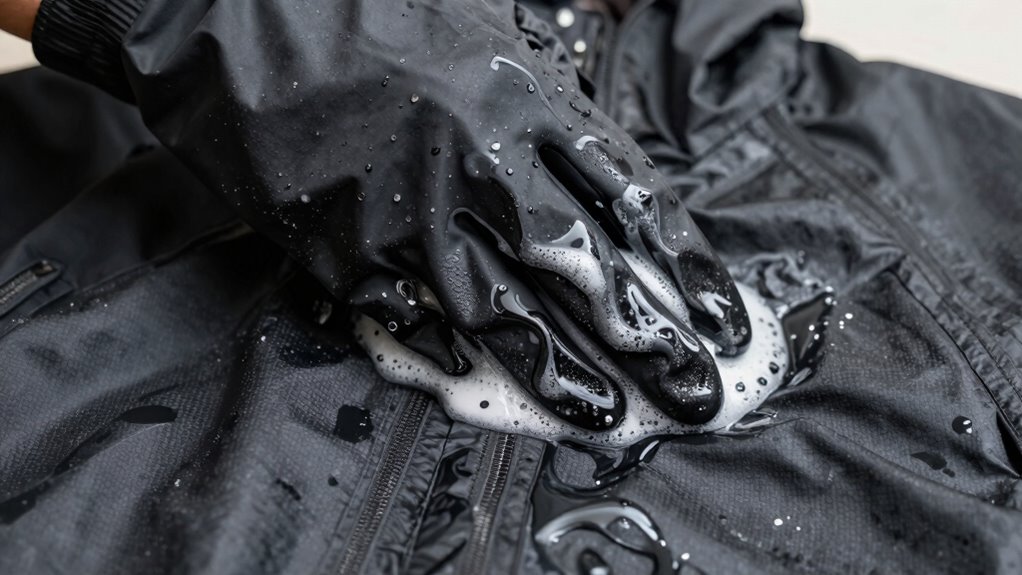
To keep your waterproof gear performing at its best, maintaining its integrity is vital to clean it carefully using the right methods. Start by gently washing your gear with a specialized cleaner designed for waterproof fabrics. Avoid harsh detergents or bleach, as they can cause breathability issues and weaken fabric durability. Use cold or lukewarm water and a soft brush or sponge to remove dirt and oils. Rinse thoroughly to guarantee no residue remains, which can impair the waterproof coating. Proper cleaning techniques preserve waterproofing and extend the lifespan of your gear. Regularly inspect and maintain your gear to identify potential damage early and ensure long-lasting waterproof performance. Additionally, using appropriate cleaning products can help prevent common damage to waterproof fabrics, ensuring your gear stays reliable in all conditions. Recognizing the importance of gentle cleaning can significantly reduce the risk of damaging delicate waterproof layers. Following these steps helps preserve both the waterproof layer and the fabric’s durability, keeping your gear functional and comfortable longer.
Tips to Restore Waterproofing After Damage or Cleaning Mistakes

When waterproofing gets compromised due to cleaning mistakes or damage, acting quickly can help restore its effectiveness. Start by cleaning the fabric gently with a mild soap and water to remove dirt and residue. Once dry, apply a fabric treatment designed to boost water resistance; this creates a new barrier that repels water. Be sure to follow the manufacturer’s instructions for application and drying times. If the fabric has lost its water resistance, reapplying a waterproofing spray or treatment can rejuvenate its protective qualities. Regular maintenance using proper waterproofing products ensures your gear maintains its water resistance over time. Proper waterproofing techniques also help prevent issues related to home energy safety, ensuring your gear and environment stay protected. Remember, restoring waterproofing isn’t just about maintaining fabric treatment, but also about prolonging the lifespan and functionality of your waterproof items.
Frequently Asked Questions
How Often Should Waterproof Gear Be Re-Treated for Optimal Protection?
You should re-treat your waterproof gear every 3 to 6 months, depending on how often you use it and the conditions you face. Regularly applying a recommended re-treatment helps maintain the waterproof lifespan and guarantees ideal protection. If you notice your gear absorbing water or its performance declining, it’s time for a fresh application. Staying proactive keeps your gear performing well and extends its durability in harsh environments.
Are There Specific Cleaning Products That Are Safe for Waterproof Fabrics?
You should use gentle cleaning products like bleach alternatives and avoid fabric softeners on waterproof fabrics. Fabric softeners can leave residues that harm the fabric’s waterproofing. Instead, opt for specialized cleaner safe for waterproof gear, which preserves the material’s integrity. Always follow the manufacturer’s instructions, and avoid harsh chemicals that could break down the waterproof coating. Proper cleaning guarantees your gear remains effective and lasts longer.
Can Washing Waterproof Gear in a Machine Harm Its Waterproof Coating?
Yes, washing waterproof gear in a machine can harm its waterproof coating. Regular laundry detergents and fabric softeners can break down the coating over time, reducing its effectiveness. To protect your gear, use a specialized, gentle cleaner designed for waterproof fabrics and avoid fabric softeners. Always follow the manufacturer’s instructions for washing, and consider reapplying a waterproofing treatment if you notice performance decline.
What Are Signs That Waterproofing Has Been Compromised?
You’ll notice fabric deterioration, such as water soaking in rather than rolling off, which signals your waterproofing is compromised. Coating degradation can cause the material to feel less slick and more absorbent. If water no longer beads up or penetrates easily, it’s a clear sign that the waterproof coating has weakened or worn away. Regularly check for these signs to make sure your gear stays effective and protected.
Does Temperature Affect the Longevity of Waterproof Coatings?
Yes, temperature effects can considerably impact coating durability. When exposed to extreme heat or cold, waterproof coatings may crack, peel, or lose adhesion over time. High temperatures cause the coating to soften and degrade, while low temperatures make it brittle and prone to cracking. Maintaining a stable environment and following manufacturer guidelines helps guarantee your waterproof coating remains effective longer, protecting your surfaces from water damage.
Conclusion
So, next time you reach for that waterproof jacket, remember the sneaky mistake hiding in plain sight. It’s ironic how your efforts to keep your gear spotless can secretly ruin its waterproof layer, leaving you drenched when you need it most. A simple cleaning slip-up can turn your trusty waterproof into just plain old fabric. Stay vigilant, follow the right care tips, and avoid the irony of waterproof gear that’s only water-resistant in theory.