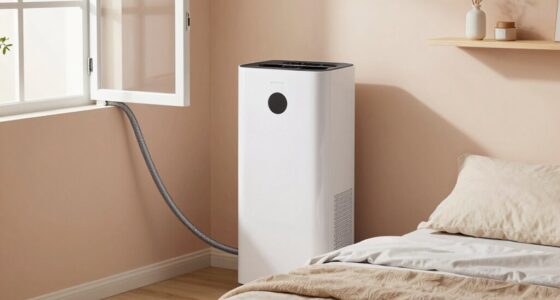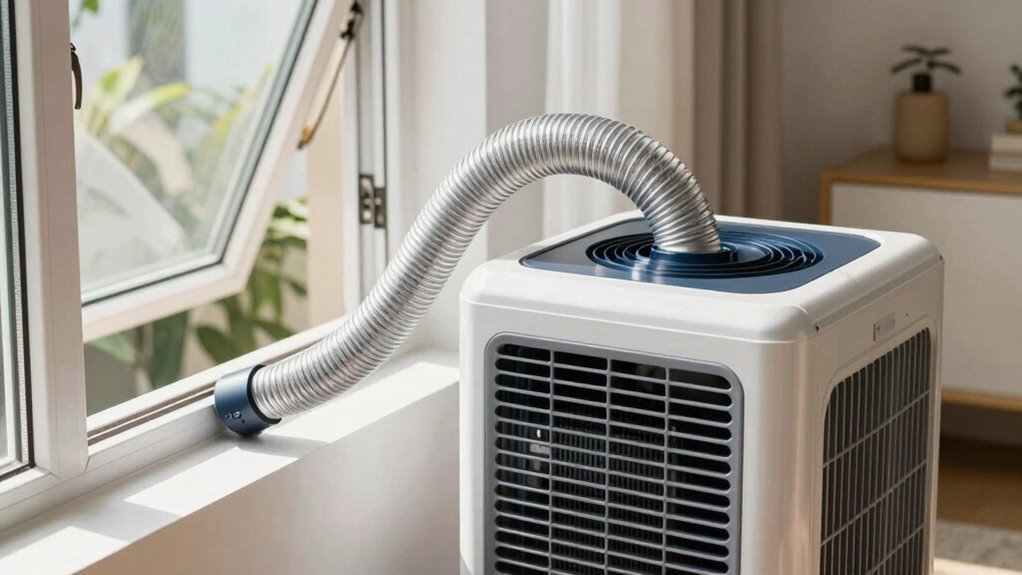

To vent your portable AC correctly, make certain the exhaust hose is securely connected, avoiding gaps or kinks that block airflow. Use the proper venting kit with high-quality, insulated ducts, and confirm the hot air is directed outside without leaks. Avoid common mistakes like improper placement, damaged hoses, or obstructed vents. Regularly check connections and keep the system clear to maintain efficiency. Keep going to discover more tips to maximize your cooling performance.
Key Takeaways
- Ensure the exhaust hose is securely connected to the portable AC and the window vent kit without gaps or leaks.
- Use a properly fitted, insulated duct that runs straight without kinks for optimal airflow.
- Position the exhaust outlet away from heat sources, direct hot air outside, and avoid obstructions.
- Regularly check for and fix any loose fittings, kinks, or debris blocking airflow to maintain efficiency.
- Avoid common mistakes like venting into enclosed spaces, damaging hoses, or improper angles that reduce cooling power.
How to Properly Set Up the Venting on Your Portable AC
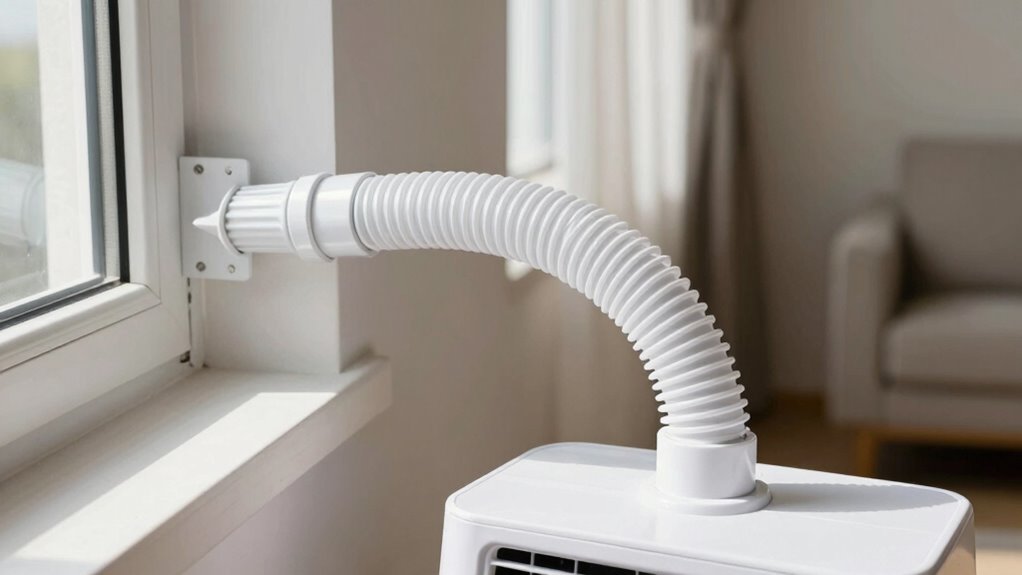
To guarantee your portable AC works efficiently, it’s vital to set up the venting correctly from the start. Begin by connecting the venting duct securely to the exhaust hose, ensuring there are no gaps or loose fittings. The exhaust hose should be attached tightly to prevent warm air from escaping into the room. When installing the venting duct, choose an appropriate window or venting opening that fits snugly to minimize leaks. Make sure the duct runs straight and isn’t kinked, as this can restrict airflow and reduce cooling performance. Proper setup of the venting duct and exhaust hose is essential to direct hot air outside effectively. Additionally, understanding the importance of venting setup can help you optimize your portable AC’s performance. Ensuring the proper airflow is maintained prevents strain on the unit and enhances cooling efficiency. Using high-quality exhaust hoses and fittings can further improve the overall efficiency of your portable AC. Paying attention to installation tips can help avoid common mistakes that diminish cooling power. Properly seal all connections to prevent leaks and maximize cooling effectiveness. Taking these steps ensures your portable AC operates at peak efficiency, cooling your space without unnecessary strain.
Picking the Right Venting Kit and Accessories for Your Unit
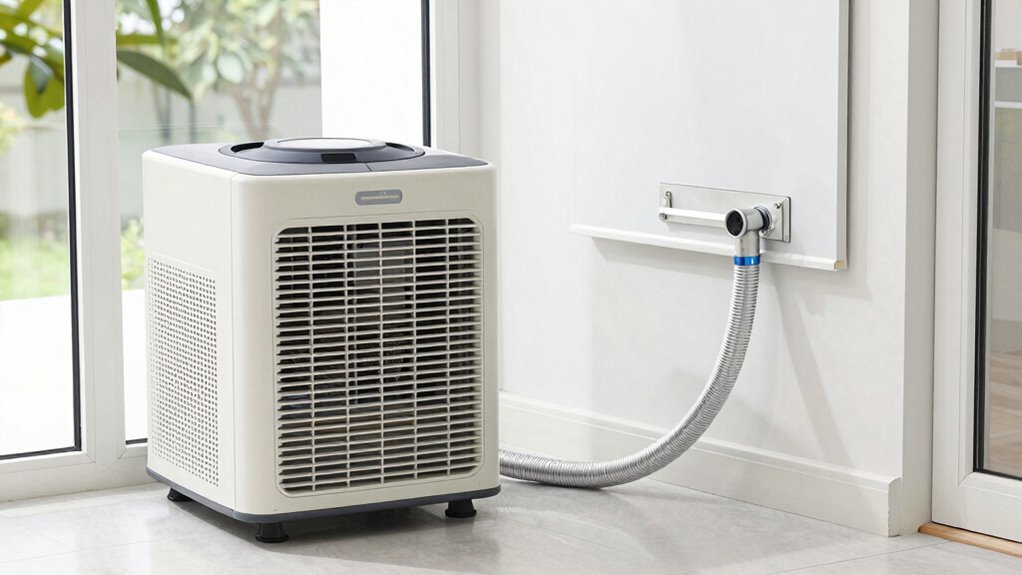
Choosing the right venting kit and accessories for your portable AC is essential to guarantee efficient operation and effective cooling. Selecting compatible duct materials to ensure proper airflow and minimizes leaks, which can reduce cooling performance. Always opt for high-quality materials like flexible aluminum or rigid plastic ducts for durability and better insulation. A vent extension can be helpful if your window opening is large or requires extra length, but make sure it fits securely to prevent air leaks. Proper accessories, like sealing kits and secure clamps, help maintain an airtight connection. When choosing your venting kit, prioritize those with compatible duct materials and adjustable vent extensions to fit your window size and setup. This will maximize airflow and keep your space cool. Additionally, understanding venting system safety and following proper installation guidelines can prevent potential hazards and ensure optimal performance. Incorporating body-safe materials in your venting accessories can also reduce the risk of issues caused by exposure to heat or moisture, ensuring a safer setup. Moreover, selecting materials that are resistant to corrosion and wear can prolong the lifespan of your venting components.
Common Mistakes That Wreck Your Portable AC’s Cooling Power
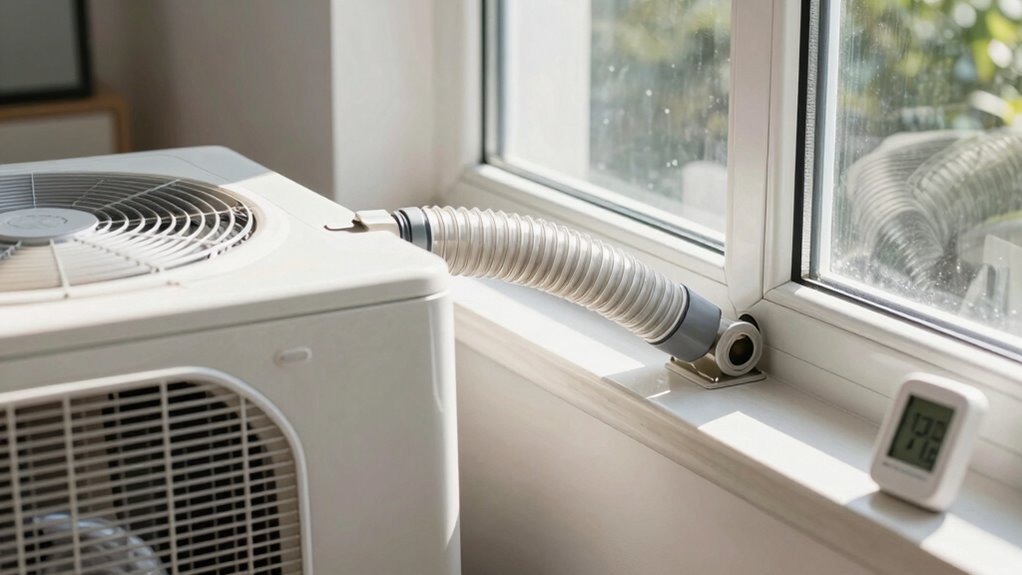
Even the best venting kit can’t prevent your portable AC from losing cooling power if it’s not set up correctly. Poor venting safety practices, like improper exhaust placement, can drastically reduce efficiency. If you don’t position the exhaust outlet away from direct sunlight or heat sources, your unit works harder to cool the room, wasting energy. Blocking airflow with incorrect vent angles or using damaged hoses also hampers performance. Always ensure your exhaust is directed outside in a clear, unobstructed path, avoiding kinks or bends. Neglecting proper venting safety can cause the unit to overheat or leak hot air back into the room, diminishing cooling power. Proper ventilation setup is critical for maximizing your portable AC’s efficiency and keeping your space comfortable. Additionally, understanding proper venting practices can help prevent common mistakes that reduce performance. Maintaining the exhaust hose integrity by checking for leaks or damage is essential for sustained cooling effectiveness. Regularly inspecting your venting system ensures optimal airflow and prevents performance issues caused by unnoticed damage or obstructions.
Tips for Maintaining Efficient Ventilation
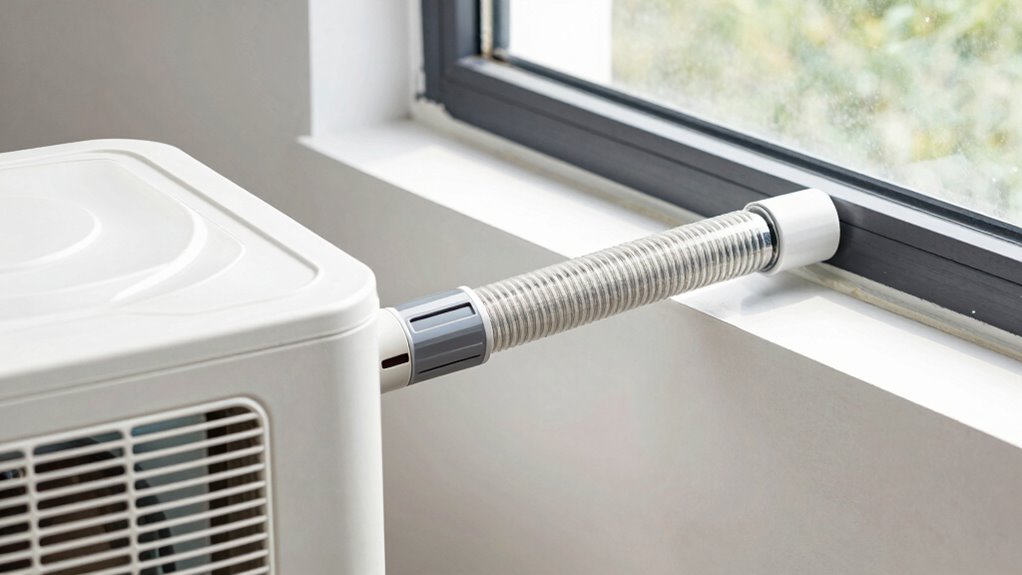
Ever wonder how to keep your portable AC running at peak efficiency? Proper ventilation is key to airflow enhancement and venting safety. To maintain effective ventilation, regularly check that the exhaust hose is securely connected and free of kinks or obstructions. Keep the venting area clear of debris to prevent airflow restrictions. Ensure the venting setup directs hot air outside without leaks or gaps. Additionally, avoid venting into enclosed spaces, which can cause heat buildup and reduce cooling performance. Proper venting not only helps your unit operate smoothly but also prevents safety hazards like carbon monoxide buildup. Correctly venting setup can improve overall cooling efficiency and safety. Regular inspections of the venting system are essential for preventing leaks and maintaining optimal operation. By following these simple tips, you ensure your portable AC vents safely and functions ideally, keeping your space cool and safe. Effective ventilation is essential for preventing overheating and ensuring your unit’s longevity. Properly venting safety also involves inspecting for any potential leaks that could compromise indoor air quality. Additionally, using high-quality, properly rated venting materials can further enhance ventilation efficiency and safety.
Troubleshooting Venting Problems and When to Call a Technician
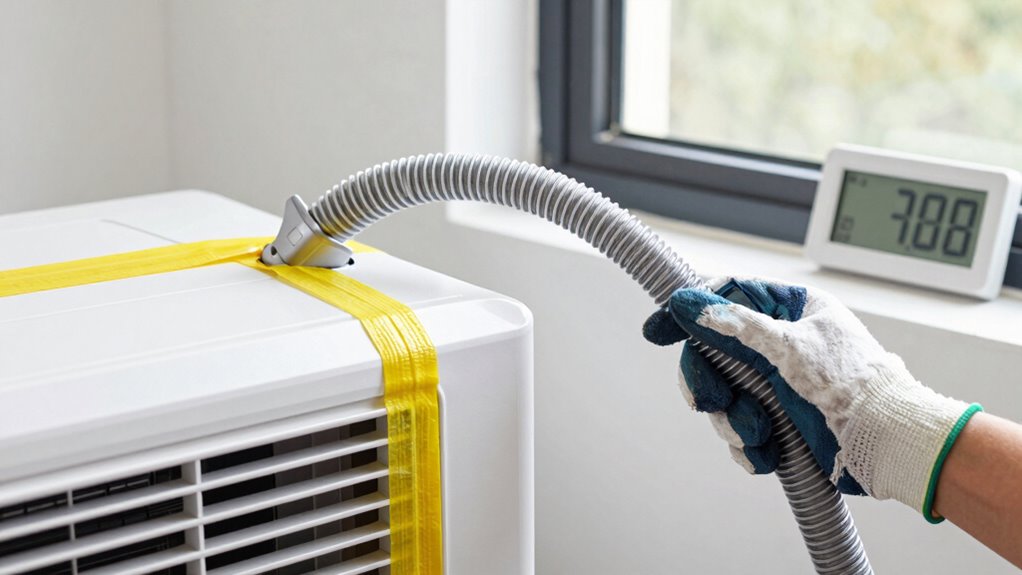
When your portable AC isn’t cooling effectively despite proper venting, it’s time to troubleshoot potential issues. Start by inspecting your venting system for any airflow obstruction, such as kinks, blockages, or disconnected ducts. A compromised venting system can cause warm air to recirculate, reducing cooling efficiency. Confirm the exhaust hose is securely attached and free of bends. Check for debris or dust buildup that might restrict airflow. If you’ve addressed these issues and still see poor performance, it’s wise to call a technician. Persistent airflow obstruction or venting system problems could indicate deeper issues, like a faulty fan or venting components. A professional can diagnose and fix these problems to restore your portable AC’s ideal cooling capacity. Additionally, understanding proper venting techniques can help prevent future performance issues and ensure your unit operates at peak efficiency. Regular maintenance, including inspecting vents and hoses, is essential to prevent common venting mistakes that diminish cooling power and increase energy consumption. Being aware of venting system components can also aid in early detection of issues before they impact performance. Furthermore, considering attention to detail during setup and maintenance can significantly improve overall system reliability.
Frequently Asked Questions
Can I Vent My Portable AC Through a Window or Door?
Yes, you can vent your portable AC through a window or door. For window installation, use a specially designed kit to create a tight seal and prevent warm air from entering. If venting through a door, use a door vent kit or a temporary seal to guarantee proper airflow. Proper venting through either option maximizes cooling efficiency and prevents warm air from compromising your AC’s performance.
How Do I Prevent Leaks Around the Venting Hose?
To prevent leaks around the venting hose, you should check the hose positioning first, ensuring it’s securely connected and straight. Apply a sealant around the edges of the vent attachment to create a tight seal. Make sure the hose fits snugly into the window kit or vent opening, and recheck for gaps. Proper hose placement and sealant application help maintain efficiency and prevent warm air or moisture from leaking indoors.
What Are the Signs of Improper Venting?
If you notice your portable AC isn’t cooling well, you’re likely facing serious airflow restriction or venting efficiency problems. Signs include warm air blowing out, excessive noise, or the unit overheating—like it’s trying to escape a sauna! These issues mean improper venting, which kills performance. Don’t ignore these clues, because poor venting makes your AC work overtime, draining power and skyrocketing your bills. Fix it quickly before your comfort turns into a sweatstorm!
Is It Necessary to Use a Sealant on the Venting Kit?
You should use sealant on your venting kit to prevent air leaks, especially if it’s a sealing venting kit. Sealing helps improve efficiency by ensuring no warm air enters or cooled air escapes. Non-sealing venting kits made of flexible materials might not need sealant, but sealing enhances performance. Always check your venting kit materials and follow manufacturer recommendations to get the best cooling and energy efficiency.
How Often Should I Clean the Venting Components?
Ever wonder how often you should clean your venting components? You should follow a regular maintenance schedule, ideally cleaning your venting parts every 2-4 weeks during heavy use or when you notice reduced airflow. Consistent cleaning prevents dust buildup, improves performance, and extends the lifespan of your portable AC. Don’t ignore these tasks—neglecting cleaning frequency can lead to inefficiency and higher energy bills.
Conclusion
Think of your portable AC as a delicate dance partner, with proper venting as the rhythm that keeps it moving smoothly. When you set it up right and avoid common mistakes, you’re guiding a steady breeze through a locked window, not a gust that escapes. Keep your ventilation clear and well-maintained, and your cooling performance will shine like sunlight breaking through cloudy skies. Together, you’ll create a cool, comfortable refuge that feels like a gust of fresh air.