

🔍 Read the full analysis: 10 Capture Cards For AI-Powered Gaming And Streaming In 2027 on ThorstenMeyerAI.com
TL;DR
A buyer’s guide identifies 10 capture cards for gaming and streaming, led by the Elgato 4K S for console-focused setups. The products differ in capture resolution, passthrough, portability and loop-out; a 4K input claim does not necessarily mean 4K recording. The source does not provide independent test results, prices or complete compatibility details.
A 2027 buying guide compares 10 capture cards for gaming and streaming, ranking the Elgato 4K S as its overall pick for console-focused users and highlighting the Elgato Game Capture Neo for portable setups and the PORTTA DX20R for high-refresh passthrough. The guide’s central warning is practical: input resolution, recording resolution and passthrough are separate specifications, so a product described as 4K-capable may not record in 4K.
The guide assesses products by how they fit into a signal chain from a console or camera to a computer and, where needed, a separate display. It favors a clear use case and specific performance claims over a headline resolution number. Its recommended checks include capture frame rate, passthrough limits, connection type and compatibility with the computer and software a buyer plans to use.
Alongside the Elgato 4K S, Elgato Game Capture Neo and PORTTA DX20R, the list includes the Fifine AmpliGame V3, a UGREEN USB 3.0 model, a Dobestyou USB 3.0 model, generic HDMI-to-USB capture options and a 4K HDMI Video Capture Card with Loop-Out. The supplied source material does not identify all 10 entries by exact retail name, so the remaining products cannot be reliably distinguished here.
According to the guide, the PORTTA DX20R emphasizes 4K 60Hz capture and high-refresh passthrough, while some USB choices accept a 4K input but record at 1080p and 60 frames per second. The Elgato Neo is described as offering 4K60 HDR passthrough. These are product descriptions reported by the source, not independent test results presented in the material.
The 10 picks
- 1
 Elgato 4K S Capture Card for PS5, Xbox Series X/S, and Switch 2View on Amazon →
- 2
 Elgato Game Capture Neo Portable USB Capture Card, 4K60 HDR PassthroughView on Amazon →
- 3
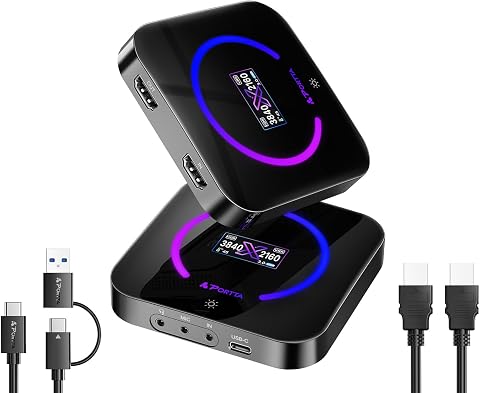 Portta DX20R HDMI Video Capture Card, Stream & Record in 4K 60Hz with Ultra-L…View on Amazon →
- 4
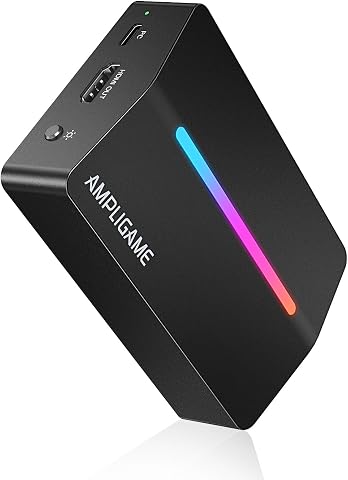 Fifine AmpliGame V3 Video Capture CardView on Amazon →
- 5
 4K HDMI Video Capture Card with Loop-Out, 1080P 60FPS USB 3.0 Streaming Devic…View on Amazon →
- 6
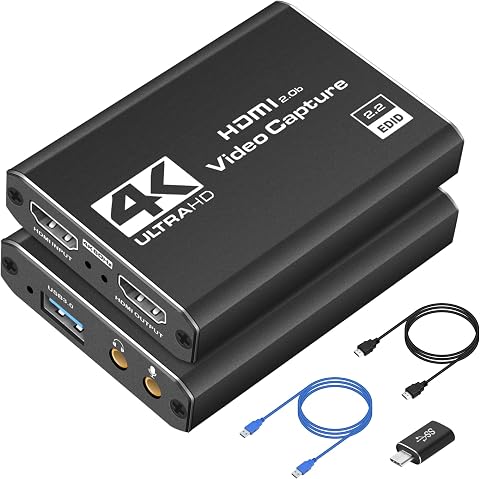 4K HDMI to USB 3.0 Video Capture Card (1080P 60FPS)View on Amazon →
- 7
 UGREEN HDMI to USB 3.0 Video Capture Card, 4K Input, 2K at 30Hz and 1080p at…View on Amazon →
- 8
 USB 3.0 HDMI Video Capture Card, 4K Input, 1080p 60FPS CaptureView on Amazon →
- 9
 4K HDMI Capture Card with 1080p 60fps RecordingView on Amazon →
- 10
 Dobestyou V316 4K HDMI Capture Card with USB 3.0View on Amazon →
Match Capture to Your Setup
The distinctions matter because a capture card can be compatible with a high-resolution source without sending a matching-quality recording to the computer. Buyers seeking 4K recordings need to confirm the card’s capture specification, rather than relying on input or passthrough figures. Players who record while gaming should also check whether the card can pass the desired resolution, refresh rate and HDR signal to their display.
The guide’s categories offer a starting point, not a universal ranking for every user. A compact USB device may be adequate for a simple stream or a portable setup, while console players using a separate screen may place more value on loop-out or high-refresh passthrough. Choosing against the actual signal path can leave a buyer with a card that accepts the source but does not meet the recording or display needs.
Popular right now
Bose QuietComfort Ultra Earbuds (2nd Gen), Wireless Noise-Cancelling Earbuds, Black

De'Longhi Magnifica Start Automatic Espresso Machine with Milk Frother, Silver

Sony WH-1000XM6 Wireless Noise-Canceling Headphones, Black
As an affiliate, we earn on qualifying purchases.
How the Signal Path Shapes Choice
A capture card sits between a source, such as a console or camera, and a computer used for streaming or recording. Some models also send the signal onward to a monitor or television. The guide treats those functions as separate: input is what the device accepts, capture is what it sends to the computer, and passthrough is what reaches the display.
That distinction informs the source’s ranking. It places the Elgato 4K S first for current-console use, including PS5, Xbox Series X/S and Switch 2 setups; it highlights the Neo for portability and the PORTTA for passthrough performance. The source says several USB 3.0 options have overlapping 1080p 60fps recording claims, with fewer differentiators in their descriptions. It does not supply a testing methodology with measured results, prices or a full specification table.
„Input resolution is what the card can accept; capture resolution is what it sends to the computer for recording or streaming; passthrough is what reaches a connected display.“
— ThorstenMeyerAI.com buying guide
Specs and Testing Still Need Checking
The source material does not give a complete, clearly named roster of all 10 cards, nor does it include prices, direct product links, benchmark results or the date on which specifications were checked. It also does not establish that the products were tested under identical conditions. The ranking should therefore be read as a guide’s assessment, not as a verified laboratory comparison.
Specific compatibility details remain unprovided, including supported operating systems, software recognition, exact USB requirements and the precise combinations of resolution, refresh rate and HDR each device can pass through. Even a stated USB 3.0 connection does not confirm how a card will perform through a particular cable, hub or computer port. Buyers should verify the manufacturer’s current specifications and the complete signal path before purchase.
Verify the Full Connection Chain
The next step for buyers is to list the source device, computer, recording target and display, then compare each product against that setup. Check the card’s recording resolution and frame rate separately from its input and passthrough limits; confirm whether loop-out is needed; and review system and software compatibility. For a high-refresh gaming display, verify the exact supported resolution-and-refresh combination rather than relying on a general passthrough label.
Because the source does not provide full pricing or testing details, the guide alone cannot establish which model offers the best value or performs best in every configuration. Product names and specifications may also change. Any final recommendation should be based on current manufacturer information and the buyer’s intended setup.
Key Questions
Does a 4K input specification mean a card records in 4K?
No. Input resolution describes the signal a card accepts; capture resolution describes what it sends to the computer. The guide says some USB options accept 4K input but record at 1080p and 60fps.
Which card does the guide rank as its overall pick?
The guide names the Elgato 4K S as its leading choice, particularly for console-focused setups. That is the source’s assessment, not a claim that it is best for every user or configuration.
What is loop-out used for?
Loop-out sends the source signal to a separate display while the card also feeds video to a computer. It can let a player use a monitor or television instead of playing from the computer’s capture preview.
What should high-refresh-rate players check?
Check the card’s exact passthrough resolution and refresh rate, as well as HDR support if needed. A general high-refresh claim may not specify the precise combination supported by the player’s source and display.
Are all 10 products fully identified and independently tested in the source?
No. The supplied source material names several products but does not provide a complete roster of 10 distinct retail names or independent test results. Readers should verify the exact model and current specifications before buying.
Source: ThorstenMeyerAI.com