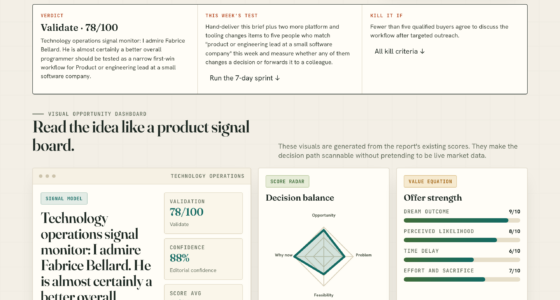

📊 Full opportunity report: The Unanticipated Effects Of OpenAI’s Cursor Disconnection In AI on ThorstenMeyerAI.com — validation score, market gap, and execution plan.
TL;DR
OpenAI will end its contract supplying models to Cursor, a coding tool now owned by SpaceX, citing trust issues. Developers using Cursor are set to lose access, highlighting risks for third-party integrations.
OpenAI has announced it will cease supplying its AI models to Cursor, a coding tool now owned by SpaceX, effective November 12, citing trust concerns over SpaceX’s control after its recent acquisition of Cursor. This move impacts developers who rely on Cursor’s integration with OpenAI models, raising questions about third-party dependencies and corporate disputes.
On August 28, OpenAI issued a formal notice that it will terminate its contract with Cursor, with the shutdown scheduled for November 12. This decision follows the recent acquisition of Cursor by SpaceX, which completed on August 15 after SpaceX’s purchase of Anysphere, the company behind Cursor. OpenAI states that its decision is based on concerns about SpaceX’s potential misuse of its technology, citing past instances where Musk’s companies, including Twitter and xAI, allegedly violated OpenAI’s terms of service.
The contract termination affects developers who use Cursor as a platform to access OpenAI’s models for coding and AI tasks. These users did not participate in the corporate dispute and now face losing access without fault. OpenAI emphasizes that its choice is a trust and compliance measure, aiming to prevent misuse of its models as the new ownership takes control.
Neither SpaceX nor Cursor has publicly responded to the announcement as of now, and the details of the dispute remain partly unverified, with OpenAI’s reasons based on its internal assessments and public allegations against Musk’s companies.
OpenAI will stop supplying its models to Cursor (shutoff Nov 12) now that SpaceX owns it. The lesson underneath has nothing to do with whose side you’re on.
Implications for Developers and AI Ecosystem
This decision highlights the risks third-party developers face when relying on proprietary AI models embedded in external tools. The abrupt cutoff underscores how corporate disputes and ownership changes can directly impact end-users, especially when they lack control over the underlying infrastructure. For the broader AI industry, it raises questions about model access, trust, and the stability of integrations that depend on corporate relationships.
Moreover, the move exemplifies how trust and compliance considerations are increasingly influencing AI deployment decisions, potentially reshaping how companies manage partnerships and data security in the AI ecosystem. Developers and companies relying on external AI tools may need to reassess dependencies and prepare for sudden disruptions.
As an affiliate, we earn on qualifying purchases.
Background of OpenAI and Cursor Ownership Changes
OpenAI's models have become widely used in third-party tools like Cursor, which originated from OpenAI's startup accelerator in 2024. Recently, SpaceX acquired Cursor through a series of corporate transactions, culminating in August 2026, when SpaceX purchased Anysphere, the company behind Cursor, for $60 billion. Prior to this, Elon Musk's companies, including Twitter and xAI, had a history of contractual disputes with OpenAI, which OpenAI cites as a reason for its cautious approach.
OpenAI's contract with Cursor allowed for termination upon a change of control, which it is now exercising. The move is framed as a trust measure, but it also coincides with increased competition in the AI coding space, notably from Musk's own xAI and Grok, which directly compete with OpenAI's offerings.
The situation is unfolding amidst broader tensions between Musk and OpenAI, but the core issue remains the potential misuse of AI models and the integrity of contractual commitments following corporate ownership shifts.
As an affiliate, we earn on qualifying purchases.
Unclear Aspects of the Dispute and Future Impact
It remains unclear how SpaceX and Cursor will respond publicly, and whether alternative arrangements will be made for developers. The exact nature of SpaceX's compliance with OpenAI's terms, and whether future access might be restored, is also uncertain. Additionally, the full scope of Musk's companies' past contract violations and their influence on this decision are not independently verified.
Questions also linger about how this move will influence other third-party AI integrations and whether similar actions might occur elsewhere in the industry.
As an affiliate, we earn on qualifying purchases.
Next Steps for Developers and Industry Watchers
Developers relying on Cursor should prepare for the November 12 cutoff by seeking alternative AI tools or negotiating new agreements. OpenAI may clarify or modify its policies regarding model access amidst ongoing corporate negotiations. Meanwhile, industry observers will monitor how SpaceX and Cursor respond publicly and whether similar trust-based restrictions are adopted elsewhere.
Further developments regarding the potential for renewed access or new partnership arrangements are expected in the coming months, alongside ongoing discussions about AI governance and corporate responsibility.
As an affiliate, we earn on qualifying purchases.
Key Questions
Will developers be able to access OpenAI models through Cursor after November 12?
As of now, OpenAI has announced it will cease support on November 12, with no indication of an extension or alternative arrangement. Developers should consider alternative solutions.
What prompted OpenAI to cut off Cursor's access?
OpenAI cites trust concerns related to SpaceX's ownership, including past contract violations by Musk's companies, as reasons for the decision. The move is framed as a precaution to prevent misuse of its models.
Could this decision affect other third-party AI integrations?
Yes, it raises broader questions about dependency on proprietary models and how corporate disputes might impact third-party tools relying on OpenAI or similar providers.
Is there any indication that the dispute will be resolved in favor of restoring access?
There is no public information suggesting an imminent resolution. Developers should prepare for the cutoff and monitor official statements for updates.
How does this impact the broader AI industry?
This situation highlights the importance of trust, contractual clarity, and the risks of dependency on external AI services, potentially influencing future industry standards and partnerships.
Source: ThorstenMeyerAI.com