
📊 Full opportunity report: How Quantization Transforms Local LLMs In 2026’S AI Era on ThorstenMeyerAI.com — validation score, market gap, and execution plan.
TL;DR
In 2026, advanced quantization methods, especially trained-in low-precision formats like MXFP4, are allowing large language models to run efficiently on personal hardware. This shift, driven by models trained with native low-precision weights, marks a significant change from previous post-training quantization practices, making AI more accessible and powerful for individual users.
In 2026, the AI landscape has shifted as large language models (LLMs) are now trained in native low-precision formats, primarily MXFP4, enabling efficient local inference on consumer hardware. This breakthrough is driven by the adoption of quantization-aware training (QAT), fundamentally changing how models are developed and deployed.
Traditionally, LLMs like Kimi K3, with trillions of parameters, required vast memory—up to 5.6 terabytes for full-precision FP16 weights. Post-training quantization reduced this size, but in 2026, models are now trained directly in low-precision formats such as MXFP4, which use 4-bit weights during training itself. This approach, called trained-in quantization, results in models that are inherently smaller and more efficient, with weights stored at native low precision from the outset.
For example, Kimi K3, a 2.8-trillion-parameter model, is trained at MXFP4, making its native size approximately 1.4 terabytes—significantly smaller than the 5.6 terabytes it would need at FP16. This native low-precision training allows the model to be directly deployed at this size without the need for post-hoc compression, which was standard practice before 2026. The shift is also supported by hardware acceleration, particularly on Blackwell-class GPUs, which can process MXFP4 formats efficiently, further enhancing performance.
Quantization is the lever that turns a model needing a datacenter into one needing a workstation. In 2026 it stopped being a simple after-the-fact shrink — and Kimi K3 is the clearest example of why.
Quantization stores the same weights at coarser precision. Fewer bits per weight means less memory and bandwidth, and slightly less accuracy. The size scales almost linearly with bit-depth.
bytes ≈ parameters × bits ÷ 8. K3 figures are Unsloth-reported for the 2.8T model.„Quantized“ isn’t one thing. The format decides which hardware, which loader, and which trade-offs you get.
For years, labs shipped at FP16 and the community shrank the model afterward. Kimi K3 inverts that — and it changes the advice.
- Precision reduced after the model is trained
- Exploits the slack between FP16 and 4-bit
- „Just download a smaller quant“ — the old default
- K3 ships natively at MXFP4, MXFP8 activations
- The compression was spent before release
- Can’t be squeezed further uniformly — the slack is gone
If K3 can’t be squeezed uniformly, how does a 594GB 1-bit build exist? Mixed precision — most weights at 1–2 bits, the load-bearing layers upcast to 8-bit, the whole thing measured against a lossless reference.
Both distort the simple bytes-equals-params-times-bits math, and both bite hardest on the frontier models people most want to run.
The abstractions resolve into a hard boundary. Drawn on a 512GB M3 Ultra:
Choosing a quant is choosing a point on a curve — steep at the ends, flat in the middle.
Now the frontier labs are spending the compression before you download it.
Implications of Native Low-Precision Training for AI Accessibility
This development dramatically lowers the hardware barrier for running large language models, making advanced AI accessible on personal devices like Macs and high-end desktops. It reduces memory and computational requirements, enabling wider adoption and experimentation outside data centers. Moreover, training models directly in low precision improves efficiency and reduces energy consumption, aligning with sustainability goals in AI development.
As models like Kimi K3 demonstrate, native low-precision training also enhances numerical stability and accuracy, challenging previous assumptions that aggressive quantization would inevitably degrade performance. This shift could accelerate AI innovation, democratize access, and reshape the ecosystem of AI deployment.
personal AI hardware with quantization support
As an affiliate, we earn on qualifying purchases.
As an affiliate, we earn on qualifying purchases.
Evolution of Quantization Techniques in AI Development
Before 2026, the dominant approach involved training models at full precision (FP16 or BF16) and then applying post-training quantization (PTQ) to shrink the models for deployment. Techniques like GPTQ and MLX quantizations enabled 4-bit or 8-bit inference on GPUs, but these were approximations that often sacrificed some accuracy. The advent of trained-in quantization, especially formats like MXFP4, marks a fundamental change, as models are now designed from the start to operate at native low precision.
This transition was driven by hardware advancements, particularly the capabilities of Blackwell-class GPUs, which can process low-precision floating-point formats directly. The shift also reflects a broader trend toward more efficient, sustainable AI, with models designed to optimize performance and size simultaneously, rather than relying solely on post-hoc compression.
"Models trained in native low-precision formats like MXFP4 are a game-changer, enabling large-scale AI to run efficiently on consumer hardware."
— Thorsten Meyer
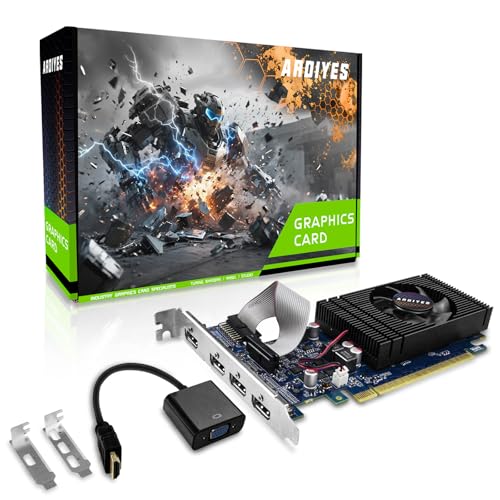
ARDIYES GT 740 4GB GDDR5 Low Profile GPU Graphics Card, 4X HDMI Ports for Quad Multi-Monitor Setup, PCI Express 3.0 x16, Silent Cooling, Ideal for Office and Home Theater
- Memory Capacity: 4GB GDDR5 memory for smooth graphics
- Quad HDMI Ports: Supports four monitors for multitasking
- Multi-Monitor Setup: Seamless quad-display connectivity
As an affiliate, we earn on qualifying purchases.
As an affiliate, we earn on qualifying purchases.
Unresolved Questions About Long-Term Model Stability
While native low-precision training shows promise, it is still unclear how these models will perform across diverse tasks and over extended periods. The robustness of MXFP4-trained models in real-world applications and their susceptibility to numerical instability or degradation under various conditions remain areas of active investigation. Additionally, the full ecosystem support, including hardware compatibility and software tooling, is still evolving.
As an affiliate, we earn on qualifying purchases.
Next Steps for Model Training and Hardware Optimization
Researchers and hardware developers are expected to further refine low-precision training techniques and expand hardware support for formats like MXFP4. Upcoming model releases will likely demonstrate improved stability and broader applicability. Meanwhile, software frameworks are adapting to support native low-precision training workflows, making this approach more accessible for developers and organizations.
compact large language model hardware
As an affiliate, we earn on qualifying purchases.
As an affiliate, we earn on qualifying purchases.
Key Questions
How does native low-precision training differ from post-training quantization?
Native low-precision training involves training models directly in formats like MXFP4, whereas post-training quantization reduces precision after training, often leading to some loss in accuracy. The new approach results in inherently smaller, more efficient models with better performance at low sizes.
What hardware supports native low-precision formats like MXFP4?
Blackwell-class GPUs are optimized for processing MXFP4 formats, enabling efficient inference. Support from other hardware platforms is expected to grow as low-precision formats become more mainstream.
Will native low-precision training replace all other quantization methods?
While it is a significant advancement, native low-precision training is most beneficial for large models and specific hardware. Other methods like calibration-based GPU quantization remain relevant for certain applications and hardware configurations.
What are the main benefits of training models at MXFP4?
The primary benefits include reduced memory footprint, faster inference, lower energy consumption, and improved deployment flexibility on consumer hardware.
Are there any risks or downsides to native low-precision training?
Potential risks include numerical instability or reduced accuracy in some tasks, especially during early adoption phases. Ongoing research aims to address these issues and improve robustness.
Source: ThorstenMeyerAI.com