
🔍 Read the full analysis: Block’s Dessa Sounds Like A Person—But Sounding Human Is No Verdict on ThorstenMeyerAI.com
TL;DR
Block announced Dessa, a speech-to-speech research model whose company-selected demos include laughter, interruptions and emotional responses. The model has not been independently tested or publicly released, so its capabilities and safeguards remain unverified; its human-like voice also highlights risks for voice-based fraud.
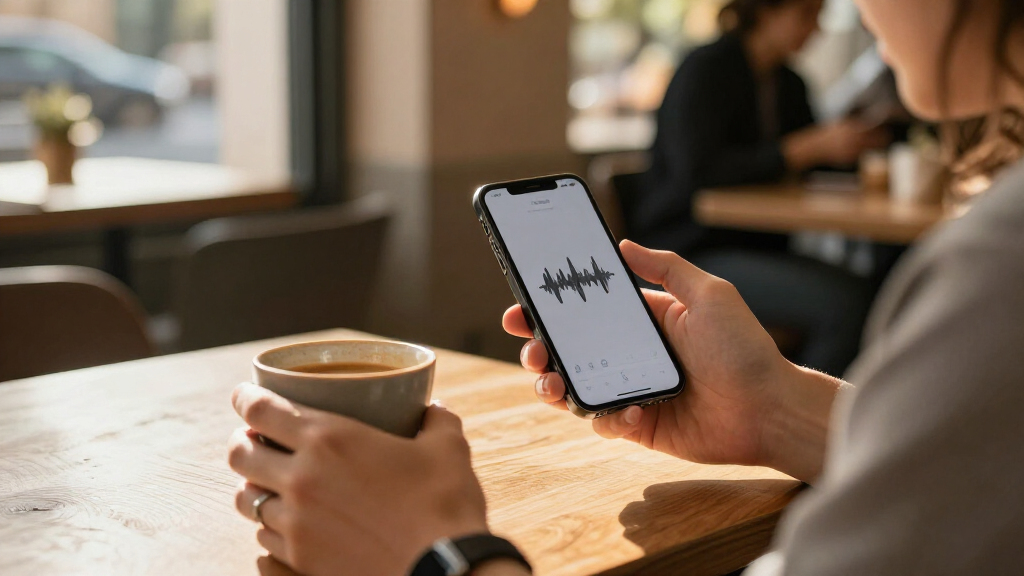
Block has published demonstrations of Dessa, a speech-to-speech research model that laughs, responds to emotion and speaks over a conversation in progress. The demos offer a glimpse of more natural-sounding voice AI, but no outside researcher or reporter has tested the model directly, and Block has not released a paper, benchmarks or public access.
Block says Dessa was trained from scratch on recorded human conversation, without text or pretrained models, and can listen while speaking. The company says it recognizes cues such as sarcasm, laughter and a frustrated sigh, and can decide when to interrupt or provide conversational back-channel responses. Block also says the model runs faster than real time on a MacBook Pro M4 Max or better; it has not provided a specific latency figure.
The company’s project page includes recordings in which Dessa laughs mid-sentence, responds to a surprise and helps a speaker recall a film title. Block describes the clips as live conversations without a person steering the model. They are still company-selected demonstrations, not independent evaluations. The Verge reported that the exchanges could be awkward or uncanny, while TechCrunch said it was unclear whether emotion in the examples might be guided by tags.
Block has made access available to a small group of AI safety researchers and has a waitlist, according to the source material. It has announced no public release date, weights or API. The model’s size, benchmark performance, supported languages and ability to imitate a specific person have not been disclosed.
Infographic 01 · Dessa fact sheet
What Block claims, what was heard, what is missing.
Every capability below comes from Block or its selected recordings. Nobody outside Block has run the model yet.
| Topic | What we know | Status |
|---|---|---|
| Training data | Human conversation only: “no text, no pretrained models” | Block’s claim |
| Conversation | Full-duplex: listens while it talks, backchannels, cuts in | Block’s claim |
| Emotion | Hears and speaks laughter, sarcasm, sighs; unclear if steered by tags (TechCrunch) | Block’s claim |
| Speed | “Faster than real time”; no latency figure | Block’s claim |
| Hardware | Trained on one NVIDIA GB200 NVL72; runs on a MacBook Pro M4 Max or better | Block’s claim |
| Demos | Some chats “a little awkward and uncanny”, more natural than GPT-Live-1 (The Verge) | reporters heard it |
| Size, benchmarks, release date | Not disclosed (CoinDesk) | not disclosed |
| Paper, model card, license, weights | None found as of 26 Oct 2026 | not disclosed |
| Languages | Not listed; Block calls learning new languages an open question | not disclosed |
| Voice cloning safeguards | No statement on watermarking, consent checks or imitating a specific person | not disclosed |
Who can use it
research preview
- Public: a waitlist; “launch links are coming soon”
- Early access: “a small group of AI safety researchers”, institutional email required
- Business use: none announced; Square already uses voice AI for ordering (TechCrunch)
Who built it
from Block’s page
- A “(very) small AI research lab at Block” reporting to Jack Dorsey
- Founded by former members of Dessa, the Toronto startup Square acquired in 2020 (CoinDesk)
- Lead Ragavan Thurairatnam: “a GPT3 moment for speech”
Sources: Block, Dessa project page (23 Oct 2026); Ragavan Thurairatnam on X (23 Oct 2026); The Verge (23 Oct 2026); TechCrunch (24 Oct 2026); CoinDesk (24 Oct 2026).
Powered by Thorsten Meyer AI
Human-Sounding Calls Raise Fraud Risks
Dessa matters beyond the novelty of a voice that laughs or follows an interruption. If speech systems become better at matching conversational rhythm and emotion, listeners may have fewer obvious cues for distinguishing a generated voice from a person. That could make voice interfaces more comfortable to use, but could also make impersonation calls more convincing. The demonstrations do not establish that Dessa can clone a target’s voice or has been used in fraud.
The source cites the FBI’s 2025 Internet Crime Report, published in April 2026, which recorded 22,364 complaints mentioning AI and $893 million in reported losses. The report also counted more than $5 million in losses from distress scams involving cloned voices of loved ones. Those figures describe reported complaints and losses across the stated categories; they do not show that Dessa contributed to them or quantify any change caused by the model.
For families and organizations, the practical concern is that a familiar-sounding voice alone is weak evidence of identity. A call that demands urgent payment or sensitive information should be verified through a known number or a separate channel. A family code word can offer another check. Companies handling payment requests can require written confirmation or a callback process rather than relying on voice recognition.
USB microphone for clear voice recording and video calls
As an affiliate, we earn on qualifying purchases.
As an affiliate, we earn on qualifying purchases.
What Block Has Released So Far
Block, the company behind Square and Cash App, published its Dessa project page on October 23, 2026. Co-founder Jack Dorsey described speaking with the model as feeling like talking with a person, citing emotion, pauses and natural cadence. Dessa lead Ragavan Thurairatnam called it “a GPT3 moment for speech” and said it could run on consumer GPUs. These are statements from the project’s leadership, not independent findings.
The research team is described as a small lab at Block founded by former members of Toronto-based AI company Dessa, acquired by Square in 2020. Block says the model was trained using one NVIDIA GB200 NVL72 and far fewer words than large language models typically require. The source material does not provide enough technical detail to independently assess those claims or compare training efficiency.
Coverage of the demonstrations has been mixed. The Verge found Dessa more natural-sounding than another model shown in the comparisons, but also noted awkward moments. The Decoder cautioned that emotional-sounding speech does not establish emotion or intelligence. Those observations concern the published clips; no public testing of the model itself is reported.
„Talking with it feels like talking with a person…full of emotion, nuance, pauses, and a natural cadence.“
— Jack Dorsey, Block co-founder
USB-C headphones with microphone for voice calls
As an affiliate, we earn on qualifying purchases.
As an affiliate, we earn on qualifying purchases.
Capabilities and Safeguards Remain Unknown
As of October 26, Block has not provided a technical paper, model card, benchmarks, license or public release date. Without outside access, claims about performance, conversational reliability and hardware requirements cannot be checked independently. The available clips cannot establish how the system behaves across longer calls, varied speakers, noisy environments or languages.
Block has not published a list of supported languages, and its project material identifies learning new languages as an open question. The source material also reports no clear statement on watermarking, consent checks or protections against imitating a particular person. Block says Dessa chooses its own voice and personality, but that claim does not answer how the model would respond to attempts to copy an individual’s voice.
The article’s source says Article 50 of the EU AI Act applies from August 2, 2026, including transparency obligations for certain AI interactions. The specific duties applicable to a product depend on its use and circumstances. Block has not explained how it plans to meet any relevant obligations for Dessa, or whether the research system will become a consumer product.
MacBook Pro M4 Max laptop for AI development
As an affiliate, we earn on qualifying purchases.
As an affiliate, we earn on qualifying purchases.
Watch for Independent Access
The next meaningful test will be whether Block gives outside researchers access and publishes enough technical information to evaluate the model. A public release, if announced, could clarify its performance, supported languages, safeguards and hardware needs. Until then, readers should treat the demonstrations as evidence of what Block chose to show—not proof of broad reliability or safe deployment.
In the meantime, people and organizations can reduce exposure to voice impersonation by verifying urgent requests independently. Families can agree on a code word; businesses can require callbacks to established numbers and written approval for transfers. Those precautions address existing voice-fraud risks and do not depend on whether Dessa is released.
voice privacy microphone mute button
As an affiliate, we earn on qualifying purchases.
As an affiliate, we earn on qualifying purchases.
Key Questions
What is Block’s Dessa?
Dessa is a speech-to-speech research model that Block says can listen and speak at the same time. Its published demos include laughter, emotional-sounding responses and interruptions.
Has anyone outside Block tested it?
The source material reports that no outside party has run the model. Coverage so far has assessed Block’s recordings, not independent tests of the system.
Can Dessa clone a specific person’s voice?
That has not been established. Block says the model picks its own voice and personality, but the available information does not explain whether or how it can imitate a specific person.
Is Dessa publicly available?
No public release date, model weights or API have been announced. Block says a small group of AI safety researchers has early access and that a waitlist is available.
How can people check whether an urgent call is genuine?
Hang up and call the person back using a number already known to you. Families can also agree on a private code word; organizations can verify payment requests through a separate channel.
Source: ThorstenMeyerAI.com