
📊 Full opportunity report: A Practical Look At Youth Athlete Form And Pro Benchmarks on IdeaNavigator AI — validation score, market gap, and execution plan.
TL;DR
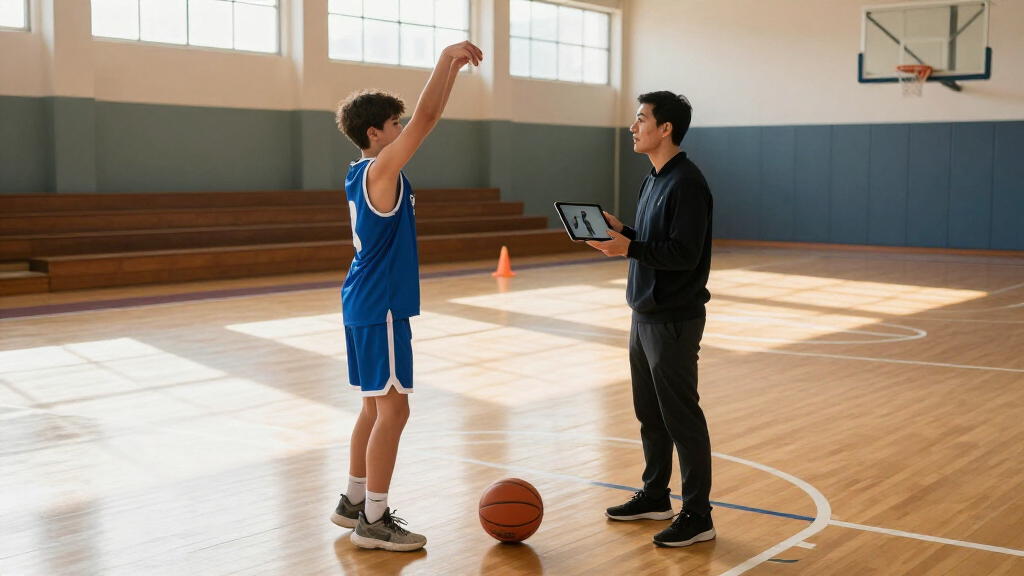
IdeaNavigator AI has outlined a proposed app that would compare young athletes’ recorded movements with professional reference mechanics and suggest a targeted drill. The concept has not been validated; its proposed first test is a baseball-hitting pilot in which certified coaches review grades for 100 children.
IdeaNavigator AI has outlined a concept for a phone-based app that would assess young athletes’ movements against professional reference mechanics and recommend one drill per practice session. The proposal targets parents whose children practice without a private coach, but it describes a product idea and validation plan—not a tested app or proven coaching method.
The proposed workflow is to record a movement, overlay the child’s motion with a reference profile for that skill, grade selected checkpoints and suggest a drill aimed at the largest identified gap. Examples of checkpoints in the proposal include hip rotation, release angle and stride. The initial product would focus on one sport and skill rather than attempt to assess every youth athlete at once.
For its first test, the proposal selects baseball hitting and calls for certified coaches to compare the app’s grades with their own assessments across 100 children. That is a suggested validation study, not a completed trial: no coach findings, accuracy results, participant details or testing dates are provided.
The proposed business model is a family subscription for each sport, with a separate coach tier for team use. The concept identifies youth sports training technology as its market. It does not give subscription prices, development costs, a release schedule or evidence that families or teams have agreed to pay.
Testing a Low-Cost Coaching Aid
The idea addresses a practical gap for families whose children practice without regular one-to-one coaching. The proposal argues that repeated swings, throws and strides can reinforce movement patterns when no coach is watching. It puts private sessions at $75 to $150 each, but supplies no location, date or pricing survey for that figure; it should be treated as the proposal’s estimate, not a universal rate.
If a phone tool can provide useful, consistent feedback, it could give parents another way to structure practice between coaching sessions. But a numerical grade or professional-looking overlay would not by itself show that the feedback is accurate, suitable for a child, or likely to improve performance. The proposed coach review is a first check on agreement, not evidence of better outcomes or lower injury risk.
The distinction matters because families may rely on movement advice when deciding how a child should train. A system that misreads a motion or applies a reference poorly could direct practice toward the wrong adjustment. The concept’s value therefore depends less on the promise of automated grading than on whether testing shows that its assessments are dependable and appropriately limited.
Popular right now

Dyson V9 Motorbar Cordless Vacuum

Ninja Creami Scoop & Swirl Ice Cream Maker – Bone & Champagne (Amazon Exclusive)

Sony BRAVIA 5 85-Inch Mini LED 4K HDR Smart Google TV (K-85XR50)
As an affiliate, we earn on qualifying purchases.
From Phone Video to Practice Feedback
The proposal rests on the claim that pose-estimation models can now run on phones with enough accuracy to compare a young athlete’s mechanics with reference motion profiles. It does not name a model, publish technical measurements or provide independent evidence for that performance claim. No device requirements, camera setup or operating conditions are specified.
Its planned scope is deliberately narrow: one buyer, one sport and a limited set of movement checkpoints. Starting with baseball hitting would allow the team behind the idea to compare app assessments with coaches’ judgments before considering other sports or a broader set of skills. The outline does not identify a developer, participating coaches or a product already available to families.
Accuracy, Safety and Demand Unproven
No app launch, completed pilot or performance data is reported. It remains unknown how the proposed grades would be calculated, how reference mechanics would account for differences among children, or how coaches would resolve disagreements with the software. The plan also does not explain whether the hundred-child test would include different ages, experience levels or physical abilities.
The proposal describes the tool as addressing flaws that can become habits and increase injury risk, but offers no study or outcome data establishing that the app would prevent either problem. It is also unclear how the system would communicate uncertainty, protect children’s video, or distinguish a technical variation from a movement that warrants correction. No subscription price or evidence of willingness to pay is given.
Coach Review Is the Proposed Test
The next stated milestone is a baseball-hitting pilot involving 100 children, with certified coaches auditing the app’s grades against their assessments. Any report from that test would need to explain how participants were selected, what the coaches evaluated and how agreement was measured before readers could judge the results.
IdeaNavigator AI provides no timetable for the pilot or a product launch. Until testing is completed and results are published, the app remains a proposed training aid, and claims about its accuracy, effects on practice or commercial prospects remain unresolved.
Source: IdeaNavigator AI
Key Questions
Is the youth athlete form-grading app available now?
No launch is reported. The outline describes a product concept and a proposed pilot, not an app currently available to families.
How would the app assess an athlete’s form?
The proposed workflow uses phone video to compare a child’s movement with a reference profile, grade checkpoints such as hip rotation or stride, and recommend one drill for the largest identified gap.
How would the concept be tested?
The proposed first pilot would focus on baseball hitting. Certified coaches would compare the app’s grades with their own assessments across 100 children; results have not been reported.
Has the app been shown to reduce injury risk or improve performance?
No outcome evidence is provided. The proposal discusses repeated form flaws and injury risk but reports no study showing that the app changes either outcome.
What would a subscription cost?
No price is specified. The proposed business model is a family subscription for each sport and a separate tier for coaches or teams.
Source: IdeaNavigator AI