
To accurately measure noise at home you need a good sound level meter calibrated for precision, avoiding reliance on smartphone apps. Prepare your space by closing windows, silencing appliances, and absorbing sound with soft furnishings. Hold the device at ear level and consistent distance from the noise source, choosing appropriate settings. Regularly check calibration and document your data. Keep in mind local noise standards to guarantee your results are trustworthy—more guidance on these steps is just ahead.
Key Takeaways
- Use a calibrated digital sound level meter and select A-weighting with fast response for accurate readings.
- Prepare the environment by closing windows, turning off appliances, and choosing quiet rooms to minimize external noise.
- Hold the device at ear level and consistent distance, ensuring minimal interference during measurement.
- Take multiple readings over different times and days to identify patterns and ensure reliability.
- Compare results with local noise regulations and document data for ongoing assessment and compliance.
What Are the Best Tools to Measure Noise at Home?
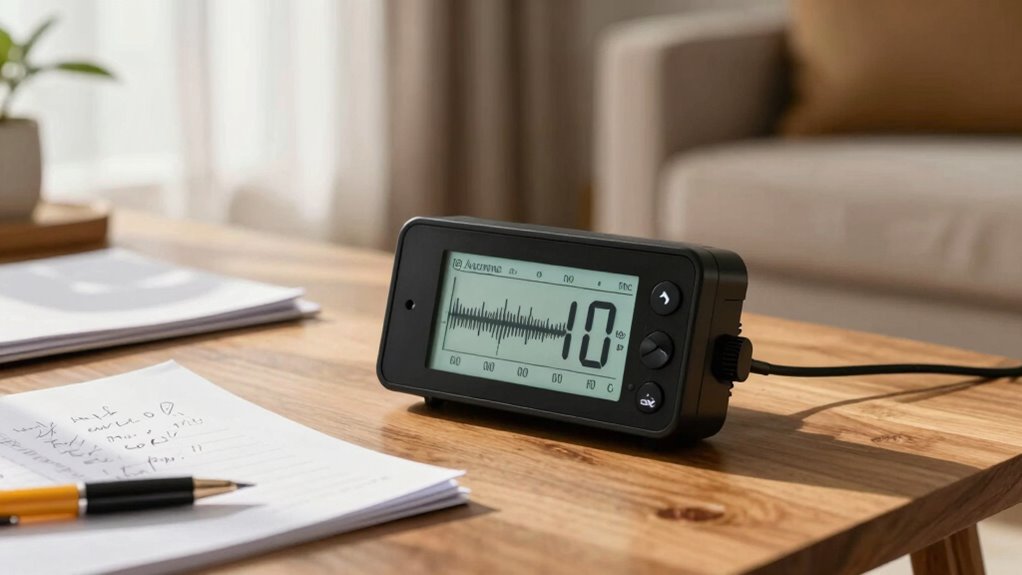
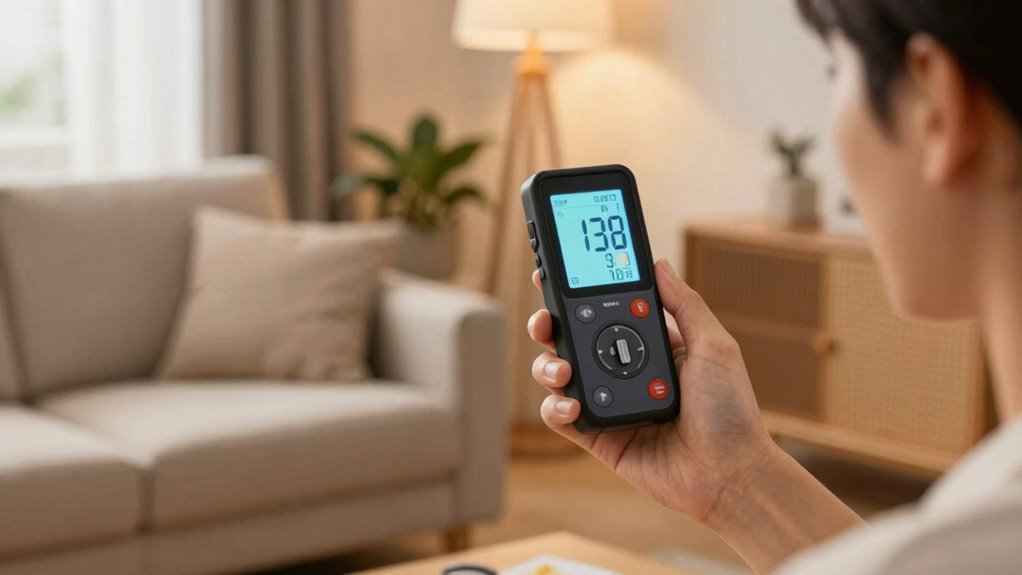
To accurately measure noise levels at home, you’ll want to use reliable tools designed for sound assessment. The most effective devices are digital sound level meters, which provide precise measurements of noise pollution. Look for models with a flat frequency response and a clear display. Guarantee the meter is capable of decibel calibration, meaning it can be adjusted for accurate readings across different environments. This calibration is essential because it minimizes errors caused by background noise or device inaccuracies. Avoid using basic smartphone apps alone, as they often lack the sensitivity and calibration features needed for trustworthy results. Investing in a quality sound level meter ensures you get consistent, accurate noise measurements, which are vital for assessing your environment and identifying sources of noise pollution. Additionally, choosing modern kitchen technology with integrated noise monitoring features can help you maintain a quieter home environment more effectively. For the most trustworthy results, consider selecting a device with professional-grade sensors, which are designed specifically for accurate sound measurement in varied settings. Regularly calibrating your device and understanding the noise level guidelines can further enhance measurement accuracy and help you interpret your results correctly. Moreover, understanding sound frequency ranges can assist in identifying specific noise sources and their potential impact on your environment. It is also beneficial to consider the location-specific noise considerations to ensure your measurements are relevant to your living space.
Preparing Your Environment for Accurate Noise Measurement
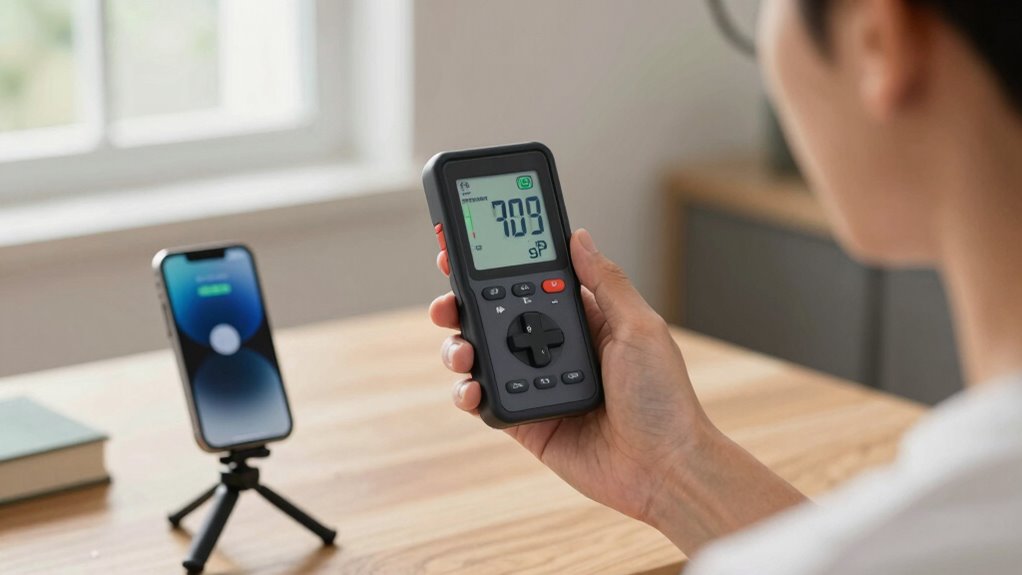
Before measuring noise levels at home, you should prepare your environment to guarantee accurate results. Noise pollution can be influenced by interior acoustics, so creating a controlled setting helps make certain consistent readings. To optimize your environment, consider these steps:
- Close windows and doors to minimize external noise intrusion
- Turn off or silence appliances that generate background noise
- Use soft furnishings like curtains and rugs to absorb sound
- Avoid high-traffic areas during measurement times
- Choose a quiet room with minimal echo for more reliable results
- Be aware of interior acoustics that can affect sound measurement accuracy
- Additionally, understanding the impact of room geometry on sound reflection can help you select the best measurement spot.
- Recognizing how sound absorption varies with different materials can further enhance measurement consistency.
- Incorporating sound dampening techniques can also improve the accuracy of your noise measurements.
- Considering the spatial arrangement of furniture and objects can further reduce unwanted echoes and reflections, leading to more precise results.
How to Use a Sound Level Meter Properly?
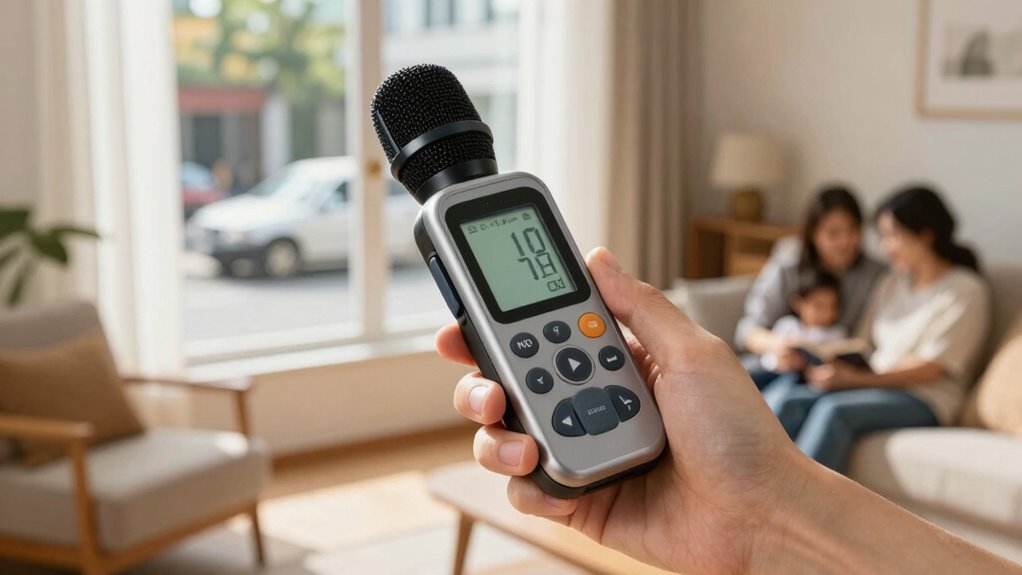
Using a sound level meter correctly is essential for obtaining accurate noise measurements. First, ensure you follow proper calibration procedures by regularly checking the device with a calibration tone or standard. This guarantees your measurements remain precise over time. When taking readings, hold the meter at a consistent distance from the noise source, typically at ear level, and avoid shielding the microphone. Use proper measurement techniques, such as selecting the correct weighting (usually A-weighted) and response time (Fast or Slow), depending on what you’re measuring. Keep the environment stable, minimize background noise, and avoid touching the device during recording. By adhering to these calibration procedures and measurement techniques, you’ll ensure your noise data is reliable and trustworthy. Additionally, understanding the contrast ratio of your projector can help you interpret how well your environment’s noise levels might affect your viewing experience. Regularly monitoring noise levels around your home can also assist in maintaining a comfortable and quiet environment, especially if you are evaluating the impact of appliances or devices like air purifiers. Moreover, familiarizing yourself with noise measurement standards can help you compare your results against recommended limits for health and comfort. Consistent use of proper measurement procedures will help you build a reliable noise profile for your space, aiding in better noise management decisions.
Interpreting Noise Data and Checking Compliance
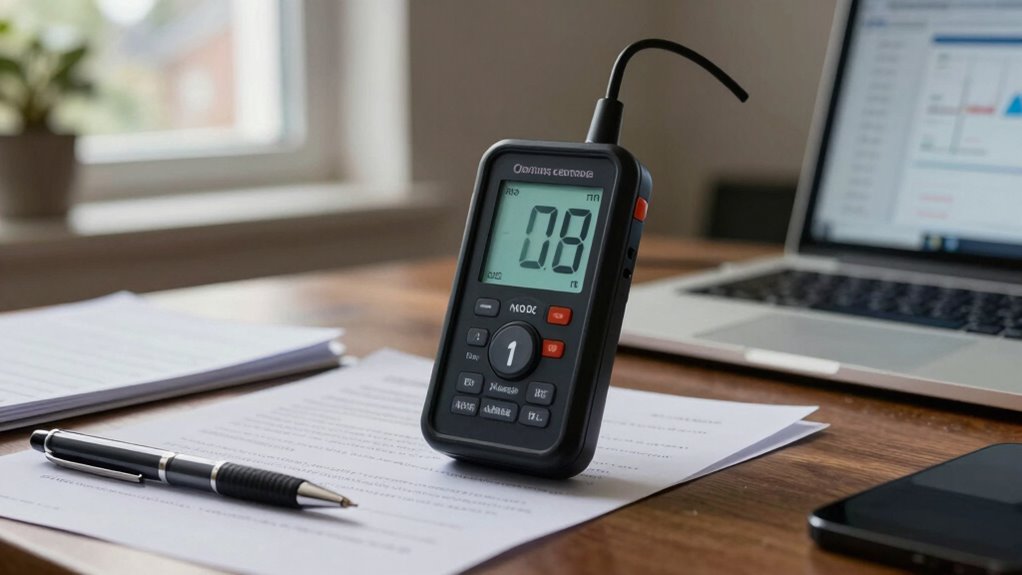
Once you’ve taken accurate noise measurements with your sound level meter, the next step is to interpret the data correctly and determine whether it meets safety standards. Effective noise monitoring relies on proper data analysis to assess if noise levels stay within acceptable limits. To do this, compare your results against local regulations or recommended guidelines. Look for patterns in the data, such as peak levels or persistent noise, which might indicate compliance issues. Keep these points in mind:
- Check if average and peak noise levels stay below legal thresholds
- Identify times of high noise activity
- Compare readings to permissible limits
- Consider cumulative exposure over time
- Document and review data for consistency
- Use innovative cloud data management to securely store and analyze your noise data
- Employ noise monitoring tools for ongoing assessment and trend analysis
- Incorporate real-time alerts to promptly address noise violations
This approach helps you understand if your environment is safe and compliant.
Tips for Consistent and Reliable Noise Measurements
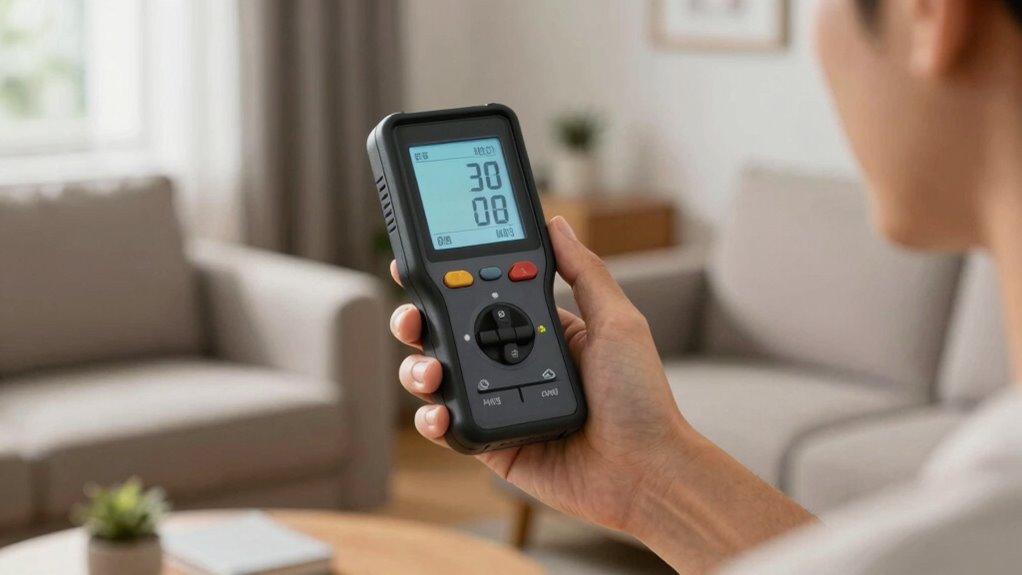
Achieving consistent and reliable noise measurements requires careful setup and disciplined procedures. First, guarantee your equipment is properly noise calibrated before each session; accurate calibration ensures that your readings reflect true sound levels. Maintaining a steady measurement frequency by taking readings at consistent times and under similar environmental conditions reduces variability caused by external factors. Use a reliable sound level meter and follow manufacturer instructions closely. Record measurements over multiple days or times to identify patterns and confirm consistency. Keep your device away from sources of interference or vibrations that could skew results. Regularly verify your calibration to prevent drift. Understanding noise calibration is essential to ensure your measurements are accurate and trustworthy. Additionally, paying attention to ambient noise conditions helps in obtaining more precise results. Being aware of external environmental factors can further enhance the accuracy of your data. By adhering to these practices, you’ll improve the accuracy and trustworthiness of your noise data, making your results dependable for any purpose.
Frequently Asked Questions
How Often Should I Measure Noise Levels at Home?
You should measure noise levels at home regularly, ideally once a month or whenever you notice changes in your environment. Make certain your measurement equipment options are calibrated properly for accurate results. Noise level calibration is vital, especially if you’re tracking long-term trends. Frequent testing helps you identify persistent issues and maintain a comfortable environment. Consistent measurements also make sure your data remains reliable over time, giving you peace of mind.
Can Smartphones Provide Accurate Noise Measurements?
Smartphones can be surprisingly effective, but they aren’t perfect noise measurement tools. While some noise measurement apps claim high smartphone accuracy, they often fall short compared to professional devices. Your phone’s microphone can pick up sound, but ambient noise, hardware quality, and app calibration impact results. Use these apps for quick, rough estimates—don’t rely on them for precise noise measurement, especially when safety or compliance is involved.
What Time of Day Is Best for Noise Testing?
You should test noise levels during the quietest part of the day, often early morning or late evening, especially if you’re noise-sensitive. This helps you get accurate results and identify areas needing soundproofing techniques. Testing at different times reveals peak noise periods, so plan your measurements accordingly. Consistent testing during these low-traffic periods guarantees you accurately gauge your home’s soundproofing effectiveness and address noise issues effectively.
How Do Weather Conditions Affect Noise Measurement Results?
Sure, weather impact can make your noise measurements feel like a rollercoaster. Rain, wind, and humidity distort sound levels, leading to inconsistent results. Seasonal variation also plays a role, with quieter winters and louder summers. Don’t let weather fool you—always record measurements under similar conditions or wait for calm, clear days. Otherwise, your data might just reflect Mother Nature’s mood swings, not actual noise levels.
Are There Legal Limits for Indoor Noise Levels?
Yes, there are legal thresholds for indoor noise levels set by noise ordinances in many areas. These limits aim to prevent disturbances and protect your health. You should check local regulations because they vary by city or region. If noise exceeds these legal limits, you can file a complaint. Monitoring your indoor noise helps guarantee you’re within the permissible levels and maintain a comfortable, compliant environment.
Conclusion
Now that you know how to measure noise accurately at home, you’re armed with the tools and techniques to cut through the chaos. Remember, consistent measurement is your secret weapon, turning whispers into clear signals. Think of your sound level meter as a trusted compass guiding you through the noise jungle—stay vigilant, stay precise. With these skills, you can silence the uncertainties and create a more peaceful living space. The power to control noise is in your hands—grab it.