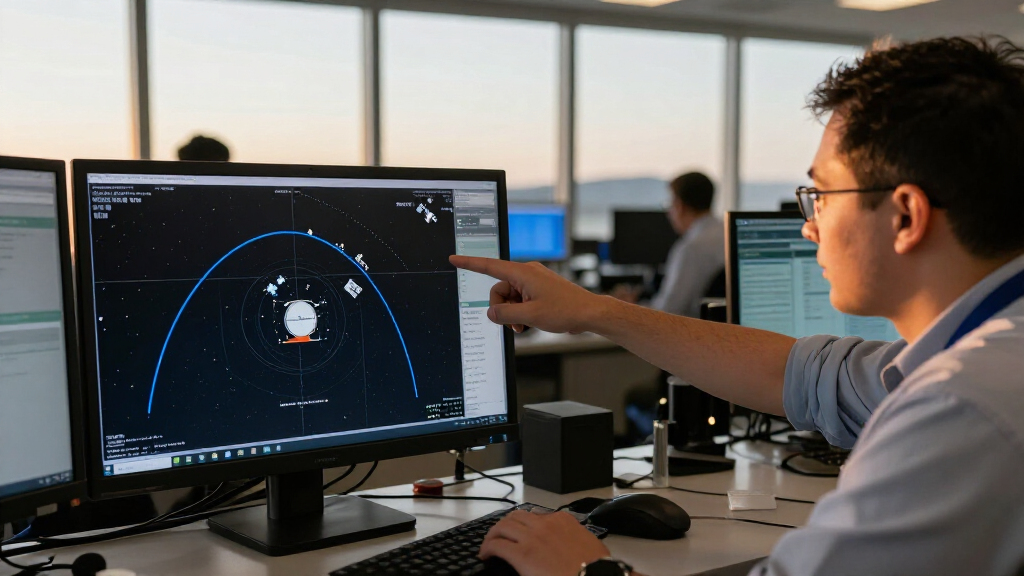

🔍 Read the full analysis: FCC Clearance For SpaceX: What The Data Centre Satellite Decision Includes on ThorstenMeyerAI.com
TL;DR
The FCC authorized SpaceX to deploy as many as 1 million satellites intended to operate as orbital data centres, with deployment milestones running through 2040. The decision covers radio links for backup and emergency control, not whether the technology or business model will work; the FCC deferred SpaceX’s request on disposal plans for satellites above 600 kilometres.
The Federal Communications Commission on November 25 authorized SpaceX to deploy up to 1 million satellites intended to function as data centres in orbit, granting most of the company’s application while deferring a request about disposal of satellites above 600 kilometres. The decision authorizes specified satellite radio links; it does not establish that SpaceX’s proposed system, called Starmind, has been built, will work technically or will be commercially viable.
The FCC’s Space Bureau approved radio links for backup and emergency control. SpaceX has said that the satellites would rely primarily on laser links between spacecraft to carry data, with radio available as a backup. The agency licenses radio use, not the computing equipment itself, and its order does not make the proposed system a service customers can use.
The authorization describes orbital layers, or shells, that are 50 kilometres thick and range from 500 to 1,002 kilometres above Earth. The permission also comes with deployment milestones: SpaceX must have at least one satellite operating by 2033, half of the authorized fleet by 2038, and the full fleet by 2040. The source account says the authorization may lapse if the deadlines are missed.
The FCC denied petitions seeking to block the proposal from Kuiper Systems, Amazon’s satellite-network unit, Viasat and the American Astronomical Society. It found SpaceX’s plan for satellites below 600 kilometres met its rules, according to the source account. But the commission deferred the company’s proposed disposal approach for satellites at higher altitudes, saying SpaceX had not provided enough information.
FCC decision · what the permission covers
A permission for 1 million data centre satellites, with deadlines
The FCC licenses radio, not computers. So the permission covers backup radio links and sets deadlines. Whether the satellites work is left to SpaceX.
- November 25, 2026Permission grantedThe FCC lets SpaceX deploy up to 1 million satellites as data centres in space, called Starmind.
- What it coversRadio as a spare lineThe licence is for backup and emergency radio control. Lasers between satellites carry the data.
- Not judgedDoes it work?The FCC says whether space data centres work or pay off is not its call.
- DeferredDisposal above 600 kmSpaceX must give more detail before it sends higher satellites to disposal orbits.
- 2033 to 2040DeadlinesOne satellite by 2033, half by 2038, all by 2040, or the permission lapses.
- Blue: satellites the permission allows, shown schematically in shells between 500 and 1,002 km.
- Orange: the first satellite, which must be working by November 25, 2033.
Sources: FCC news release, November 25, 2026 (page 1); FCC Space Bureau order DA 26-1273, November 25, 2026 (pages 2, 4, 5, 13, 14). Schematic, not to scale: no satellite has been launched under this permission.
Graphic: Powered by Thorsten Meyer AI
A Long-Term Bet on Orbital Computing
The authorization gives SpaceX regulatory room to pursue a system that could eventually connect satellite-based computing with users and infrastructure on Earth. The company argues that orbital facilities could draw on solar power in space while serving demand for computing, including AI. Those are company claims about a proposed design, not results demonstrated by operating data centres in orbit.
The development matters because the computing sector faces pressure to secure electricity and cooling for large facilities on the ground. An orbital alternative, if it can be built and operated as intended, could affect how some future computing capacity is supplied. But the FCC’s authorization does not answer questions about cost, reliability, heat management, data-transfer performance or demand. For customers and businesses, there is no immediate change: the plan remains subject to years of development and regulatory deadlines.
The decision also leaves unresolved concerns raised by opponents and astronomers, including orbital debris and the potential effects of large numbers of satellites on astronomical observations. The commission’s action settles the licence application in large part, but it is not a finding that those broader concerns have been eliminated.
Popular right now

De'Longhi Classic Signature Espresso Machine with Adjustable Milk Frother

Dyson Cyclone V10 Origin Cordless Vacuum

KitchenAid Artisan 5-Quart Tilt-Head Stand Mixer, Ink Blue (KSM150PS)
As an affiliate, we earn on qualifying purchases.
What the FCC License Covers
The decision is a communications authorization rather than approval of a finished computing service. As described in the source account, the FCC’s role was to review the proposed use of radio frequencies. Its order covers backup and emergency control radio links; SpaceX says the main data connections would use lasers. The distinction matters: approval of a radio link does not demonstrate that laser communications, orbital computing or the wider system will perform as proposed.
SpaceX has described Starmind as a way to use solar energy in space to power AI computing for use on Earth. Reuters reported the company’s claim that the satellites could use “near-constant solar power with little operating or maintenance costs.” The Verge reported SpaceX’s description of the concept as a way to “capture solar energy in space to power” AI on Earth. These statements describe the company’s rationale; the FCC did not assess whether the system will achieve those outcomes.
The dispute before the commission included objections from satellite operators and astronomers. The FCC denied the cited petitions, but its response varied by issue. The source account says the agency accepted SpaceX’s approach for satellites below 600 kilometres and found its proposed coordination with the National Science Foundation sufficient for astronomy-related concerns. It did not resolve the higher-altitude disposal request, and it did not assess whether the business is technically or economically viable.
„Near-constant solar power with little operating or maintenance costs“
— SpaceX, as reported by Reuters
Open Questions on Safety and Performance
No Starmind satellites are in orbit, according to the source material, and the FCC did not determine whether the project can meet its technical or commercial goals. The order does not establish how much computing capacity the satellites could provide, what service would cost, how quickly results could reach Earth or whether customers would be able to access it.
The higher-altitude disposal plan remains unresolved. The source account says SpaceX proposed moving satellites above 600 kilometres to disposal orbits rather than relying on atmospheric re-entry, but the FCC deferred that request for lack of information. The decision also does not set conditions addressing the concerns raised about waste heat or possible effects on the infrared sky. Astronomers argued that the system could generate substantial waste heat; that remains an attributed concern, not a finding in the order.
The available material does not give a full technical assessment of collision risk, satellite failure rates, laser-link capacity, cooling methods or the system’s environmental effects. It also does not specify what further information SpaceX must submit on disposal or when the FCC will revisit that issue. Those details should not be read as settled by the authorization.
Milestones Run Through 2040
The first stated deployment deadline is 2033, when SpaceX must have at least one satellite operating. The company would then have to reach half of its authorized constellation by 2038 and the full fleet by 2040, under the terms described in the source material. Missing the deadlines could cause the authorization to lapse, though the available account does not explain how the FCC would apply that outcome to each milestone.
SpaceX’s next practical steps would include developing and launching spacecraft, demonstrating that the proposed communications links and computing systems work, and meeting the licence’s conditions. The company’s higher-altitude disposal request also remains a regulatory issue after the FCC’s deferral. The source material does not give a date for a further decision on that request.
Until satellites are operating and the company provides evidence of performance, Starmind remains a proposal rather than an available AI-computing product. The FCC’s authorization establishes permission and deadlines; it does not guarantee deployment or settle the system’s technical, economic or environmental questions.
Key Questions
What did the FCC authorize SpaceX to do?
The FCC authorized SpaceX to deploy up to 1 million proposed data-centre satellites and approved specified radio links for backup and emergency control. The authorization does not mean the satellites have been launched or that the proposed service is operating.
When must SpaceX deploy the satellites?
The milestones described in the source material require at least one satellite by 2033, half of the fleet by 2038 and the full authorized fleet by 2040. The account says the permission may lapse if the deadlines are missed.
Did the FCC confirm that space data centres will work?
No. The FCC did not assess whether the system is technically feasible or commercially viable. SpaceX’s claims about solar power and operating costs remain company projections, not demonstrated results.
What part of SpaceX’s request did the FCC defer?
The agency deferred SpaceX’s proposed disposal approach for satellites above 600 kilometres, saying the company had not supplied sufficient information. The source material does not state when the FCC will revisit the request.
Can customers use SpaceX’s orbital data centres now?
No. The source account says none of the satellites is in orbit. The authorization is for a proposed system with milestones extending to 2040, not a currently available computing service.
Source: ThorstenMeyerAI.com