📊 Full opportunity report: Build A Better Record Of Your TRT Symptoms And Lab Results on IdeaNavigator AI — validation score, market gap, and execution plan.
TL;DR
IdeaNavigator AI has outlined a proposed lab and symptom tracker for men on testosterone replacement therapy, with an eight-week test involving 300 users. The concept would connect imported lab results, dose changes and daily check-ins; no app launch, clinical validation or test results are reported.
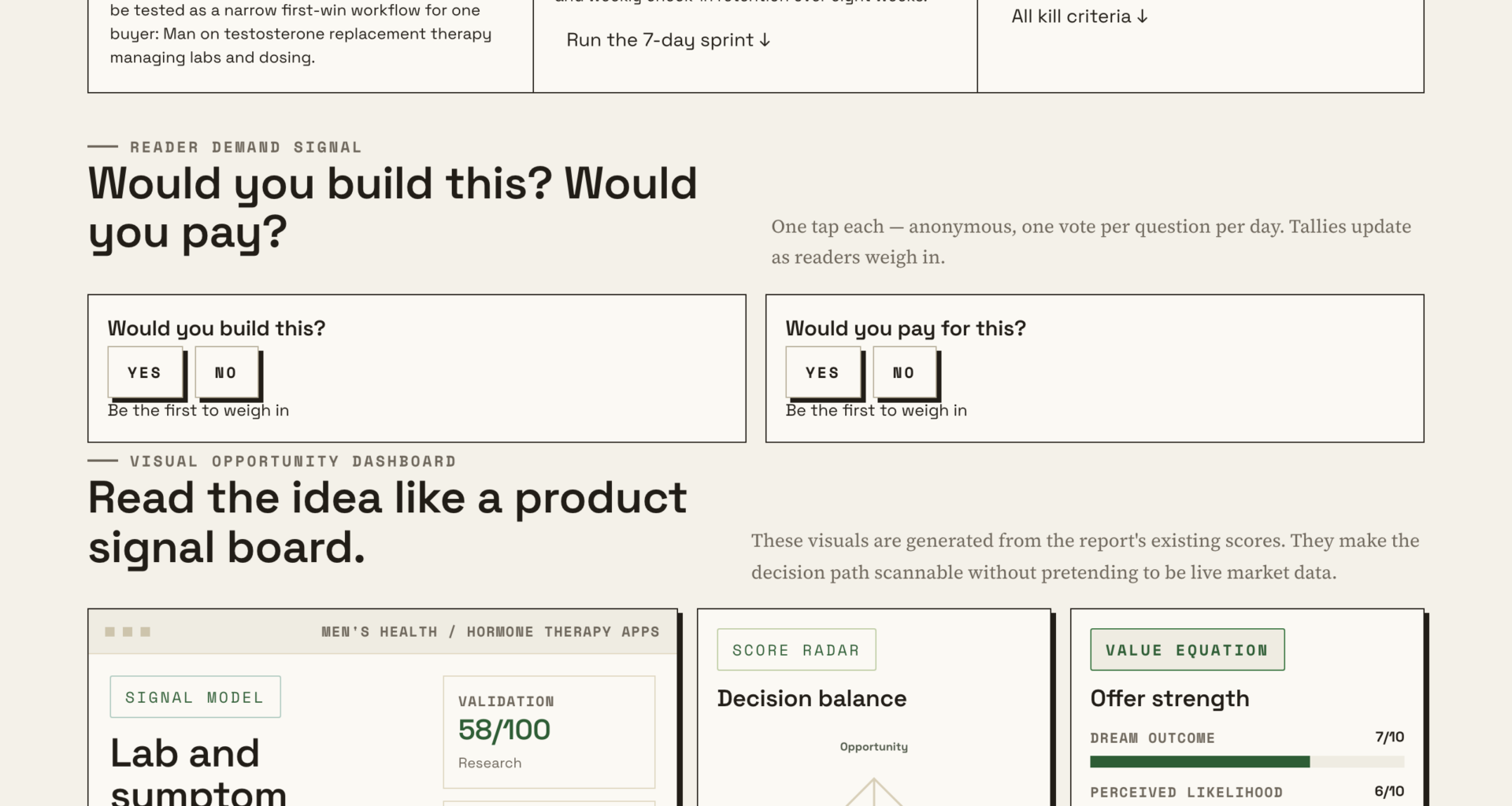
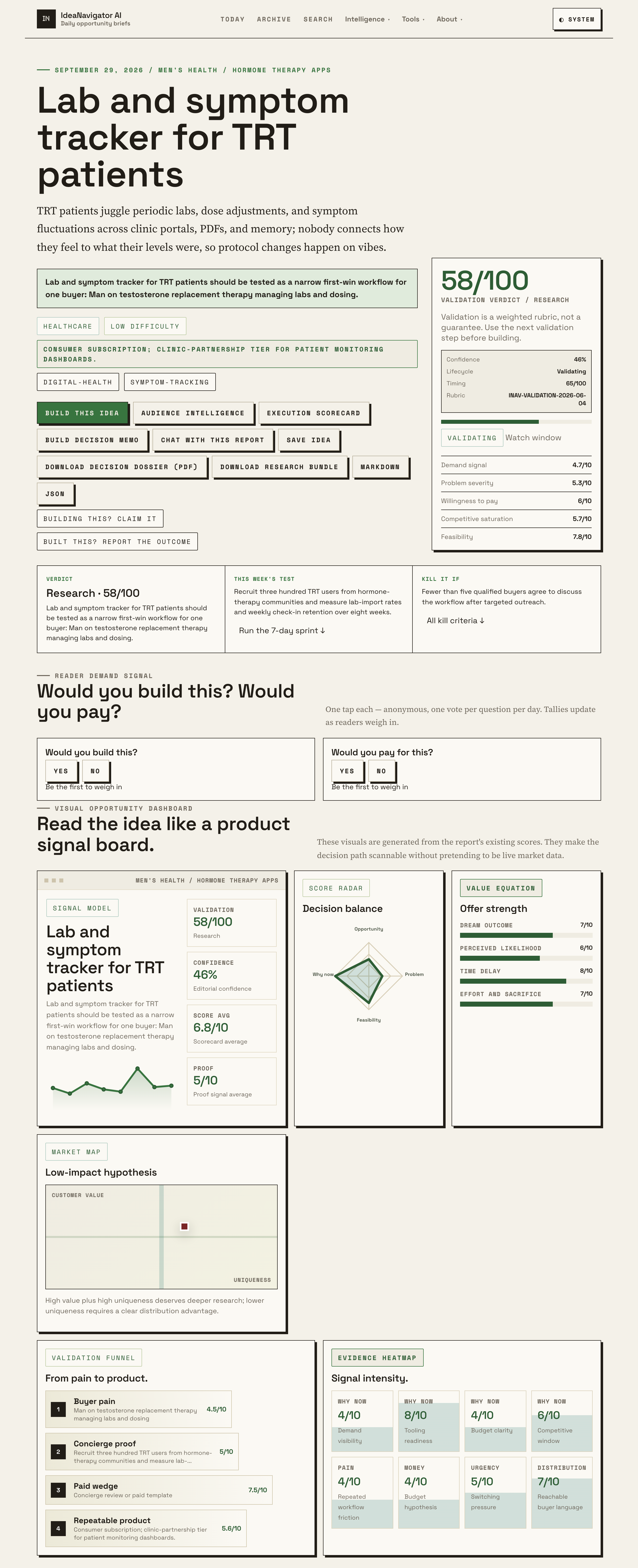
IdeaNavigator AI has proposed testing a lab and symptom tracker for men on testosterone replacement therapy (TRT), an approach intended to connect lab results and dose changes with patients’ day-to-day symptoms. The proposal calls for recruiting 300 TRT users for an eight-week test, but does not report that the app has been built, launched or clinically evaluated.
The proposed app would let users import lab-result PDFs and view hormone panels over time alongside dose changes and daily symptom check-ins. It would also prepare trend summaries for clinic visits and flag results that move outside target ranges. The proposal does not specify which hormone measurements, target ranges or clinical guidelines the app would use.
IdeaNavigator AI identifies the intended user as a man on TRT who is managing lab tests and dosing. Its description says patients may have to piece together information from clinic portals, PDFs and memory, making it hard to see how symptoms relate to measured hormone levels. That is the problem the proposed tracker aims to address; the material provides no patient survey or other data measuring how widespread it is.
The suggested test would recruit users from hormone-therapy communities and track two measures over eight weeks: lab-import rates and weekly check-in retention. No recruitment has been reported, and there are no results on whether users would keep up with check-ins or find the summaries useful to clinicians.
Connecting Symptoms With Lab History
A tracker that brings test results, dosing history and symptom notes into one timeline could give patients a clearer record to discuss with their clinicians. That record may help organize questions around protocol changes, especially when appointments are separated by weeks or months. The proposal describes this as a product opportunity, though it does not show that the tool improves care or changes treatment decisions.
The suggested workflow also has consequences for clinical use. Flags and trend summaries could shape what patients raise during appointments, so their usefulness would depend on accurate imports, suitable reference ranges and clear communication that app-generated observations do not replace a clinician’s judgment. The proposal does not explain how those safeguards would work.
For a potential business, retention is an early practical test: users would need to import results and record symptoms often enough for the timeline to be useful. IdeaNavigator AI suggests a consumer subscription and a separate clinic-partnership tier with patient-monitoring dashboards. Pricing, clinic demand and willingness to pay have not been established.
A Proposed Test for Fragmented Records
The proposal places the idea in the men’s health and hormone-therapy app market. It says TRT prescriptions and telehealth clinics have grown, contributing to a larger group of patients managing care across providers. Those are claims in the proposal; it supplies no figures, dates or independent evidence to quantify the growth.
The product outline is an early-stage concept, not a reported medical study or a clinical recommendation. Its proposed first step is to find out whether people will use two basic features: importing lab documents and completing weekly symptom check-ins. The eight-week period would test engagement with those tasks, but on its own would not establish that the tracker improves health outcomes or that its alerts are medically reliable.
Clinical Rules and Test Results
No app, developer, launch date or participating clinic is identified. It is also unclear how lab values would be extracted from PDFs, how the app would account for differences among laboratories, or who would set the target ranges and alert rules. Those details matter because a flag could be misunderstood if it lacks the test’s context or a clinician’s interpretation.
The proposal gives no evidence that patients or clinics have agreed to take part. It reports no test results, user feedback, pricing research or clinical review. The suggested eight-week test would measure imports and check-in retention, but the proposed measures do not directly establish whether clinic conversations improve or treatment decisions change.
Recruitment Would Be the First Milestone
The next step described is recruiting 300 TRT users from hormone-therapy communities and monitoring lab imports and weekly check-ins for eight weeks. IdeaNavigator AI has not reported that recruitment has begun or set a timetable. If a test proceeds, its findings could indicate whether users engage with the core workflow; further clinical and product evaluation would be needed to assess the accuracy and safety of any alerts or summaries.
Source: IdeaNavigator AI
Key Questions
Has a TRT lab and symptom tracker launched?
No launch is reported. IdeaNavigator AI describes a product concept and a proposed test.
What would the proposed app track?
It would combine lab results, dose changes and daily symptom check-ins, then prepare trend summaries and flag values outside target ranges. The proposal does not define those ranges.
How would the idea be tested?
The proposal suggests recruiting 300 TRT users for eight weeks and measuring lab-import rates and weekly check-in retention. No completed test or findings are reported.
Would the app replace a clinician’s advice?
The proposal does not describe the app as a substitute for clinical care. It outlines tracking and summaries for clinic visits, but gives no clinical validation or details on how alerts would be reviewed.
Source: IdeaNavigator AI