For most small businesses, Sage 50 Pro Accounting is the strongest overall pick in this lineup because it connects stock tracking with accounting, while Inventoria is a more focused choice for straightforward stock control. MRBOSS iPOS stands out for sellers who need point of sale and delivery workflows alongside inventory. The main tradeoff is between broader business tools and a simpler system focused on a particular workflow; some entries here are also specialized for salons or have limited product information. I’d match the software to how you receive, count, sell, and reconcile stock before choosing by feature list alone. Read on for how the seven options compare and which buyer each suits best.
Key Takeaways
- Sage 50 Pro Accounting leads for businesses that want inventory tied to accounting, though it may bring more accounting workflow than a stock-only operation needs.
- Inventoria is the clearest fit for buyers seeking dedicated stock control rather than a broader accounting or point-of-sale package.
- MRBOSS iPOS puts sales, inventory, and delivery integration in the same conversation, making it more relevant to sellers with those linked workflows.
- Salon Point of Sale is narrowly tailored to salon and spa checkout; that focus may suit its intended setting but limits its appeal to other businesses.
- Orderhive and the generically named inventory management entries need closer feature and support verification because their supplied product details do not establish their current capabilities.
| Sage 50 Pro Accounting 2026 U.S. Retail Essential Edition (1-Year Subscription) |  | Best for Inventory Plus Accounting | Edition: Essential | License: 1 user, 1-year subscription | Platform: PC (Windows) | VIEW LATEST PRICE | See Our Full Breakdown |
| Inventoria Software for Stock Control and Inventory Management |  | Best for Straightforward Stock Control | Platform: Windows | Distribution: Download | Inventory feature: Inventory monitoring | VIEW LATEST PRICE | See Our Full Breakdown |
| Orderhive Inventory Management Software |  | Best for Multi-Channel Cloud Operations | Type: Software | Deployment: Cloud-based | Trial: Free trial available | VIEW LATEST PRICE | See Our Full Breakdown |
| Salon Point of Sale Checkout Software – Inventory Management & Control, Touchscreen for Salons and Spas (Windows PC, CD-ROM) |  | Best for Salon and Spa Retail | Operating system: Windows only | Installation media: CD-ROM | Hardware support: Touchscreen, thermal printers, cash drawers, barcode scanner | VIEW LATEST PRICE | See Our Full Breakdown |
| Inventory Management System | 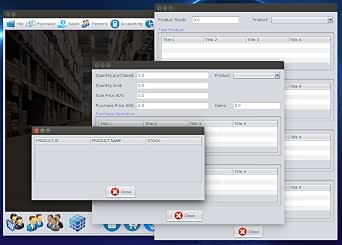 | Best for Desktop Order and Delivery Tracking | Versions: 1.2, 1.3 | Processor: 2 GHz | RAM: 2 GB | VIEW LATEST PRICE | See Our Full Breakdown |
| Inventory Management Professional – Inventory Tracking and Management Software |  | Best for Large, Multi-Warehouse Catalogs | Operating system: Windows PC | User license: 1 user | Warehouse management: Multiple warehouses and locations | VIEW LATEST PRICE | See Our Full Breakdown |
| MRBOSS iPOS iOS Point of Sale System with Inventory Management and Delivery Integration |  | Best for iOS Food-Service Inventory | Platform: iOS, Mac, and iPad | Installation: No installation required | Support: 1 month of remote support included | VIEW LATEST PRICE | See Our Full Breakdown |
More Details on Our Top Picks
Sage 50 Pro Accounting 2026 U.S. Retail Essential Edition (1-Year Subscription)
Sage 50 Pro Accounting suits small businesses that need stock tracking alongside bookkeeping, invoicing, job costing, and financial reports. Its preconfigured business models can help owners get core accounts set up without building every category from scratch. Compared with Inventoria, which focuses more directly on stock monitoring, purchase orders, and barcode entry, Sage gives inventory a place within a broader accounting workflow. That makes it a stronger fit when financial records and job costs matter as much as stock levels, though it may be more software than a stockroom-only operation needs. The tradeoffs are a recurring annual subscription and Windows-specific system requirements. Online features also need a high-speed connection, while the desktop software offers offline capabilities.
Pros:- Combines inventory management with bookkeeping, invoicing, and financial reporting
- Preconfigured business models can simplify initial accounting setup
- Includes job costing and cash flow monitoring
- Desktop software supports offline work
Cons:- Requires an annual subscription
- Runs on specified Windows versions and has minimum hardware requirements
- Online features require a stable high-speed internet connection
Best for: Small Windows-based businesses that want inventory tracking connected to bookkeeping, invoicing, and job costing
Not ideal for: Businesses seeking a dedicated, lightweight stock-control tool or teams using macOS or Linux
- Edition:Essential
- License:1 user, 1-year subscription
- Platform:PC (Windows)
- Delivery:Online code
- OS compatibility:Windows 10 (21H1+) or Windows 11 (23H2+)
- Minimum RAM:8 GB
- Minimum disk space:1 GB
- Internet:High-speed connection required for online features
Our verdict“Choose Sage 50 when you want inventory records tied to a wider small-business accounting workflow and can work within its Windows and subscription requirements.”
Inventoria Software for Stock Control and Inventory Management
Inventoria keeps its focus on day-to-day stock control: monitoring inventory, warning about low levels, preparing purchase orders, and adding items with barcode scanning. Those tools can help a small operation spot replenishment needs and communicate with vendors without taking on a broader accounting suite. Compared with Sage 50 Pro Accounting, Inventoria is more centered on inventory tasks, while Sage also handles bookkeeping and job costing. That narrower focus may suit buyers who already use separate accounting software, but the provided product details do not establish cloud access or system requirements. Installation is via download, so the software requires local setup and maintenance. Buyers who need a fully specified platform or want inventory integrated with accounting should weigh those gaps against its direct stock-control workflow.
Pros:- Automated warnings can flag low stock before it becomes a stockout
- Creates and emails purchase orders to vendors
- Barcode scanning support can speed up item entry
- Keeps customer and supplier information in a centralized database
Cons:- Download distribution requires local installation and maintenance
- Specific system requirements and compatibility details are not provided
- The listed features do not establish cloud access or accounting integration
Best for: Small businesses that need local Windows stock monitoring, purchase orders, and barcode-assisted item entry
Not ideal for: Teams that require clearly documented system requirements, cloud access, or integrated bookkeeping
- Platform:Windows
- Distribution:Download
- Inventory feature:Inventory monitoring
- Purchasing feature:Purchase orders
- Item entry:Barcode scanning
- Records:Customer and supplier database
Our verdict“Pick Inventoria for focused stock alerts and purchasing workflows if local installation works for your business and you do not need an all-in-one accounting suite.”
Orderhive Inventory Management Software
Orderhive is the cloud-based option in this group, designed to track stock, manage orders, and update inventory across connected sales channels. Remote access can help teams coordinate stock when they are not working from one desktop. Its multi-channel orientation gives it a different role from Inventoria, whose listed strengths are local stock monitoring, purchase orders, and barcode scanning. Orderhive may suit sellers who need connected order flows, while the product information here offers few details about specific integrations or system requirements. Cloud access also means an internet connection is necessary, and new users may need time to learn the workflow. A free trial is listed, giving businesses a way to evaluate fit before committing, but the available specs do not describe trial terms or feature limits.
Pros:- Cloud-based access supports work from different locations
- Designed for inventory tracking and order management
- Multi-channel sales integration is part of its intended workflow
- A free trial is available for evaluation
Cons:- Requires internet connectivity
- May take time for new users to learn
- The provided product details do not specify supported channels or system requirements
Best for: Online sellers managing stock and orders across multiple sales channels who need remote access
Not ideal for: Businesses that need offline access or detailed, confirmed information about integrations and platform requirements before choosing
- Type:Software
- Deployment:Cloud-based
- Trial:Free trial available
- Inventory:Inventory tracking
- Order management:Order management
- Sales channels:Multi-channel integration
- Connectivity:Internet connection required
Our verdict“Consider Orderhive if you sell through multiple channels and value remote inventory access, provided its online workflow fits your team.”
Salon Point of Sale Checkout Software – Inventory Management & Control, Touchscreen for Salons and Spas (Windows PC, CD-ROM)
Salon Point of Sale Checkout Software connects inventory with the salon checkout routine, customer records, appointments, and employee permissions. Barcode scanning and touchscreen support can help staff move through product sales at the counter, while custom receipts and tax settings support store-specific checkout needs. Compared with Inventoria, which centers on stock control and purchase orders, this option is built around salon and spa operations. That makes it a more specialized fit for service businesses that also sell products, but a poor match for general warehouses or sellers focused on multi-channel fulfillment. The software supports unlimited employee accounts and database backup and restore. Its main constraints are Windows-only compatibility, physical CD-ROM installation, and the possibility that staff will need training to use its broader feature set.
Pros:- Combines inventory control with checkout, appointments, and customer records
- Touchscreen and barcode scanner support can speed counter sales
- Unlimited employee accounts with custom permissions
- Includes configurable taxes, receipt customization, and database backup and restore
Cons:- Windows-only software
- Installation requires a physical CD-ROM
- Advanced features may require staff training
Best for: Salons and spas that sell retail products and want checkout, customer records, appointments, and inventory in one Windows system
Not ideal for: General retailers, cloud-first teams, or businesses without a Windows PC and CD-ROM drive
- Operating system:Windows only
- Installation media:CD-ROM
- Hardware support:Touchscreen, thermal printers, cash drawers, barcode scanner
- Employee management:Unlimited employees and administrators with custom permissions
- Payment methods:Cash, credit, check
- Inventory features:Grouped inventory, Google API prefill, barcode scanning
- Tax handling:Multiple custom tax configurations
- Backup and restore:Database backup and restore capability
- Receipt customization:Custom printable receipts
Our verdict“Choose this salon-focused POS if product inventory needs to work alongside service appointments and in-person checkout on Windows.”
Inventory Management System
Inventory Management System covers core records and transactions: products, suppliers, customers, stock levels, taxes, purchase and sales orders, and deliveries. That broader transaction list sets it apart from Inventoria, whose supplied details emphasize stock alerts, vendor purchase orders, and barcode entry. This system may be a better fit when delivery tracking and tax calculation belong in the same desktop workflow. Its Java implementation is described as cross-platform for Windows and Linux, though it depends on a separately installed MySQL Server and Java runtime. Unlike Orderhive, it has no cloud or mobile access, so teams needing remote coordination may prefer a cloud service. The listed OS range is broad, but the separate software setup makes this a more technical choice than a hosted tool.
Pros:- Tracks stock, taxes, purchase and sales orders, and deliveries
- Manages users, products, suppliers, and customers
- Supports Windows and Linux
- Lists modest minimum requirements of 2 GHz processor, 2 GB RAM, and 2 GB disk space
Cons:- Requires separate MySQL Server and Java installations
- Does not provide cloud or mobile access
- Desktop-only use limits remote team coordination
Best for: Small businesses with technical support that need desktop stock, order, tax, and delivery records on Windows or Linux
Not ideal for: Mobile or distributed teams that need cloud access, or owners seeking a simple setup without separate database and Java dependencies
- Versions:1.2, 1.3
- Processor:2 GHz
- RAM:2 GB
- Hard disk:2 GB
- Supported operating systems:Windows 10, 8, 8.1, 7, Vista, XP, 2000, and Windows
- Additional requirements:MySQL Server and Java
- Deployment:Desktop application
Our verdict“Choose this system if your business needs desktop order and delivery tracking across Windows or Linux and can manage its extra software dependencies.”
Inventory Management Professional – Inventory Tracking and Management Software
Inventory Management Professional is the strongest fit here for businesses that need to track a very large catalog across several locations. It supports millions of items, stock transfers, purchase orders, and sales invoices in one Windows program, while search across products, orders, customers, and vendors helps staff find records without splitting work among separate tools. Compared with Inventoria Software for Stock Control and Inventory Management, this product emphasizes scale and multi-warehouse handling; that makes it a better match for complex stock movement than a small, single-site operation may need. The tradeoff is its single-user license, which can make shared workflows awkward or require added licenses as a team grows. It also runs on Windows PCs only, so mixed-device teams should look elsewhere.
Pros:- Handles millions of inventory items in one program
- Supports multiple warehouses, locations, and stock transfers
- Searches across products, orders, customers, and vendors
- Google Shopping API integration supports bulk item imports
Cons:- The included license is for one user, limiting team access
- Windows-only compatibility excludes Mac and mobile-first workflows
Best for: Windows-based wholesalers or retailers managing a large catalog across multiple warehouses with one primary inventory operator
Not ideal for: Teams that need several staff to work in the system at once or need access from Mac, iOS, or other non-Windows devices
- Operating system:Windows PC
- User license:1 user
- Warehouse management:Multiple warehouses and locations
- Google Shopping API integration:Yes
- Support:24-hour email support
- Inventory capacity:Manages millions of items
- Purchasing and sales:Purchase orders and sales invoices
Our verdict“Choose it if your Windows-based operation needs large-catalog and multi-warehouse tracking under one primary user.”
MRBOSS iPOS iOS Point of Sale System with Inventory Management and Delivery Integration
MRBOSS iPOS suits small food-service and retail businesses that want inventory management tied directly to checkout and delivery orders. Its Uber Eats and DoorDash integrations, QR code ordering, tax calculation, and cloud printing bring front-of-house tasks into the same iOS-based workflow, which gives it a different focus from Inventory Management Professional and its large-catalog, multi-warehouse controls. The no-installation setup can make starting on compatible Apple devices simpler, and support for barcode scanners and cash drawers connects digital stock records to in-store sales. That convenience comes with limits: the system is restricted to the iOS ecosystem, depends on compatible peripherals for a full POS setup, and includes remote support for only one month. Businesses prioritizing deeper warehouse operations should compare it with dedicated stock-control options.
Pros:- Runs without installation on supported iOS and Mac devices
- Integrates directly with Uber Eats and DoorDash
- Includes cloud printing, QR code ordering, and tax calculation
- Supports common POS peripherals such as cash drawers and barcode scanners
Cons:- Limited to the iOS ecosystem
- Remote support is included for only one month
- Full POS functionality depends on compatible hardware peripherals
Best for: Small restaurants, cafes, and retailers already using Apple devices that need inventory linked with delivery orders and checkout
Not ideal for: Businesses using Windows or Android, or operators whose main need is extensive warehouse and stock-transfer management
- Platform:iOS, Mac, and iPad
- Installation:No installation required
- Support:1 month of remote support included
- Delivery integrations:Uber Eats and DoorDash
- Included features:Cloud printing, QR code ordering, tax calculation, and customizable receipts
- Compatible peripherals:Cash drawers, barcode scanners, and printers
- Remote management:Mobile app
Our verdict“Pick MRBOSS iPOS if you run a small Apple-based food-service or retail operation and want delivery orders connected to checkout and inventory.”

How We Picked
I ranked these options by how clearly their stated purpose maps to day-to-day inventory work: recording stock, supporting sales or checkout, and helping a business keep inventory connected to the rest of its operation. I also weighed the usability implied by each product’s focus, the likely fit for a particular business type, and whether the available description gives buyers enough detail to judge the system. That puts Sage 50 first for its accounting connection, Inventoria next for focused stock control, and point-of-sale products where their named workflow offers a distinct advantage.
Product descriptions vary in detail, so I treated unclear or generic listings cautiously rather than assuming unlisted features. Orderhive and the two broadly titled inventory products may still fit particular needs, but buyers should confirm supported platforms, integrations, reporting, updates, and vendor support before relying on them. This ranking reflects the information supplied for this roundup; a buyer’s own transaction volume, sales channels, and existing systems can change which choice makes sense.
Factors to Consider When Choosing Inventory Management Software
Inventory software affects purchasing, selling, and bookkeeping, so the right choice depends on the way stock moves through your business. I’d map the workflow first, then check whether a product supports the decisions and handoffs that currently cause errors or extra work.
Map Your Stock Workflow Before Comparing Features
Write down how an item enters your business, where it is stored, how it is sold, and how a discrepancy gets corrected. A retailer with frequent deliveries may need receiving and reorder steps, while a small service business may only need a reliable count of supplies. Buyers often select a long feature list without checking whether staff can complete the ordinary tasks quickly. Ask who will update records and how often, since software cannot keep counts accurate if the process has no clear owner. Match a short list of real tasks to a product demonstration or documentation. This makes fit easier to judge than broad claims about inventory control.
Check the Accounting and Sales Connections
Stock records can diverge from financial records when sales and purchases are entered in separate places. Decide whether you need inventory transactions to flow into accounting, checkout, online sales, or delivery tools, and identify which system should be the source of truth. Confirm the specific connection supports the data you need, rather than assuming that an integration name means every workflow is covered. Also ask how returns, refunds, bundles, and corrections are handled across connected systems. A connected suite can reduce duplicate entry, but it can make switching tools harder later. If your current systems are simple, a focused product may be easier to maintain.
Plan for Item Variants, Locations, and Growth
Count how many distinct items you manage and whether a single product comes in sizes, colors, batches, or other variants. Multiple storage locations add another layer: a total stock figure may not tell staff where an item can be found. Buyers can outgrow a simple count tracker when these details are handled through notes or spreadsheets. Before committing, verify that the product supports your present structure and the next likely step, such as a second location or another sales channel. Avoid paying for scale you have no plan to use, but do not ignore a near-term change that would force a data migration. A small trial using representative items can reveal limitations early.
Evaluate Daily Usability and Device Fit
Inventory data is only as dependable as the routine used to enter it. Consider whether staff will work at a desktop, a checkout counter, or mobile devices, and check that the software suits that setting. A dedicated point-of-sale interface can simplify selling, while a desktop-focused package may suit back-office accounting better. Test common actions such as receiving a shipment, correcting a count, and finding low stock, not just the initial setup. Include staff who will use the system in that evaluation because small usability problems multiply across repeated tasks. Check training materials and vendor support availability before rollout.
Compare Total Ownership and Data Portability
Look beyond the initial purchase format and identify renewal terms, update policies, support arrangements, and any required hardware or add-ons. A subscription may provide ongoing updates but creates a recurring commitment; a packaged desktop product can carry different maintenance and compatibility questions. Ask how you can export item records, transaction history, and counts if you change systems. Check whether your operating system and existing equipment are supported for the period you expect to use the software. Buyers sometimes focus on setup effort and overlook the cost of keeping data clean or training new staff. A clear exit path helps preserve flexibility as the business changes.
Frequently Asked Questions
Should I choose accounting software or a dedicated inventory system?
Choose based on where inventory errors create the most work. If stock movements need to reconcile closely with bookkeeping, an accounting-centered option such as Sage 50 may reduce duplicate records. If accounting is already handled well and the main problem is counting or tracking goods, a focused inventory tool may be easier to operate. Confirm that the system handles your actual purchasing and sales steps before deciding. A product label alone does not establish how detailed its inventory features are.
Can a point-of-sale system manage inventory well enough for a small shop?
It can when stock changes mainly happen at checkout and the system also supports the receiving and adjustment steps the shop needs. A POS-centered choice may make sales and stock updates feel connected, but it may offer less depth for purchasing, multiple locations, or accounting than a dedicated system. List the tasks staff perform outside checkout and ask how those are recorded. Verify the handling of returns, exchanges, and stock corrections. The right answer depends on the full stock workflow, not just the register.
What should I verify when a software listing gives few feature details?
Request current documentation or a demonstration that covers item setup, stock adjustments, reporting, imports, and data export. Confirm platform compatibility, update practices, support channels, and whether the product remains actively maintained. Ask about integrations by name and confirm what data moves in each direction. Generic product titles can make it difficult to distinguish editions or vendors, so verify the exact product and version before entering business data. If those answers are unavailable, treat the uncertainty as a material part of the buying decision.
How do I know whether my business needs multi-location inventory?
If staff need to know not only how many units exist but where they are, location-level tracking can prevent avoidable transfers and stockouts. This applies to separate storefronts, warehouses, and sometimes back rooms with distinct picking routines. Count how often goods move between locations and whether transfers need approval or a record. If everything is stored and sold from one place, location controls may add setup work without much benefit. Choose software that supports the next realistic expansion rather than a distant hypothetical one.
How can I move from spreadsheets without losing stock accuracy?
Start by cleaning item names, identifiers, units, and duplicate records before importing anything. Take a physical count close to the launch date and agree on a cutover point so staff do not update both the spreadsheet and the new system indefinitely. Test a small set of items first, including variants and any unusual units. Keep a copy of the original data and confirm that transaction history or opening balances import as expected. Assign one person to resolve mismatches during the first stock cycle.
Conclusion
For the broadest small-business fit in this group, I’d start with Sage 50 Pro Accounting, especially when inventory and bookkeeping need to stay connected. Inventoria is my value-oriented pick for buyers who want a direct stock-control focus, while MRBOSS iPOS is the more specific choice for businesses linking checkout and delivery. Beginners should favor whichever product makes receiving, counting, and correcting stock clearest in a walkthrough; the lineup does not provide enough detail to name a universal beginner winner. Salon owners can assess Salon Point of Sale for its tailored checkout setting. Treat Orderhive and the generically titled systems as shortlist candidates only after verifying current capabilities, support, and platform fit.