
To effectively remove odors, you need to understand how they cling to porous surfaces and how time and airflow help disperse them. Ventilate regularly to dilute scent molecules, and use absorbers like activated charcoal or baking soda to trap odors at their source. Combining these with proper cleaning speeds up the process and offers lasting results. If you’re ready to learn more about permanent odor elimination, keep exploring these proven strategies.
Key Takeaways
- Effective odor removal combines source cleaning, absorption with materials like activated charcoal or baking soda, and chemical neutralizers for lasting results.
- Increasing airflow through ventilation and fans disperses odor molecules, speeding up natural dissipation and reducing scent concentration.
- Porous surfaces absorb odor molecules deeply; targeted cleaning and oxidizing agents help break chemical bonds for permanent elimination.
- Regular maintenance, including cleaning and proper ventilation, prevents odor buildup and sustains a fresh environment over time.
- Relying solely on masking sprays is ineffective; focus on source removal and odor-absorbing strategies for true, lasting odor elimination.
Why Odors Stick Around and How to Get Rid of Them for Good
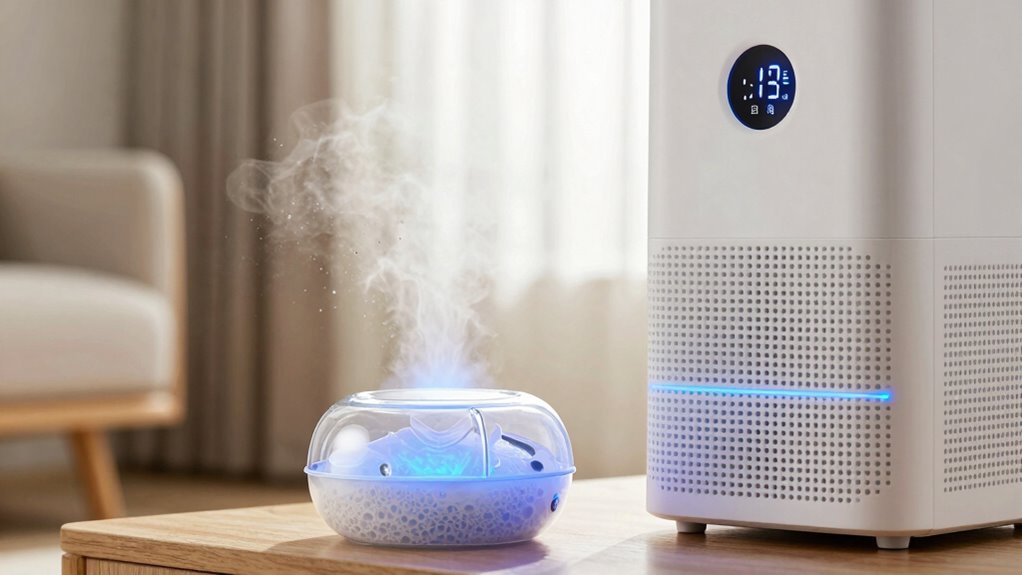
Odors tend to stick around because they embed themselves deeply into porous surfaces like carpets, upholstery, and curtains. When scent molecules settle into these materials, chemical reactions occur that make the odors linger longer. These reactions can transform scent molecules, causing them to bond with fibers or release slowly over time. That’s why cleaning surfaces alone often doesn’t fully eliminate odors. The molecules become trapped, creating a persistent smell. To get rid of odors for good, you need to break these chemical reactions and remove the scent molecules completely. This can involve specialized cleaning agents, odor absorbers, or oxidizers that target the chemical bonds. Understanding how odors embed themselves helps you choose effective methods to eliminate them permanently. Porous surfaces can harbor odors longer, making targeted treatments essential for complete odor removal. Additionally, using air purifiers with advanced filtration systems can significantly reduce residual odors by capturing scent molecules before they settle into surfaces. Recognizing the chemical bonds involved in odor retention can further improve your approach to permanent odor removal, especially when combined with odor neutralizing agents that break chemical bonds effectively. Moreover, employing chemical reactions that alter or break down odor molecules can accelerate the removal process for lasting freshness.
How and Why Odors Form and Last in Your Home
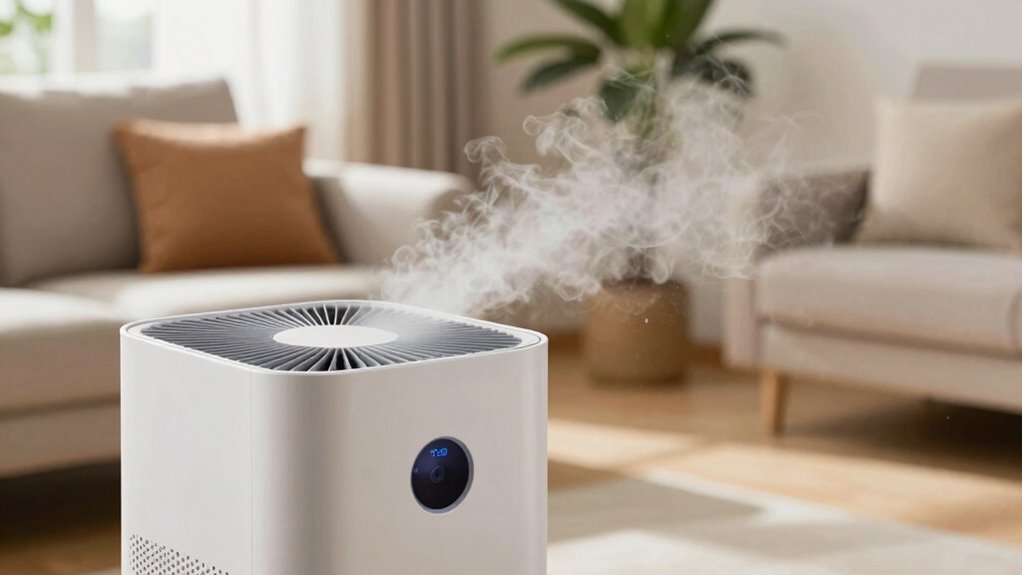
Because scent molecules can settle into porous surfaces like carpets, furniture, and curtains, odors often form and persist in your home long after the source has been removed. Odor molecules and scent compounds are tiny particles that cling to these materials, creating a lingering smell. These molecules can become trapped in fibers, making them difficult to eliminate without proper cleaning. To understand this better, consider this table:
| Surface Type | Absorbs Odor Molecules | Retains Scent Compounds | Time for Odor to Fade |
|---|---|---|---|
| Carpets | High | Long-lasting | Days to weeks |
| Upholstery | Moderate | Moderate | Hours to days |
| Curtains | High | Long-lasting | Days to weeks |
| Walls | Low | Short-lived | Hours |
| Hard Floors | Very low | Very short-lived | Minutes to hours |
This helps explain why odors can stick around, even after cleaning. Additionally, understanding the porous nature of different surfaces can help you select more effective odor removal methods. Using appropriate cleaning agents can also reduce the likelihood of odor molecules becoming deeply embedded in surfaces. Recognizing the role of absorbers like activated charcoal can further enhance odor elimination efforts. Incorporating ventilation and air exchange methods can accelerate odor dissipation in your home.
How Time and Airflow Help Natural Odor Dissipation
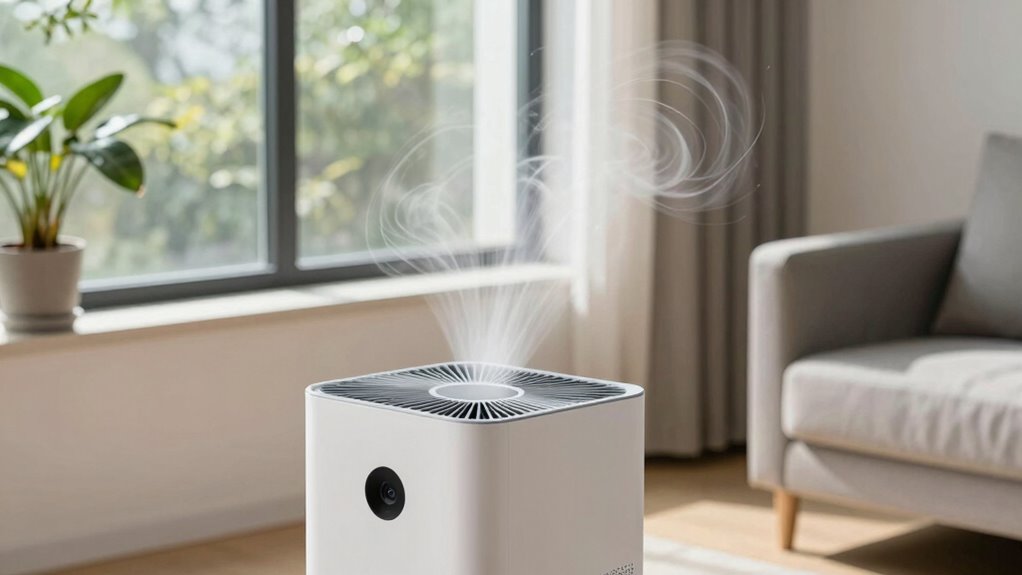
When you open windows or turn on fans, airflow quickly helps odors disperse and fade away. Fresh air dilutes the scent, making the smell less noticeable over time. Ultimately, given enough time, natural processes will eliminate odors without the need for chemicals. Proper piercing care and hygiene also plays a vital role in preventing lingering smells caused by infection or irritation.
Ventilation Accelerates Odor Loss
Ventilation plays a crucial role in speeding up odor removal by increasing airflow and allowing fresh air to replace the stale, odorous air. When you improve air exchange, you encourage odor diffusion, helping the scent molecules disperse more quickly. As fresh air enters, it pushes out the contaminated air, reducing odor concentration faster. Proper airflow creates a cycle where odorous particles are carried away, making natural dissipation more efficient. This process leverages the principles of diffusion and pressure differences to accelerate odor loss. By ventilating regularly, you prevent odors from lingering and allow your space to naturally reset. Overall, increasing airflow through ventilation is a simple yet effective way to enhance odor removal without relying solely on absorbents or chemical treatments.
Fresh Air Dilutes Scent
Increasing airflow and allowing more time for fresh air to circulate are key factors in naturally dispersing odors. When air moves through a space, it promotes air circulation that helps dilute the scent. As fresh air mixes with the odorous particles, the concentration of the scent decreases, making it less noticeable. This process, called scent dilution, relies on continuous air exchange to gradually reduce odors without the need for chemical treatments. By opening windows or using fans, you enhance air circulation, speeding up the natural dissipation of smells. Over time, the constant influx of fresh air ensures that the scent becomes less intense and eventually disappears. This simple, natural method leverages the power of fresh air to effectively diminish odors. Additionally, Free Floating concepts emphasize that open spaces with good airflow are particularly effective at odor removal because they allow odors to disperse more quickly.
Time Naturally Eliminates Odors
Time plays a crucial role in naturally eliminating odors, especially when combined with consistent airflow. As fresh air circulates, it helps carry away odor molecules, allowing natural dissipation to occur. While scent masking and odor masking can temporarily hide unpleasant smells, they don’t eliminate the root cause. Over time, odors fade as molecules break down or disperse into the environment. To maximize this process, keep spaces well-ventilated and let airflow do its work. Navigation and mapping technology in some cleaning robots can help optimize airflow and ventilation in your space.
Consider these emotional triggers:
- *Relief* as stale smells vanish naturally
- *Confidence* in a fresh, odor-free space
- *Comfort* from knowing odors aren’t just masked
- *Peace* in trusting time and air to restore freshness
What Are the Best Materials to Absorb Odors?
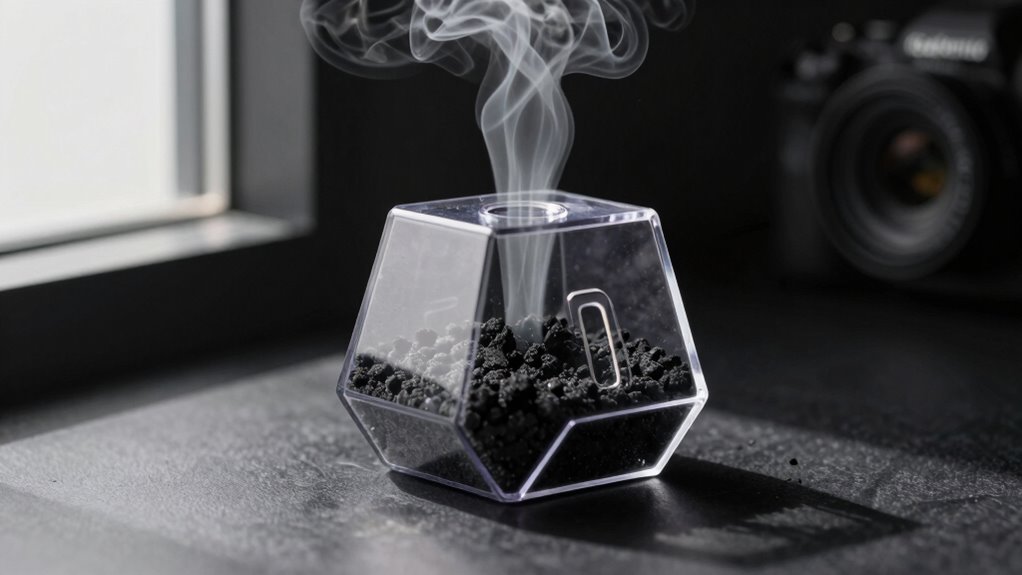
When it comes to effectively absorbing unpleasant odors, certain materials stand out for their natural and chemical properties. Charcoal filters are highly effective because their porous structure traps odor molecules, making them a popular choice in air purifiers and ventilation systems. Baking soda is another versatile material; its alkaline nature neutralizes acids in odors, helping to eliminate smells from refrigerators, carpets, and trash cans. Both materials work through absorption and neutralization, providing immediate relief from bad odors. You can place bowls of baking soda in affected areas or use activated charcoal filters in air purifiers for ongoing odor control. These materials are affordable, non-toxic, and easy to incorporate into your odor removal strategy, making them some of the best options for natural odor absorption. Incorporating sustainable materials into your odor control methods can also enhance your eco-conscious lifestyle while supporting environmentally friendly practices. Additionally, selecting eco-friendly options helps reduce your environmental footprint and promotes sustainable living.
When Should You Use Chemical Neutralizers or Natural Methods?

Choosing the right approach to eliminate odors depends on the situation and the severity of the smell. When deciding between chemical vs natural methods, consider the odor’s strength and your safety preferences. Use chemical neutralizers when odors are stubborn or persistent, as they work quickly and effectively. Natural methods are best for mild smells or when you want a non-toxic solution. Incorporating expertise in architectural solutions can also assist in designing spaces that minimize odor buildup. Here are key moments to choose your neutralizer timing: 1. For immediate, strong odors, opt for chemical neutralizers. 2. When odors are faint or lingering, natural methods can gradually neutralize them. 3. If you’re sensitive to chemicals, wait until the smell is less intense before using a neutralizer. 4. Combine natural methods with aeration for ongoing, safe odor control.
Combine Absorbers and Airflow for Faster Odor Removal
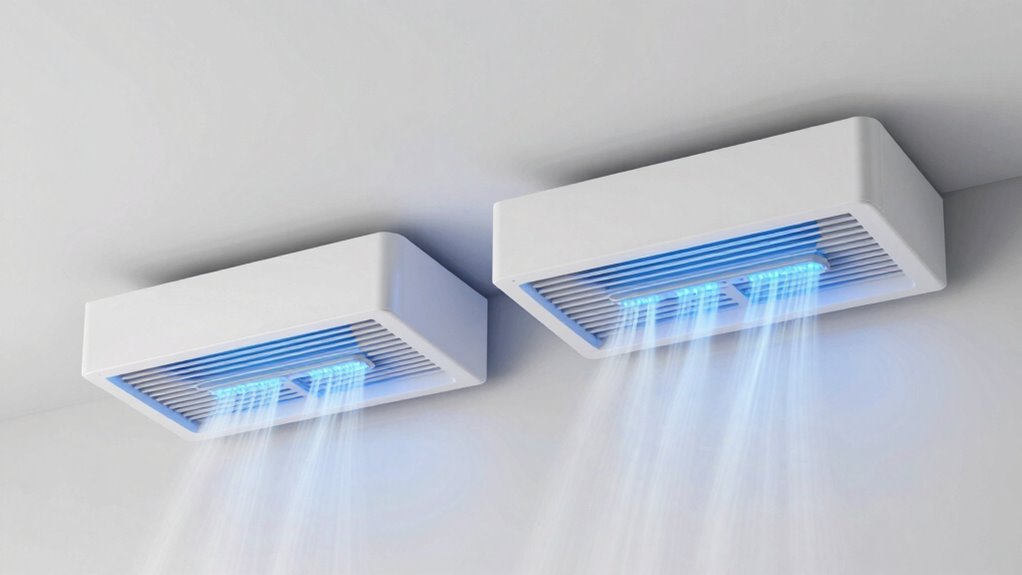
Combining odor absorbers with active airflow can substantially speed up the removal process. Using activated charcoal in conjunction with fans or ventilation helps disperse the absorber’s particles more evenly, increasing contact with odor molecules. For stronger or stubborn odors, ozone generators can be effective. These devices produce ozone that reacts with odor-causing compounds, breaking them down quickly. When you run an ozone generator alongside activated charcoal, airflow helps distribute the ozone more efficiently throughout the space. This combination accelerates odor neutralization, reducing the time needed to freshen your environment. Proper airflow dynamics can further optimize odor removal strategies, ensuring even distribution and faster results. Just ensure proper ventilation during ozone use, as ozone can be harmful if inhaled in high concentrations. Pairing absorbers with airflow creates a more effective, faster odor removal process, especially when understanding filtration and how it interacts with air circulation. Additionally, understanding air circulation patterns can help target problem areas more effectively. Recognizing how air exchange rates influence odor dispersal can also make your odor removal efforts more efficient.
Tips to Keep Your Home or Car Smelling Fresh Long-Term
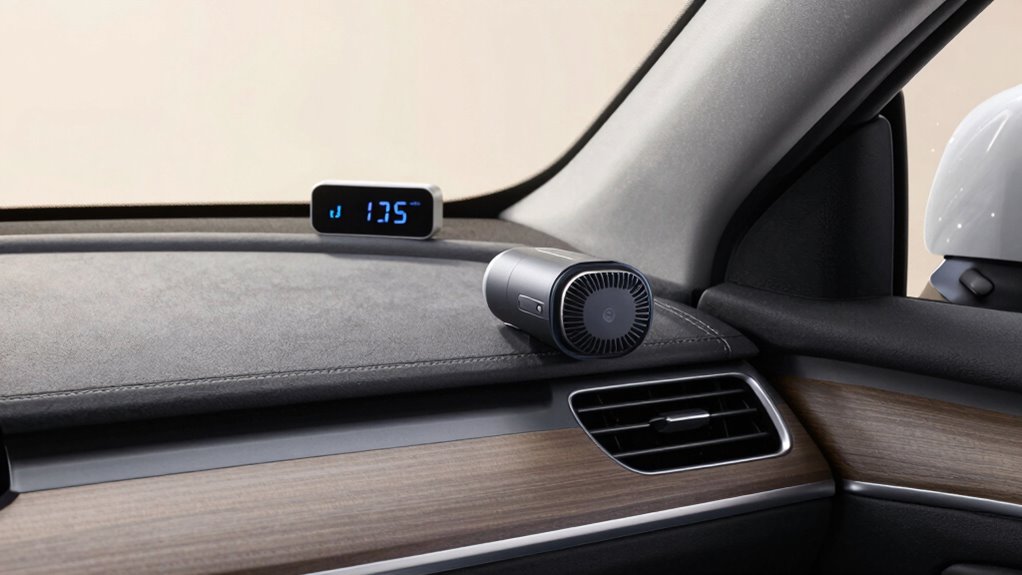
To keep your home or car smelling fresh for the long haul, you need to stay consistent with a few simple habits. Regularly ventilate your space, use absorbing agents to trap odors, and clean frequently to prevent buildup. These steps will help maintain a fresh scent and make odor issues less likely to return. Additionally, understanding how indoor air quality impacts odor persistence can guide you toward more effective odor control strategies. Maintaining good airflow can also help dilute lingering smells and improve overall air freshness. Incorporating natural essential oils like lavender or lemon through diffusion can also enhance your environment’s aroma quality, promoting a healthier and more pleasant space.
Regular Ventilation Practices
Ever wondered how to keep your home or car smelling fresh for the long haul? Regular ventilation is key. It allows fresh air exchange, removing stale odors and reducing humidity that can trap smells. To maximize its benefits, try these practices:
- Open windows and doors daily to promote air exchange and refresh the space.
- Use exhaust fans in kitchens and bathrooms to control humidity and prevent mold.
- Keep vents clear of dust to maintain airflow efficiency.
- Periodically ventilate during different times of the day for consistent humidity control and odor prevention.
Use of Absorbing Agents
Using absorbing agents is an effective way to keep your home or car smelling fresh over the long term. Activated charcoal is a powerful natural absorber that traps odors without adding scents, making it ideal for persistent smells. Place small bags or bowls of activated charcoal in areas prone to odors, like closets or the car interior. Baking soda is another versatile option; it absorbs moisture and neutralizes unpleasant smells. Sprinkle it on carpets or upholstery, then vacuum after a few hours. For continuous freshness, keep these agents accessible in key spots. Remember, regular replacement enhances their effectiveness. Combining activated charcoal and baking soda creates a proactive barrier against unwanted odors, helping your space stay fresh without relying solely on sprays or air fresheners.
Maintain Cleanliness Consistently
Maintaining cleanliness consistently is essential for keeping your home or car smelling fresh over the long term. Regular cleaning reduces airborne particles that carry odor molecules, preventing bad smells from lingering. By staying on top of messes, you stop odor molecules from settling and multiplying. Here are four key tips:
- Vacuum and dust often to remove airborne particles that trap odor molecules.
- Wipe down surfaces daily, especially in high-traffic areas, to eliminate sources of odors.
- Wash fabrics regularly, since upholstery and curtains can hold odor molecules.
- Keep trash bins clean and sealed to prevent odor molecules from escaping and spreading.
Consistent cleanliness disrupts the cycle of airborne particles and odor molecules, keeping your space smelling fresh long-term.
Common Mistakes That Sabotage Odor Removal Efforts
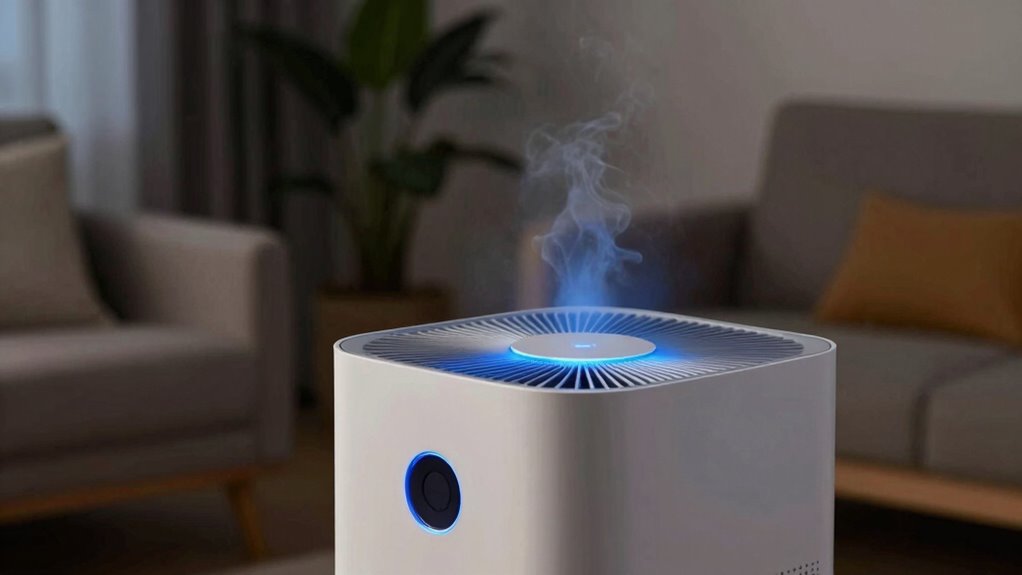
One of the biggest mistakes people make when trying to eliminate odors is relying solely on surface-level solutions, like spraying air fresheners or deodorants. These methods only mask the smell temporarily and don’t address the root cause. Instead, you might fall into the trap of scent masking, which gives a false sense of freshness without removing the odor. Another common mistake is neglecting proper odor trapping techniques. Effective odor removal requires targeting the source and using absorbers or filters designed to trap odor molecules. Relying solely on scent masking or superficial sprays can prolong the problem, making it harder to eliminate odors completely. To truly get rid of unwanted smells, focus on odor trapping methods and addressing the source directly, rather than just covering up the scent.
Step-by-Step Guide to Permanent Odor Elimination
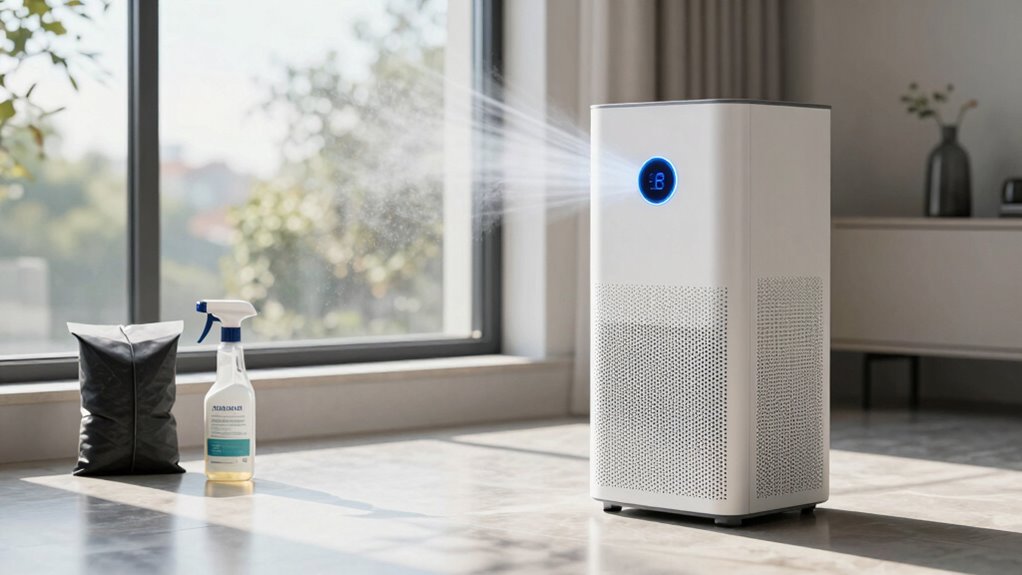
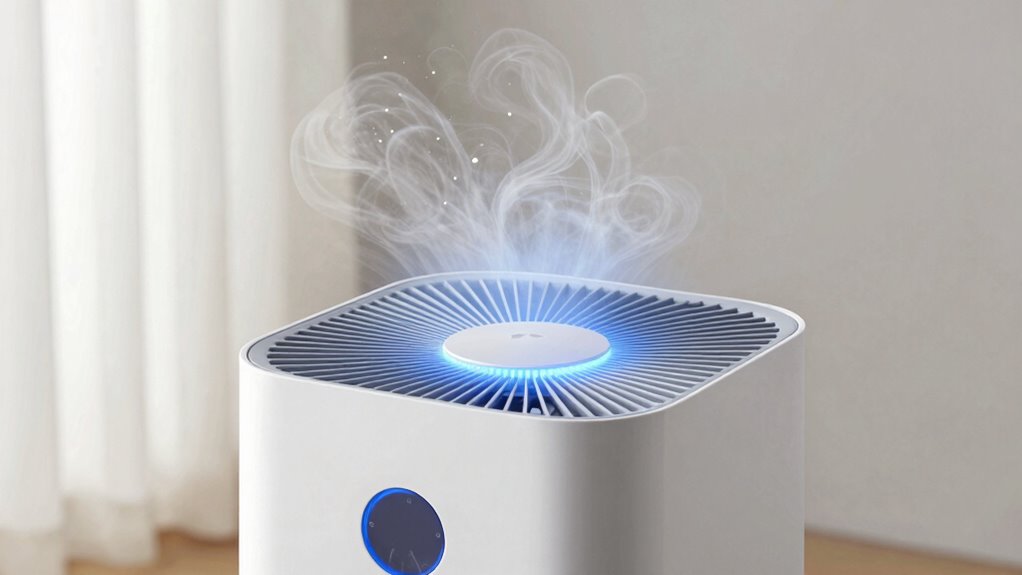
To achieve permanent odor elimination, you need a clear, step-by-step approach that targets the source and uses effective techniques. First, identify the odor’s origin—whether it’s in the carpet, furniture, or air. Second, use an air purifier to continuously filter airborne particles and neutralize smells. Third, incorporate odor absorbers like activated charcoal or baking soda to treat surfaces and fabrics. Fourth, maintain a clean environment by regularly ventilating and deep-cleaning problem areas. This combination ensures you’re attacking odors at their source and preventing future buildup. By following these steps, you regain control over your space, creating a fresh, odor-free environment that lasts. Consistency and the right tools are key to permanent odor removal.
Frequently Asked Questions
Can Certain Plants Naturally Eliminate Household Odors Effectively?
Certain plants can help naturally eliminate household odors through botanical absorption, but their efficacy varies. Plants like spider plants, peace lilies, and Boston ferns are known for their ability to absorb airborne toxins and odors, improving air quality. While they don’t replace mechanical odor removal, their plant efficacy combined with regular cleaning can make your home smell fresher naturally. Keep in mind, consistent care maximizes their odor-eliminating benefits.
How Do Temperature Changes Influence Odor Absorption and Dissipation?
Temperature changes markedly impact odor absorption and dissipation through thermodynamic effects and vapor pressure. As temperature rises, vapor pressure increases, causing odors to become more volatile and easier to dissipate into the air. Conversely, lower temperatures decrease vapor pressure, trapping odors and slowing their escape. You’ll notice that warming a space helps odors dissipate faster, while cooler temperatures can trap smells, making odors linger longer.
Are There Specific Air Purifiers That Outperform Natural Odor Removal Methods?
Think of air purifiers as your odor-fighting superheroes. Devices with activated charcoal or ozone generators often outperform natural methods because they actively trap or neutralize smells. Activated charcoal absorbs odors like a sponge, while ozone generators break down odor molecules at a molecular level. If you want quick, effective results, investing in these specialized purifiers beats relying solely on natural air circulation or open windows.
What Role Do Humidity Levels Play in Odor Persistence and Removal?
Humidity impact plays a significant role in odor persistence and removal. When humidity levels are high, moisture can trap odor molecules, making smells linger longer. Proper moisture control helps by reducing excess humidity, which prevents odors from soaking into surfaces or lingering in the air. By maintaining ideal humidity levels, you improve the effectiveness of air purifiers and odor absorbers, ensuring a fresher, odor-free environment.
How Long Should I Wait After Using Absorbers Before Ventilating a Space?
You should wait at least 24 hours before ventilating a space after using odor absorbers. Proper ventilation timing allows the absorbers to effectively trap and neutralize odors, ensuring you get the best results. Rushing to ventilate too soon can let odors escape before absorption completes. Give the absorbers enough time to do their job, then open windows or turn on fans to refresh the air and fully eliminate lingering smells.
Conclusion
By understanding how odors cling like stubborn shadows and leveraging the power of time, airflow, and smart absorbers, you can banish unwanted smells for good. Think of your home as a garden—you need to tend to it regularly, removing the weeds and letting invigorating air flourish. With patience and the right tools, you’ll transform your space into a refreshing breeze, turning persistent odors into distant memories.