

Choosing email marketing automation software starts with understanding the workflows, audience, and platform you need—not simply picking a tool from a feature list. Of these nine resources, Email Marketing Automation and CRM Systems is the strongest overall match for readers focused on segmentation, funnels, and customer lifetime value, while Email Marketing with MailChimp 2025 is the clearest fit for people committed to Mailchimp. Readers who want broad, practical advice can turn to Marketing Automation for Dummies. The main tradeoff is between platform-specific instructions and broader strategy that can apply across tools. Read on for a comparison of what each guide can—and cannot—help you decide.
Key Takeaways
- Email Marketing Automation and CRM Systems most directly matches the keyword’s automation focus, with its emphasis on funnels, segmentation, and customer lifetime value.
- Email Marketing with MailChimp 2025 is the most platform-specific pick, making it more useful to Mailchimp users than to buyers comparing several software providers.
- The lineup consists of books and guides, not automation platforms, so readers still need to verify current software features, integrations, and plan limits with vendors.
- Several titles center on writing campaigns, building lists, and converting subscribers; those subjects support automation planning but do not replace technical platform evaluation.
- The strongest choice depends on the decision at hand: SaaS lifecycle strategy, general marketing foundations, Mailchimp setup, or a structured introduction to automation.
| Email Marketing Mastery: A Practical Guide to Building Email Lists, Writing High-Converting Campaigns, Automating Follow-Ups, and Growing Your Online Business | 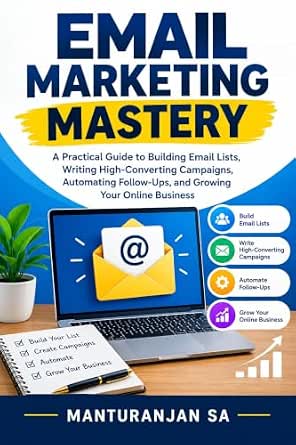 | Best for Automation Fundamentals | Title: Email Marketing Mastery: A Practical Guide to Building Email Lists, Writing High-Converting Campaigns, Automating Follow-Ups, and Growing Your Online Business | ASIN: B0HLQBQ3X3 | Topics: Email list building, campaign writing, automated follow-ups, online business growth | VIEW LATEST PRICE | See Our Full Breakdown |
| Email Marketing Rules: 184 Best Practices to Optimize the Subscriber Experience and Drive Business Success |  | Best for Subscriber Experience | Title: Email Marketing Rules: 184 Best Practices to Optimize the Subscriber Experience and Drive Business Success | ASIN: B0BW23B5JG | Stated number of practices: 184 | VIEW LATEST PRICE | See Our Full Breakdown |
| 300 Email Marketing Tips: Critical Advice and Strategies to Turn Subscribers into Buyers and Grow Your Business |  | Best for Conversion Ideas | Title: 300 Email Marketing Tips: Critical Advice and Strategies to Turn Subscribers into Buyers and Grow Your Business | ASIN: 1098935470 | Topic: Email marketing | VIEW LATEST PRICE | See Our Full Breakdown |
| Email Marketing Demystified (Third Edition): Build a Massive Mailing List, Write Copy That Converts, and Generate More Sales |  | Best for List Growth and Copy | Title: Email Marketing Demystified (Third Edition): Build a Massive Mailing List, Write Copy That Converts, and Generate More Sales | ASIN: B0BN4PSTGR | Edition: Third Edition | VIEW LATEST PRICE | See Our Full Breakdown |
| Email Marketing Services: A Step-by-Step Guide to Building Email Lists, Creating High-Converting Campaigns, and Growing Your Business |  | Best Step-by-Step Business Guide | Title: Email Marketing Services: A Step-by-Step Guide to Building Email Lists, Creating High-Converting Campaigns, and Growing Your Business | ASIN: B0HLYCHQQM | Format: Book | VIEW LATEST PRICE | See Our Full Breakdown |
| The SaaS Email Marketing Playbook |  | Best for SaaS Retention and Recurring Revenue | Format: Playbook | Primary topic: Email marketing for SaaS businesses | Lead focus: Converting leads | VIEW LATEST PRICE | See Our Full Breakdown |
| Email Marketing with MailChimp 2025 |  | Best for Mailchimp-Focused Lead Nurturing | Format: Guide | Named platform: Mailchimp | Title year: 2025 | VIEW LATEST PRICE | See Our Full Breakdown |
| Email Marketing Automation and CRM Systems: A Guide to Funnels, Segmentation, and Customer Lifetime Value |  | Best for Funnel and CRM Strategy | Format: Guide | Primary topic: Email marketing automation and CRM systems | Funnel focus: Marketing funnels | VIEW LATEST PRICE | See Our Full Breakdown |
| Marketing Automation for Dummies |  | Best for Broad Marketing Automation Orientation | Format: Book | Primary topic: Marketing automation | Email-specific coverage: Not specified in the supplied product information | VIEW LATEST PRICE | See Our Full Breakdown |
| email marketing automation software | ASIN | Format | Title |
|---|---|---|---|
| Email Marketing Mastery: A Pra | B0HLQBQ3X3 | Not specified in provided product data | Email Marketing Mastery: A Practical Guide to Building Email Lists, Writing High-Converting Campaigns, Automating Follow-Ups, and Growing Your Online Business |
| Email Marketing Rules: 184 Bes | B0BW23B5JG | — | Email Marketing Rules: 184 Best Practices to Optimize the Subscriber Experience and Drive Business Success |
| 300 Email Marketing Tips: Crit | 1098935470 | — | 300 Email Marketing Tips: Critical Advice and Strategies to Turn Subscribers into Buyers and Grow Your Business |
| Email Marketing Demystified | B0BN4PSTGR | Book | Email Marketing Demystified (Third Edition): Build a Massive Mailing List, Write Copy That Converts, and Generate More Sales |
| Email Marketing Services: A St | B0HLYCHQQM | Book | Email Marketing Services: A Step-by-Step Guide to Building Email Lists, Creating High-Converting Campaigns, and Growing Your Business |
| The SaaS Email Marketing Playb | 177807409X | Playbook | — |
| Email Marketing with MailChimp | B0DN6MXPW2 | Guide | — |
| Email Marketing Automation and | B0GM5W268Q | Guide | — |
| Marketing Automation for Dummi | B00J8GAHO6 | Book | — |
More Details on Our Top Picks
Email Marketing Mastery: A Practical Guide to Building Email Lists, Writing High-Converting Campaigns, Automating Follow-Ups, and Growing Your Online Business
Email Marketing Mastery earns this role by connecting list building and campaign writing with automated follow-ups, the clearest automation focus among these five guides. That makes it a useful starting point for an online business owner who needs to understand how email can support growth, rather than a reference dedicated to a particular software platform. Compared with Email Marketing with MailChimp 2025 in the wider roundup, its description suggests a broader, platform-neutral approach, but provides no basis for expecting step-by-step instructions for configuring a specific tool. The tradeoff is limited detail about segmentation, integrations, or automation workflows: those looking for software setup guidance may find the title’s promise more practical than technically specific. It is best read as a foundation for planning follow-up campaigns, not as a replacement for software documentation.
Pros:- Covers list building alongside campaign creation, linking audience growth to email execution.
- Includes automated follow-ups, the most direct automation topic in this set of general guides.
- Frames email marketing around growing an online business.
- Combines copy and automation topics rather than focusing on campaign advice alone.
Cons:- The supplied description does not identify a software platform or provide configuration instructions.
- No details are provided about segmentation, integrations, or specific automation workflows.
- The available data does not specify format, author, or edition.
Best for: New online business owners who want a general introduction to list building, campaign writing, and automated email follow-ups before choosing a platform.
Not ideal for: Marketers who already use automation software and need detailed instructions for platform setup, segmentation, or CRM integration.
- Title:Email Marketing Mastery: A Practical Guide to Building Email Lists, Writing High-Converting Campaigns, Automating Follow-Ups, and Growing Your Online Business
- ASIN:B0HLQBQ3X3
- Topics:Email list building, campaign writing, automated follow-ups, online business growth
- Stated focus:Using email marketing to grow an online business
- Automation topic:Automating follow-ups
- Format:Not specified in provided product data
Our verdict“Choose this guide if you need a general business-focused introduction that includes automated follow-ups, but not software-specific setup instructions.”
Email Marketing Rules: 184 Best Practices to Optimize the Subscriber Experience and Drive Business Success
Email Marketing Rules is the strongest fit here for readers who want a principles-led checklist for communicating with subscribers. Its stated 184 best practices and subscriber-experience focus set it apart from 300 Email Marketing Tips, which is framed around converting subscribers into buyers and growing a business. That distinction matters in automation: rules centered on the recipient can help teams think through the quality of recurring messages, while conversion-focused advice may better suit immediate sales goals. The supplied data does not confirm that the book covers automation workflows, software features, or platform setup, so I would not treat it as a technical manual. Its breadth may provide many ideas, but without more detail on organization or format, buyers cannot tell how easily the advice maps to a particular automation tool.
Pros:- Presents 184 stated best practices, offering a broad pool of guidance.
- Emphasizes the subscriber experience, a useful lens for recurring automated messages.
- Connects email practices with business success rather than treating email as an isolated task.
Cons:- The supplied product data does not establish how much of the book addresses automation specifically.
- No platform instructions, format, or edition details are provided.
- The scope and structure of the 184 practices are not described in the available information.
Best for: Email marketers responsible for subscriber communications who want a broad set of practices to guide campaign and automation decisions.
Not ideal for: Small-business owners seeking step-by-step instructions for building automated sequences in a named email marketing platform.
- Title:Email Marketing Rules: 184 Best Practices to Optimize the Subscriber Experience and Drive Business Success
- ASIN:B0BW23B5JG
- Stated number of practices:184
- Topic:Email marketing best practices
- Stated audience focus:Subscriber experience
- Stated business focus:Supporting business success
Our verdict“Pick this for subscriber-centered email guidance, but choose a platform manual if your main need is building automations in software.”
300 Email Marketing Tips: Critical Advice and Strategies to Turn Subscribers into Buyers and Grow Your Business
300 Email Marketing Tips is the conversion-oriented choice in this group: its stated aim is to help turn subscribers into buyers and support business growth. The large collection of tips suggests a browse-and-select format, which may suit readers looking for prompts rather than a single linear tutorial. Compared with Email Marketing Rules, which foregrounds subscriber experience and best practices, this book puts the commercial outcome more squarely in view. That makes it a better conceptual fit for teams planning sales-focused campaign content, but the supplied description does not say whether its strategies cover automated sequences or any specific software. Buyers seeking an operational guide to triggers, segmentation, or platform configuration should look elsewhere or pair it with a technical resource. Its value here is the conversion lens, not confirmed automation instruction.
Pros:- Offers 300 stated tips, giving readers a broad set of ideas to consult.
- Focuses on converting subscribers into buyers.
- Connects email strategy to business growth.
- Its conversion emphasis differs from the subscriber-experience focus of Email Marketing Rules.
Cons:- The product data does not confirm coverage of automation workflows or software features.
- No information is provided about format, author, or edition.
- The available description does not explain how tips are organized or whether they include implementation steps.
Best for: Solo marketers and small-business owners seeking a bank of sales-focused email ideas to shape campaigns and follow-up content.
Not ideal for: Readers who need a structured, software-specific tutorial for setting up automated journeys, triggers, or audience segments.
- Title:300 Email Marketing Tips: Critical Advice and Strategies to Turn Subscribers into Buyers and Grow Your Business
- ASIN:1098935470
- Topic:Email marketing
- Stated number of tips:300
- Stated conversion focus:Turning subscribers into buyers
- Stated business focus:Growing a business
Our verdict“Choose this for a large collection of conversion-minded email ideas, not for hands-on automation setup.”
Email Marketing Demystified (Third Edition): Build a Massive Mailing List, Write Copy That Converts, and Generate More Sales
Email Marketing Demystified pairs two core tasks—building a mailing list and writing sales-focused copy—so it suits readers who need to improve the audience and message behind their campaigns. Its Third Edition and stated book format are clearer product details than the sparse listings for Email Marketing Rules and 300 Email Marketing Tips. The focus on generating sales also gives it a more direct commercial angle than Email Marketing Mastery, whose description explicitly includes automated follow-ups. That is the main limitation for this automation roundup: the supplied description does not mention workflows, triggers, segmentation, or email software. I would treat it as a guide to list and copy fundamentals that can support automation, rather than a direct guide to building automated campaigns.
Pros:- Covers both mailing-list growth and persuasive email copy.
- Explicitly connects email marketing with generating sales.
- The supplied data identifies it as the Third Edition and a book.
- Its list-and-copy emphasis complements, rather than duplicates, Email Marketing Mastery’s stated follow-up focus.
Cons:- The product description does not mention automation workflows or software setup.
- No additional information is provided about tools, integrations, or segmentation.
- The available data gives no further detail on the contents of the Third Edition.
Best for: Business owners who need guidance on growing an email list and writing persuasive sales copy before scaling campaigns.
Not ideal for: Automation specialists looking for practical instructions on workflows, triggers, segmentation, or a particular email service.
- Title:Email Marketing Demystified (Third Edition): Build a Massive Mailing List, Write Copy That Converts, and Generate More Sales
- ASIN:B0BN4PSTGR
- Edition:Third Edition
- Format:Book
- Topics:Mailing-list growth, persuasive copywriting, sales generation
- Stated campaign goal:Generate more sales
Our verdict“Choose this for list-building and sales-copy fundamentals, but pair it with a technical resource if automation setup is your priority.”
Email Marketing Services: A Step-by-Step Guide to Building Email Lists, Creating High-Converting Campaigns, and Growing Your Business
Email Marketing Services stands out for presenting its subject as a step-by-step guide, with a path from list building to campaign creation and business growth. That framing may be more approachable for readers who want an ordered introduction than the collection-style promise of 300 Email Marketing Tips. It also complements Email Marketing Mastery: both address list growth and campaigns, but Mastery explicitly names automated follow-ups, while this title’s description does not. The distinction is important for a software-focused roundup. The supplied data identifies a book, author, and series, but it does not name platforms or confirm lessons on workflow configuration. I would choose it for foundational campaign planning, not on the assumption that “Services” means a directory or technical guide to email software.
Pros:- Describes a step-by-step approach rather than a collection of standalone tips.
- Covers both email-list building and campaign creation.
- Ties email marketing activities to business growth.
- Provides author and series information in the supplied product data.
Cons:- The description does not specifically mention automated follow-ups or workflows.
- No email marketing platform or software setup instructions are identified.
- The supplied data does not specify an edition or additional technical details.
Best for: New business owners who prefer a step-by-step introduction to growing an email list and creating campaigns.
Not ideal for: Experienced email operators seeking advanced automation logic, platform-specific tutorials, or detailed CRM and segmentation guidance.
- Title:Email Marketing Services: A Step-by-Step Guide to Building Email Lists, Creating High-Converting Campaigns, and Growing Your Business
- ASIN:B0HLYCHQQM
- Format:Book
- Author:Sanjay Mandavi
- Series:Online Earning Guide Books
- Series number:41
- Topics:Email list building, campaign creation, business growth
Our verdict“Pick this for a structured introduction to lists and campaigns, but choose Email Marketing Mastery if automated follow-ups are your main concern.”
The SaaS Email Marketing Playbook
The SaaS Email Marketing Playbook is the most focused choice here for teams whose automation needs center on subscription growth: converting leads, retaining customers, and supporting recurring revenue. That business-specific lens gives it a clearer use case than Marketing Automation for Dummies, whose broad subject matter may suit readers seeking general orientation but has no supplied detail about SaaS workflows. The description points to strategic guidance rather than a named software platform, so buyers should not expect a step-by-step interface manual or implementation instructions for a particular tool. Its narrow focus is also a limitation: businesses outside SaaS may find the retention and recurring-revenue framing less relevant. I’d choose it for strategic direction on lifecycle email, not as a substitute for automation software documentation.
Pros:- Tailored to the recurring-revenue model used by SaaS businesses
- Connects lead conversion with customer retention
- Keeps the focus on email marketing rather than broad marketing topics
Cons:- The supplied description does not identify any software platform or implementation steps
- Its SaaS-specific focus may be a poor fit for ecommerce, nonprofits, or service businesses
Best for: SaaS founders and lifecycle marketers planning email programs around lead conversion, subscriber retention, and recurring revenue
Not ideal for: Small businesses outside SaaS or buyers who need hands-on instructions for configuring a specific email automation platform
- Format:Playbook
- Primary topic:Email marketing for SaaS businesses
- Lead focus:Converting leads
- Retention focus:Increasing customer retention
- Revenue focus:Growing recurring revenue
- Software platform identified:Not specified in the supplied product information
- ASIN:177807409X
Our verdict“Choose this guide if your SaaS team needs email strategy tied to lead conversion and customer retention, rather than platform-specific setup instructions.”
Email Marketing with MailChimp 2025
Email Marketing with MailChimp 2025 is the most tool-specific pick in this group: its stated focus is using Mailchimp to generate leads, nurture subscribers, and improve conversions. That makes it a more direct fit for readers already considering that platform than The SaaS Email Marketing Playbook, which addresses SaaS outcomes without naming a particular service. The emphasis on cold emailing may appeal to marketers exploring outreach, but the description does not clarify how much of the guide concerns automation setup versus campaign strategy. Buyers should also verify that its guidance suits their current Mailchimp interface and sending practices; the title’s year alone does not establish how often the material is updated. I’d favor it for a Mailchimp-centered learning path, not for platform-neutral comparisons.
Pros:- Names Mailchimp as its central platform
- Covers lead generation and subscriber nurturing
- Includes conversion improvement as a stated goal
- Addresses cold emailing as part of its campaign focus
Cons:- The supplied description does not specify which Mailchimp automation features or workflows are covered
- Platform-specific guidance may not transfer to other email services
- The description does not establish the depth of its coverage of cold-email compliance or automation setup
Best for: Solo marketers and small teams using or evaluating Mailchimp who want guidance on lead generation and subscriber nurturing
Not ideal for: Teams committed to another email platform or readers seeking a clearly documented, platform-neutral automation guide
- Format:Guide
- Named platform:Mailchimp
- Title year:2025
- Lead focus:Lead generation
- Audience focus:Subscriber nurturing
- Conversion focus:Improving conversions
- Campaign topic:Cold emailing
- ASIN:B0DN6MXPW2
Our verdict“Pick this if your email work is centered on Mailchimp and you want lead-generation and nurturing guidance, but skip it for platform-neutral instruction.”
Email Marketing Automation and CRM Systems: A Guide to Funnels, Segmentation, and Customer Lifetime Value
Email Marketing Automation and CRM Systems suits readers who want to connect email workflows with broader customer management. Its stated subjects—funnels, segmentation, and customer lifetime value—make it a more strategic, CRM-oriented choice than Email Marketing with MailChimp 2025, which is tied to one platform and highlights lead nurturing and conversions. This guide’s breadth may help marketers think about how audience groups move through a customer journey, but the supplied description does not name a CRM or email service, or promise instructions for building specific automations. That leaves implementation depth uncertain. I’d put it on the shortlist for planning lifecycle strategy across marketing and CRM, while buyers who need click-by-click software setup should seek a more tool-specific resource.
Pros:- Connects email automation with CRM systems
- Covers marketing funnels and audience segmentation
- Includes customer lifetime value as a planning focus
Cons:- The supplied information does not name specific email or CRM platforms
- No implementation detail is provided for configuring workflows or integrations
- Its combined funnel and CRM scope may be broader than needed for a single email campaign
Best for: Marketing operations and CRM leads designing segmented email funnels around customer lifetime value
Not ideal for: New users who need step-by-step instructions for a named email platform or CRM system
- Format:Guide
- Primary topic:Email marketing automation and CRM systems
- Funnel focus:Marketing funnels
- Segmentation focus:Audience segmentation
- Customer metric:Customer lifetime value
- Specific software platforms:Not specified in the supplied product information
- ASIN:B0GM5W268Q
Our verdict“Choose this guide for a cross-functional view of funnels, segmentation, and CRM strategy, not for instructions tied to a particular platform.”
Marketing Automation for Dummies
Marketing Automation for Dummies is the broadest option in this batch by title, making it a possible starting point for readers who want an introduction to marketing automation beyond email alone. That general scope sets it apart from The SaaS Email Marketing Playbook, which is explicitly centered on SaaS email outcomes, and from Email Marketing with MailChimp 2025, which names a specific platform. The tradeoff is a lack of detail: the supplied description does not identify topics, tools, email workflows, or the intended reader, so I can’t judge how much practical email automation guidance it offers. Buyers seeking a targeted guide to segmentation or SaaS retention have clearer matches elsewhere in this roundup. This pick makes most sense as a general subject primer, with its email-specific usefulness uncertain.
Pros:- Covers marketing automation as a broad subject
- May suit readers seeking an introductory overview rather than a narrow platform manual
- Its wider scope contrasts with the SaaS-specific focus of The SaaS Email Marketing Playbook
Cons:- No further product details are supplied to confirm its email-specific coverage
- The description does not identify software platforms, workflows, or practical exercises
- Its broad subject may be less useful than a targeted guide for readers with a defined automation task
Best for: Readers new to marketing automation who want a broad introduction before choosing a more specialized email or platform guide
Not ideal for: Email marketers who need verified coverage of specific automation workflows, software tools, or SaaS lifecycle campaigns
- Format:Book
- Primary topic:Marketing automation
- Email-specific coverage:Not specified in the supplied product information
- Software platforms:Not specified in the supplied product information
- Workflow details:Not specified in the supplied product information
- Additional product details:Not provided
- ASIN:B00J8GAHO6
Our verdict“Consider this for a general introduction to marketing automation, but choose a more specific guide if your priority is email workflow implementation.”

How We Picked
I ranked these resources by how directly they help readers make decisions about email marketing automation: workflow design, segmentation, CRM connections, lifecycle messaging, and selecting or using a platform. I also weighed audience fit, practical scope, and whether a title appears focused on a particular service or on principles that can carry across tools. Since these entries are books and guides rather than software products, I did not treat them as substitutes for live product documentation or a platform feature comparison.
The order favors the closest match to automation and system-level decisions, followed by focused resources for distinct needs. Email Marketing Automation and CRM Systems leads because its stated subject aligns most closely with the central query; the Mailchimp guide earns a specific-use position for readers already committed to that platform. Broader campaign, list-building, and marketing titles rank lower for this search because they may help with strategy but are less clearly centered on automation software. Buyers should check publication details and current platform interfaces before relying on any guide for step-by-step instructions.
| email marketing automation software | Format |
|---|---|
| Email Marketing Mastery: A Pra | Not specified in provided product data |
| Email Marketing Rules: 184 Bes | — |
| 300 Email Marketing Tips: Crit | — |
| Email Marketing Demystified | Book |
| Email Marketing Services: A St | Book |
| The SaaS Email Marketing Playb | Playbook |
| Email Marketing with MailChimp | Guide |
| Email Marketing Automation and | Guide |
| Marketing Automation for Dummi | Book |
Factors to Consider When Choosing Email Marketing Automation Software
A guide can clarify what to look for, but it cannot confirm that a particular software plan fits your business. Before choosing a platform, define the decisions you need to make and the work the system must handle. These factors help separate a useful learning resource from the software evaluation itself.
Start With the Automation Job, Not the Feature List
Write down the first few tasks you want the system to handle, such as a welcome sequence, abandoned-cart reminders, or lead nurturing. A long feature list can distract from whether the software supports those specific workflows. Map the trigger, the audience, the message, and the intended next action for each sequence. This reveals whether you need simple scheduled follow-ups or branching logic based on customer behavior. A common mistake is buying for hypothetical complexity before any repeatable campaign exists. Begin with the smallest useful workflow, then check how easily the platform can support more advanced paths later.
Check Data Sources and Integration Ownership
Automation only works as well as the customer data feeding it, so list every system that holds relevant information: ecommerce, forms, CRM, billing, or support. Confirm which system owns key fields and how updates move between tools. An integration that syncs contacts but not purchase or lifecycle events may not support the campaigns you expect. Ask whether connections are native, rely on a third-party connector, or require custom work, and identify who will maintain them. Avoid sending the same audience into multiple systems without a clear rule for consent and suppression. A guide about CRM concepts can help frame the questions, but vendor documentation is the place to validate specific data behavior.
Plan for Consent, Deliverability, and List Hygiene
Permission practices and sender reputation affect whether automated messages reach people, not just whether a workflow can be built. Decide how consent is recorded, how unsubscribes and complaints are handled, and how inactive contacts are treated. Check whether the software supports authentication setup and gives usable delivery diagnostics. Do not assume that importing an old list is safe simply because the platform accepts the file. A clean signup process and a sensible re-engagement policy are better foundations than adding more contacts quickly. These operational needs should be part of software selection, even when a marketing guide focuses mainly on campaign writing.
Match the Learning Resource to Your Platform Commitment
Platform-specific guides can be efficient when you have already chosen a service, but their instructions may age as interfaces and features change. General strategy books are less tied to one interface and can help you compare principles across vendors, though they may not explain current setup steps. Before relying on a guide, check its edition date and whether it addresses the features you plan to use. If you are still comparing platforms, prioritize material about workflow design, segmentation, and lifecycle strategy over button-by-button tutorials. Once you select a tool, pair general learning with current help documentation. This avoids letting a book’s platform assumptions steer a decision that should be based on your requirements.
Estimate Complexity, Ownership, and Ongoing Work
More elaborate automation can add value, but it also creates work: someone must review content, maintain segments, monitor errors, and update workflows when products or policies change. Identify the person responsible for each task before choosing software with advanced capabilities. A small team may be better served by a few clear sequences than by a complex branching system that no one maintains. Ask how easy it is to pause, edit, test, and audit an automation after launch. Also include migration and staff training in your evaluation; switching tools can involve more than exporting contact records. Choose sophistication that your team can support consistently.
Compare the Full Operating Cost, Not Just the Entry Point
Software costs can vary with contact volume, sending needs, user access, and advanced functions, so compare the plans that match your expected use rather than headline claims. Check whether features such as segmentation, reporting, integrations, or multi-step workflows sit behind plan limits. Include add-ons, implementation effort, and the time needed to manage the system in your comparison. A lower-cost tool may require extra services or manual work, while a broader platform may include capabilities your team will never use. Estimate likely growth and identify the point at which a plan change would be needed. This gives you a more realistic basis for deciding when paying for more capability makes sense.
Frequently Asked Questions
Are these nine entries email marketing automation software products?
No. The listed entries are books and guides about email marketing, automation, platforms, or related strategy. They can help readers understand concepts and prepare better questions, but they do not send campaigns or run workflows. For a software purchase, compare providers directly on current automation features, integrations, deliverability tools, support, and plan limits. Treat any platform instructions in a book as subject to change, especially when they refer to a specific service or edition.
Which guide should I read if I have not chosen a platform yet?
Start with a resource whose stated focus is broader than one software provider, such as Email Marketing Automation and CRM Systems for automation concepts or Marketing Automation for Dummies for a wider introduction. These titles are better starting points for framing needs than a platform-specific tutorial. As you read, turn ideas into a short requirements list: triggers, audience data, integrations, reporting, and who will maintain the workflows. Then verify those requirements against current vendor documentation and a hands-on trial where available. A general guide can shape your questions, but it cannot confirm a provider’s present capabilities.
When does a platform-specific guide make more sense than a general one?
A platform-specific guide is most useful after you have selected that service or narrowed your choice to it. It can provide a more direct path through setup and common platform workflows than a broad marketing book. The tradeoff is that its instructions may not transfer to other providers, and interface details can become outdated. Check the edition and compare its guidance with the platform’s current help materials before following setup steps. If you are still comparing providers, use general workflow and strategy resources first.
Can a book help me decide whether I need CRM features with email automation?
It can help you understand why CRM data and email workflows often work together, but the need depends on how your organization manages customer relationships. A business with a few simple signup sequences may not need a full CRM layer. Teams coordinating sales follow-up, account history, and multiple lifecycle stages may gain value from shared records and behavior data. List the customer details and handoffs your process requires, then check whether a standalone email tool can handle them or whether a connected CRM is needed. Confirm the practical workflow in the software rather than relying on a title alone.
How should I judge whether an automation platform is too complex for my team?
Judge complexity by the work your team can reliably operate, not by the number of features shown in a demo. Name the person who will build workflows, review messages, maintain segments, and diagnose failures. If those responsibilities have no clear owner, advanced branching may create more upkeep than benefit. Start with a small set of measurable automations and see whether the team can keep them accurate over time. Add complexity only when a real customer journey or operational need calls for it.
Conclusion
For the closest match to the automation-focused search, I recommend Email Marketing Automation and CRM Systems as the best overall guide, while keeping in mind that it is a book, not software. The best value for broad learning is 300 Email Marketing Tips for readers who want a wide range of campaign ideas, though it is less centered on technical automation decisions. For a premium-style, specialized learning path, The SaaS Email Marketing Playbook is the pick for SaaS teams shaping lifecycle communication. Beginners can start with Marketing Automation for Dummies for a wider introduction, and Mailchimp users should choose Email Marketing with MailChimp 2025 for platform-specific guidance. If your priority is selecting a live service, use these resources to clarify requirements, then compare current vendor tools directly.