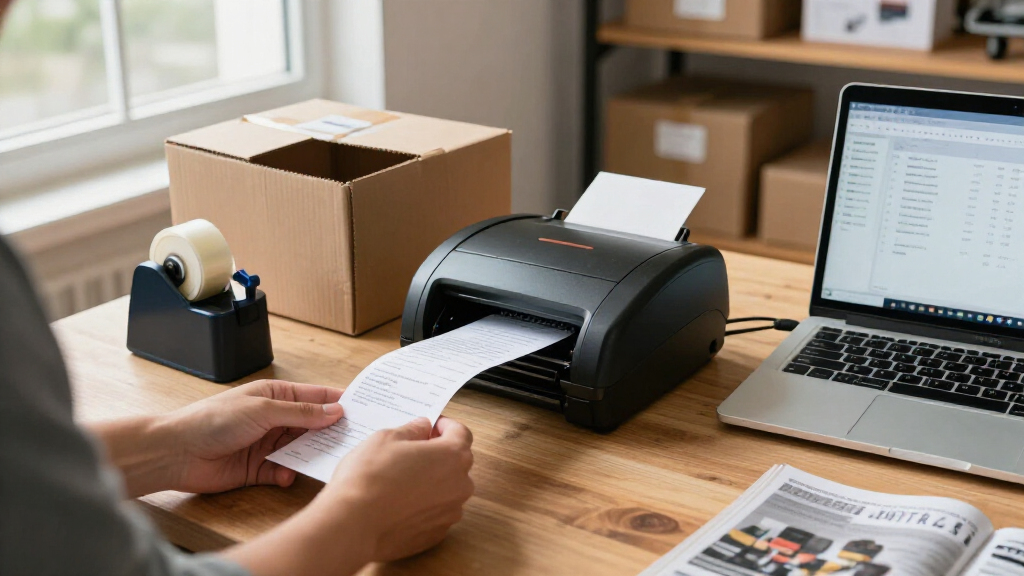

For most ecommerce sellers, I’d start with the Rollo USB Shipping Label Printer for its commercial-grade 4×6 focus; the Rollo Wireless is a stronger fit when Wi-Fi access matters, while the Arkscan 2054A stands out for broad platform support and roll or fanfold labels. The main choice is between a simple USB setup and wireless convenience, with device compatibility and label feeding also shaping the day-to-day experience. Some models add a built-in label bin, while others keep the design focused on straightforward desktop printing. I compare all 15 options by how well their stated features match common ecommerce shipping workflows. Read on for the full breakdown and a guide to choosing the right fit for your shop.
Key Takeaways
- USB and wireless solve different problems: Rollo USB suits a direct computer connection, while Rollo Wireless and the Bluetooth models are aimed at sellers who want fewer cable constraints.
- The Arkscan 2054A has a distinct workflow advantage: its stated support for both roll and fanfold labels gives sellers more ways to feed stock than models described only as 4×6 printers.
- Built-in label bins appear across several entries: the white and black versions of the bin-equipped model share a stated feature set, so color and workspace fit matter more than a claimed functional difference.
- Phone compatibility needs careful checking: several listings name iOS and Android alongside computer systems, but buyers should confirm the exact app and setup requirements for their devices before choosing.
- Not every shipping label task needs a 4×6 machine: Brother’s 2-inch direct thermal desktop printer serves a narrower label-size need, while most of the lineup is framed around package shipping labels.
| Rongta Shipping Thermal Label Printer, Bluetooth 4×6 Sticker Label Maker Wireless Shipping Label Printer for Package Small Business Compatible with Windows macOS Android iOS (White) |  | Best for Mobile-First Sellers | Printing method: Direct thermal, monochrome | Resolution: 203 × 203 DPI | Wireless connection: Bluetooth through the RONGTA app | VIEW LATEST PRICE | See Our Full Breakdown |
| Nelko Bluetooth Thermal Shipping Label Printer, 4×6 Thermal Label Printer | 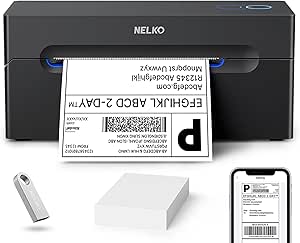 | Best Value for Flexible Label Sizes | Printing method: Direct thermal, monochrome | Resolution: 203 × 203 DPI | Claimed print speed: Up to 150 mm/s or 72 4×6 labels per minute | VIEW LATEST PRICE | See Our Full Breakdown |
| Labeer Bluetooth Thermal Shipping Label Printer, Wireless 4×6 Label Printer |  | Best for Phone-Based Label Preparation | Printing method: Direct thermal, monochrome | Resolution: 203 × 203 DPI | Supported label width: 1.57–4.41 inches | VIEW LATEST PRICE | See Our Full Breakdown |
| Rollo USB Shipping Label Printer – Commercial Grade 4×6 Thermal Printer |  | Best for Reliable Desktop Shipping Workflows | Printing method: Direct thermal, monochrome | Resolution: 203 × 203 DPI | Stated print speed: One 4×6 label per second | VIEW LATEST PRICE | See Our Full Breakdown |
| Westinghouse Thermal Shipping Label Printer USB, 4×6 Label Commercial Grade, Compatible with USPS, UPS, FedEx, Shopify, Amazon, Small Business, Desktop Label Printer for Packages, Includes Labels |  | Best for Wired, Multi-OS Workstations | Printing method: Direct thermal, monochrome | Resolution: 203 DPI | Advertised print speed: Up to 6 inches per second | VIEW LATEST PRICE | See Our Full Breakdown |
| MUNBYN Bluetooth Thermal Label Printer, Wireless 4×6 Shipping Label Printer |  | Best for Multi-Size Label Work | Printer type: Direct thermal, monochrome | Supported label width: 1.57–4.25 inches | Maximum media size: 4 × 6 inches | VIEW LATEST PRICE | See Our Full Breakdown |
| Rollo Wireless Shipping Label Printer – Wi-Fi 4×6 Thermal Label Printer |  | Best for Wi-Fi and AirPrint Workflows | Printer type: Direct thermal, monochrome | Resolution: 203 × 203 DPI | Supported label width: 1.57–4.1 inches | VIEW LATEST PRICE | See Our Full Breakdown |
| Bluetooth Thermal Shipping Label Printer with Built-in Label Bin, Wireless 4×6 Label Printer for iPhone, Android, Windows & Mac, Includes 50 Labels, Works with USPS, UPS, Amazon, Etsy, Shopify, White |  | Best for a Tidy Home Packing Station | Printer type: Direct thermal, monochrome | Resolution: 203 × 203 DPI | Supported label width: 1.57–4.1 inches | VIEW LATEST PRICE | See Our Full Breakdown |
| Rongta Bluetooth Shipping Label Printer, Wireless 4×6 Thermal Label Printer for Shipping Packages, Support Phones, Compatible with Windows macOS Android iOS for Small Business |  | Best for Small and Specialty Labels | Model: RP425 | Printer type: Direct thermal, monochrome | Resolution: 203 × 203 DPI | VIEW LATEST PRICE | See Our Full Breakdown |
| Brother 2-Inch Direct Thermal Desktop Label Printer USB |  | Best for Narrow Ecommerce Labels | Model: TD-2020A | Printer type: Direct thermal, monochrome | Maximum label width: 2.4 inches | VIEW LATEST PRICE | See Our Full Breakdown |
| Arkscan 2054A Shipping Label Printer |  | Best for Platform and Label-Size Flexibility | Printing method: Direct thermal | Resolution: Not specified in supplied product data | Print speed: 5 inches per second | VIEW LATEST PRICE | See Our Full Breakdown |
| JADENS Bluetooth Thermal Shipping Label Printer | 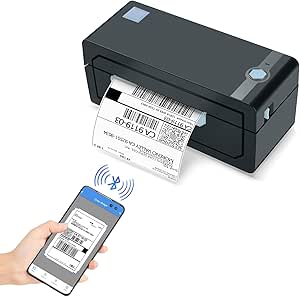 | Best for Phone-Based Shipping | Printing method: Thermal; no ink or toner | Resolution: 203 × 203 DPI | Connectivity: Bluetooth and USB | VIEW LATEST PRICE | See Our Full Breakdown |
| NULLTONEX Thermal Shipping Label Printer 4×6 |  | Best for App-Based Label Customization | Printing method: Direct thermal | Resolution: 203 × 203 DPI | Stated maximum speed: 150 mm/s | VIEW LATEST PRICE | See Our Full Breakdown |
| Bluetooth Thermal Shipping Label Printer with Built-in Label Bin, Black | 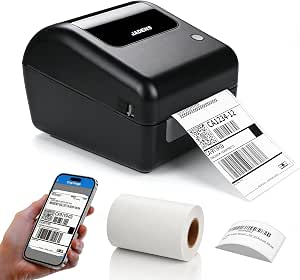 | Best for Built-In Roll Storage | Printing method: Direct thermal | Resolution: 203 × 203 DPI | Stated maximum speed: 150 mm/s | VIEW LATEST PRICE | See Our Full Breakdown |
| Omezizy D450BT Bluetooth Shipping Label Printer with Built-in Label Bin |  | Best Compact Built-In-Bin Printer | Printing method: Thermal; no ink or toner | Resolution: 203 × 203 DPI | Stated print speed: 72 labels per minute | VIEW LATEST PRICE | See Our Full Breakdown |
| thermal label printers for ecommerce | Resolution | Printing method | Connectivity | Dimensions |
|---|---|---|---|---|
| Rongta Shipping Thermal Label | 203 × 203 DPI | Direct thermal, monochrome | — | — |
| Nelko Bluetooth Thermal Shippi | 203 × 203 DPI | Direct thermal, monochrome | — | — |
| Labeer Bluetooth Thermal Shipp | 203 × 203 DPI | Direct thermal, monochrome | — | — |
| Rollo USB Shipping Label Print | 203 × 203 DPI | Direct thermal, monochrome | — | — |
| Westinghouse Thermal Shipping | 203 DPI | Direct thermal, monochrome | — | — |
| MUNBYN Bluetooth Thermal Label | — | — | Bluetooth and USB | 4.9 × 9.67 × 6.49 inches |
| Rollo Wireless Shipping Label | 203 × 203 DPI | — | Wi-Fi and USB | 3 × 7 × 3.5 inches |
| Bluetooth Thermal Shipping Lab | 203 × 203 DPI | — | Bluetooth and USB | — |
| Rongta Bluetooth Shipping Labe | 203 × 203 DPI | — | Bluetooth | Description lists 10.2 × 7.4 × 5.3 inches; specifications list 3 × 7 × 2 inches |
| Brother 2-Inch Direct Thermal | 203 × 203 DPI | — | USB 2.0 and RS-232C serial | 8.4 × 4.33 × 6.77 inches |
| Arkscan 2054A Shipping Label P | Not specified in supplied product data | Direct thermal | USB | 9.25 × 8.25 × 6.25 inches |
| JADENS Bluetooth Thermal Shipp | 203 × 203 DPI | Thermal; no ink or toner | Bluetooth and USB | 5.91 × 9.06 × 5.91 inches |
| NULLTONEX Thermal Shipping Lab | 203 × 203 DPI | Direct thermal | Bluetooth and USB | 8.08 × 4.73 × 6.9 inches |
| Bluetooth Thermal Shipping Lab | 203 × 203 DPI | Direct thermal | Bluetooth and USB | 10 × 7 × 7 inches |
| Omezizy D450BT Bluetooth Shipp | 203 × 203 DPI | Thermal; no ink or toner | Bluetooth and USB | 7.3 × 6.3 × 5.35 inches |
More Details on Our Top Picks
Rongta Shipping Thermal Label Printer, Bluetooth 4×6 Sticker Label Maker Wireless Shipping Label Printer for Package Small Business Compatible with Windows macOS Android iOS (White)
The Rongta is aimed at sellers who want to prepare labels from a phone rather than keep a computer beside the packing area. Its listing describes Bluetooth printing through the RONGTA app for phones, alongside USB printing from a PC or laptop, giving it a more mobile workflow than the wired-only Rollo USB. Direct thermal printing also means there is no ink or toner to replenish. The tradeoff is a thinner spec sheet: the stated resolution is 203 DPI, but the listing gives no print-speed figure or detailed label-width range, making it harder to judge for frequent, varied jobs. Compared with the Labeer, which documents multiple label sizes and automatic PDF cropping, this Rongta looks simpler but offers less evidence of label-preparation tools. I’d shortlist it for straightforward phone-led shipping, not a busy operation that needs clearly documented throughput.
Pros:- Bluetooth printing through the RONGTA app supports a phone-centered packing workflow.
- USB printing is available from a PC or laptop.
- Direct thermal output avoids ink and toner.
- Supports multiple label sizes, according to the product description.
Cons:- The listed 203 DPI resolution is basic for dense graphics or very small text.
- No print-speed figure is provided, so it is difficult to gauge suitability for batch printing.
- The supported label-width range and detailed app workflow are not specified.
Best for: Small online sellers who create a modest number of standard shipping labels from an iPhone or Android phone and want a USB option for computer printing.
Not ideal for: High-volume fulfillment teams or sellers who regularly switch label formats; the listed details do not specify print speed or a broad supported-width range.
- Printing method:Direct thermal, monochrome
- Resolution:203 × 203 DPI
- Wireless connection:Bluetooth through the RONGTA app
- Wired connection:USB for PC or laptop
- Compatible devices:Windows, macOS, Android, and iOS devices
- Media:Thermal labels; multiple sizes supported
- Functions:Print only
- Color:White
Our verdict“Choose the Rongta if you mainly print standard labels from a phone and value wireless convenience over clearly documented speed and format flexibility.”
Nelko Bluetooth Thermal Shipping Label Printer, 4×6 Thermal Label Printer
The Nelko PL70E earns its place through a useful combination of fast stated output, broad label-size support, and phone connectivity. Its claimed rate of up to 72 4×6 labels per minute is more compelling for batch shipping than the Rongta, whose listing does not state a speed. The 1.54–4.1-inch media-width range also lets sellers use smaller barcode or product labels alongside shipping labels, with both fanfold and roll media supported. Platform coverage includes common ecommerce services, though printing from a marketplace involves saving the label as a PDF and loading it into the NELKO app. Connection details matter: Mac printing is USB-only, while Bluetooth requires the app and is not a direct device pairing. That makes it less flexible for Mac users than the Labeer’s listed USB support across several desktop systems.
Pros:- Claimed output reaches up to 72 4×6 labels per minute.
- Supports label widths from 1.54 to 4.1 inches, including common shipping and small-label formats.
- Accepts both fanfold and roll labels.
- Offers Bluetooth through its app and USB connections for supported computers.
Cons:- Mac printing is USB-only; Bluetooth printing is not supported for Mac in the listing.
- Phone printing requires the NELKO app and a PDF-label workflow.
- At 203 DPI, output is not aimed at fine-detail graphics.
Best for: Small ecommerce sellers who print batches of shipping labels and occasional narrower inventory or barcode labels from Windows, Android, or iOS devices.
Not ideal for: Mac users who specifically need wireless printing, or sellers who expect to send labels directly from a platform without routing PDFs through the NELKO app.
- Printing method:Direct thermal, monochrome
- Resolution:203 × 203 DPI
- Claimed print speed:Up to 150 mm/s or 72 4×6 labels per minute
- Supported label width:1.54–4.1 inches
- Media loading:Fanfold and roll labels
- Connections:Bluetooth through app; USB
- Listed desktop compatibility:Windows 7 or later, macOS via USB, and ChromeOS via USB
- Listed mobile compatibility:iOS and Android through the NELKO app
Our verdict“Pick the Nelko for brisk small-business batches and mixed label sizes, provided its app-based phone workflow and Mac USB limitation fit your setup.”
Labeer Bluetooth Thermal Shipping Label Printer, Wireless 4×6 Label Printer
The Labeer distinguishes itself with a more guided phone-to-label workflow than the Rongta: its FlashLabel Pro app can identify a PDF label area, remove white margins, and provide crop and rotate controls. That can reduce fiddling when marketplace labels arrive with extra page space or the wrong orientation. It also covers more than standard 4×6 shipping, supporting listed widths from 1.57 to 4.41 inches and both roll and fanfold media. Automatic gap detection and paper-out and jam alerts are useful for repeated packing jobs. Its small stated footprint and 450-gram weight suit a cramped home desk, although the listing provides no clear pages-per-minute figure to compare with the Nelko’s claimed batch speed. Desktop connections also vary by system: Windows supports USB or Bluetooth, while macOS, ChromeOS, and Linux are listed for USB.
Pros:- App tools crop, rotate, and remove excess margins from PDF labels.
- Supports label widths from 1.57 to 4.41 inches, including several common formats.
- Automatic gap detection and calibration help keep labels aligned.
- Paper-out, jam, pause, resume, and print-cancel features support routine packing work.
Cons:- No clear print-speed figure is provided for comparing batch throughput.
- Mac, ChromeOS, and Linux connections are listed as USB rather than Bluetooth.
- Phone printing depends on the FlashLabel Pro app and a prepared PDF.
Best for: Phone-first marketplace sellers who often need to crop, rotate, or reformat downloaded PDF shipping labels and also print smaller inventory labels.
Not ideal for: High-volume shippers who need a documented print rate, or Mac users who require Bluetooth rather than a USB connection.
- Printing method:Direct thermal, monochrome
- Resolution:203 × 203 DPI
- Supported label width:1.57–4.41 inches
- Listed label sizes:4×6, 4×4, 4×2, 2×1 inches, and custom sizes
- Media loading:Roll and fanfold labels
- Connections:Bluetooth and USB
- Computer compatibility:Windows via USB or Bluetooth; macOS, ChromeOS, and Linux via USB
- Mobile compatibility:iPhone and Android through FlashLabel Pro
- Weight:450 g
Our verdict“Choose the Labeer if app-based PDF cleanup and broad label-size support matter more than a published speed figure or wireless Mac printing.”
Rollo USB Shipping Label Printer – Commercial Grade 4×6 Thermal Printer
The Rollo USB is the most straightforward fit here for sellers who already pack from a computer and want a dedicated, wired shipping station. Its stated rate of one 4×6 label per second gives buyers a concrete throughput reference, unlike the Rongta and Labeer listings, which do not provide comparable speeds. It supports media up to 4.1 inches wide and works with major shipping platforms and marketplaces; the included Rollo Ship app adds a shipping workflow rather than making this just a printer. The compromise is clear: this is a USB-only model, so it cannot match the phone freedom of the Nelko or Labeer. Its 203 DPI output is suited to standard shipping labels and barcodes, not fine graphic work. I’d favor it for a stable desk setup over mobile packing or frequent device switching.
Pros:- Stated output of one 4×6 label per second supports efficient batch packing.
- Works with Windows and Mac computers through USB.
- Supports labels up to 4.1 inches wide for shipping and other small-business labels.
- Rollo Ship app and broad marketplace and carrier compatibility support ecommerce workflows.
Cons:- USB-only connection rules out direct wireless or phone-based printing.
- 203 DPI resolution is suited to standard labels rather than fine-detail graphics.
- Requires a computer at the printer station.
Best for: Small businesses that print shipping labels from a Windows or Mac computer at a fixed packing desk and want a stated one-label-per-second rate.
Not ideal for: Sellers who need phone printing, Bluetooth, or frequent movement between packing stations; this model connects by USB.
- Printing method:Direct thermal, monochrome
- Resolution:203 × 203 DPI
- Stated print speed:One 4×6 label per second
- Maximum media width:4.1 inches
- Connection:USB
- Compatible operating systems:Windows XP and newer; Mac OS 10.9 and newer
- Compatible platforms:Major shipping platforms and marketplaces, including Amazon, Shopify, Etsy, and eBay
- Warranty:Limited 1-year warranty
Our verdict“Choose the Rollo USB for a computer-based packing station where wired simplicity and a clearly stated print rate matter more than wireless convenience.”
Westinghouse Thermal Shipping Label Printer USB, 4×6 Label Commercial Grade, Compatible with USPS, UPS, FedEx, Shopify, Amazon, Small Business, Desktop Label Printer for Packages, Includes Labels
The Westinghouse is the wired workstation pick for sellers who value operating-system and media flexibility over Bluetooth. It lists compatibility with Windows, macOS, and Linux, supports USB and Ethernet, and accepts labels from 0.78 to 4.6 inches wide. That broader width range exceeds the Rollo USB’s stated 4.1-inch maximum, which can help when a shop uses different package, barcode, or product-label formats. Its advertised speed is 6 inches per second at 203 DPI, though that measurement is not directly comparable to the Rollo’s label-per-second figure. The main limitation is the lack of Bluetooth, and Ethernet cable and USB-C cable or adapter are not included. Compared with the app-focused Nelko, Westinghouse is better suited to a fixed computer or network setup than phone-led label creation.
Pros:- Listed compatibility includes Windows, macOS, and Linux.
- USB and Ethernet connections suit wired desktop or networked workstations.
- Supports media widths from 0.78 to 4.6 inches, wider than the Rollo USB’s listed maximum.
- Includes starter labels, a label holder, USB cable, and power accessories.
Cons:- No Bluetooth capability for wireless phone printing.
- Ethernet cable and USB-C cable or adapter are sold separately.
- The claimed speed is given in inches per second, making direct comparison with label-per-minute claims difficult.
Best for: Small ecommerce teams using Windows, macOS, or Linux computers at a fixed packing station who need broad media-width support and USB or Ethernet connectivity.
Not ideal for: Mobile-first sellers who want Bluetooth printing, or buyers who need a ready-to-connect Ethernet or USB-C setup without sourcing extra cables or adapters.
- Printing method:Direct thermal, monochrome
- Resolution:203 DPI
- Advertised print speed:Up to 6 inches per second
- Supported media width:0.78–4.6 inches
- Maximum print width:4.25 inches
- Connections:USB and Ethernet; no Bluetooth
- Listed operating systems:Windows, macOS, and Linux
- Media loading:Fanfold labels and rolls
- Included accessories:Starter labels, label holder, USB cable, power cord, and power adapter
Our verdict“Pick the Westinghouse for a wired, multi-OS packing station that needs wider media options, and skip it if phone-based Bluetooth printing is part of your workflow.”
MUNBYN Bluetooth Thermal Label Printer, Wireless 4×6 Shipping Label Printer
The MUNBYN RW403B is a strong fit for ecommerce sellers who need more than standard parcel labels. Its 1.57–4.25-inch media range covers 4×6 shipping labels as well as narrower barcode, inventory, and product labels, giving it more format flexibility than the Rollo Wireless, which supports media up to 4.1 inches wide. Bluetooth support for phones and computers also suits a packing station where orders are managed across devices, while USB provides a wired option. The listing cites a 2-year manufacturer warranty and a long stated printhead life, useful points for sellers planning regular use. The tradeoff is that it lacks Rollo’s Wi-Fi and AirPrint convenience, and its broad label range may be unnecessary if you only print shipping labels. Its listed print-speed figures also conflict, so I would not choose it on speed claims alone.
Pros:- Supports media widths from 1.57 to 4.25 inches for varied ecommerce labeling tasks.
- Bluetooth compatibility includes Android, iOS, Windows, Mac, and Chromebook.
- USB connection offers a wired alternative to Bluetooth.
- Listed 2-year manufacturer warranty and stated printhead life of up to 970,000 labels.
Cons:- No Wi-Fi or AirPrint support, unlike the Rollo Wireless.
- The product information gives conflicting print-speed figures, making throughput difficult to judge.
- The listing does not specify a built-in roll holder, so some setups may need separate label support.
Best for: Small ecommerce sellers who print shipping labels alongside narrower inventory, barcode, or product labels and want Bluetooth device flexibility.
Not ideal for: Sellers who want Wi-Fi or AirPrint printing, or who only need basic 4×6 labels and would not use the wider media range.
- Printer type:Direct thermal, monochrome
- Supported label width:1.57–4.25 inches
- Maximum media size:4 × 6 inches
- Connectivity:Bluetooth and USB
- Compatible devices:Android, iOS, Windows, Mac, Chromebook, laptops, PCs, and tablets
- Dimensions:4.9 × 9.67 × 6.49 inches
- Manufacturer warranty:2 years
Our verdict“Choose the MUNBYN if your ecommerce workflow uses several label widths and Bluetooth matters more than Wi-Fi printing.”
Rollo Wireless Shipping Label Printer – Wi-Fi 4×6 Thermal Label Printer
The Rollo Wireless earns its place for sellers who want to print from multiple devices without making Bluetooth the center of the setup. It supports AirPrint from iPhone, iPad, and Mac, plus Wi-Fi printing for Android, Windows, Chromebook, and Linux; USB remains available for a direct connection. That range is more convenient than the Bluetooth-focused MUNBYN RW403B for a mixed-device packing area. Rollo also pairs the printer with its Ship Manager app, which connects to ecommerce platforms and shipping services, while its 203 DPI output and stated one-label-per-second rate suit routine order packing. The tradeoff is a narrower maximum media width than MUNBYN and no included label holder is specified. Sellers who already use another shipping workflow may also get less value from the bundled app features.
Pros:- AirPrint supports direct printing from iPhone, iPad, and Mac.
- Wi-Fi works with Android, Windows, Chromebook, and Linux, with USB as another connection option.
- Rollo Ship Manager connects with ecommerce platforms and shipping services.
- Supports labels from 1.57 to 4.1 inches wide and lists a printhead life of about 650,000 labels.
Cons:- Maximum label width is narrower than the MUNBYN RW403B’s 4.25-inch limit.
- The supplied information does not list a built-in label holder.
- Rollo’s app features may be redundant for sellers already committed to a separate shipping platform.
Best for: Small and growing ecommerce teams that print from Apple and non-Apple devices and want Wi-Fi, AirPrint, and a connected shipping app.
Not ideal for: Sellers who need labels wider than 4.1 inches, prefer a Bluetooth-only setup, or already rely on a shipping platform and do not need Rollo Ship Manager.
- Printer type:Direct thermal, monochrome
- Resolution:203 × 203 DPI
- Supported label width:1.57–4.1 inches
- Connectivity:Wi-Fi and USB
- Compatible systems:Android, Chromebook, Linux, Mac, Windows, iPhone, and iPad
- Print speed:Up to 150 mm/s; listed as one 4×6 label per second
- Dimensions:3 × 7 × 3.5 inches
- Weight:3.5 pounds
Our verdict“Pick the Rollo Wireless if device-friendly Wi-Fi and AirPrint matter more to your packing workflow than extra label-width flexibility.”
Bluetooth Thermal Shipping Label Printer with Built-in Label Bin, Wireless 4×6 Label Printer for iPhone, Android, Windows & Mac, Includes 50 Labels, Works with USPS, UPS, Amazon, Etsy, Shopify, White
This white built-in-bin model is the clearest choice in this group for sellers who want the label roll contained inside the printer. The integrated holder keeps the roll guided within the body, which can reduce clutter compared with the Rollo Wireless, whose listing does not specify an internal holder. It supports direct thermal labels from 1.57 to 4.1 inches wide and works with common marketplaces and shipping services, so it covers standard ecommerce fulfillment plus smaller barcode and inventory labels. The package includes 50 4×6 labels, making it easier to start printing without sourcing media separately. Its main compromise is connection flexibility: Bluetooth is listed for mobile devices and Windows, while Mac uses USB. The listing gives no warranty duration, and the 203 DPI resolution is standard rather than a reason to choose it over more connected alternatives.
Pros:- Integrated label holder keeps the roll inside the printer body.
- Includes 50 4×6 thermal labels to get a basic shipping workflow started.
- Supports label widths from 1.57 to 4.1 inches.
- Compatible with major ecommerce platforms and shipping services listed in the product details.
Cons:- Mac connection is listed as USB rather than Bluetooth.
- The listing does not provide a manufacturer warranty duration.
- 203 DPI is standard resolution, with no listed feature that distinguishes output quality from comparable models.
Best for: Home-based sellers who want a contained roll setup, print standard shipping labels, and value an initial pack of labels.
Not ideal for: Mac users who want wireless printing, or high-volume sellers who need clearer warranty information and a specified sustained-duty rating.
- Printer type:Direct thermal, monochrome
- Resolution:203 × 203 DPI
- Supported label width:1.57–4.1 inches
- Connectivity:Bluetooth and USB
- Label holder:Built-in roll holder
- Included media:50 4 × 6-inch thermal labels
- Maximum media capacity:Up to 350 sheets
- Compatible systems:iPhone, iPad, Android, Windows, and Mac via USB
Our verdict“Choose this model for a neat home shipping station if its internal label bin matters more than wireless Mac printing.”
Rongta Bluetooth Shipping Label Printer, Wireless 4×6 Thermal Label Printer for Shipping Packages, Support Phones, Compatible with Windows macOS Android iOS for Small Business
The Rongta RP425 stands out for ecommerce sellers whose work includes unusually small labels as well as standard 4×6 shipping labels. Its stated 0.98–4.37-inch width range reaches narrower formats than the MUNBYN RW403B, which starts at 1.57 inches, and it can handle barcode, QR, and circular labels alongside parcel labels. Automatic label identification and feeding may also help reduce manual alignment when changing media. Phones connect through Rongta’s app, while Windows and Mac require downloaded drivers; Chrome OS is listed as compatible. That setup is less convenient than the Rollo Wireless for sellers who want AirPrint or Wi-Fi. The product information also contains conflicting speed figures, and the listed dimensions vary between the description and specifications, so I would treat its portability claims cautiously.
Pros:- Supports a broad 0.98–4.37-inch label-width range, including small-format labels.
- Automatic label identification and feeding can simplify switching between media sizes.
- Bluetooth printing is available through the Rongta app for iOS and Android.
- Windows, Mac, and Chrome OS compatibility is listed.
Cons:- Desktop setup requires downloading Windows or Mac drivers from Rongta’s website.
- No Wi-Fi or AirPrint connection is listed.
- Product details conflict on print speed and physical dimensions.
Best for: Small businesses that print a mix of shipping labels, narrow barcodes, QR labels, and small-format product or inventory labels.
Not ideal for: Sellers who want Wi-Fi or AirPrint, dislike installing desktop drivers, or need dependable published speed and size figures.
- Model:RP425
- Printer type:Direct thermal, monochrome
- Resolution:203 × 203 DPI
- Supported label width:0.98–4.37 inches
- Connectivity:Bluetooth
- Compatible systems:iOS, Android, Windows 7 or newer, Mac OS 10.11 or newer, and Chrome OS
- Dimensions:Description lists 10.2 × 7.4 × 5.3 inches; specifications list 3 × 7 × 2 inches
- Weight:0.65 kg
Our verdict“Choose the RP425 if narrow labels are part of your ecommerce workflow and you can accept app-based mobile printing and driver setup.”
Brother 2-Inch Direct Thermal Desktop Label Printer USB
The Brother TD-2020A serves a different ecommerce job from the 4×6-focused printers here: it produces labels, tags, and receipts up to 2.4 inches wide, not standard parcel labels. That makes it more appropriate for product identification, barcode, and inventory labeling than for printing carrier labels; the MUNBYN RW403B and Rollo Wireless are better fits when 4×6 shipping labels are the daily task. Brother’s USB 2.0 and RS-232C serial connections suit a fixed workstation, while its drop-in, spindle-less media design accepts rolls up to five inches in diameter. The stated speed of up to six inches per second is useful for repeated short labels. The tradeoff is clear: there is no wireless connection listed, and its narrow media limit rules it out as a standalone shipping-label printer for most ecommerce orders.
Pros:- Prints labels, tags, and receipts up to 2.4 inches wide for product and inventory workflows.
- Listed print speed reaches six inches per second.
- Drop-in spindle-less design accommodates media rolls up to five inches in diameter.
- Offers both USB 2.0 and RS-232C serial connections.
Cons:- Cannot print standard 4×6 shipping labels because its maximum width is 2.4 inches.
- No Wi-Fi or Bluetooth connectivity is listed.
- The USB-focused desktop setup is less flexible than the wireless Rollo and MUNBYN models.
Best for: Ecommerce sellers who need a desktop printer for narrow product, barcode, inventory, or receipt labels alongside a separate 4×6 shipping printer.
Not ideal for: Sellers looking for one printer to handle standard 4×6 carrier labels or anyone who needs wireless printing from phones and tablets.
- Model:TD-2020A
- Printer type:Direct thermal, monochrome
- Maximum label width:2.4 inches
- Resolution:203 × 203 DPI
- Print speed:Up to 6 inches per second
- Connectivity:USB 2.0 and RS-232C serial
- Maximum roll diameter:5 inches
- Dimensions:8.4 × 4.33 × 6.77 inches
Our verdict“Buy the Brother as a companion for narrow product and inventory labels, not as your main 4×6 ecommerce shipping printer.”
Arkscan 2054A Shipping Label Printer
The Arkscan 2054A is the most flexible choice here for sellers who print from a mix of marketplaces and shipping services. Its listed compatibility spans platforms such as Amazon, Etsy, Shopify, ShipStation, UPS and USPS, while support for roll and fanfold labels lets you choose the supply format that fits your packing station. Compared with the more phone-oriented JADENS Bluetooth printer, this model is a USB-connected workflow built around computers and broad software support; it also handles labels from 0.75 to 4.25 inches wide, beyond standard shipping labels.
The tradeoff is that it does not offer wireless printing, and its 5-inch-per-second speed is lower than the faster claims on several compact models in this group. BarTender UltraLite is Windows-only, so Mac and Chromebook users should not count on that design tool. I’d choose it for a computer-based operation that needs label variety and accessible support, not for a phone-first packing setup.
Pros:- Works with a wide range of ecommerce, marketplace, and carrier workflows.
- Accepts roll and fanfold labels, giving sellers more supply-loading options.
- Supports label widths from 0.75 to 4.25 inches and lengths up to 90 inches.
- Includes Windows-only BarTender UltraLite and lists US-based phone, chat, and remote support.
Cons:- USB-only connectivity rules out wireless printing from phones.
- Its stated 5-inch-per-second speed is slower than the 150 mm/s claims on some alternatives.
- BarTender UltraLite is limited to Windows.
Best for: Small ecommerce sellers printing from Windows, Mac, or Chromebook who need roll-and-fanfold support and labels beyond standard 4×6 shipping formats.
Not ideal for: Phone-first sellers or teams that need Bluetooth printing, since this model connects by USB.
- Printing method:Direct thermal
- Resolution:Not specified in supplied product data
- Print speed:5 inches per second
- Connectivity:USB
- Compatible systems:Windows, Mac, Chromebook, Android
- Label width:0.75–4.25 inches
- Label length:0.4–90 inches
- Label loading:Roll and rear-loaded fanfold
- Dimensions:9.25 × 8.25 × 6.25 inches
Our verdict“Choose the Arkscan 2054A if you value broad platform support and flexible label formats more than wireless convenience or faster stated throughput.”
JADENS Bluetooth Thermal Shipping Label Printer
The JADENS Bluetooth printer suits sellers who want to prepare labels from a phone or move printing away from a fixed USB workstation. It pairs by Bluetooth with Windows 8 or later and Mac, while Android and iOS printing runs through the Jadens Printer app. USB remains available for Windows 7 and newer or Mac, so a computer connection is an alternative if wireless setup is inconvenient. Like the NULLTONEX printer, it supports both roll and fanfold labels, but its supplied information describes a more limited app-based mobile workflow rather than an app with a large template library.
Its 203 DPI resolution is suited to standard shipping text and barcodes, and it accepts labels 1.57 to 4.1 inches wide. The main compromise is the phone app requirement: mobile printing is not a direct Bluetooth print path, and labels need recalibration after each size change. I’d favor it over the USB-only Arkscan for sellers who regularly print from phones, but skip it if you want a single straightforward computer workflow.
Pros:- Offers Bluetooth printing for supported Windows and Mac computers, plus app-based mobile printing.
- USB connection provides a wired option for Windows and Mac.
- Supports both roll and fanfold labels.
- 203 DPI resolution and label widths from 1.57 to 4.1 inches suit common shipping and warehouse labels.
Cons:- Android and iOS printing requires the Jadens Printer app; it is not direct Bluetooth printing from the phone.
- Users must recalibrate when changing label sizes.
- The listed maximum label width is 4.1 inches, narrower than the Arkscan 2054A’s 4.25-inch limit.
Best for: Solo sellers who create shipping labels on Android or iPhone and want Bluetooth printing with USB available for a computer.
Not ideal for: High-throughput packing teams that frequently switch label sizes or want mobile printing without a dedicated app and recalibration.
- Printing method:Thermal; no ink or toner
- Resolution:203 × 203 DPI
- Connectivity:Bluetooth and USB
- Label width:1.57–4.1 inches
- Supported media:Roll and fanfold labels
- Maximum media size:4 × 6 inches
- Compatible systems:Windows 7 or newer, Mac OS 10.9 or newer; Android and iOS through app
- Dimensions:5.91 × 9.06 × 5.91 inches
Our verdict“Pick the JADENS if phone-based label printing is a regular part of your small-business workflow and app setup is acceptable.”
NULLTONEX Thermal Shipping Label Printer 4×6
The NULLTONEX printer is the app-focused pick for sellers who need more than a basic shipping-label print button. Its FlashLabel Pro app lists 1,800+ templates and 300+ fonts, plus offline template storage, which can help with product, barcode, and warehouse labels alongside daily parcel dispatch. That editing emphasis sets it apart from the built-in-bin D450BT, whose standout advantages are compact storage and auto-alignment rather than a stated template library. NULLTONEX also offers Bluetooth and USB, giving mobile users a wireless route and computer users a direct connection.
The listed 203 DPI resolution and speed claim of up to 150 mm/s target small businesses with regular batches, though real throughput depends on the workflow and label content. It accepts labels 1.57 to 4.3 inches wide and includes 25 4×6 labels. The tradeoffs are monochrome-only output and reliance on the FlashLabel Pro app for its mobile features. I’d choose it for varied label-design needs, not for buyers who only want a bare-bones shipping printer.
Pros:- FlashLabel Pro includes a large selection of templates, fonts, and editing tools.
- Bluetooth and USB provide wireless and wired printing options.
- Supports label widths from 1.57 to 4.3 inches for uses beyond parcel labels.
- Includes 25 4×6 labels and lists overheat protection.
Cons:- Prints in black and white only.
- Mobile wireless printing depends on the FlashLabel Pro app.
- The 150 mm/s figure is a stated maximum, not a guaranteed rate for every label or workflow.
Best for: Small online retailers who print shipping labels plus customized product, barcode, or warehouse labels from a phone or computer.
Not ideal for: Sellers who only need standard 4×6 labels and prefer a minimal setup without a feature-rich companion app.
- Printing method:Direct thermal
- Resolution:203 × 203 DPI
- Stated maximum speed:150 mm/s
- Connectivity:Bluetooth and USB
- Label width:1.57–4.3 inches
- App:FlashLabel Pro; offline template storage
- Included labels:25 sheets of 4 × 6-inch thermal labels
- Dimensions:8.08 × 4.73 × 6.9 inches
Our verdict“Choose NULLTONEX if customizable, varied label work matters as much as shipping, and skip it if you want only the simplest 4×6 printing setup.”
Bluetooth Thermal Shipping Label Printer with Built-in Label Bin, Black
This built-in-bin printer is aimed at sellers who want roll labels contained inside the printer instead of sitting on an external holder. Its integrated holder supports rolls, with product information listing capacity up to 350 sheets; that can keep a home packing area tidier than a basic open-feed setup. Compared with the Omezizy D450BT, it has a larger stated capacity, while the D450BT is more compact and also lists rear-fed folded paper. This model includes 50 4×6 labels, so a new user can begin with a standard shipping-label format.
It offers Bluetooth for iPhone, iPad, Android, and Windows, while Mac uses USB. The stated 203 DPI resolution and 150 mm/s speed fit routine ecommerce dispatch, but the product data does not list the broad operating-system range claimed for the D450BT. Its 10 × 7 × 7-inch body also takes more desk space than that smaller alternative. I’d pick it for contained roll storage and a larger roll capacity, not for the smallest packing station or Mac users seeking wireless printing.
Pros:- Integrated label bin holds compatible rolls inside the printer.
- Product data lists capacity up to 350 sheets.
- Includes 50 4×6 thermal labels for initial setup.
- Supports Bluetooth printing on listed mobile devices and Windows, plus USB for Mac.
Cons:- Mac connectivity is USB-only according to the supplied details.
- Its listed dimensions are larger than the Omezizy D450BT.
- The product details specify roll loading but do not list rear-fed fanfold support.
Best for: Home-based sellers who use roll labels, want them stored inside the printer, and mainly print from iPhone, Android, or Windows.
Not ideal for: Mac users who want Bluetooth printing, or sellers with very limited desk space who may prefer the smaller Omezizy D450BT.
- Printing method:Direct thermal
- Resolution:203 × 203 DPI
- Stated maximum speed:150 mm/s
- Connectivity:Bluetooth and USB
- Label width:1.57–4.1 inches
- Maximum listed capacity:Up to 350 sheets
- Included labels:50 4 × 6-inch thermal labels
- Dimensions:10 × 7 × 7 inches
Our verdict“Choose this model for contained roll storage and a larger stated label capacity, provided its footprint and Mac USB connection suit your setup.”
Omezizy D450BT Bluetooth Shipping Label Printer with Built-in Label Bin
The Omezizy D450BT combines a small footprint with internal roll storage, making it the most space-conscious built-in-bin option in this set. Its compartment holds up to 250 4×6 labels and the printer also accepts rear-loaded folded paper, so sellers can keep supplies contained without giving up fanfold use. That makes it a more flexible loading choice than the black built-in-bin model, which lists roll storage but not fanfold support. The D450BT also claims Bluetooth and USB compatibility across Windows, macOS, Linux, and ChromeOS, alongside Android and iOS phones.
Auto-detection and a stated speed of 72 labels per minute aim to reduce alignment adjustments and keep routine batch shipping moving. Its 203 DPI output is standard for this class, and the listed width range extends to 4.6 inches. The compromise is that its 250-label capacity is below the 350-sheet claim for the black bin model, and the listing includes only 30 labels. I’d choose it for a compact, multi-device packing station rather than for maximum roll capacity.
Pros:- Compact listed dimensions with an internal bin for up to 250 4×6 labels.
- Supports both internal roll paper and rear-loaded folded paper.
- Lists Bluetooth and USB compatibility across mobile devices and major desktop systems.
- Auto-detection and a stated speed of 72 labels per minute target efficient label handling.
Cons:- Its listed capacity is lower than the 350-sheet claim for the black built-in-bin alternative.
- The supplied product listing includes 30 labels.
- Prints monochrome at 203 DPI, so it is not suited to color label output.
Best for: Small-space ecommerce sellers who want internal roll storage, fanfold support, and compatibility across phones and major computer systems.
Not ideal for: High-volume shippers who prioritize the largest stated roll capacity or want a larger starter label supply.
- Printing method:Thermal; no ink or toner
- Resolution:203 × 203 DPI
- Stated print speed:72 labels per minute
- Connectivity:Bluetooth and USB
- Compatible systems:Android, iOS, Windows, macOS, Linux, ChromeOS
- Label width:1–4.6 inches
- Maximum listed capacity:Up to 250 4 × 6-inch labels
- Dimensions:7.3 × 6.3 × 5.35 inches
Our verdict“Pick the D450BT if desk space, multiple connection options, and both roll and fanfold loading matter more than maximum label capacity.”

How We Picked
I ranked these thermal label printers for ecommerce by how clearly their stated features support everyday shipping work: 4×6 label use, connection options, operating-system compatibility, label-feeding flexibility, and practical fit for a small shop. I gave stronger placement to options with a clear role, such as the USB-focused Rollo, the Wi-Fi Rollo, or the Arkscan’s roll-and-fanfold support, rather than treating every Bluetooth listing as interchangeable.
The product information supplied does not establish print speed, resolution, long-term reliability, app quality, or tested compatibility, so I do not present those as proven advantages. Where listings appear closely related or share the same stated feature set, I treat them as near-ties rather than inventing a difference. The order favors identifiable workflow benefits first, then narrower or less clearly differentiated options; buyers should verify device support and included accessories on the current product listing.
| thermal label printers for ecommerce | Printing method | Connectivity |
|---|---|---|
| Rongta Shipping Thermal Label | Direct thermal, monochrome | — |
| Nelko Bluetooth Thermal Shippi | Direct thermal, monochrome | — |
| Labeer Bluetooth Thermal Shipp | Direct thermal, monochrome | — |
| Rollo USB Shipping Label Print | Direct thermal, monochrome | — |
| Westinghouse Thermal Shipping | Direct thermal, monochrome | — |
| MUNBYN Bluetooth Thermal Label | — | Bluetooth and USB |
| Rollo Wireless Shipping Label | — | Wi-Fi and USB |
| Bluetooth Thermal Shipping Lab | — | Bluetooth and USB |
| Rongta Bluetooth Shipping Labe | — | Bluetooth |
| Brother 2-Inch Direct Thermal | — | USB 2.0 and RS-232C serial |
| Arkscan 2054A Shipping Label P | Direct thermal | USB |
| JADENS Bluetooth Thermal Shipp | Thermal; no ink or toner | Bluetooth and USB |
| NULLTONEX Thermal Shipping Lab | Direct thermal | Bluetooth and USB |
| Bluetooth Thermal Shipping Lab | Direct thermal | Bluetooth and USB |
| Omezizy D450BT Bluetooth Shipp | Thermal; no ink or toner | Bluetooth and USB |
Factors to Consider When Choosing Thermal Label Printers For Ecommerce
Choosing a shipping printer is less about collecting features and more about fitting the machine to the way orders move through your shop. I’d settle the connection, label stock, and device questions before comparing cosmetic details or bundled labels.
Match the connection to your packing station
A USB printer can be a sensible choice when one computer stays beside the packing table and predictable cable-based printing suits the routine. Bluetooth may make printing from a phone or tablet more convenient, but wireless setup can depend on the manufacturer’s app and the device you plan to use. Wi-Fi is a different kind of convenience: it can help when the printer and computer are not beside one another, but it adds network setup to the process. A common mistake is buying based on the word “wireless” without checking which connection type the model actually supports. Before ordering, map the printer’s location, the device that creates labels, and who else needs access.
Check device and platform support at the point of purchase
Compatibility claims can cover different operating systems without guaranteeing the same setup experience on each one. Check whether your exact computer, phone, and operating-system version are listed, then confirm whether printing runs through a dedicated app, a browser, or shipping software. This matters most when labels are created on a phone but orders are managed on a computer, since switching devices can add steps. Sellers using a Chromebook or a less common shipping platform should confirm support rather than relying on a broad list of marketplace names. A printer that fits your existing workflow can save more time than one with an extra connection option you rarely use.
Choose label feeding around your order volume and space
Roll and fanfold labels have different practical needs: rolls may suit a dedicated holder or an integrated bin, while fanfold stock can sit behind or beside the printer. Consider where the labels will sit and whether the printer can feed them without bending or catching. A built-in bin can reduce loose-label clutter, but it does not automatically mean a smaller overall footprint or easier access for every workspace. Buyers sometimes focus on the printer’s body and overlook the space needed for a roll, cable, and outgoing packages. Measure the whole working area, not just the device.
Make sure 4×6 is the right label size
Most options in this roundup are positioned for 4×6 shipping labels, a common format for parcel workflows, but a smaller desktop label printer may fit inventory, barcode, or other narrow-label tasks better. Do not assume a printer made for smaller labels can replace a dedicated 4×6 shipping machine. Check the label dimensions required by your carrier and shipping platform, including whether your usual label layout is printed at its intended size. Resizing a label to fit can create scanning or readability problems. If your business prints both shipping and product labels, decide whether one printer can handle the stock you need or whether separate devices make more sense.
Treat setup and upkeep as part of the purchase
Direct thermal printing avoids the need for ink or toner, but it does not remove all maintenance or supply decisions. You still need compatible labels, a clean print path, and a reliable way to load stock; the label material also affects how well prints hold up to heat, sunlight, and handling. Check whether the printer uses labels you can source easily and whether the listed package includes enough stock to get started. Bundled labels are convenient, but they should not be the deciding factor if replacement supplies are hard to find. For a busy shop, clear loading instructions and accessible support can matter more than a small accessory bundle.
Pay for a workflow benefit, not a longer feature list
Spending more only makes sense when a specific feature removes friction: Wi-Fi can help a shared packing area, broad platform support can simplify a mixed-device shop, and flexible label feeding can suit varied stock. If one person prints from one computer, a straightforward USB model may be the cleaner choice. A beginner may value simple setup and a clear path from order to label more than several connection modes. Avoid comparing printers by feature count alone; vague or overlapping Bluetooth listings may not offer a meaningful difference for your routine. Write down the task you want to make easier, then pay for the feature that directly addresses it.
Frequently Asked Questions
Should I choose Bluetooth, Wi-Fi, or USB for an ecommerce label printer?
I’d choose based on where labels are created and where the printer sits. USB is a straightforward match for a fixed computer at the packing station, while Bluetooth may suit phone- or tablet-led printing if the printer’s app supports your device. Wi-Fi can help when more than one workstation needs access or the printer sits away from the main computer, though it requires network setup. These connection labels are not interchangeable, so confirm the exact connection method and compatible devices on the product listing. If you have only one printing device, a simpler connection may mean fewer setup steps.
Can a 2-inch thermal printer replace a 4×6 shipping label printer?
Not for every shipping workflow. A 2-inch printer such as the Brother desktop model is aimed at narrower labels, while most products here are described as 4×6 shipping printers. Carrier and marketplace labels may require a particular layout, so check the label dimensions your shipping service provides before buying. Printing a 4×6 design at a reduced size can make barcodes or text harder to scan or read. If you print both small product labels and parcel labels, a second printer may be more practical than trying to force one format to cover both jobs.
Do I need a built-in label bin, or is a separate roll holder enough?
A built-in bin can keep labels contained and make a compact packing station feel tidier, but it is not automatically the best fit for every roll or label supply. A separate holder may offer more flexibility if you use different roll sizes or prefer to place stock behind the printer. Fanfold labels also need a clear feeding path, even when no roll holder is involved. Measure the space around the printer and check how labels enter the device before deciding. The bin-equipped listings in this roundup are most relevant if keeping the label supply close to the printer is a priority.
What should I verify before buying a Bluetooth printer for iPhone or Android?
Confirm that the exact phone and operating-system version are supported, and check whether printing requires a manufacturer app or another setup step. A listing that names iOS or Android does not by itself tell you how label files move from your order system to the printer. Look for instructions or support information covering the shipping platforms you use, then check whether the printer connects through Bluetooth rather than Wi-Fi. If your shop creates labels on a computer, verify that computer support too instead of assuming the phone listing covers every device. This check can prevent a printer from fitting only part of your workflow.
Is the Rollo USB model a better choice than the Rollo Wireless model?
Neither is universally better; the decision turns on where and how you print. The Rollo USB is the more direct fit when a computer stays connected at the packing station, while the Rollo Wireless is aimed at buyers who want Wi-Fi access. A wired setup may be simpler for one workstation, whereas wireless access can offer more placement freedom but brings network configuration into the process. Confirm compatibility with your devices and shipping software before choosing either one. If Wi-Fi does not solve a real problem in your workspace, the USB model’s simpler connection may be enough.
Conclusion
For the best overall fit, I’d begin with the Rollo USB Shipping Label Printer if a direct computer connection and commercial-grade 4×6 focus match your packing station. The best premium-style workflow option is the Rollo Wireless for buyers who specifically want Wi-Fi access, while the Arkscan 2054A is my pick for sellers who value stated roll-and-fanfold support and broad platform coverage. For beginners, a straightforward USB model or a Bluetooth printer with confirmed support for their existing device is a safer starting point than choosing by wireless claims alone. The best value choice depends on which listed features you will actually use, since the supplied product details do not support a price-based comparison; prioritize the simplest model that fits your device and label format. For a compact, narrower-label task, consider the Brother 2-inch printer, but do not treat it as a substitute for a 4×6 parcel-label machine. Match the printer to your workflow, verify compatibility, and choose the feature that removes a real packing-room hassle.