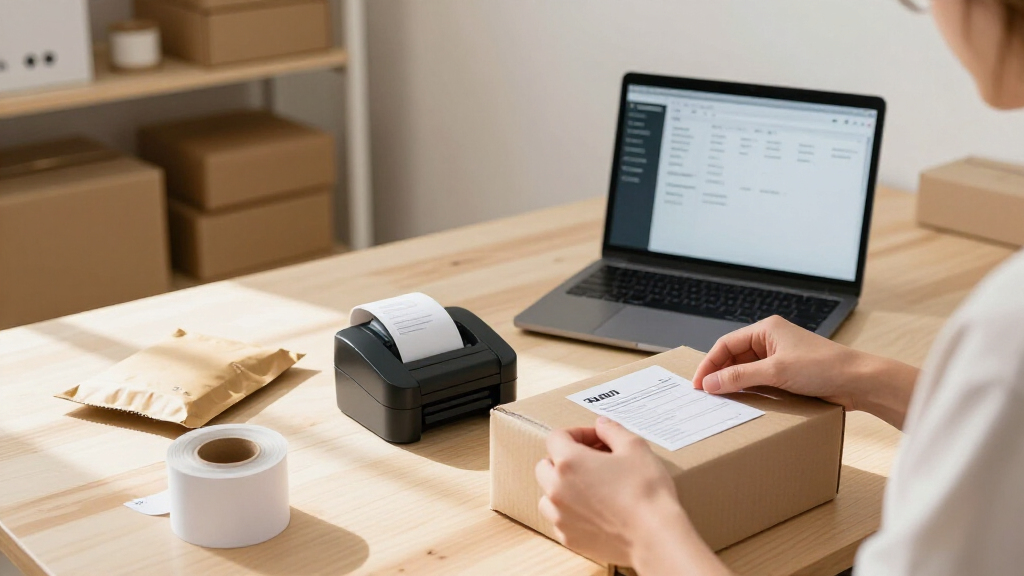

For most ecommerce sellers, I’d start with the Rollo USB Shipping Label Printer as the best overall pick for a straightforward, dedicated shipping-station setup. The Westinghouse WHTP203E stands out for sellers who want USB and Ethernet connectivity, while the Omezizy D450BT offers a built-in label bin for a tidier workspace. The main tradeoff is between simple USB reliability, wireless convenience, and features that suit a higher-volume packing area. Compatibility with your devices, shipping platform, and label format matters as much as the printer itself. Read on for a comparison of all 15 options and guidance on choosing one for your workflow.
Key Takeaways
- Connection type separates the lineup: USB models suit a fixed packing station, while Bluetooth options offer more placement flexibility but make device and app compatibility a key check.
- The Rollo USB is the strongest all-round fit: its commercial-grade positioning makes it a sensible starting point for sellers who want a dedicated 4×6 shipping printer without choosing a wireless-first workflow.
- The Westinghouse WHTP203E fills a distinct network role: USB and Ethernet give it an advantage for shared workspaces where a wired network connection is useful.
- Label handling can matter more than extra connectivity: the Omezizy D450BT’s built-in label bin addresses workspace organization, a different need from the wireless options’ placement flexibility.
- Several models are close variants rather than clearly different classes: the two KNAON listings and multiple Rongta RP425-branded options make it especially important to compare exact model details and connection methods before buying.
| MUNBYN Bluetooth Thermal Label Printer |  | Best for Flexible Label Sizes | Printer type: Thermal, monochrome | Supported label width: 1.57–4.25 inches | Connectivity: Bluetooth and USB | VIEW LATEST PRICE | See Our Full Breakdown |
| Rollo USB Shipping Label Printer – Commercial Grade 4×6 Thermal Printer |  | Best for Fast, Wired Fulfillment | Printer type: Thermal | Resolution: 203 × 203 DPI | Print speed: 150 mm/s; up to 1 label per second | VIEW LATEST PRICE | See Our Full Breakdown |
| SVANTTO Bluetooth 4×6 Wireless Thermal Shipping Label Printer |  | Best for High-Volume Mobile Printing | Printing technology: Thermal | Connectivity: Bluetooth and USB | Compatible devices and platforms: Android, iOS, Windows, and Mac | VIEW LATEST PRICE | See Our Full Breakdown |
| KNAON Bluetooth Thermal Shipping Label Printer, 4×6, White |  | Best for App-Based Custom Labels | Printer type and output: Thermal, monochrome | Connectivity: Bluetooth and USB | Compatible operating systems: Windows 7 or later, macOS, ChromeOS, and Linux | VIEW LATEST PRICE | See Our Full Breakdown |
| Westinghouse WHTP203E Thermal Shipping Label Printer, USB and Ethernet, 4 x 6 in |  | Best for Wired Network Workstations | Printer type: Direct thermal | Resolution: 203 × 203 DPI | Print speed: Up to 6 inches per second | VIEW LATEST PRICE | See Our Full Breakdown |
| JADENS Bluetooth Thermal Shipping Label Printer, 4 x 6 | 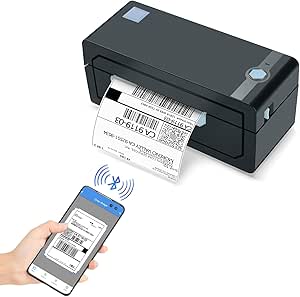 | Best for Flexible Media | Model: JD268BT | Print technology: Thermal, monochrome | Resolution: 203 × 203 DPI | VIEW LATEST PRICE | See Our Full Breakdown |
| Nelko Bluetooth Thermal Shipping Label Printer | 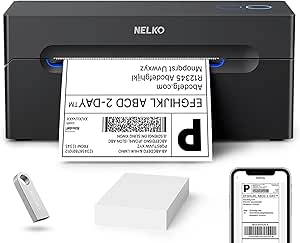 | Best for Fast Small-Batch Printing | Print technology: Thermal, monochrome | Resolution: 203 × 203 DPI | Print speed: Up to 72 4 × 6 labels per minute | VIEW LATEST PRICE | See Our Full Breakdown |
| NULLTONEX Bluetooth and USB Thermal Shipping Label Printer |  | Best Starter Bundle | Print technology: Direct thermal, monochrome | Resolution: 203 DPI | Print speed: Up to 150 mm/s; up to 72 labels per minute | VIEW LATEST PRICE | See Our Full Breakdown |
| Hoorola BY-480BT Bluetooth Thermal Shipping Label Printer |  | Best for Broad Platform Compatibility | Model: BY-480BT | Print technology: Thermal, monochrome | Resolution: 203 DPI | VIEW LATEST PRICE | See Our Full Breakdown |
| Rongta RP425 Bluetooth Thermal Shipping Label Printer |  | Best for Unusually Narrow Labels | Model: RP425 | Print technology: Thermal, monochrome | Resolution: 203 DPI | VIEW LATEST PRICE | See Our Full Breakdown |
| Arkscan 2054A Direct Thermal Shipping Label Printer |  | Best for Broad Computer Compatibility | Print technology: Direct thermal | Connectivity: USB | Compatible operating systems: Windows, Mac, ChromeOS, Android | VIEW LATEST PRICE | See Our Full Breakdown |
| Rongta RP425 Wireless Thermal Label Printer, Bluetooth 4×6 Sticker Maker (White) |  | Best for Mobile-First Sellers | Printer type: Thermal, monochrome | Connectivity: Bluetooth and USB | Compatible devices: Windows and macOS computers; Android and iOS phones and tablets | VIEW LATEST PRICE | See Our Full Breakdown |
| Rongta Bluetooth Thermal Shipping Label Printer, 4×6 |  | Best for Flexible Label Loading | Printer type: Monochrome thermal | Connectivity: Bluetooth for phones and tablets; USB for computers | Supported operating systems: Android, iOS, Mac, Windows | VIEW LATEST PRICE | See Our Full Breakdown |
| Omezizy D450BT Bluetooth Thermal Shipping Label Printer with Built-In Label Bin |  | Best for Larger Label Batches | Printer type: Thermal, monochrome | Connectivity: Bluetooth and USB | Compatible systems: Android, iOS, Windows, macOS, Linux, ChromeOS | VIEW LATEST PRICE | See Our Full Breakdown |
| KNAON Bluetooth Thermal Shipping Label Printer, 4 × 6, White |  | Best for Compact, Multi-OS Workspaces | Printer type: Thermal, monochrome | Connectivity: Bluetooth via FlashLabel Pro app; USB | Compatible operating systems: Windows 7 or later, macOS, ChromeOS, Linux | VIEW LATEST PRICE | See Our Full Breakdown |
| shipping label printers for ecommerce | Connectivity | Resolution | Print speed |
|---|---|---|---|
| MUNBYN Bluetooth Thermal Label | Bluetooth and USB | — | — |
| Rollo USB Shipping Label Print | USB 2.0 | 203 × 203 DPI | 150 mm/s; up to 1 label per second |
| SVANTTO Bluetooth 4×6 Wireless | Bluetooth and USB | — | — |
| KNAON Bluetooth Thermal Shippi | Bluetooth and USB | — | — |
| Westinghouse WHTP203E Thermal | USB and Ethernet; no Bluetooth | 203 × 203 DPI | Up to 6 inches per second |
| JADENS Bluetooth Thermal Shipp | Bluetooth, USB 2.0 | 203 × 203 DPI | — |
| Nelko Bluetooth Thermal Shippi | Bluetooth via NELKO app; USB | 203 × 203 DPI | Up to 72 4 × 6 labels per minute |
| NULLTONEX Bluetooth and USB Th | Bluetooth, USB | 203 DPI | Up to 150 mm/s; up to 72 labels per minute |
| Hoorola BY-480BT Bluetooth The | Bluetooth, USB | 203 DPI | 150 mm/s; up to 72 labels per minute |
| Rongta RP425 Bluetooth Thermal | Bluetooth | 203 DPI | Up to 150 mm/s |
| Arkscan 2054A Direct Thermal S | USB | — | 5 inches per second |
| Rongta RP425 Wireless Thermal | Bluetooth and USB | 203 × 203 dpi | Up to 15 pages per minute |
| Rongta Bluetooth Thermal Shipp | Bluetooth for phones and tablets; USB for computers | 203 dpi | Up to 150 mm/s |
| Omezizy D450BT Bluetooth Therm | Bluetooth and USB | 203 × 203 dpi | Up to 72 labels per minute |
| KNAON Bluetooth Thermal Shippi | Bluetooth via FlashLabel Pro app; USB | 203 dpi | Up to 180 mm/s |
More Details on Our Top Picks
MUNBYN Bluetooth Thermal Label Printer
The MUNBYN is a flexible pick for ecommerce sellers who print more than standard 4 × 6 shipping labels. Its 1.57–4.25-inch label range can cover shipping, inventory, and product labels, while Bluetooth and USB let you work from a phone, tablet, or computer. Automatic label calibration helps align new stock before a print run, and thermal printing avoids ink and toner purchases. Compared with the USB-only Rollo X1038, this model is easier to place around a small packing area and supports mobile printing. The tradeoff is that monochrome thermal output requires compatible thermal media, and the listed 60 dB noise level means quiet operation is relative rather than silent. I’d choose it for mixed-label workflows, not for buyers who only need a basic wired 4 × 6 setup.
Pros:- Supports label widths from 1.57 to 4.25 inches for varied ecommerce labeling tasks.
- Bluetooth and USB support printing from mobile devices and computers.
- Thermal printing needs no ink or toner.
- Automatic label calibration helps align media when loading a new roll.
Cons:- Monochrome output cannot produce color branding or graphics.
- Requires compatible thermal labels rather than ordinary paper.
- Its 60 dB noise specification may be noticeable in a quiet home workspace.
Best for: Small ecommerce sellers printing shipping labels alongside narrower inventory or product labels from both mobile devices and computers.
Not ideal for: Sellers who need color output, want to use ordinary paper, or prefer a simple wired-only printer for standard 4 × 6 labels.
- Printer type:Thermal, monochrome
- Supported label width:1.57–4.25 inches
- Connectivity:Bluetooth and USB
- Compatible devices:Laptops, PCs, smartphones, and tablets
- Supported platforms:Android, iOS, Windows, Mac, and Chromebook
- Dimensions:4.9 × 9.67 × 6.49 inches
- Noise level:60 dB
- Warranty:2 years
Our verdict“Choose the MUNBYN if your ecommerce workflow includes several label sizes and mobile printing, but skip it if you only need a wired 4 × 6 printer.”
Rollo USB Shipping Label Printer – Commercial Grade 4×6 Thermal Printer
The Rollo X1038 is the straightforward choice for sellers who prioritize fast desktop fulfillment over wireless convenience. Its 150 mm/s print speed and stated output of one label per second suit a busy packing station, while broad compatibility with shipping platforms keeps the workflow centered on label creation rather than app-based templates. It connects by USB to Windows and Mac computers and handles media up to 4.1 inches wide. Compared with the Bluetooth-enabled SVANTTO, the Rollo gives up mobile printing but avoids relying on a wireless connection or phone app. That simplicity is useful when a dedicated computer stays at the packing bench. The tradeoff is firm: there is no Bluetooth, and the listed operating-system support does not include ChromeOS or Linux. I’d favor it for a computer-based shipping station, not a mobile-first shop.
Pros:- Print speed of up to 150 mm/s supports quick batch fulfillment.
- USB setup suits a dedicated computer-based packing station.
- Supports label widths up to 4.1 inches, including standard 4 × 6 shipping labels.
- Thermal printing avoids ink and toner.
Cons:- USB is the only listed connection, with no wireless printing.
- Listed operating-system compatibility is limited to Windows and Mac.
- The one-year limited warranty is shorter than the MUNBYN’s two-year coverage.
Best for: Small businesses with a Windows or Mac computer at the packing station that print frequent 4 × 6 shipping labels over USB.
Not ideal for: Sellers who print from phones or tablets, need wireless placement, or use ChromeOS or Linux as their primary system.
- Printer type:Thermal
- Resolution:203 × 203 DPI
- Print speed:150 mm/s; up to 1 label per second
- Connectivity:USB 2.0
- Maximum media width:4.1 inches
- Standard paper size:4 × 6 inches
- Compatible operating systems:Windows XP or later; Mac 10.9 or later
- Dimensions and weight:4 × 8 × 4 inches; 2.2 pounds
Our verdict“Pick the Rollo X1038 for fast, computer-based label runs, but choose the SVANTTO or MUNBYN if mobile wireless printing matters.”
SVANTTO Bluetooth 4×6 Wireless Thermal Shipping Label Printer
The SVANTTO makes the most sense for sellers who want wireless phone printing without giving up a fast desktop option. It connects by Bluetooth to Android and iOS and by USB to Windows or Mac, so a shop can print from mobile devices or a computer depending on the task. Its listed speed of up to 180 mm/sec and output of up to 72 4 × 6 labels per minute make it the speed-focused wireless pick in this group. The MUNBYN also offers Bluetooth and USB, but the SVANTTO’s stated maximum speed is higher; the Rollo X1038, by contrast, is USB-only. The tradeoff is that the supplied information gives no dimensions, warranty, or clear drawback details, making setup and long-term support harder to compare. I’d shortlist it for mobile-led shipping, while checking workflow compatibility before committing.
Pros:- Bluetooth printing supports Android and iOS devices.
- USB connection adds computer-based printing for Windows and Mac.
- Listed speed reaches 180 mm/sec for brisk label runs.
- Supports label widths from 1.57 to 4.3 inches.
Cons:- The supplied product details do not state dimensions or weight.
- Warranty information is not provided in the supplied specifications.
- The product details do not specify resolution or a clear platform-by-platform setup workflow.
Best for: Ecommerce sellers who create labels on Android or iOS and need USB printing from a Windows or Mac computer as a backup.
Not ideal for: Buyers who need clearly documented dimensions, warranty coverage, or a printer with detailed operating and media specifications before purchase.
- Printing technology:Thermal
- Connectivity:Bluetooth and USB
- Compatible devices and platforms:Android, iOS, Windows, and Mac
- Supported label width:1.57–4.3 inches (40–110 mm)
- Maximum print speed:Up to 180 mm/sec
- Stated output rate:Up to 72 4 × 6-inch labels per minute
- Included accessories:Instruction manual, USB cable, adapter, plug, and Type-C port for Mac laptops
Our verdict“Choose the SVANTTO if fast Bluetooth label printing from a phone is central to your shipping routine and you can verify setup details for your devices.”
KNAON Bluetooth Thermal Shipping Label Printer, 4×6, White
KNAON stands out for sellers who want an app-centered route to both shipping labels and custom printed materials. Its FlashLabel Pro app provides templates, icons, and fonts, while Bluetooth and USB offer mobile and computer connections. It supports Windows, macOS, ChromeOS, and Linux, a broader listed computer-platform range than the Rollo X1038, which is limited to Windows and Mac. The printer’s 4.2-inch maximum media width fits common shipping labels, and the included test papers let buyers check alignment before loading their usual stock. The main compromise is workflow: Bluetooth printing requires the app, and shipping labels may need to be saved as PDFs and imported. The supplied dimensions also conflict. I’d pick it for template-led small-shop labeling, but not for sellers who want direct, uncomplicated shipping-platform printing.
Pros:- Bluetooth and USB provide mobile and wired printing options.
- Listed support includes Windows, macOS, ChromeOS, and Linux.
- The app offers templates, icons, and fonts for custom label layouts.
- Includes 10 test papers for checking print alignment.
Cons:- Bluetooth printing depends on the FlashLabel Pro app.
- Shipping labels may require saving as PDFs and importing them into the app.
- The supplied product dimensions differ between the description and product information.
Best for: Small-shop owners who want app-based label templates and need Bluetooth printing across phones and a range of computer operating systems.
Not ideal for: High-throughput sellers who need a direct, streamlined label workflow or buyers who require confirmed product dimensions before allocating packing-bench space.
- Printer type and output:Thermal, monochrome
- Connectivity:Bluetooth and USB
- Compatible operating systems:Windows 7 or later, macOS, ChromeOS, and Linux
- Maximum media width:4.2 inches
- Print resolution:200 × 200
- Listed dimensions:Description: 7.17 × 3.9 × 3.43 inches; product information: 5.46 × 3.03 × 2.61 inches
- Weight:2.8 pounds
- Included:10 test printing papers
Our verdict“Choose KNAON if app templates and broad computer-platform support suit your shop, but skip it if you want a direct, app-free shipping workflow.”
Westinghouse WHTP203E Thermal Shipping Label Printer, USB and Ethernet, 4 x 6 in
The Westinghouse WHTP203E is the work-oriented pick for sellers who want a fast, wired printer with Ethernet as well as USB. Its up to 6 inches per second speed and 203 DPI resolution support quick, legible shipping-label production, while compatibility with Windows, macOS, and Linux makes it less restrictive than the Windows-and-Mac-only Rollo X1038. Support for both fanfold labels and rolls gives a packing station more choice in how it feeds stock, and the included starter labels and holder help get a first setup underway. Unlike the Bluetooth SVANTTO, this model is not suited to printing directly from a phone. Ethernet cable and USB-C cable or adapter are also sold separately, so the supplied accessories may not cover every connection. I’d choose it for a fixed workstation, not a wireless or highly portable setup.
Pros:- Prints at up to 6 inches per second for fast shipping-label runs.
- USB and Ethernet provide wired connection options.
- Supports Windows, macOS, and Linux, plus ZPL software.
- Handles fanfold labels and rolls and includes starter labels and a label holder.
Cons:- Bluetooth is not supported, so direct phone printing is not available.
- Ethernet cable and USB-C cable or adapter are sold separately.
- Its 9.45 × 8.36 × 6.88-inch footprint is larger than compact options such as the MUNBYN.
Best for: Ecommerce teams running a fixed Windows, Mac, or Linux packing station that want Ethernet connectivity and fast label output.
Not ideal for: Mobile-first sellers or anyone who needs Bluetooth printing, a compact travel printer, or all connection cables included.
- Printer type:Direct thermal
- Resolution:203 × 203 DPI
- Print speed:Up to 6 inches per second
- Supported media width:0.78–4.6 inches
- Maximum printing width:4.25 inches
- Connectivity:USB and Ethernet; no Bluetooth
- Compatible operating systems:Windows, macOS, and Linux
- Dimensions:9.45 × 8.36 × 6.88 inches
- Included accessories:Starter labels, label holder, USB flash drive, USB cable, power cord, and power adapter
Our verdict“Choose the Westinghouse for a fast, fixed wired workstation with Ethernet, but look to the SVANTTO if you need Bluetooth printing.”
JADENS Bluetooth Thermal Shipping Label Printer, 4 x 6
The JADENS JD268BT earns this spot for sellers who switch between label formats: it accepts fanfold and roll media and supports widths from 1.57 to 4.1 inches. That flexibility suits ecommerce workflows that use standard 4 × 6 shipping labels alongside narrower product or barcode labels. Bluetooth and USB provide a choice between mobile printing through the Jadens app and a wired computer setup. Like the Nelko Bluetooth Thermal Shipping Label Printer, it prints at 203 DPI without ink or toner, but JADENS does not list a print-speed figure, so I would not rank it first for rapid batch fulfillment. Changing label sizes also calls for recalibration, which adds setup friction. Choose it for media flexibility, not for a set-and-forget operation across frequent label changes.
Pros:- Accepts both fanfold and roll thermal labels.
- Supports label widths from 1.57 to 4.1 inches.
- Bluetooth and USB connection options support mobile and computer workflows.
- Thermal printing avoids ink and toner purchases.
Cons:- Changing label sizes requires recalibration.
- Mobile printing depends on the Jadens Printer app.
- No print-speed figure is provided for comparing batch throughput.
Best for: Small ecommerce sellers who use both fanfold and roll labels or print shipping labels alongside narrower barcode labels.
Not ideal for: High-volume shippers who need a published fast print rate or sellers who frequently change label sizes and want to avoid recalibration.
- Model:JD268BT
- Print technology:Thermal, monochrome
- Resolution:203 × 203 DPI
- Connectivity:Bluetooth, USB 2.0
- Label width:1.57–4.1 inches
- Maximum media size:4 × 6 inches
- Compatible systems:Windows 7 and newer, Mac OS 10.9 and newer, Android, iOS
- Warranty:One-year limited warranty
Our verdict“Choose the JADENS if your ecommerce setup needs roll and fanfold media flexibility more than a documented fast batch-printing rate.”
Nelko Bluetooth Thermal Shipping Label Printer
The Nelko Bluetooth Thermal Shipping Label Printer is a strong fit for ecommerce sellers who want a stated speed for short fulfillment runs: it can print up to 72 4 × 6 labels per minute. It pairs that pace with Bluetooth through the NELKO app and USB for computers, including Chrome OS devices. Compared with the JADENS JD268BT, Nelko has a clearer throughput claim and adds Chrome OS support, though both offer 203 DPI monochrome output and support fanfold or roll labels. The main workflow limit is platform-specific: Mac printing is USB-only, and Bluetooth printing requires the NELKO app. Its compact size helps conserve packing space, but sellers who want an app-free wireless setup or a stated native Mac Bluetooth path should look elsewhere.
Pros:- Rated for up to 72 4 × 6 labels per minute.
- Works with fanfold and roll thermal labels.
- USB support includes Windows, Mac, and Chrome OS.
- Thermal printing requires no ink or toner.
Cons:- Bluetooth printing requires the NELKO app.
- Mac OS printing is limited to USB.
- Monochrome output cannot print color product or packing graphics.
Best for: Small online shops that print recurring batches of 4 × 6 labels and use USB-connected Mac or Chrome OS computers.
Not ideal for: Mac users who need Bluetooth printing, or sellers who want wireless printing without relying on a dedicated app.
- Print technology:Thermal, monochrome
- Resolution:203 × 203 DPI
- Print speed:Up to 72 4 × 6 labels per minute
- Connectivity:Bluetooth via NELKO app; USB
- Label width:1.54–4.1 inches
- Media:Fanfold and roll labels
- Compatible systems:iOS, Android, Windows 7 or later, Mac OS, Chrome OS
- Dimensions and weight:9 × 5 × 6 inches; 1.4 kg
Our verdict“Pick Nelko for compact, fast label batches over USB, but skip it if Mac Bluetooth printing is part of your workflow.”
NULLTONEX Bluetooth and USB Thermal Shipping Label Printer
The NULLTONEX Bluetooth and USB Thermal Shipping Label Printer stands out as a practical starter bundle: it includes a USB cable, power cord, and 25 4 × 6 thermal labels, so a new seller has supplies for initial setup and test prints. Its stated 150 mm/s speed and Bluetooth or USB connections place it close to the Hoorola BY-480BT on headline print pace, while NULLTONEX supports slightly wider media, up to 4.3 inches. That extra width may help when a shop uses more than standard parcel labels. Both are monochrome thermal models, so neither is suited to color inserts or graphics. The included labels are only a small starter quantity, and buyers still need to check that mobile printing works with their chosen device and workflow.
Pros:- Includes a USB cable, power cord, and 25 thermal labels.
- Offers Bluetooth and USB connectivity.
- Supports label widths up to 4.3 inches.
- Rated to print up to 72 labels per minute.
Cons:- Monochrome-only output is unsuitable for color branding or inserts.
- The included 25 labels provide only a limited initial supply.
- Print resolution is 203 DPI, rather than a higher-resolution option.
Best for: New ecommerce sellers who want a printer, connection cables, and a small supply of 4 × 6 labels in one package.
Not ideal for: Shops that need color printing, a substantial included label supply, or a highly specified mobile-app workflow before purchase.
- Print technology:Direct thermal, monochrome
- Resolution:203 DPI
- Print speed:Up to 150 mm/s; up to 72 labels per minute
- Connectivity:Bluetooth, USB
- Label width:1.57–4.3 inches
- Supported label size:4 × 6 inches and other sizes
- Dimensions and weight:8.08 × 4.73 × 6.9 inches; 3 pounds
- Included accessories:Power cord, USB cable, 25 sheets of 4 × 6 thermal labels
Our verdict“Choose NULLTONEX as a convenient starter kit if the included setup accessories matter more than color output or a large label supply.”
Hoorola BY-480BT Bluetooth Thermal Shipping Label Printer
For an ecommerce seller juggling devices and storefronts, the Hoorola BY-480BT has one of the broadest stated compatibility lists here: iOS, Android, Windows, macOS, Linux, and Chrome OS. It also supports Bluetooth and USB, with USB positioned for batch printing, and handles label widths from 1.54 to 4.1 inches. Its 150 mm/s rated speed matches the NULLTONEX, but the Hoorola’s strongest distinction is its listed operating-system range and two-year limited warranty, not a faster print engine. The tradeoff is ordinary for direct thermal shipping printers: output is monochrome, and direct thermal labels can fade over time. Sellers who archive labels or need color branding should choose a different print method; for routine parcel dispatch across mixed devices, Hoorola is the more adaptable pick.
Pros:- Lists support for iOS, Android, Windows, macOS, Linux, and Chrome OS.
- Bluetooth and USB offer wireless and wired workflows.
- Rated speed is up to 150 mm/s, or 72 labels per minute.
- Includes a two-year limited warranty.
Cons:- Monochrome printing cannot produce color branding.
- Direct thermal labels may fade over time.
- Supported media width is limited to 4.1 inches.
Best for: Ecommerce teams printing from a mix of phones, desktop systems, or Chrome OS and Linux devices.
Not ideal for: Sellers who need color labels or long-term label durability for records that may face heat or extended storage.
- Model:BY-480BT
- Print technology:Thermal, monochrome
- Resolution:203 DPI
- Print speed:150 mm/s; up to 72 labels per minute
- Connectivity:Bluetooth, USB
- Supported label width:1.54–4.1 inches
- Compatible systems:iOS, Android, Windows, macOS, Linux, Chrome OS
- Warranty:Two-year limited warranty
Our verdict“Choose the Hoorola if your shipping workflow spans several operating systems and the longer listed warranty matters more than color or archival durability.”
Rongta RP425 Bluetooth Thermal Shipping Label Printer
The Rongta RP425 is the most flexible choice in this group for shops that print more than standard parcel labels: its supported width begins at 0.98 inches, narrower than the JADENS, Nelko, NULLTONEX, or Hoorola ranges. That makes it a better fit for small barcode or product labels alongside shipping labels, while its 150 mm/s speed supports regular dispatch batches. Unlike those four models, the RP425 is listed with Bluetooth connectivity rather than USB, so computer-based workflows should confirm connection requirements before choosing it. Mobile printing uses the Rongta app, and label auto-identification and feeding can reduce manual adjustment. Its broad media range is useful, but the larger listed footprint and app dependency make it less compelling for sellers who only print 4 × 6 labels from a wired workstation.
Pros:- Supports label widths down to 0.98 inches.
- Rated print speed reaches 150 mm/s.
- Automatically identifies and feeds labels.
- Compatible with Windows, macOS, Chrome OS, Android, and iOS.
Cons:- Mobile printing requires the Rongta app.
- Bluetooth is the only listed connection, with no USB option specified.
- Its 10.2 × 7.4 × 5.3-inch footprint is larger than the compact Hoorola.
Best for: Small ecommerce businesses that print both 4 × 6 shipping labels and narrow barcode or product labels from mobile devices.
Not ideal for: Sellers who need a USB connection, want to print only standard 4 × 6 labels, or prefer not to use a mobile printing app.
- Model:RP425
- Print technology:Thermal, monochrome
- Resolution:203 DPI
- Print speed:Up to 150 mm/s
- Connectivity:Bluetooth
- Supported label width:0.98–4.37 inches
- Compatible systems:Windows 7 or newer, macOS 10.11 or newer, Chrome OS, Android, iOS
- Dimensions and weight:10.2 × 7.4 × 5.3 inches; 0.65 kg
- Warranty:One year
Our verdict“Choose the RP425 if your ecommerce operation needs one printer for standard parcels and unusually narrow labels, and Bluetooth fits your setup.”
Arkscan 2054A Direct Thermal Shipping Label Printer
The Arkscan 2054A suits ecommerce sellers who want a straightforward USB printer that works across Windows, Mac, ChromeOS, and Android. Its support for both roll and fanfold labels gives more choice in how you feed stock, while a 4.25-inch print width covers standard shipping labels and smaller formats. Compared with the Rongta Bluetooth Thermal Shipping Label Printer, 4×6, the Arkscan supports ChromeOS and prints labels as wide as 4.25 inches, but it gives up wireless phone and tablet printing.
At 5 inches per second, it is better suited to steady small-business batches than a high-throughput packing line. BarTender UltraLite is included for Windows, though that software benefit does not extend to other systems. Choose it for wide OS support and flexible media; skip it if Bluetooth or faster batch output matters more.
Pros:- Supports Windows, Mac, ChromeOS, and Android through USB
- Accepts both roll and fanfold labels
- Direct thermal printing avoids ink and toner refills
- Includes BarTender UltraLite software for Windows users
Cons:- USB-only connection does not support wireless mobile printing
- 5-inch-per-second speed may slow larger shipping batches
- Included label design software is limited to Windows
Best for: Small ecommerce sellers who print from a mix of Windows, Mac, ChromeOS, or Android devices and want roll-or-fanfold media flexibility.
Not ideal for: High-volume pack stations or sellers who need wireless printing, since this model is USB-only and prints at 5 inches per second.
- Print technology:Direct thermal
- Connectivity:USB
- Compatible operating systems:Windows, Mac, ChromeOS, Android
- Print speed:5 inches per second
- Maximum print width:4.25 inches
- Maximum print length:90 inches
- Supported media:Roll and fanfold labels
- Dimensions:9.25 × 8.25 × 6.25 inches
- Included software:BarTender UltraLite for Windows
Our verdict“Choose the Arkscan 2054A if broad computer compatibility and flexible label loading matter more than wireless convenience or rapid batch printing.”
Rongta RP425 Wireless Thermal Label Printer, Bluetooth 4×6 Sticker Maker (White)
The Rongta RP425 is the better fit for sellers who create orders and shipping labels on a phone or tablet and want to print without a cable. Bluetooth works through the Rongta mobile app, while USB connectivity gives laptop and desktop users a wired option. Its 203 dpi monochrome output is suited to standard shipping labels, and thermal printing means no ink or toner to replace. Compared with the Arkscan 2054A, the RP425 adds wireless convenience but is limited to 4 × 6-inch media rather than supporting a wider range of label widths and lengths.
The listed speed of 15 pages per minute can serve a small order flow, but it is not a substitute for evaluating a busy packing station’s batch needs. The mobile workflow also depends on the companion app, and output is monochrome. Pick this model for phone-based fulfillment; look elsewhere if you need broader label formats or a less app-dependent setup.
Pros:- Bluetooth printing supports a mobile-first shipping workflow
- USB connection is available for PCs and laptops
- Thermal printing requires no ink cartridges or toner
- Compact, lightweight design suits small workspaces
Cons:- Supports only 4 × 6-inch media
- Bluetooth printing depends on the Rongta mobile app
- Monochrome output cannot produce color labels
Best for: Solo sellers and small online shops that prepare orders on Android or iOS devices and want Bluetooth printing for standard 4 × 6 shipping labels.
Not ideal for: Sellers using varied label sizes or seeking a highly flexible desktop workflow, since the printer is limited to 4 × 6-inch media and mobile printing relies on its app.
- Printer type:Thermal, monochrome
- Connectivity:Bluetooth and USB
- Compatible devices:Windows and macOS computers; Android and iOS phones and tablets
- Resolution:203 × 203 dpi
- Print speed:Up to 15 pages per minute
- Maximum media size:4 × 6 inches
- Weight:16 ounces
- Warranty:1-year limited
Our verdict“Choose the RP425 if you print standard shipping labels from a phone or tablet, but prefer a wider-media model such as the Arkscan 2054A for varied label formats.”
Rongta Bluetooth Thermal Shipping Label Printer, 4×6
This Rongta Bluetooth Thermal Shipping Label Printer gives small ecommerce operations a useful middle ground: phone and tablet printing over Bluetooth, plus USB printing from a computer. Its support for roll and fanfold labels from 1.54 to 4.1 inches wide makes it more adaptable than the 4 × 6-only Rongta RP425 when orders call for smaller formats. Thermal output avoids ink and toner, and the listed speed of up to 150 mm/s is aimed at routine parcel preparation rather than a large-scale line.
The tradeoff is a narrower operating-system range: it does not support Linux or ChromeOS, unlike the Arkscan 2054A. Computer connections are USB-only, so Bluetooth is reserved for phones and tablets. Its companion app also requires logistics labels to be saved as PDFs. This is a practical pick for mixed-device sellers on supported systems who value media flexibility over a direct laptop wireless connection.
Pros:- Bluetooth printing is available from phones and tablets
- USB connection supports laptop and desktop printing
- Accepts roll and fanfold thermal labels
- Thermal printing avoids ink and toner supplies
Cons:- Does not support Linux or ChromeOS
- Computers connect by USB rather than Bluetooth
- Companion app workflow requires logistics labels to be saved as PDFs
Best for: Small sellers who print from Android or iOS devices as well as Windows or Mac computers and want roll-or-fanfold support for different label widths.
Not ideal for: Linux and ChromeOS users, or laptop users who specifically need Bluetooth printing rather than a USB computer connection.
- Printer type:Monochrome thermal
- Connectivity:Bluetooth for phones and tablets; USB for computers
- Supported operating systems:Android, iOS, Mac, Windows
- Unsupported operating systems:Linux, ChromeOS
- Resolution:203 dpi
- Print speed:Up to 150 mm/s
- Label width:1.54–4.1 inches
- Supported media:Roll and fanfold thermal labels
- Dimensions:7.4 × 10.24 × 5.3 inches
Our verdict“Choose this Rongta model for flexible label loading and mobile printing on supported systems, but choose the Arkscan 2054A if ChromeOS support is a requirement.”
Omezizy D450BT Bluetooth Thermal Shipping Label Printer with Built-In Label Bin
The Omezizy D450BT is aimed at ecommerce sellers who want labels ready to feed without keeping a separate stack beside the printer. Its built-in bin holds up to 250 labels, and automatic alignment is intended to keep roll or folded stock positioned as jobs move through. With Bluetooth and USB connectivity plus support for Windows, macOS, Android, iOS, Linux, and ChromeOS, it has broader listed system coverage than the Rongta Bluetooth Thermal Shipping Label Printer, 4×6.
The stated speed of up to 72 labels per minute makes it the batch-oriented pick in this group, though actual output depends on the job and setup. It prints monochrome thermal labels only, and the built-in capacity adds little value to sellers printing occasional parcels. Its 1–4.6-inch width range is useful for varied formats, but label stock remains a required consumable.
Pros:- Built-in bin holds up to 250 labels
- Automatic alignment supports more consistent label feeding
- Bluetooth and USB connections cover mobile and computer workflows
- Supports Windows, macOS, Android, iOS, Linux, and ChromeOS
Cons:- Monochrome output does not support color labels
- Requires thermal label stock
- High-capacity bin may be unnecessary for very low-volume sellers
Best for: Growing ecommerce shops that print batches of orders, use roll or folded labels, and want a built-in supply bin with broad device compatibility.
Not ideal for: Occasional shippers with very limited workspace or those who want color output; the bin’s capacity and thermal-only monochrome printing may be unnecessary.
- Printer type:Thermal, monochrome
- Connectivity:Bluetooth and USB
- Compatible systems:Android, iOS, Windows, macOS, Linux, ChromeOS
- Resolution:203 × 203 dpi
- Print speed:Up to 72 labels per minute
- Label width:1–4.6 inches
- Label capacity:Up to 250 labels
- Paper handling:Built-in label bin; roll and folded labels
- Dimensions:7.3 × 6.3 × 5.35 inches
Our verdict“Choose the Omezizy D450BT for batch shipping and built-in label storage; the Rongta RP425 is a simpler fit when you only need standard 4 × 6 labels for a smaller workflow.”
KNAON Bluetooth Thermal Shipping Label Printer, 4 × 6, White
The KNAON Bluetooth Thermal Shipping Label Printer is a compact choice for sellers who need both mobile printing and computer support across several operating systems. Bluetooth works through the FlashLabel Pro app, while USB connects computers; listed support includes Windows, macOS, ChromeOS, and Linux. Its 4.41-inch maximum media width is slightly broader than the 4.1-inch limit on the Rongta Bluetooth Thermal Shipping Label Printer, 4×6, and output reaches up to 180 mm/s.
The small footprint suits a crowded packing desk, but the app requirement adds a step to wireless printing. ChromeOS users also need a separate FlashLabel extension, so its broad OS list does not mean every setup is equally direct. Monochrome thermal printing keeps ink out of the supply list, though it cannot create color-coded labels. The included 20 test papers help with initial setup, not ongoing stock needs.
Pros:- Bluetooth and USB connectivity support mobile and computer workflows
- Listed operating-system support includes Windows, macOS, ChromeOS, and Linux
- Compact dimensions suit crowded packing areas
- Includes 20 test papers for initial setup
Cons:- Bluetooth printing requires the FlashLabel Pro app
- ChromeOS use requires a separate FlashLabel extension
- Monochrome output does not support color labels
Best for: Home-based and small ecommerce sellers who need a compact printer, Bluetooth phone printing, and computer support that includes ChromeOS or Linux.
Not ideal for: Buyers who want wireless printing without a companion app, or ChromeOS users who prefer not to install a separate extension.
- Printer type:Thermal, monochrome
- Connectivity:Bluetooth via FlashLabel Pro app; USB
- Compatible operating systems:Windows 7 or later, macOS, ChromeOS, Linux
- Maximum media width:4.41 inches
- Print speed:Up to 180 mm/s
- Resolution:203 dpi
- Dimensions:7.3 × 2.56 × 3.15 inches
- Included items:20 test printing papers
Our verdict“Choose the KNAON for a compact, multi-OS setup with app-based Bluetooth printing, but favor the Arkscan 2054A if you want a USB-first workflow without a mobile printing app.”
How We Picked
I ranked these shipping label printers for ecommerce by how well their stated features match everyday order fulfillment: printing common 4×6 labels, fitting into a practical packing setup, and connecting to the devices sellers already use. I gave weight to connection options, label handling, stated build or commercial positioning, and whether a feature solves a real workflow problem rather than simply adding complexity.
The order reflects role and use case, not a claim that every model has been independently tested. A dedicated USB printer ranks well for a stable packing station; wireless models make more sense when flexible placement or device mobility matters; and Ethernet or a built-in label bin earns attention for specific workspace needs. Where listings appear similar, including the KNAON and Rongta variants, I treat the exact model and compatibility details as something buyers should verify rather than assume.
Factors to Consider When Choosing Shipping Label Printers For Ecommerce
Choosing a label printer is a workflow decision, not just a hardware comparison. Before I choose a model, I match it to the device that creates labels, the pace of order packing, and the space around the shipping station.
Match the Connection to Your Packing Station
A printer that connects easily to your existing setup can save more time than one with extra features you will rarely use. USB is a natural fit for a fixed workstation, while Bluetooth can suit a compact or mobile workflow if the printer supports your specific computer, phone, or tablet. Ethernet can help when a printer needs a wired network connection or a shared location, but it adds setup steps compared with a direct cable. A common mistake is treating “wireless” as universal compatibility; connection support can vary by operating system and label-printing app. Check the seller’s supported-device information and your shipping platform’s print workflow before choosing. If more than one person will print labels, decide whether they need direct access, network access, or simply a shared computer.
Check Label Size, Format, and Print Workflow
Most shipping workflows center on 4×6-inch labels, but the printer is only one part of the process. Confirm that your carrier or marketplace can generate a label format the printer software can send correctly, and check whether the printer expects rolls, fanfold labels, or both. A mismatch can lead to scaled, clipped, or misaligned labels even when the printer itself is functioning. Avoid assuming that a “thermal label printer” automatically accepts every label layout or paper source. If you also need address, barcode, or product labels in other sizes, check how easily the device handles those formats before committing. For a single-purpose shipping station, sticking to a standard 4×6 workflow keeps setup simpler.
Size Capacity to Your Order Volume
The right printer depends on how often you print, not only on your busiest sales day. A small seller sending a few parcels at a time may prefer a simple setup, while a busier operation benefits from fewer interruptions to reload labels and a workspace arranged for repeated packing. Label capacity and loading access affect how often a packing session stops, so check the supported label supply and how it fits your available space. Do not buy on a vague promise of “commercial” use without checking the specifications that affect your actual workload. Likewise, a feature-rich model may add little if order volume is low. Think about typical daily batches and peak periods separately before deciding what capacity is worth prioritizing.
Plan for Software, Drivers, and Compatibility
Setup friction often comes from software rather than printing hardware. Confirm that the printer has drivers or an app for your operating system and that your label source can send jobs to it without a complicated workaround. Phone-first sellers should pay particular attention to supported mobile platforms, since Bluetooth alone does not guarantee a smooth print path. For desktop users, verify whether the printer supports the browser, shipping software, and computer they rely on. A common mistake is checking compatibility with the device but not with the full label workflow, including downloading, opening, and printing a carrier label. If your store adds staff or changes platforms, look for a setup that remains practical beyond one person’s current device.
Account for Label Storage and Workspace Layout
Printers take up more than their own footprint: label rolls or stacks, cables, and a clear path for printed labels also need room. A built-in label bin, as found on the Omezizy D450BT, may help contain supplies and keep a small station orderly, but it is not a substitute for checking the printer’s dimensions and loading method. Workspace fit matters especially when labels feed from behind or sit beside the printer. Measure the space with labels loaded, not just the device body. If several people pack orders, consider where supplies can be reached and whether the printer’s position creates cable or traffic clutter. A simpler model may be the better choice when space is tight and its supply arrangement fits your routine.
Compare Total Ownership, Not Just the Printer
Before buying, check the ongoing cost and availability of compatible labels, along with the ease of replacing supplies. Thermal printing avoids ink or toner purchases, but label stock remains a recurring expense and low-quality or incompatible stock can disrupt scanning and adhesion. Supply availability is especially important if the printer uses a less common label format or loading arrangement. Check warranty coverage, driver updates, and customer support channels as well, since these can matter when a shipping station is down. Avoid paying for connectivity or capacity you will not use, but do not choose a model whose supply needs are hard to meet. A practical purchase balances printer fit with dependable access to labels and setup support.
Frequently Asked Questions
Should I choose Bluetooth or USB for an ecommerce shipping label printer?
I’d choose USB when the printer will stay beside one computer and a direct connection fits the packing routine. Bluetooth is more useful when placement flexibility or printing from a compatible mobile device matters, but the exact device and software support must be confirmed first. Wireless pairing does not guarantee that every shipping platform can print directly. For a shared station, also think about who controls the print queue and how other users will send jobs. Choose based on the full path from creating a label to sending it, not on connection type alone.
Will a 4×6 thermal printer work with labels from my marketplace or carrier?
A 4×6 format is common for parcel shipping, but the printer still needs to work with the label file and print workflow your marketplace or carrier provides. Check the printer’s supported operating systems and software, then confirm that your label source can print at the intended size without scaling. A label that is shrunk, clipped, or poorly aligned can create problems at carrier handoff. Some workflows require a desktop browser or a specific app, even when the printer supports Bluetooth. Verify the complete process before ordering rather than relying on the 4×6 label size alone.
Can one shipping label printer serve multiple people or computers?
It can, but the answer depends on how the printer connects and how your team sends print jobs. A USB model is usually simplest when users share one workstation; an Ethernet option such as the Westinghouse WHTP203E may suit a wired network setup. Bluetooth models can be convenient for an individual device but should not be assumed to work like a network printer. Check whether the printer and its software support your intended number of devices and operating systems. For a team, test the shared workflow on the devices staff will actually use before replacing an existing station.
Is a built-in label bin worth prioritizing?
A built-in bin is useful when it keeps labels organized and reduces clutter around a compact packing station. It may be less valuable if your labels are stored in a separate dispenser or if the printer’s position already leaves room for the supply. The Omezizy D450BT stands out in this roundup for that feature, while other picks emphasize connection choices or a straightforward dedicated setup. Check what label sizes and supply arrangements the bin accommodates, and measure the space needed around the printer. Organization helps, but it should not outweigh compatibility or a suitable print workflow.
What should I verify before buying one of the similar KNAON or Rongta listings?
Compare the exact model number, connection method, included accessories, supported devices, and label-loading details rather than relying on a shared brand name. This roundup includes two KNAON listings and several Rongta options with overlapping names, so the listing title alone may not distinguish the configurations clearly. Confirm that the version you select matches your intended computer or mobile device and your label source. Check whether a label holder or other needed accessory is included or sold separately. If key specifications are unclear, ask the seller before purchasing instead of assuming one listing has the same setup as another.
Conclusion
For a dependable fixed packing station, I’d choose the Rollo USB as the best overall fit in this lineup. The Westinghouse WHTP203E is my pick for sellers who need USB and Ethernet options, while the Omezizy D450BT suits buyers who value an integrated label-storage setup. For a beginner, I’d favor the simplest model that supports the devices and label workflow already in use; a straightforward USB connection can reduce setup variables. For value, compare the exact model’s included setup and ongoing label compatibility rather than choosing by a similar-looking listing name. Before buying any Bluetooth-first option, verify support for your specific device and shipping software; that check is the best way to avoid a printer that fits the desk but not the workflow.