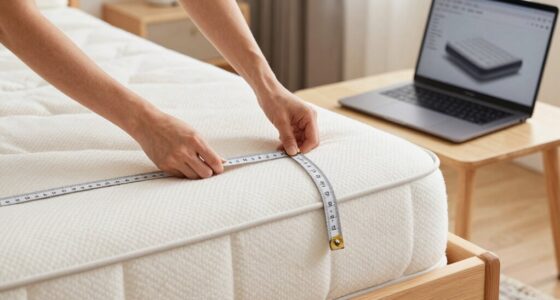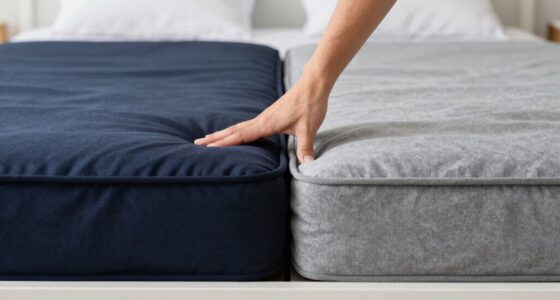

Your mattress typically lasts 7 to 10 years, but some parts may wear out sooner without proper care. Comfort layers and edges often sag first, causing discomfort and support issues. Regularly rotate and inspect your mattress, use protective covers, and maintain a sturdy support base to extend its lifespan. Choosing quality materials and taking care of your mattress can make it last longer. Keep exploring for more tips to maximize your mattress’s durability.
Key Takeaways
- Comfort layers, like foam or pillow tops, are most prone to sagging and wear over time.
- Edges and support system components weaken first, reducing overall mattress stability.
- Regular rotation, proper support, and protective covers extend mattress lifespan.
- Signs of failure include sagging, indentations, discomfort, increased tossing, and persistent odors.
- Upgrading or repairing early issues maintains sleep quality and prolongs mattress durability.

Queen Size Mattress Protector Waterproof, Premium 200 GSM Terry Mattress Cover, Soft & Breathable Bed Cover, Fitted Sheet Style Stretchable Deep Pockets 17" by Utopia Bedding (White)
Mattress Protector – Fits Queen size mattress perfectly with dimensions 60 inches by 80 inches by 17 inches,…
As an affiliate, we earn on qualifying purchases.
As an affiliate, we earn on qualifying purchases.
How Long Does a Mattress Usually Last?
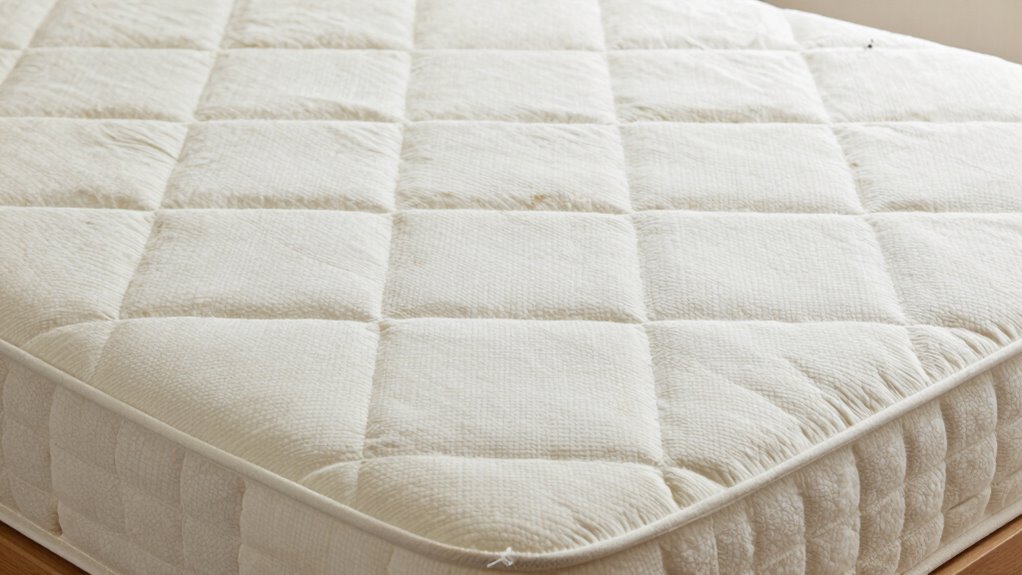
A typical mattress lasts about 7 to 10 years, though its lifespan can vary based on factors like usage, quality, and maintenance. Your sleep hygiene plays a role—poor habits can accelerate wear and tear. The materials used in your mattress also influence longevity; for example, memory foam and latex tend to last longer than traditional springs. Regularly rotating or flipping your mattress helps distribute wear evenly, extending its life. High-quality mattress materials often resist sagging and indentations better, making them a worthwhile investment. Additionally, understanding mattress materials can help you choose a durable option from the start. Proper maintenance and ventilation considerations can significantly impact your mattress’s lifespan by preventing moisture buildup and mold growth. Ensuring good airflow around your mattress can prevent mold growth and prolong its durability. Proper mattress care and good sleep hygiene can also minimize unnecessary stress on the mattress, helping it last longer. Incorporating proper cleaning techniques can further preserve your mattress and maintain its comfort and support over time. Keep in mind that how you care for your mattress directly impacts its durability. Proper maintenance, combined with good sleep hygiene, guarantees you get the most out of your mattress and enjoy restful, supportive sleep for years to come.

EGO Topper 3 Inch Queen Memory Foam Mattress Topper, Gel Foam Mattress Topper for Pressure Relief, Ventilated Design Bed Topper in a Box, CertiPUR-US Certified, 60"×80", Medium
Built for Comfort: 3 inch of AeroFusion Memory Foam is crafted to fit body's micro pressure points and…
As an affiliate, we earn on qualifying purchases.
As an affiliate, we earn on qualifying purchases.
What Are the Signs That Your Mattress Is Wearing Out?

Over time, your mattress can show clear signs that it’s wearing out, even if you can’t see any obvious damage. You might notice you’re waking up feeling less refreshed or experiencing more aches and pains, which can hurt your sleep hygiene. Sagging or indentations in the mattress surface are common indicators that the internal mattress technology is breaking down. If you find yourself tossing and turning more or waking up frequently, it’s a sign that support and comfort are compromised. Also, if your mattress develops persistent odors or feels uneven, it’s time to contemplate replacing it. Recognizing these signs early helps you maintain better sleep hygiene and ensures your mattress continues to support restful sleep. Monitoring mattress lifespan can help you plan for timely replacements and maintain optimal sleep quality. Additionally, understanding the components of a mattress can aid in identifying specific issues that signal it’s time for a new one. For example, wear and tear on the mattress components can accelerate deterioration, making early detection crucial. Being aware of signs of deterioration can further help in making informed decisions about when to replace your mattress.

Upcanso 16 Inch Queen Bed Frame No Box Spring Required, Metal Platform Queen Size Bed Frames with 14 Inch Storage, 3,500 lbs Heavy Duty Steel Slats Support, Easy Assembly Mattress Foundation
No Box Spring Needed: Reliable steel slats are matched to your memory foam, latex or spring mattress, and…
As an affiliate, we earn on qualifying purchases.
As an affiliate, we earn on qualifying purchases.
Which Parts of a Mattress Are Most Likely to Wear Out First?
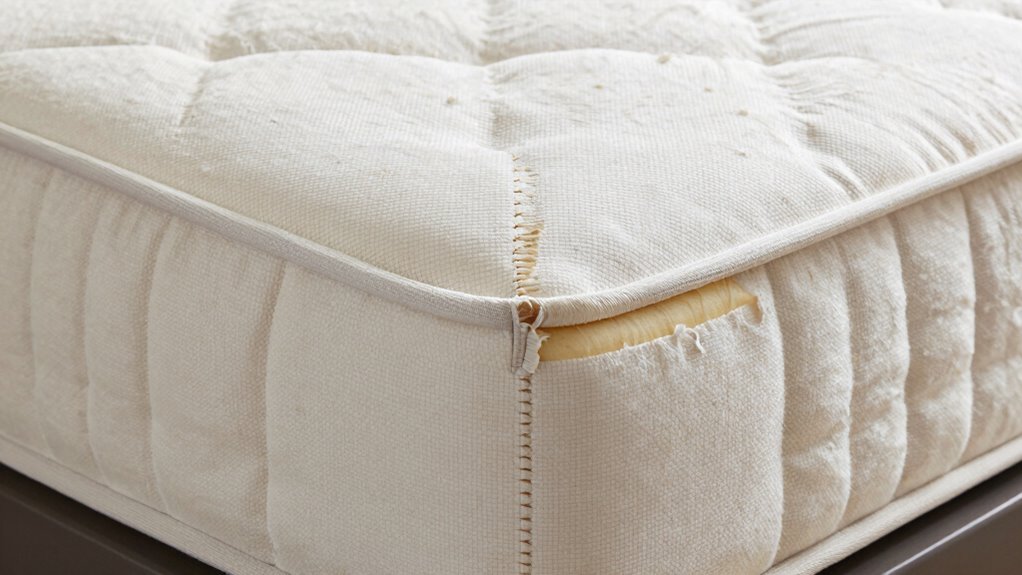
Since certain parts of your mattress endure more stress and use than others, they tend to wear out first. The comfort layers, especially foam or pillow tops, often sag or develop indentations over time, reducing support. The mattress cover types, especially those with thin or low-quality fabrics, can tear or stain easily. The edges of your mattress also weaken first, especially if your bed frame stability isn’t solid, leading to sagging or collapse. The foundation or box spring underneath can also deteriorate, affecting overall comfort. Keep an eye on these vulnerable areas to prolong your mattress’s lifespan. Regularly inspect your mattress cover, ensure your bed frame is sturdy, and rotate your mattress to help distribute wear evenly. Additionally, choosing energy-efficient materials can help enhance durability and extend the life of your mattress components. Using appropriate cleaning techniques can also prevent premature wear and keep your mattress in good condition for longer. Moreover, selecting quality construction methods can significantly improve the durability of your mattress over time. Incorporating durable materials during purchase can further help resist wear and tear, ensuring your mattress lasts longer. Paying attention to proper support systems can also reduce uneven pressure and extend your mattress’s overall lifespan.

Twin Bed Wedge Pillow Headboard & Mattress Gap Filler, Long Triangle Edge Corner Pillows 10x6x76in, Dense Foam, White, with Pockets – Prevents Pillow/Toy Drops, Bed Accessories Home Collection
Perfect for bed gap filler: Solve your trouble when you found pillows and items in annoying gap in…
As an affiliate, we earn on qualifying purchases.
As an affiliate, we earn on qualifying purchases.
What Factors Affect How Long Your Mattress Will Last?
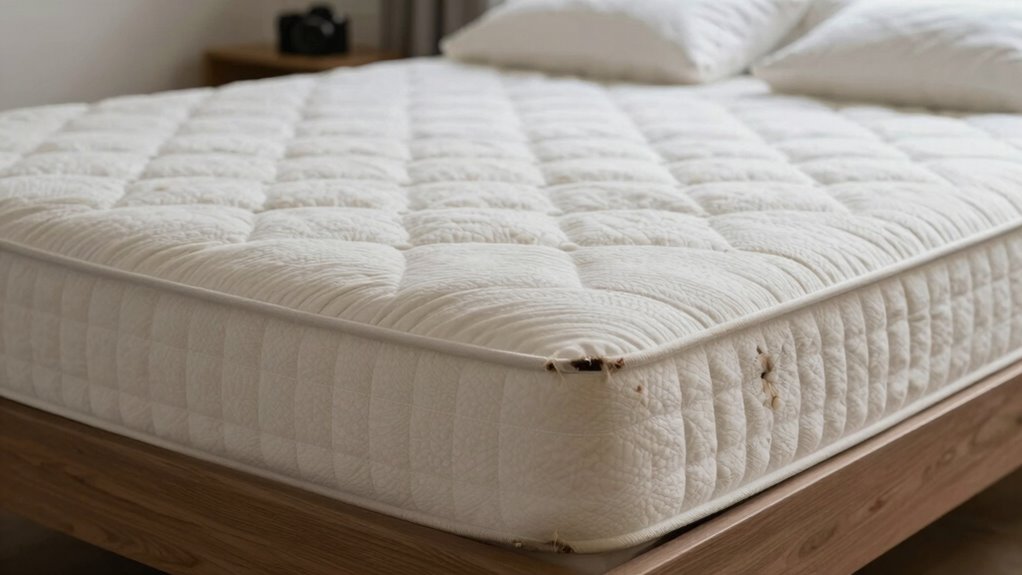
Several key factors directly influence how long your mattress lasts, including its quality, usage habits, and maintenance. The bed frame you choose plays a role; a sturdy, supportive frame prevents sagging and uneven wear. Choosing the right bed frame is essential for supporting your mattress properly and avoiding premature deterioration. Mattress material also affects longevity—latex and memory foam tend to last longer than innerspring options. How often you use your mattress impacts wear; daily use accelerates deterioration, especially if you’re not rotating it regularly. Proper maintenance, like keeping it clean and well-ventilated, helps preserve its lifespan. Additionally, exposure to moisture, temperature fluctuations, and heavy loads can weaken materials over time. To further extend your mattress’s lifespan, consider proper ventilation to reduce moisture buildup and prevent mold growth. Selecting a supportive bed frame with appropriate weight capacity and stability is crucial for extending your mattress’s lifespan. Understanding material durability can help you choose a mattress that will last longer. Choosing a high-quality mattress, using a suitable bed frame, and adopting good habits can considerably extend your mattress’s lifespan.
How Can You Care for Your Mattress to Make It Last Longer?
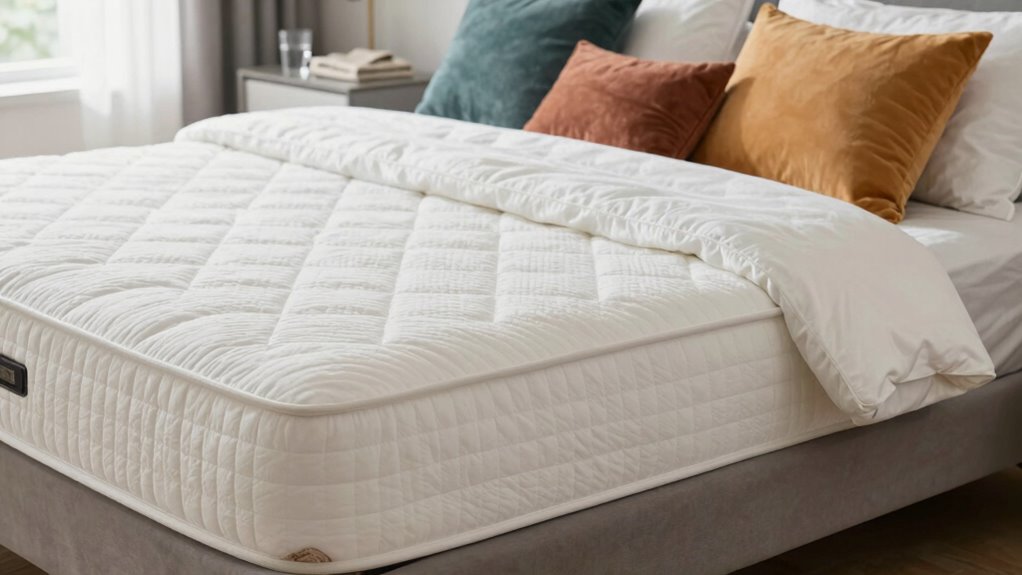
To extend your mattress’s life, you should rotate it regularly to prevent uneven wear. Using a protective cover keeps it clean and shields it from spills and allergens. Additionally, maintaining a proper support base ensures your mattress stays in good shape and provides ideal comfort. Regularly checking the air quality in your sleeping environment can also help prevent mold and dust buildup that may damage your mattress over time. Ensuring proper home energy practices, such as controlling humidity and air circulation, can further preserve your mattress’s condition. Understanding filtration and how it impacts indoor air can help reduce contaminants that accelerate wear and tear. Proper ventilation and air filtration systems contribute to healthier indoor conditions that protect your mattress investment. Monitoring indoor pollutants can also help you maintain an optimal environment for your mattress’s longevity.
Regular Mattress Rotation Schedule
Regularly rotating your mattress is a simple yet effective way to extend its lifespan. It helps prevent uneven wear, especially if your bed frame compatibility limits movement. You should also consider home organization to keep your sleeping area tidy, which can contribute to better mattress maintenance. Follow a schedule to keep your mattress in top shape and maintain excellent mattress firmness ratings. Here are four key tips:
- Switch sides and ends every 3-6 months to distribute pressure evenly.
- Check your bed frame compatibility before rotating to avoid damage.
- Rotate more frequently if you sleep in one position or share your bed.
- Keep an eye on firmness ratings; a balanced mattress lasts longer and feels better.
Consistent rotation reduces sagging and prolongs comfort, saving you money and enhancing sleep quality.
Use Protective Mattress Covers
Using protective mattress covers is a straightforward way to preserve your mattress’s condition over time. They shield against spills, stains, and dust mites, helping with allergen control and bed bug prevention. A quality cover creates a barrier that keeps irritants out and maintains hygiene, extending your mattress’s lifespan. Choose covers that are waterproof and tightly woven for maximum protection. Regularly washing the cover also helps prevent mold and dirt buildup. Incorporating mattress protection can further enhance durability and overall bed hygiene. Proper cable management and avoiding unnecessary wear and tear can also contribute to extending your mattress’s longevity.
Maintain Proper Support Base
Ever wonder how your mattress’s support system affects its longevity? A proper support base is essential to prevent sagging and uneven wear. Start by ensuring bed frame compatibility—an incompatible frame can cause unnecessary stress. Next, check that your mattress height considerations align with your bed frame, making it easier to get in and out without damaging the edges. Additionally, regularly inspect your support system for loose slats or broken parts, and replace them promptly. Finally, avoid placing your mattress directly on the floor unless it’s designed for that purpose, as it can trap moisture and cause deterioration. By maintaining a sturdy, compatible support base, you extend your mattress’s life and enjoy better sleep quality.
When Is It Time to Replace Your Mattress?
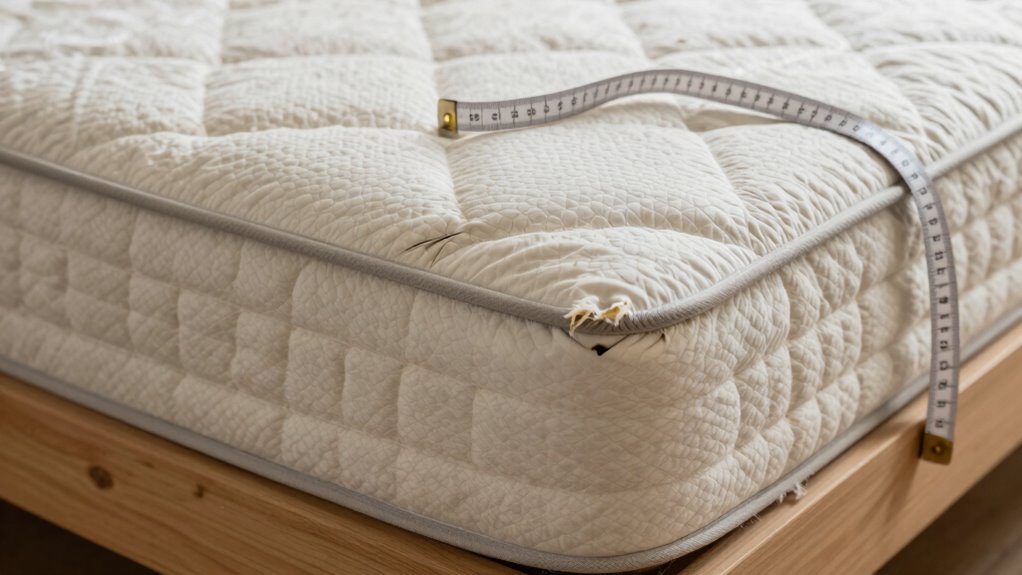
Knowing when to replace your mattress is essential for a good night’s sleep. Look out for signs like persistent sagging, discomfort, or new aches. Typically, most mattresses need replacing every 7 to 10 years based on age and condition.
Signs of Worn-Out Mattress
When your mattress starts to show signs of wear, it’s a clear indication that it may be time for a replacement. You might notice these warning signs:
- You wake up feeling sore or aching, despite choosing the right mattress firmness options.
- Your bed feels uneven or sagging, making it hard to find proper bed frame compatibility.
- Tossing and turning becomes frequent, disrupting your sleep.
- Visible indentations or worn-out areas appear after years of use.
Ignoring these signs can lead to poor sleep quality and discomfort. Upgrading your mattress ensures better support and comfort, especially when considering your preferred firmness options. Remember, a worn-out mattress can’t provide the necessary support, making it essential to recognize these symptoms early.
Age Limits and Recommendations
Most mattresses have a practical lifespan, and replacing yours at the right time can considerably improve your sleep quality. Experts recommend replacing your mattress every 7 to 10 years, but this depends on usage, comfort, and wear. Signs like persistent sagging, discomfort, or allergies suggest it’s time for a change. When choosing a new mattress, consider bed frame compatibility and mattress size options to ensure proper support and fit.
| Age of Mattress | Typical Lifespan | Key Indicator |
|---|---|---|
| 0-3 years | New, ideal | No signs of wear or sagging |
| 4-7 years | Good, moderate | Slight discomfort or impressions |
| 8-10 years | Approaching end | Sagging or uneven support |
| 10+ years | Usually time to replace | Significant wear or discomfort |
| Always check | – | Compatibility with bed frame |
Common Mattress Problems and Simple Fixes

Even the best mattresses can develop issues over time, but many common problems have simple fixes. If your mattress has a persistent mattress odor or off gassing, try airing it out in a well-ventilated space for a few days before use. For sagging or lumps, rotate or flip your mattress regularly to distribute wear evenly. If you notice squeaking or creaking, check for loose parts or screws and tighten as needed. Stains or spills can be cleaned with mild solutions, extending your mattress’s life. Addressing these issues promptly can improve your sleep quality and prolong your mattress’s lifespan. Don’t ignore small problems—they can lead to bigger, more costly issues down the line.
Tips for Choosing a Mattress That Lasts Longer
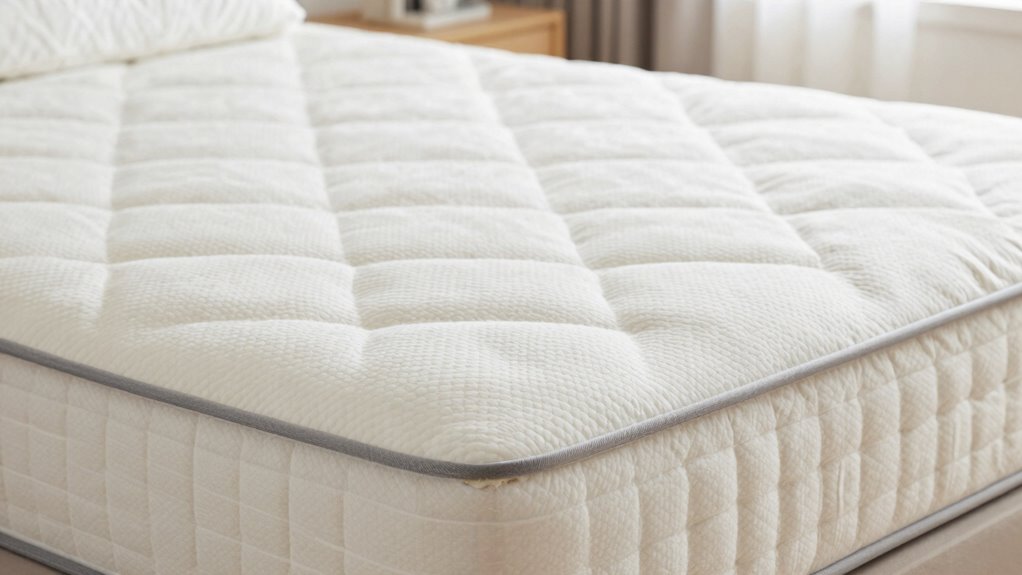
When choosing a mattress, pay attention to the materials used, as some last longer than others. Make sure the mattress provides proper support and is easy to maintain to extend its lifespan. These factors can help you pick a durable option that stays comfortable over time.
Material Durability Factors
Choosing a durable mattress starts with understanding the materials used in its construction. Your focus should be on material composition and wear resistance, which directly impact longevity. Here are key factors to deliberate:
- High-quality foams or latex with strong wear resistance prevent sagging and indentations over time.
- Innerspring coils with reinforced edges provide lasting support and prevent breakdown.
- Hybrid designs combine durability of multiple materials for longer use.
- Tightly woven covers protect the core, reducing wear from daily contact.
Proper Support and Maintenance
Selecting a mattress with proper support and maintaining it well can considerably extend its lifespan. Start by choosing a sturdy bed frame that evenly distributes weight and prevents sagging. An improper or flimsy frame can cause uneven wear and reduce mattress longevity. Additionally, use quality mattress accessories like a protective cover and a mattress topper to guard against spills, stains, and wear. Regularly rotate your mattress, ideally every three to six months, to promote even wear. Keep the mattress clean by vacuuming and spot-cleaning stains promptly. Proper support and routine care minimize stress on the materials, helping your mattress retain its shape and comfort longer. Investing in the right foundation and accessories is key to making your mattress last.
How to Extend Your Mattress’s Lifespan With Proper Maintenance
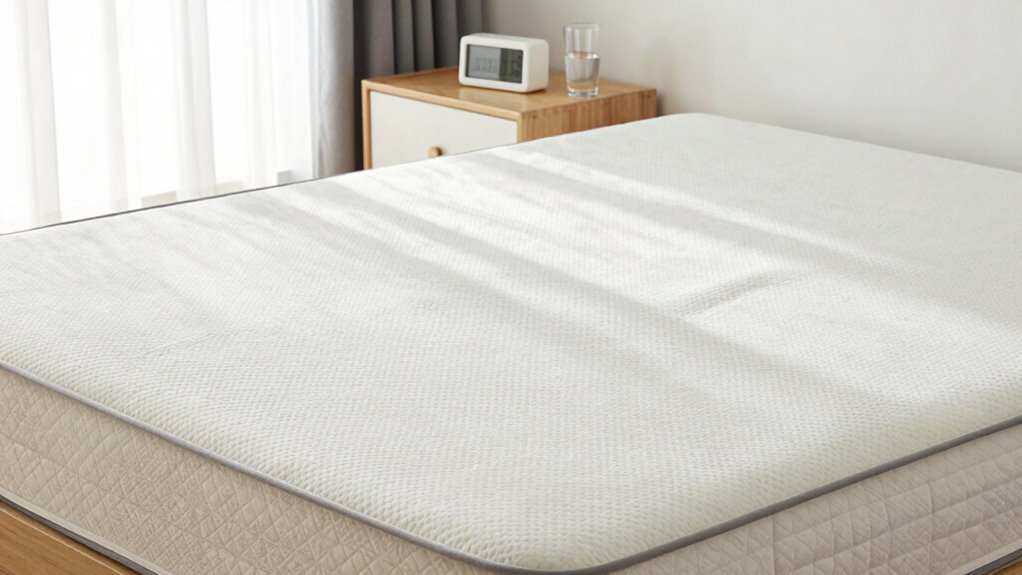
Regular maintenance is essential for extending your mattress’s lifespan and ensuring it remains comfortable and supportive. By incorporating simple habits, you can prevent premature wear and maintain a healthy sleeping environment. Here are four key steps:
- Regular mattress cleaning – vacuum and spot clean to remove dust, dirt, and allergens, promoting allergy prevention.
- Use a mattress protector – shields against spills, stains, and dust mites, extending its durability.
- Rotate your mattress – flip or rotate every three to six months to prevent uneven wear.
- Keep it dry and well-ventilated – avoid moisture buildup that can deteriorate materials and cause mold.
Consistent care keeps your mattress fresh, supportive, and long-lasting, making every night’s sleep better.
Budget-Friendly Tips for Buying a Durable, Long-Lasting Mattress
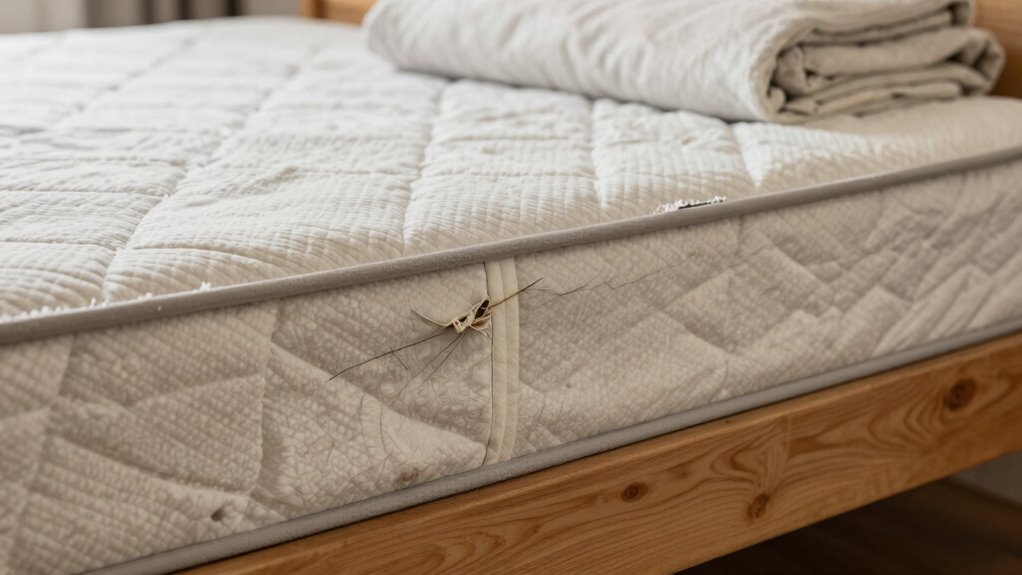
Investing in a durable mattress doesn’t have to break the bank. Look for mattress innovation that combines quality with affordability, such as hybrid designs or foam layers that offer longevity without a hefty price tag. Pay attention to materials and construction, as these impact durability and your sleep environment. Shop during sales or seasonal promotions to get the best deal on reputable brands known for long-lasting quality. Read reviews and ask about warranty coverage to ensure your investment is protected. A well-chosen mattress with the right support and durability features improves your sleep environment and lasts longer. By prioritizing these tips, you can find a budget-friendly, durable mattress that provides restful nights without sacrificing quality.
Frequently Asked Questions
How Often Should I Rotate or Flip My Mattress?
You should rotate your mattress every 3 to 6 months and flip it if it’s double-sided. This helps distribute wear evenly, especially if your mattress has different firmness levels on each side. Check your bed frame compatibility to make certain it supports flipping or rotating. Regularly doing this prevents sagging and extends your mattress’s lifespan, keeping it comfortable and supportive for years to come.
Do Mattress Protectors Extend Mattress Lifespan?
Think of a mattress protector as a shield, guarding your sleep haven. Yes, it does extend mattress life by preventing spills, stains, and dust buildup. The mattress protector benefits include keeping your mattress clean and reducing wear and tear, which ultimately prolongs its longevity. By investing in a good protector, you’re actively preserving your mattress, ensuring it stays supportive and comfortable for years to come.
What Materials Last the Longest in a Mattress?
Memory foam and latex are among the materials that last the longest in a mattress. Memory foam maintains its shape and comfort over many years, especially if you choose high-density options. Latex offers exceptional durability due to its natural resilience and resistance to sagging. To extend their lifespan, rotate your mattress regularly and use a good mattress protector. These practices keep your memory foam or latex mattress supportive and comfortable longer.
How Does Body Weight Affect Mattress Durability?
Surprisingly, your body weight impact can turn your mattress into a sad pancake faster than you think. Heavier folks cause more mattress compression, leading to quicker sagging and wear. While lightweight sleepers might enjoy longer-lasting comfort, if you’re on the heavier side, you’ll need a sturdier mattress to withstand the extra pressure. So, don’t underestimate how much your body weight impacts mattress durability—it’s a silent culprit behind early mattress failure.
Can Sleeping Position Impact Mattress Wear?
Your sleeping posture can considerably impact mattress wear. If you frequently sleep in positions that create pressure points, like stomach sleeping, it can cause uneven compression and sagging over time. To extend your mattress’s life, try to maintain a balanced sleeping posture, avoid excessive twisting, and use supportive pillows. Distributing your weight evenly helps reduce stress on specific areas, keeping your mattress in good shape longer.
Conclusion
So there you have it—your trusty mattress’s secret weaknesses revealed. With a little care and a dash of luck, you can force it to last longer than its natural lifespan. Or, you know, keep waking up sore and questioning all your life choices. Either way, remember: a good night’s sleep shouldn’t be a luxury, but if your mattress gives out, maybe it’s just giving you a gentle nudge to buy a new one. Sleep tight (or not)!