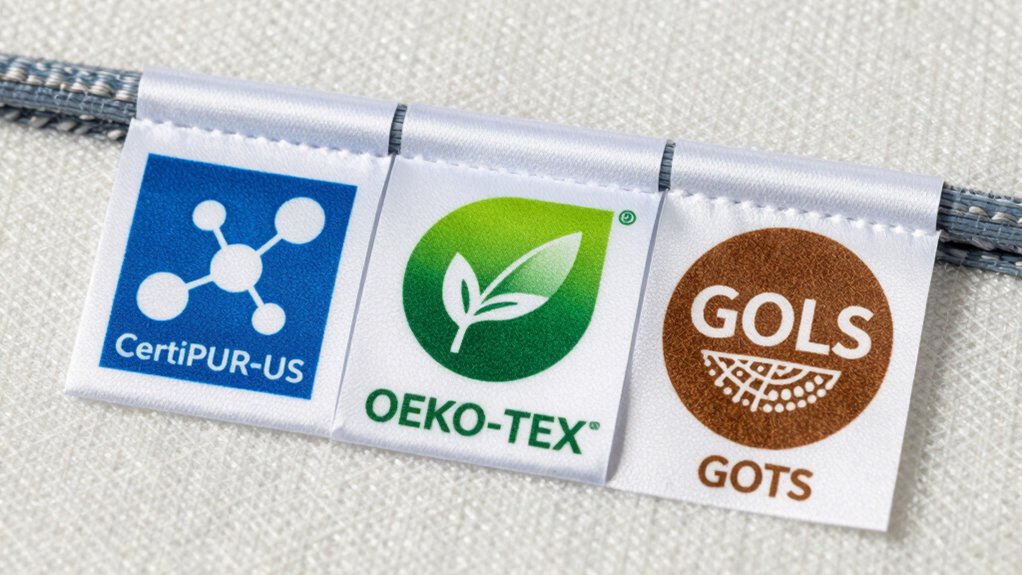

CertiPUR-US, OEKO-TEX, and GOLS/GOTS are important certifications that help you identify safe, eco-friendly products. CertiPUR-US guarantees foams are free from harmful chemicals and safe indoors. OEKO-TEX certifies textiles for toxins and safe manufacturing. GOLS and GOTS focus on organic materials and sustainable processes, covering everything from fiber cultivation to production. Understanding these labels helps you make informed choices, and if you explore further, you’ll discover how they protect your health and the planet.
Key Takeaways
- CertiPUR-US certifies foam safety and low chemical emissions, ensuring product durability and indoor air quality.
- OEKO-TEX tests textiles for toxic substances and environmental impact, confirming chemical safety and eco-friendliness.
- GOLS verifies organic latex production, while GOTS covers the entire textile supply chain, emphasizing environmental and social standards.
- Certifications serve as safety, quality, and environmental indicators but do not guarantee complete product safety or ethical practices.
- Always verify certification authenticity through official labels and certifying organizations to ensure compliance and trustworthiness.
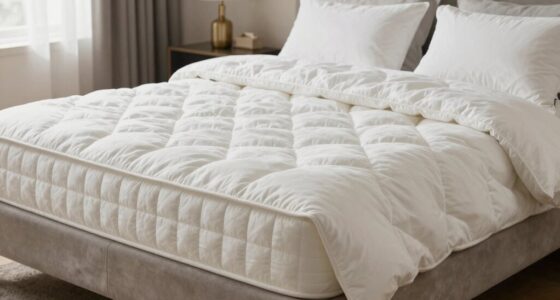
CertiPUR-US certified memory foam mattress
As an affiliate, we earn on qualifying purchases.
As an affiliate, we earn on qualifying purchases.
Why Certifications Matter When Choosing Safe, Eco-Friendly Products
When shopping for safe and eco-friendly products, certifications act as trusted indicators of quality and environmental responsibility. They simplify your decision-making by providing clear signals through product labeling that a product meets specific safety and sustainability standards. This reduces the need for extensive research and gives you peace of mind. The certification process involves rigorous testing and evaluation by independent organizations, ensuring that products adhere to strict criteria. This independent verification helps prevent misleading claims or greenwashing. Certified products often undergo continuous oversight, maintaining their standards over time. Knowing a product’s certification status gives you confidence that it’s been verified for safety, eco-friendliness, and ethical sourcing. Certification standards also promote transparency within the industry, helping consumers make more informed choices. In essence, certifications serve as a reliable shortcut, ensuring that what you buy aligns with your values and your goal to choose healthier, more sustainable options. Additionally, independent verification ensures that these standards are consistently upheld, providing further assurance of product integrity. Furthermore, these standards often include criteria related to healthy materials, which support safer and more sustainable products.
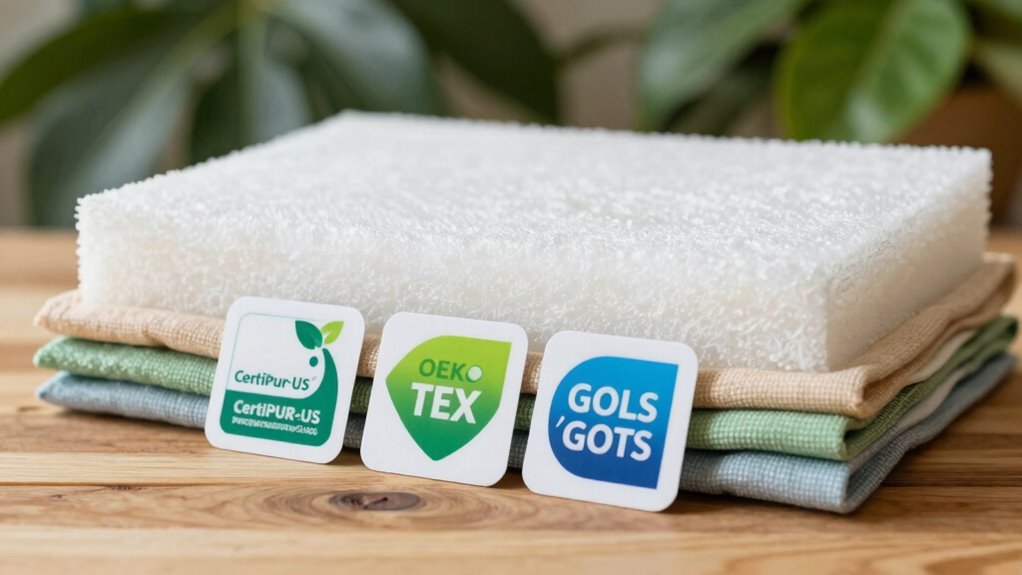
OEKO-TEX certified organic cotton sheets
As an affiliate, we earn on qualifying purchases.
As an affiliate, we earn on qualifying purchases.
What Are Product Certifications: And Why Should You Care?
Product certifications are important because they confirm your items are safe to use and meet quality standards. They also show that a company cares about the environment and responsible practices. Paying attention to certifications helps you make smarter, more informed choices. Additionally, European cloud innovation emphasizes sustainable and secure solutions that meet strict standards. Understanding the certification process can help you better evaluate product claims and ensure you’re choosing reliable options. Recognizing eco-friendly practices in certification labels further empowers you to support sustainable products.
Ensures Product Safety
Ever wonder how you can trust that a product is safe to use? Certifications help verify this by verifying that products meet specific safety standards. They involve rigorous testing and require accurate product labeling, so you know exactly what’s inside. These standards protect you from harmful chemicals and unsafe materials, giving peace of mind. Here’s a quick look at how certifications support safety:
| Certification | Focus on Safety Standards |
|---|---|
| CertiPUR-US | Limits harmful chemicals in foams |
| OEKO-TEX | Checks for toxic substances in textiles |
| GOLS/GOTS | Ensures safe organic and natural materials |
Indicates Environmental Responsibility
Certifications also serve as a mark of environmental responsibility, showing that a product has been made with eco-friendly practices and sustainable materials. They demonstrate a company’s commitment to sustainable sourcing, reducing environmental impact throughout production. When you see an eco label, it signifies that the product meets specific environmental standards, such as responsible resource use or eco-friendly manufacturing processes. This helps you make informed choices that support sustainability efforts. The eco label significance goes beyond safety, indicating that the product aligns with environmental values. By choosing certified items, you contribute to reducing pollution, conserving resources, and promoting ethical practices. Certifications act as a trustworthy guide, ensuring your purchases support a healthier planet while meeting your personal values.
Validates Quality Standards
When you see a certification label, it often means that the item has met specific quality standards set by an authorized organization. These standards focus on material durability, ensuring the product can withstand regular use without degrading quickly. Certification processes involve rigorous testing and review, verifying that the product adheres to safety, longevity, and performance criteria. Knowing a product is certified gives you confidence that it’s built to last and meets industry benchmarks. It also helps you avoid inferior items that may fail prematurely or pose safety risks. Ultimately, certifications serve as a reliable indicator of quality, allowing you to make informed purchasing decisions. They provide reassurance that the product has undergone thorough evaluation and meets the standards you expect.
As an affiliate, we earn on qualifying purchases.
How Can You Recognize Genuine Certification Labels on Products?
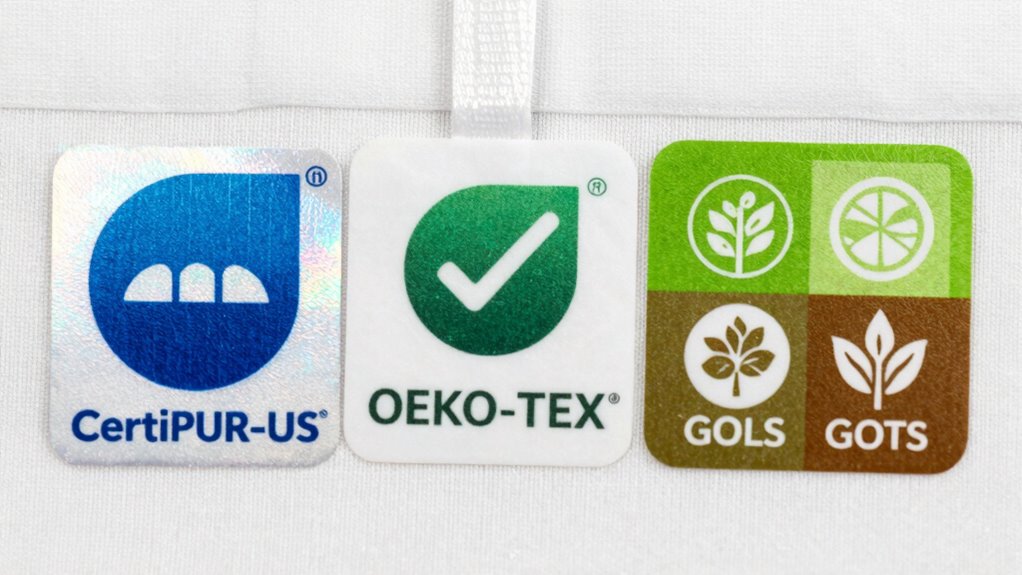
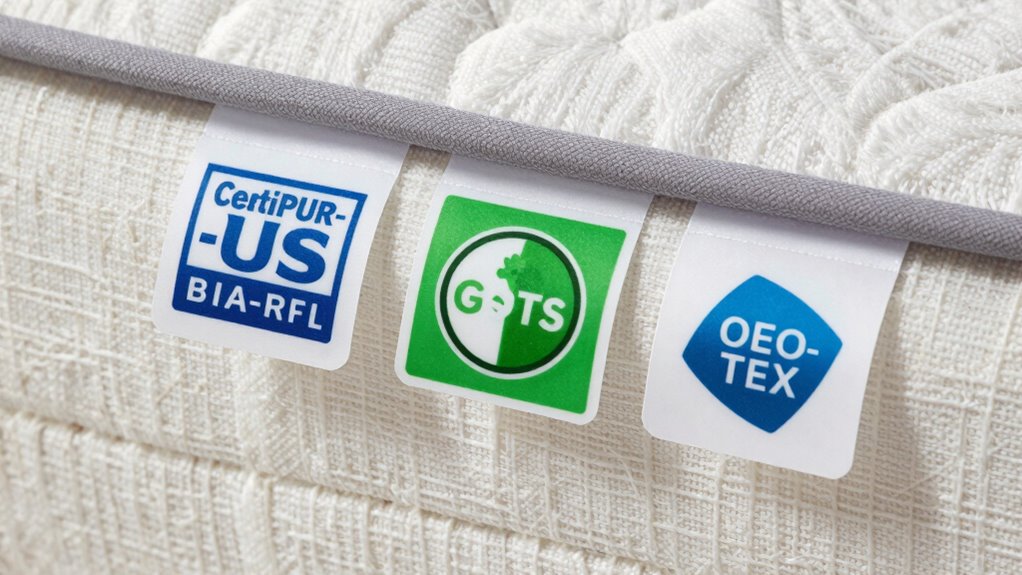
To verify a certification label is genuine, start by checking the seal’s design and compare it to official images. Look for signs of tampering, such as blurry edges or faded printing, which can indicate a fake. By inspecting labels carefully, you can confidently identify authentic certifications on your products.
Certification Seal Authenticity
Recognizing genuine certification labels on products can be straightforward if you know what to look for. Start by examining the seal closely—authentic labels typically have clear, sharp printing and consistent colors. Check for official logos that match the certifying organization’s design; blurry or faded logos can indicate a fake. A reputable brand reputation often guarantees that certification seals are genuine, as trusted companies prioritize transparency. Additionally, verify the certification’s longevity by looking for dates or serial numbers, which authentic labels usually include. Be cautious of labels that seem poorly made or are peeling off, as these might be counterfeit. Ultimately, trusting well-known brands with established certification histories helps you avoid misleading labels and ensures the product’s credibility.
Label Inspection Tips
Inspecting certification labels carefully is crucial to guarantee you’re getting genuine verification. Look for labels that have clear, legible text and consistent font. Check for the correct logo placement and ensure the label’s design matches official branding. Verify label accuracy by cross-referencing the certification number or QR code with the certifying organization’s database. Keep an eye out for signs of tampering, such as smudges or misaligned printing. Remember, certification renewal is essential; expired labels may no longer be valid. To confirm authenticity, consider these tips:
- Confirm the label’s design matches official certification standards
- Ensure the label displays a valid certification number or QR code
- Check the expiration date and renewal status regularly
- Confirm the affiliate disclosure to ensure transparency and trustworthiness
- Familiarize yourself with certification standards to better understand what each label signifies
As an affiliate, we earn on qualifying purchases.
CertiPUR-US Explained: What It Covers and Why It Matters for Foam and Mattresses
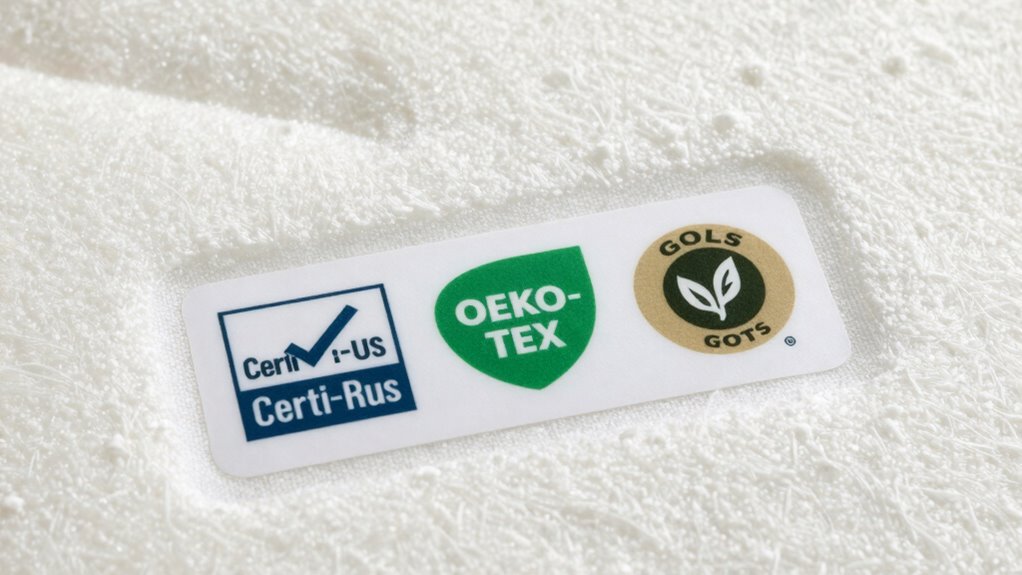
CertiPUR-US certification guarantees foam and mattress materials meet strict safety and environmental standards, giving you peace of mind about what’s inside your bedding. This certification focuses on foam safety, ensuring that harmful chemicals and pollutants aren’t present in the foam used in mattresses. It also sets mattress standards for low VOC emissions, meaning your sleeping environment stays fresh and healthy. When you see the CertiPUR-US label, you can trust that the foam has undergone rigorous testing for durability, content, and emissions. This helps you avoid exposure to potentially hazardous substances often found in lower-quality foam products. Additionally, the certification process evaluates the impact of emissions on indoor air quality, ensuring that your sleep environment remains safe and non-toxic. The certification also emphasizes the importance of environmentally friendly manufacturing practices to reduce ecological impact. Recognizing that materials safety is a key concern, CertiPUR-US certification promotes transparency from manufacturers about their ingredient lists. A robust certification process supports the integrity of the standards and provides consumers with confidence in the certification. An additional benefit is that the certification encourages reduction of harmful chemicals in foam production, supporting healthier indoor environments. Ultimately, CertiPUR-US certification ensures that your mattress meets high safety and environmental benchmarks, making it a smart choice for your health and well-being.
What Is OEKO-TEX Certification and Why Is It Important for Textiles?
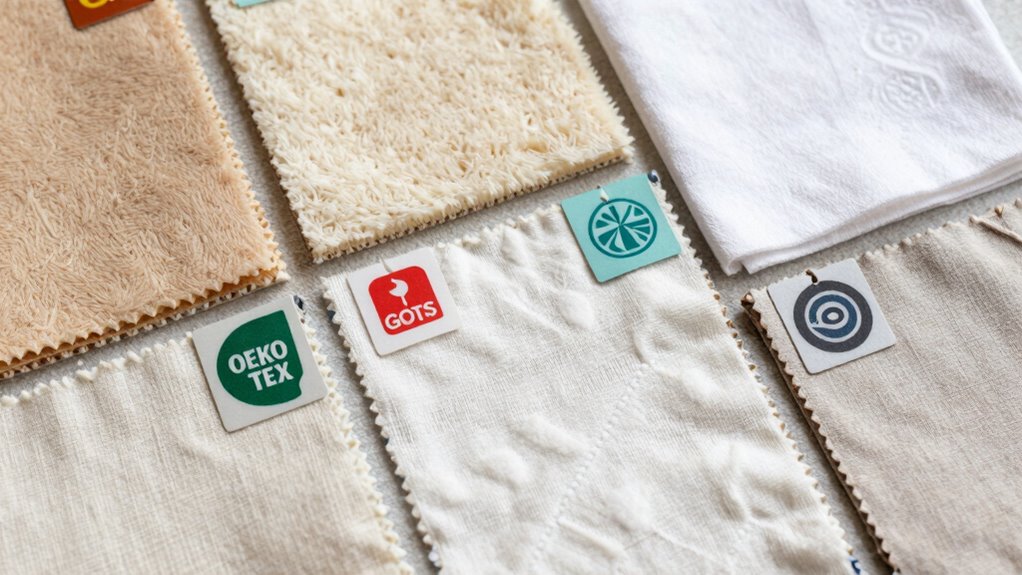
OEKO-TEX certification guarantees textiles meet strict chemical safety standards, protecting you from harmful substances. It also guarantees that the manufacturing process minimizes environmental impact. Knowing a product is certified gives you confidence in its safety and sustainability. Additionally, the certification process often assesses textile manufacturing techniques, ensuring a comprehensive approach to safety and eco-friendliness.
Chemical Safety Standards
Chemical safety standards play a crucial role in ensuring that textiles are safe for consumers and the environment. OEKO-TEX certification verifies that textiles meet strict criteria related to chemical composition and manufacturing processes, reducing harmful chemical exposure. This certification assesses:
- Limits on hazardous substances used during production
- Compliance with international safety regulations
- Regular testing of finished products for harmful chemicals
Environmental Impact Assurance
Understanding the environmental impact of textiles is essential for making sustainable choices, and certification plays a key role in that process. OEKO-TEX certification helps guarantee that textiles are produced with minimal environmental harm, supporting eco friendly manufacturing practices. It promotes the use of sustainable packaging and reduces harmful substances, making products safer for both people and the planet. When textiles are OEKO-TEX certified, you can trust they meet strict environmental standards, encouraging brands to adopt eco-conscious methods. This assurance helps you choose products that prioritize sustainability and reduce ecological footprints. By supporting certifications like OEKO-TEX, you’re contributing to a more sustainable textile industry that values eco friendly manufacturing and responsible resource use. Additionally, certifications like OEKO-TEX often require compliance with diverse investments, ensuring ongoing commitment to environmental standards. Recognizing these standards can also drive innovation within the textile industry towards more sustainable solutions, emphasizing the importance of environmental impact assurance in product selection. Engaging with certified textiles can also lead to improved consumer safety by reducing exposure to hazardous chemicals used in textile production.
GOLS and GOTS Certifications: What They Cover and Why They Matter for Organic Textiles
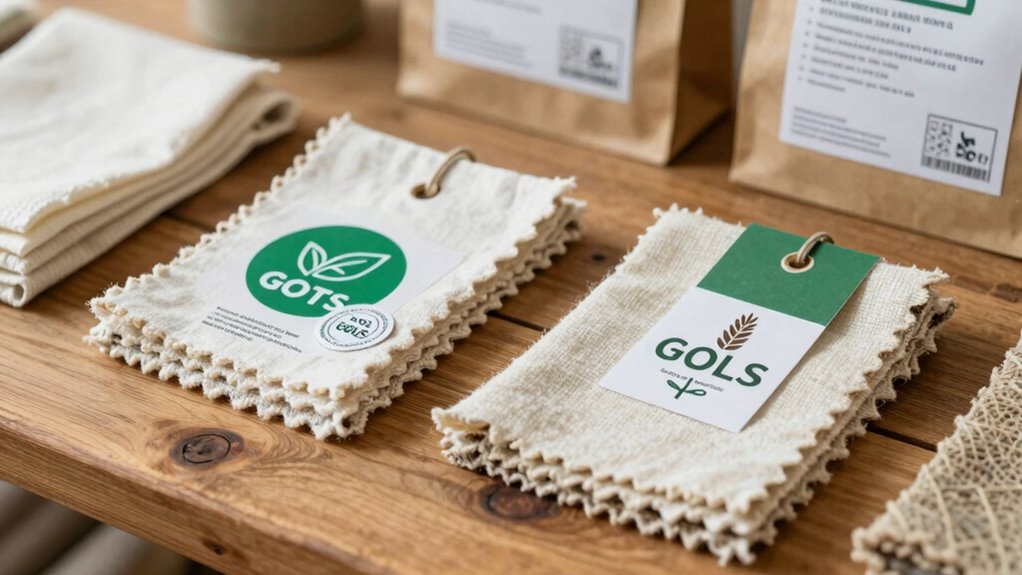
GOLS and GOTS certifications play an essential role in guaranteeing that organic textiles meet strict environmental and social standards. These certifications verify that textiles made from organic fibers adhere to rigorous textile standards, promoting sustainability and fair labor practices. When choosing organic textiles, understanding these standards helps you make informed decisions. GOLS certifies that the production of organic latex rubber is environmentally responsible, while GOTS covers the entire supply chain, including fiber cultivation, processing, and manufacturing. Compliance with certification standards ensures that products maintain their integrity throughout the supply chain and meet consumer expectations for quality and responsibility. Additionally, these certifications often incorporate biodiversity considerations, encouraging environmentally friendly practices that support ecosystem health. Recognizing the importance of sustainable practices, these certifications help consumers select products that align with eco-conscious values and reflect a commitment to environmental stewardship.
Common Certification Standards Compared: Which One Fits Your Needs?
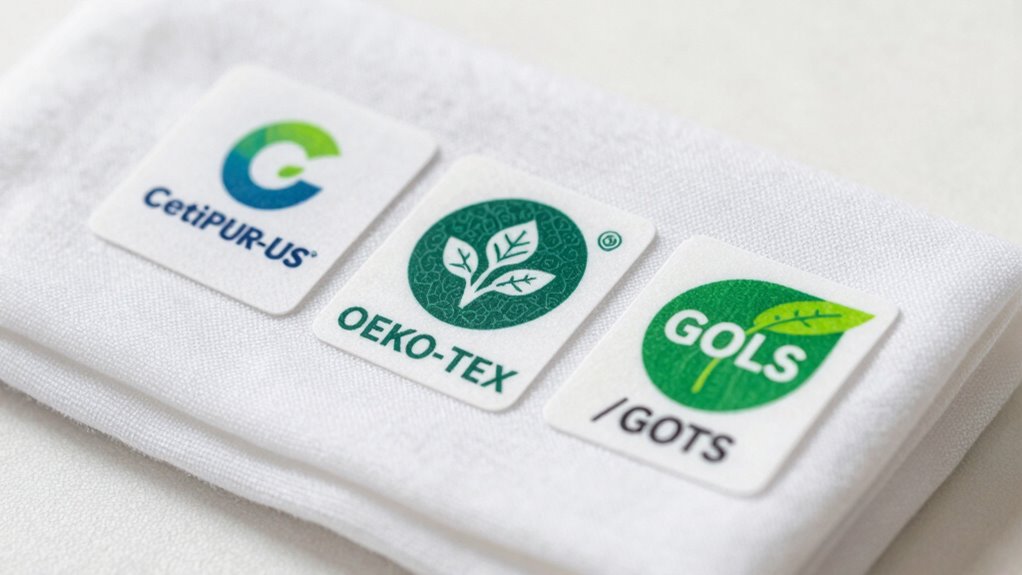
With various certification standards available, choosing the right one depends on your specific priorities and the aspects of sustainability or social responsibility you value most. Certification criteria vary, focusing on things like chemical safety, environmental impact, or fair labor practices. Certification labels help you easily identify products that meet these standards, but not all labels carry the same weight or rigor. For example, some certifications emphasize eco-friendliness, while others prioritize health safety or social ethics. When comparing standards, consider what matters most to you—whether it’s organic materials, low chemical emissions, or ethical manufacturing. Understanding certification scope can help you select products that align with your values and guarantee you’re making informed, responsible choices. Additionally, researching the certification process can provide insight into how rigorous and trustworthy the standards are. Being aware of compliance requirements ensures that products consistently meet the set standards over time. Recognizing the verification methods used by certifying bodies can further help you assess the credibility and reliability of each certification.
How Certifications Influence Your Shopping and Long-Term Value

Certifications can considerably influence your shopping decisions by providing clear signals of quality and responsibility, helping you choose products that align with your values. They reinforce consumer trust and highlight a company’s commitment to sustainable materials and ethical practices. When you see a certification, it shows the product has met specific standards, making it easier to prioritize long-term value over short-term savings. To maximize benefits, look for certifications that:
- Ensure the use of sustainable materials in manufacturing
- Guarantee safety and non-toxicity
- Support ethical and eco-friendly practices
Choosing certified products means you’re investing in items that are better for the environment and your health, offering peace of mind and lasting value. Certifications serve as a guide, making your shopping more intentional and aligned with your values.
Debunking Myths: What Certifications Guarantee and What They Don’t
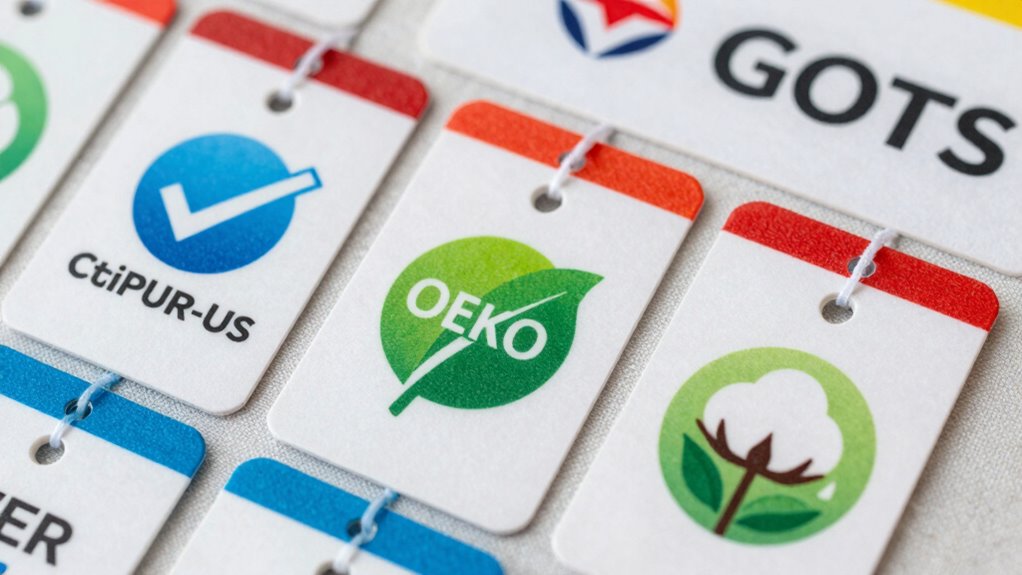
Have you ever wondered if a certification truly guarantees a product’s safety or ethical standards? Certification limitations mean that while a label like CertiPUR-US, OEKO-TEX, or GOLS/GOTS indicates certain standards, it doesn’t guarantee complete safety or ethics. Misconception clarifications are essential—you might assume a certified product is flawless, but certifications often focus on specific aspects, not the entire supply chain or long-term safety. For example, GOTS ensures organic fibers but doesn’t verify fair labor practices everywhere. Knowing what certifications cover and their limits helps you set realistic expectations. Certifications are valuable tools, but they’re not foolproof guarantees. They serve as indicators, not absolute assurances, so always research what a certification does and doesn’t certify before making your decision.
Tips to Ensure a Product Is Certified Before You Buy
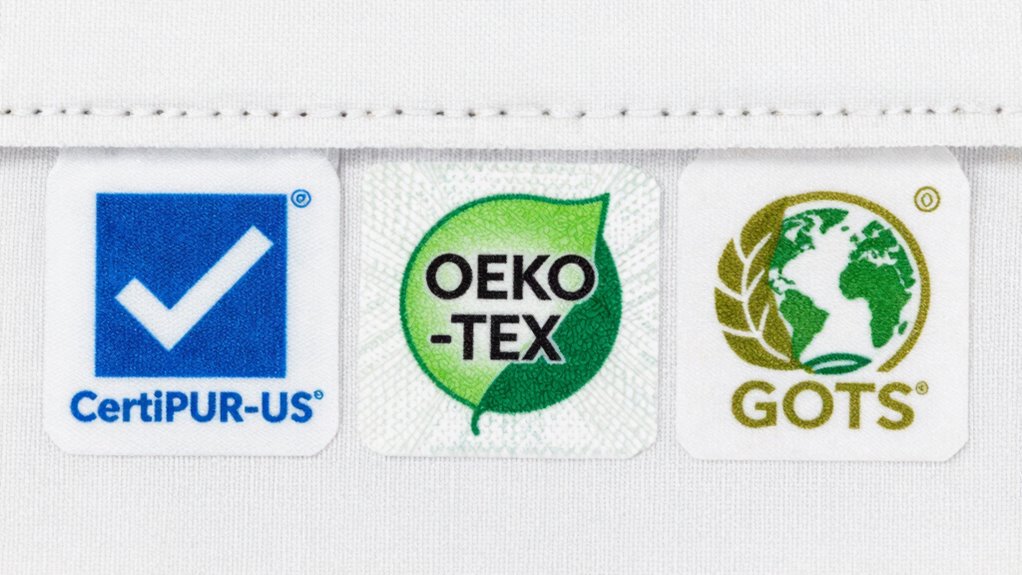
Before making a purchase, it’s important to verify that a product is genuinely certified. Understanding the certification process helps you identify authentic labels and ensures you’re getting the intended benefits. To confirm a product’s certification, check for official certification marks on packaging or labels. You can also visit the certifying organization’s website to verify the product’s status. Additionally, ask for documentation or certification reports from the seller. These steps protect you from false claims and ensure you receive the certification benefits, such as safety, quality, and environmental standards. Remember, a legitimate certification involves a transparent process, so don’t hesitate to do a quick verification. This extra step guarantees you’re choosing products that truly meet the required standards.
Frequently Asked Questions
How Often Are Certification Standards Updated or Revised?
Certification standards are typically revised every few years to guarantee they stay current with industry practices and safety concerns. You should regularly check for updates because standards revision can affect certification validity. Staying informed ensures your products meet the latest requirements, maintaining credibility and consumer trust. Manufacturers often review certification guidelines annually or biennially, but actual revision frequency varies depending on the organization and evolving regulations.
Do Certifications Guarantee Allergen-Free or Hypoallergenic Products?
Think of certifications like a lighthouse—they help guide you, but they don’t guarantee smooth sailing. Certifications don’t promise allergen-free or hypoallergenic products, but they do set standards for allergen claims and hypoallergenic standards. While these labels show a product meets certain safety criteria, individual sensitivities vary. So, always check ingredient lists and test products yourself, because no certification can turn a product into a one-size-fits-all solution for allergies.
Can Products Retain Certification After Manufacturing Changes?
Yes, products can retain certification after manufacturing changes if those modifications don’t affect the certified standards. You should check with the certifying organization to verify product durability and certification longevity. Keep in mind, some certifications require re-evaluation or renewal after significant changes to maintain their validity. Staying informed helps you verify that the product continues to meet the required safety and quality standards you expect.
Are There Regional Differences in Certification Requirements?
Yes, regional variations do exist in certification requirements, and enforcement can vary widely depending on where you are. You need to be aware that some regions have stricter standards, and enforcement might be more rigorous or lenient. It’s essential to verify local regulations and certification bodies to guarantee products meet the specific regional requirements. This way, you can confidently trust that certifications are valid and upheld where you’re purchasing or using the products.
How Do Certifications Impact Product Pricing and Affordability?
Think of certification costs as the tip of the iceberg—you might pay more upfront, but it’s worth it for peace of mind. Certifications can raise product prices, making them less affordable for some consumers. However, they also boost trust and quality, often justifying the higher price tag. Ultimately, you might pay a bit more, but you get better safety and transparency, helping you make smarter, healthier choices without breaking the bank.
Conclusion
Choosing certified products isn’t just about peace of mind—it’s about prioritizing your health and the planet. Did you know that nearly 80% of consumers say eco-friendly products influence their purchasing decisions? By understanding labels like CertiPUR-US, Oeko-Tex, and GOTS, you guarantee safer, more sustainable choices. Always look for genuine certifications to protect yourself and support responsible brands. Your informed decision can make a real difference—every product you buy is a step toward a healthier future.