📊 Full opportunity report: A Real-Time Guide To Brand-Name GLP-1 Pharmacy Data on IdeaNavigator AI — validation score, market gap, and execution plan.
TL;DR
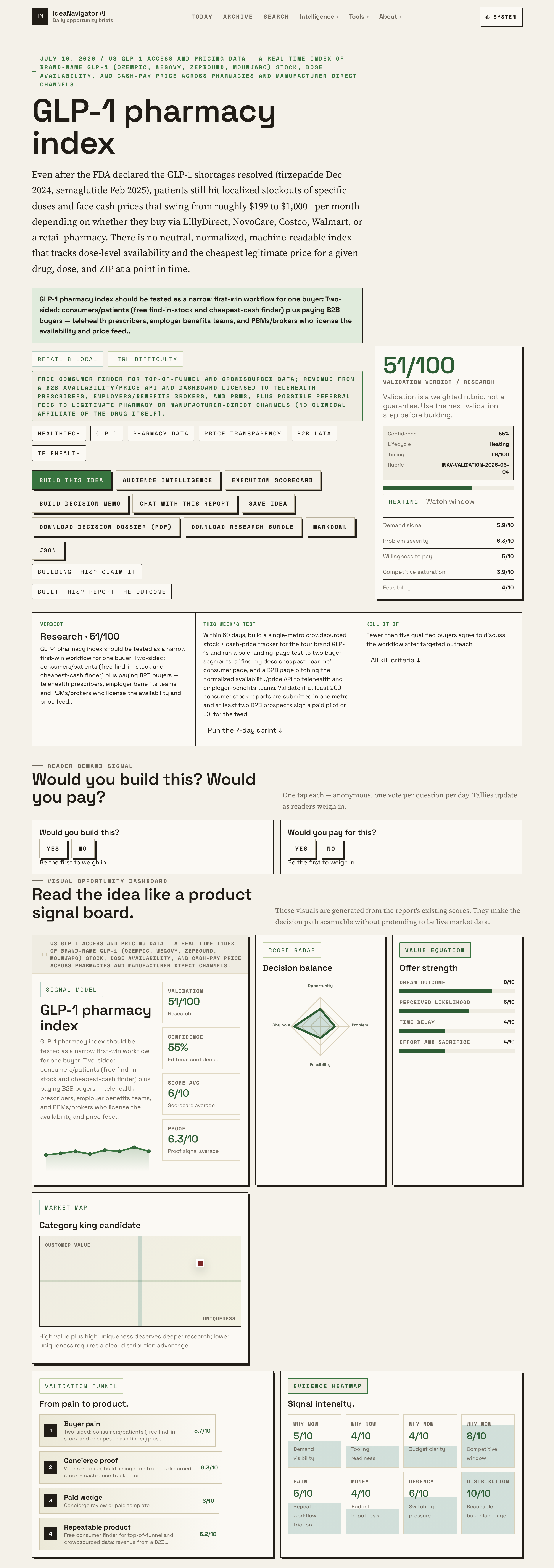
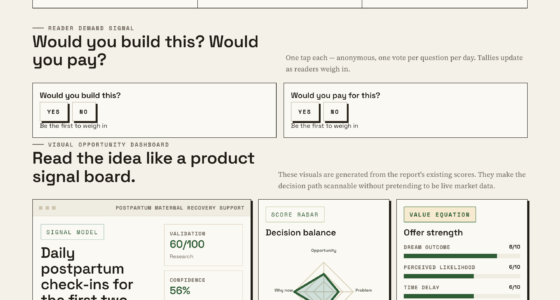
A proposal from IdeaNavigator AI describes a GLP-1 pharmacy index that would compare dose-level availability and cash prices for four brand-name drugs by ZIP code. It is a product concept, not a launched service: its suggested next step is a 60-day, single-metro test with consumer reports and prospective business buyers.
IdeaNavigator AI has proposed a pharmacy index that would track stock by dose and cash prices for four brand-name GLP-1 drugs across U.S. pharmacies and manufacturer-direct channels. The concept pairs a free consumer search tool with a paid data feed for telehealth providers, employers and pharmacy benefit managers; no operating index or signed pilot customers are identified.
The proposed consumer tool would let patients search for Ozempic, Wegovy, Zepbound and Mounjaro by drug, dose and ZIP code to find reported availability and compare cash prices. The plan calls for combining crowdsourced stock reports with public prices from channels including LillyDirect, NovoCare, Costco and Walmart, alongside a discount-price layer similar to GoodRx. It also proposes alerts when a specified dose becomes available.
For business customers, the proposal would package normalized availability and price information as an API or dashboard. Potential buyers named in the plan include telehealth prescribers, employer benefits teams, brokers and pharmacy benefit managers. Revenue could come from licenses and possibly referrals to legitimate pharmacy or manufacturer-direct channels, according to the proposal.
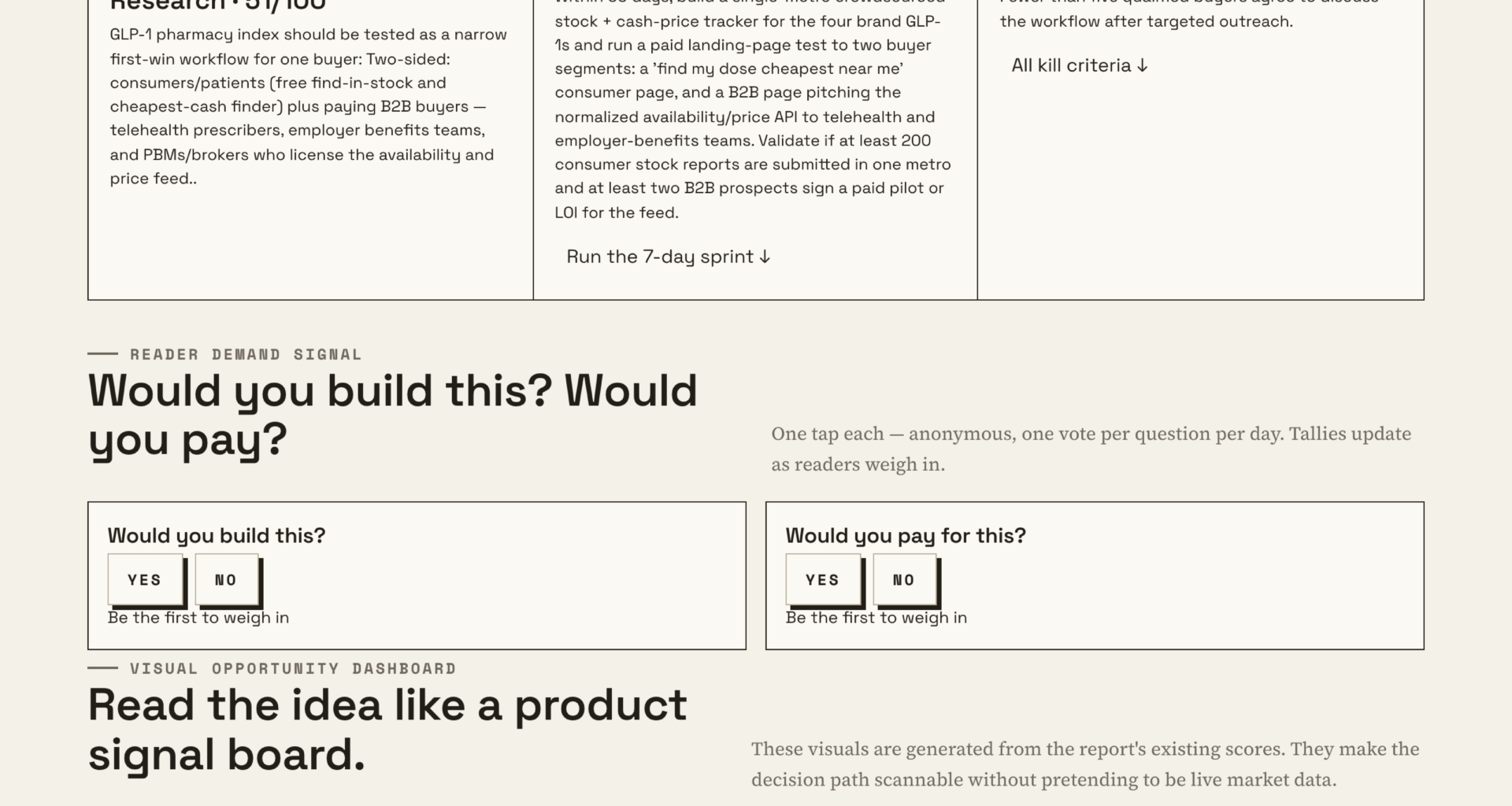
The suggested validation is a 60-day test in one metropolitan area. The proposed benchmarks are at least 200 consumer stock reports and at least two prospective business buyers signing a paid pilot or letter of intent. These are targets for a test, not results already achieved.
Why Price and Dose Data Matter
A patient looking for a particular dose may need more than a general list of pharmacies: the proposal describes localized, dose-specific stock gaps and cash prices that can vary widely by channel. A searchable index could make those differences easier to compare and reduce the effort involved in checking multiple pharmacies or direct-sale programs.
The business case rests on the same fragmentation. The proposal says employers report GLP-1 medicines account for roughly 20% of pharmacy spending, making price and availability data potentially useful for benefits planning and cost steering. That figure is presented in the proposal without a named survey, reporting period or methodology, so it should not be treated as a universal measure of employer spending.
A service would need to keep its information current and distinguish reported stock from confirmed inventory. For patients, an outdated listing could lead to wasted time; for buyers, inconsistent prices or coverage details could weaken the value of the feed. The proposal does not specify how frequently listings would be checked or how discrepancies would be resolved.
From Shortages to Scattered Prices
The proposal frames the opportunity as a shift from broad drug shortages to uneven local availability and fragmented pricing. It says the FDA declared the tirzepatide shortage resolved in December 2024 and the semaglutide shortage resolved in February 2025. Those dates refer to shortage-list status; they do not establish that every pharmacy has every dose in stock.
It also points to manufacturer cash-pay programs and retail pharmacy offerings as reasons prices are difficult to compare in one place. The plan cites monthly cash prices ranging from about $199 to more than $1,000, depending on product, dose and channel. It does not provide a dated price survey or itemized comparisons, so the range is an estimate in the proposal rather than a verified current price table.
The proposal further cites the launch of the TrumpRx portal in February 2026 and changes to compounding deadlines as part of the changing market. These developments are offered as context for a possible index; the concept itself does not establish their effects on individual patients‘ access or costs.
What the Pilot Must Establish
No product launch, live inventory feed or customer commitments are reported in the proposal. It remains unclear which metropolitan area would be tested, how pharmacies would contribute data, how stock reports would be verified, and how often prices and availability would be refreshed. The proposal also does not give a method for comparing prices when eligibility rules, quantities or other purchase conditions differ.
The cited price range and employer-spending estimate lack supporting detail in the proposal, including a date, sample and calculation method. It is also unknown whether consumers would submit enough timely reports to make the index useful, or whether business buyers would pay for the data. The proposed 200-report and two-buyer thresholds are validation goals, not evidence of demand.
A 60-Day Market Test
The next step described is to build a single-metro tracker covering the four named drugs, seed it with normalized public cash prices and invite consumers to report stock by dose. In parallel, the proposal calls for testing separate landing pages: one for people searching for a dose at the lowest nearby cash price, and another pitching the data feed to telehealth and employer-benefits buyers.
Evidence of progress would include the number and freshness of consumer reports, whether reported listings can be verified, and whether at least two prospective business customers sign a paid pilot or letter of intent within 60 days. No start date or results have been announced. The proposal ends with the source credit below.
Source: IdeaNavigator AI
Key Questions
Is the GLP-1 pharmacy index available now?
No launch is reported. The proposal outlines a possible tracker and a 60-day test; it does not describe an active service.
Which medicines would it cover?
The proposed index would track Ozempic, Wegovy, Zepbound and Mounjaro by dose and ZIP code.
Would it show insurance prices?
The concept focuses on cash prices across direct-sale and pharmacy channels. It does not describe a tool for comparing insurance coverage or out-of-pocket costs under individual plans.
How would the proposal be tested?
It proposes a single-metro test over 60 days, with targets of 200 consumer stock reports and at least two business prospects signing a paid pilot or letter of intent.
Source: IdeaNavigator AI