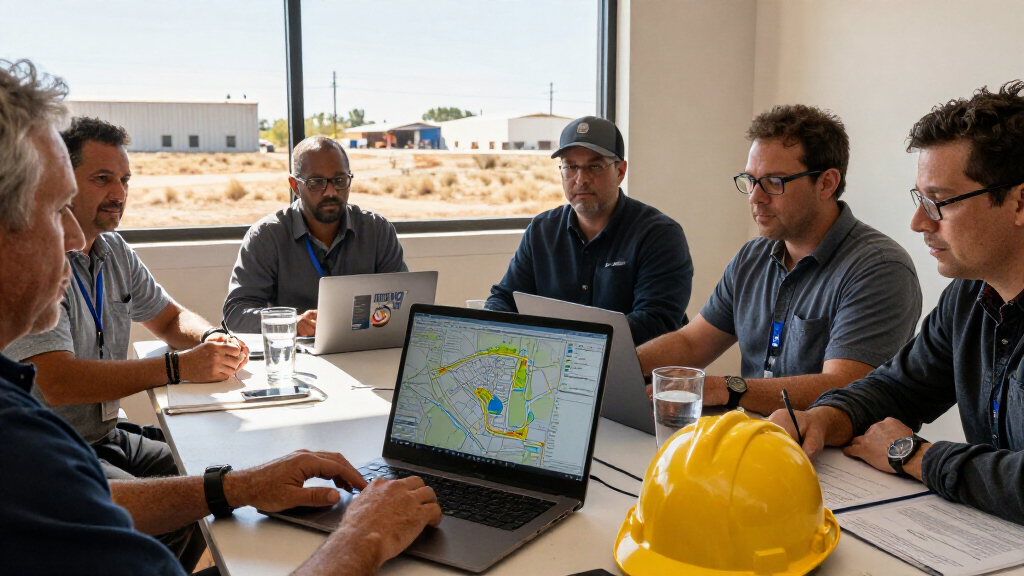

🔍 Read the full analysis: Will SpaceX’s AI Campus Plans Bring Jobs To Texas And Arizona? on ThorstenMeyerAI.com
TL;DR
SpaceX says it is advancing AI computing projects near Starbase, Texas, and in Cochise County, Arizona, with more than $74 billion in planned investment combined. The company projects hundreds of permanent jobs in Texas and about 1,000 in Arizona at full build-out, but both projects still face local decisions and some figures, including the Texas facility’s water use, are not specified.
SpaceX announced November 12 that it is advancing two large AI computing projects—one near its Starbase launch site in Texas and another in Cochise County, Arizona—with the company describing the combined planned investment as more than $74 billion. SpaceX says the developments could bring more than 500 permanent jobs in Texas and about 1,000 in Arizona at full build-out, but local approvals remain pending and the projects are at different stages of review.
In Texas, SpaceX says it plans to invest more than $24 billion in a supercomputing facility on an approximately 444-acre tract near the Port of Brownsville. A Starbase city notice describes the project as a gas-fired power plant and super-compute facility, with an estimated $24 billion in capital investment for initial phases and possible later expansion. SpaceX says the site will generate its own electricity rather than draw from the public grid. The city notice does not state the plant’s capacity.
SpaceX says construction in Texas has already involved more than 3,000 jobs and projects over 500 permanent positions once the facility is operating. Those figures are company estimates; the materials provided do not define how long construction jobs will last or list the permanent roles by occupation. SpaceX also says it has committed $220 million to water and wastewater infrastructure in Brownsville and Cameron County, including $40 million it says it has already provided. It says those projects could add about 20 million gallons of water a day from sources independent of the Rio Grande.
In Arizona, SpaceX describes a roughly $50 billion campus planned for about 747 acres near Cochise, along U.S. Highway 191. The county application was filed by Tombstone Resources L.L.C.; the application documents cited in the source material do not name SpaceX. The company connection is supported by SpaceX’s project page and a Tombstone Resources statement about a community town hall hosted by SpaceX. The application describes up to nine computing buildings, each about 493,000 square feet, developed in four phases. It estimates roughly 5,500 construction workers at peak, about 250 staff when the first buildings open and around 1,000 staff at full build-out.
SpaceX’s AI campuses and local jobs
SpaceX projects more than $74 billion in combined investment across Texas and Arizona. Jobs and local impacts depend on projects still facing public decisions.
Two sites, different power plans
The campuses would draw on different energy and cooling arrangements.
- Planned gas-fired power plant and computing facility near Starbase.
- SpaceX says the site would generate its own electricity.
- The facility’s water use and capacity are not specified.
- Grid power through regional electric cooperatives.
- Dry cooling; the application estimates 7–10 acre-feet of water per year at full build-out.
- Application estimates up to 6 gigawatts at full build-out.
Jobs come in different phases
Construction estimates describe temporary work; operating jobs are the longer-term projections.
Texas construction has involved more than 3,000 jobs, according to SpaceX. Arizona’s application estimates roughly 5,500 workers at peak.
Arizona’s application projects about 250 staff when its first buildings open.
SpaceX projects more than 500 permanent Texas positions and around 1,000 Arizona staff at full build-out.
What local decisions will weigh
The promised jobs sit alongside questions about utilities, public services and local terms.
Different infrastructure needs
Arizona would rely on grid supply and utility approvals; Texas is described as using on-site gas-fired generation.
Important details remain open
Arizona’s water figures are application estimates. Texas facility water use has not been specified.
Benefits depend on terms
Tax arrangements and effects on local services and utilities will shape what the investment means for residents.
The next public test
Both projects still require local decisions, and the supplied information does not establish their outcomes.
Projected Jobs and Local Costs
The projects put local employment estimates alongside substantial demands on power infrastructure, land and public review. SpaceX’s projections point to potentially significant construction work and hundreds of long-term operating roles, particularly in communities where large industrial developments can reshape local employment. The construction totals are peak or cumulative estimates, however, and should not be read as permanent job counts.
The Arizona proposal would rely on electricity supplied through the grid, while the Texas project is described as generating its own power with a gas-fired plant. Those arrangements have different local implications: Arizona’s plan depends on utility infrastructure and an electricity agreement, while Texas raises questions about on-site generation and emissions. SpaceX says the Arizona campus would use dry cooling and avoid industrial groundwater use. Its stated water commitments in the Rio Grande Valley concern regional water and wastewater infrastructure, but the company has not given a figure for the Texas computing site’s own water consumption.
For residents and local officials, the immediate issue is not just how many jobs are promised. It is whether the projects receive the required approvals, how public services and utilities would be affected, and what tax or other terms local governments may grant. Those details will shape how much of the proposed investment translates into local benefits and costs.
Popular right now

Vitamix 5200 Blender with 64 oz Container, Black

eufy C30 Robot Vacuum and Mop

Bose QuietComfort Headphones (2nd Gen), Wireless Over-Ear Noise-Cancelling Headphones, Black
As an affiliate, we earn on qualifying purchases.
Two Sites, Different Power Plans
SpaceX has framed the Texas facility partly as a step toward future space-based computing. In February, when the company announced it had acquired xAI, it argued that growing electricity demand for AI could not be met with terrestrial infrastructure without hardship to communities and the environment, and discussed data centers in orbit. The November plans place two large computing projects on Earth, while SpaceX says the Texas site would also help develop and test technology for future space-based computing.
The technical and land-use details vary. In Arizona, the county application describes an initial phase of about 1,500 megawatts and a full build-out of approximately 6 gigawatts, backed by a 24-gigawatt-hour battery system. Power would come through Sulphur Springs Valley Electric Cooperative and Arizona Electric Power Cooperative to a utility-owned substation on the site. The application describes no on-site power plant, though it includes natural-gas standby generators for outages and testing.
The Arizona application estimates water use at 7 to 10 acre-feet per year at full build-out, mostly for staff, and says the campus would use dry cooling without cooling towers. For comparison, the application says a center-pivot field on a 160-acre quarter section uses 400 to 600 acre-feet a year. These are figures in the project application, not independently verified operating measurements, since the campus has not yet been built.
„Together, they represent more than $74 billion in planned American investment.“
— SpaceX
Approvals and Missing Project Figures
Both projects still depend on local decisions. On December 9, 2026, the Cochise County Planning and Zoning Commission is scheduled to hold a hearing on the Arizona proposal, while the Starbase City Commission is scheduled to consider a property tax abatement tied to the Texas project. The supplied information does not establish the outcome of either proceeding.
Several details that matter to evaluating local effects remain unavailable or unsettled. The Texas materials do not specify the computing facility’s capacity or its own water use, and the size and conditions of the proposed Texas tax abatement are not given. A local news report, The 956 Report, says an air registration filed with the Texas Commission on Environmental Quality describes a temporary setup of 35 natural-gas turbines totaling about 748 megawatts, later replaced by eight turbines totaling about 708 megawatts. Those figures are reported by the outlet from the filing, not listed in the city notice cited here.
For Arizona, the application’s estimates are proposals, not proof of eventual operating levels. It also remains unclear whether the utility and regulatory approvals needed for the electricity arrangement—and for SpaceX’s promised lower power bills for local cooperative members—will be granted. The available information does not establish the final construction timetable, financing arrangements or number of jobs at each stage.
December Hearings Set the Next Test
The next scheduled public milestones are both on December 9, 2026. Cochise County’s Planning and Zoning Commission is due to hear the Arizona application, and Starbase’s City Commission is due to consider the Texas property tax abatement. Those proceedings should clarify what local officials are being asked to approve and may bring further information about project conditions.
After those meetings, the projects’ progress will depend on the relevant local decisions and, for Arizona, the utility and regulatory process behind the proposed power supply and bill reductions. Readers should look for updated filings and notices that specify final approvals, construction phases, job assumptions and any revisions to power or water plans. Until those are available, the investment and employment figures remain company or application projections, not confirmed completed projects or guaranteed job totals.
Key Questions
How many jobs does SpaceX say the projects could create?
SpaceX says the Texas project has involved more than 3,000 construction jobs so far and could support over 500 permanent jobs. The Arizona application estimates about 5,500 construction workers at peak and roughly 1,000 staff at full build-out. These figures describe different stages and are projections or company-reported estimates.
How much is SpaceX planning to invest?
SpaceX says it plans to invest more than $24 billion in Texas and about $50 billion in Arizona. The company puts the combined planned investment above $74 billion; the figures are plans, not confirmed spending already made.
Have the Texas and Arizona projects been approved?
The information provided describes local review as pending. Hearings or commission action are scheduled for December 9, 2026, including a Cochise County planning hearing and Starbase consideration of a Texas property tax abatement.
How will the campuses get electricity?
SpaceX says the Texas site will generate its own electricity, and Starbase’s notice describes a gas-fired power plant. The Arizona proposal would use grid power delivered through local cooperatives and a utility-owned substation, with standby generators for outages and testing.
What is still unknown about water use?
The Arizona application estimates 7 to 10 acre-feet of water a year at full build-out, mostly for staff, and describes dry cooling. SpaceX has not stated how much water the Texas computing facility itself would use, though it says it is funding regional water and wastewater improvements.
Source: ThorstenMeyerAI.com