

If you’re wondering which noise sounds ‘smoother,’ pink and brown noises are generally more soothing than white noise. Pink noise offers a balanced, gentle sound with equal energy across octaves, making it feel softer and more calming. Brown noise emphasizes lower frequencies, creating a deep, velvety vibe that many find exceptionally smooth. White noise, with its sharp, static-like quality, can feel harsher. Keep exploring to discover which type best suits your relaxation or focus needs.
Key Takeaways
- Brown noise sounds the smoothest due to its emphasis on low frequencies and deep, velvety tone.
- Pink noise offers a balanced, gentle sound, making it feel smoother than white noise.
- White noise is the harshest and least smooth because of its equal energy across all frequencies.
- The spectral distribution influences perceived smoothness, with brown and pink noise generally feeling more soothing.
- Personal preference and context (relaxation, sleep, focus) also affect which noise sounds ‘smoother’ to an individual.
What Are White, Brown, and Pink Noise: And How Do They Differ?
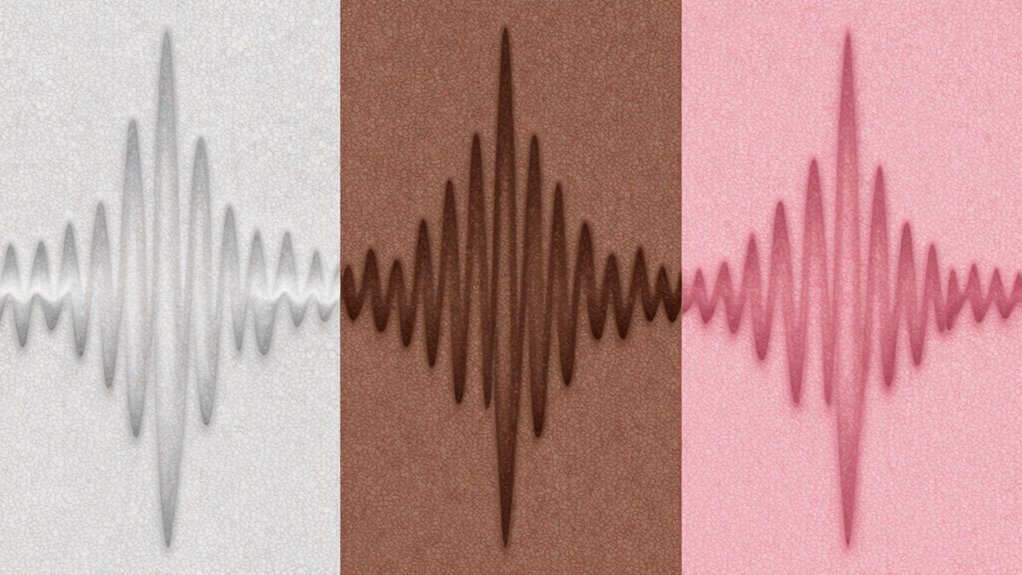
Ever wonder how different types of noise can affect your focus or relaxation? White, brown, and pink noise differ in their spectral distribution and frequency spectrum. White noise contains equal energy across all frequencies, creating a flat spectral distribution. This results in a consistent, static-like sound. Brown noise, also known as red noise, emphasizes lower frequencies, producing a deeper, rumbling sound with more energy in the bass range. Pink noise balances the spectrum so that each octave carries equal energy, resulting in a smoother, more natural sound. These differences in spectral distribution directly influence how each noise type is perceived and how they can help you concentrate or relax. Additionally, the contrast ratio of a projector impacts how well dark scenes are rendered, which can influence your viewing experience during relaxing movie sessions. Understanding the spectral distribution of each noise type can help you select the most effective sound for your specific environment or mood.
How Do Their Sound Qualities Affect Your Perception of Smoothness?

The spectral differences among white, brown, and pink noise considerably influence how smooth or harsh they sound to your ears. These qualities directly impact your perceived serenity and auditory clarity. White noise, with its equal energy across frequencies, can seem sharp and intrusive, making it feel less smooth. In contrast, pink noise’s balanced spectrum offers a softer, more calming sound that enhances perceived serenity. Brown noise, rich in low frequencies, creates a deep, velvety background that many find exceptionally smooth. Understanding this, consider the following comparison: media literacy is essential for interpreting different sound environments and their effects on perception.
| Noise Type | Sound Quality and Perception |
|---|---|
| White Noise | Harsh, sharp, less smooth, high auditory clarity |
| Pink Noise | Softer, balanced, more calming, moderate serenity |
| Brown Noise | Deep, velvety, very smooth, high perceived serenity |
What Factors Make Some Noise Feel Smoother Than Others?
Several factors influence why some noises feel smoother than others, primarily related to their spectral content and how your ears perceive different frequencies. Psychoacoustic effects play a significant role, shaping your perception of sound quality. The sound frequency distribution determines whether a noise sounds more uniform or jagged; for example, pink noise has equal energy per octave, creating a gentler, more balanced sound. Conversely, white noise contains equal energy across all frequencies, making it feel harsher. Brown noise emphasizes lower frequencies, producing a deeper, softer effect. Your perception of smoothness depends on these factors, as well as how your brain processes the spectral balance, making some noises seem more soothing or consistent than others. Additionally, spectral content impacts how your auditory system interprets these sounds, influencing the overall perception of smoothness. The spectral balance of a noise can also be affected by environmental factors and individual hearing sensitivities, further shaping how smooth the sound appears to each listener.
How to Choose the Best Noise for Relaxation, Sleep, or Focus?
Choosing the right noise depends on your goal—whether relaxing, sleeping, or focusing. Your auditory perception varies with different frequency spectra, influencing how calming or stimulating a sound feels. For relaxation, pink noise’s balanced spectrum often feels smoother. For deep sleep, brown noise’s emphasis on lower frequencies can be more soothing. If you need alertness, white noise’s broad spectrum might help block distractions. Consider this:
| Goal | Suitable Noise Type | Reason |
|---|---|---|
| Relaxation | Pink Noise | Smooth, natural sound |
| Sleep | Brown Noise | Deep, calming frequencies |
| Focus | White Noise | Broad spectrum, blocks distractions |
Experiment with each to see which aligns best with your sensory preferences for relaxation, sleep, or focus.
Tips for Using White, Brown, or Pink Noise in Your Daily Routine
Incorporating white, brown, or pink noise into your daily routine can boost focus, promote relaxation, or help you sleep more soundly. To optimize your experience, experiment with noise customization to find what works best for you. Use sound therapy apps or devices that allow you to adjust volume and tone, tailoring the noise to suit your needs. Consistency is key—play your chosen noise during specific activities like work, meditation, or bedtime. Keep the volume at a comfortable level to avoid strain or distraction. Consider blending different types of noise throughout the day to create a balanced environment. Understanding the acoustic properties of each noise type can help you select the most effective sound for your goals. By customizing your noise, you’ll make sound therapy a more effective and enjoyable part of your routine.
Frequently Asked Questions
Can Individual Preferences Influence Which Noise Type Sounds Smoother?
Yes, your personal preference definitely influences which noise sounds smoother to you. Cultural influences, past experiences, and individual sensitivity shape your perception. For example, some might find pink noise more soothing because it reminds them of natural sounds, while others prefer brown noise for its deeper tones. Ultimately, your unique background and preferences guide your perception, making certain noise types feel calmer or more comfortable than others.
Are There Health Benefits Associated With Listening to Different Noise Types?
Listening to different noise types can be like giving your mind a gentle massage, offering therapeutic benefits and cognitive enhancement. White noise helps mask distractions, improving focus. Pink noise promotes relaxation, aiding sleep and reducing stress. Brown noise may soothe anxiety and support meditation. Incorporating these sounds into your routine can boost mental well-being and concentration, making your daily life calmer and more productive.
How Does the Environment Impact the Perception of Noise Smoothness?
The environment influences how you perceive noise smoothness by affecting your ambient comfort and triggering perceptual biases. A quiet, cozy space makes sounds seem smoother, while a noisy or cluttered setting can distort your perception, making sounds feel harsher or rougher. Your surroundings shape your auditory experience, so adjusting your environment can help you enjoy noise in a way that feels more soothing and natural to you.
Do Noise Types Vary in Their Effectiveness for Different Activities?
You’ll find that different noise types suit various activities due to their psychoacoustic effects and auditory masking qualities. For focused work, pink noise often proves more effective, gently masking distractions without overwhelming your senses. For relaxation or sleep, brown noise’s deeper tones can ease your mind. White noise works well for background masking, but the best choice depends on your activity, preferences, and how your ears respond to each sound’s unique qualities.
Is There Scientific Research Supporting the Claims About Noise Smoothness?
Scientific research, including neuroscience insights and psychoacoustic studies, supports that pink noise sounds smoother to most listeners. These studies show pink noise’s balanced frequency distribution aligns with human auditory perception, making it feel more natural and calming. Brown noise, with deeper tones, can seem even smoother to some. Your perception of smoothness varies, but overall, psychoacoustic studies confirm pink noise’s gentle, soothing quality as perceived by our brains.
Conclusion
Don’t worry if you find one type of noise more soothing than another; it’s all about what feels best to you. Experiment with white, brown, or pink noise to see which promotes your relaxation, sleep, or focus. Remember, everyone’s preferences differ—so trust your ears and choose what makes you feel most comfortable. Ultimately, the right noise is the one that helps you unwind and stay centered, no matter its technical name.