
To improve your sleep with night lights, keep brightness low and choose warmer tones like amber or soft red, which promote relaxation. Bright or blue-rich lights can disrupt your circadian rhythm and lower melatonin levels, making it harder to rest. Dimming your night light and adjusting its color helps signal your body that it’s time to sleep. Continue exploring how to optimize your environment for truly restful nights.
Key Takeaways
- Use dim, warm-colored night lights (around 2000K-3000K) to promote relaxation and reduce sleep disruption.
- Bright, blue-rich lights can suppress melatonin, so avoid them before bedtime.
- Adjust brightness levels with dimmers or smart controls to prevent interfering with your circadian rhythm.
- Place night lights low and away from direct eye contact to minimize glare and enhance comfort.
- Automate lighting with timers or smart systems to ensure consistent, sleep-friendly lighting environments.
How Night Light Brightness Affects Your Sleep Quality
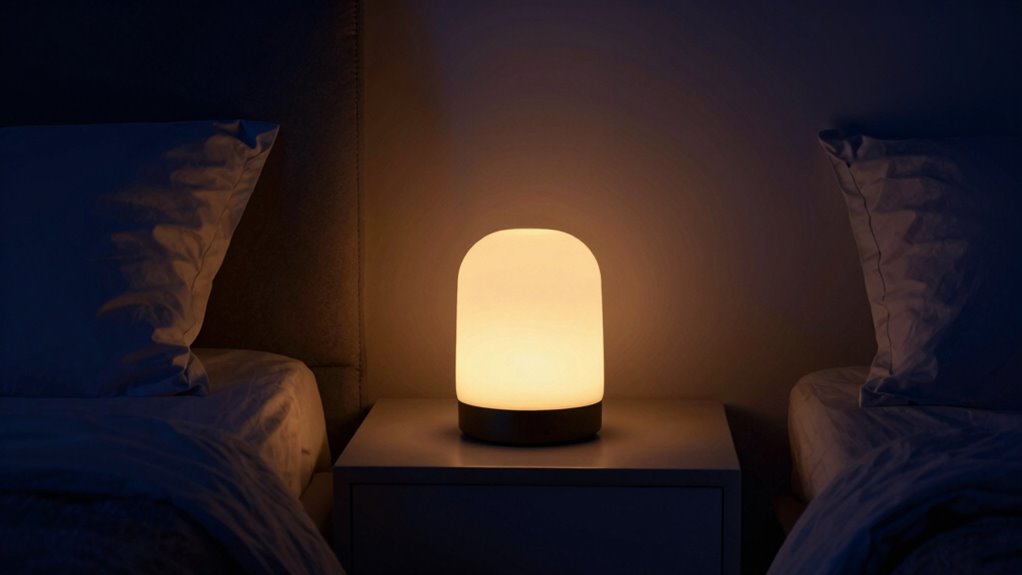
Even a small amount of light in your bedroom can considerably disrupt your sleep quality. Light pollution from night lights, even at low brightness, can interfere with your body’s circadian rhythm, the internal clock that regulates sleep and wake cycles. Bright night lights send signals to your brain that it’s daytime, causing circadian disruption and making it harder to fall asleep or stay asleep. The more intense the light, the greater its impact on melatonin production, which is essential for restful sleep. To improve your sleep quality, opt for dimmer lights or use sleep-friendly night lights that minimize light pollution. Keeping light levels low helps your circadian rhythm stay aligned, promoting deeper, more restorative sleep. Light pollution can have a significant effect on your sleep health, so managing your bedroom lighting is a simple yet effective step. Additionally, choosing appropriate color temperature lighting can further support your natural sleep cycle by reducing blue light exposure. Being aware of light intensity and its effects can help you create a sleep environment that fosters restful nights. Moreover, selecting lights with proper brightness levels can further enhance your sleep environment by reducing unnecessary light exposure, which is especially important given how contrast ratio influences the visibility of light sources in your room.
How Color Temperature Influences Rest and Relaxation
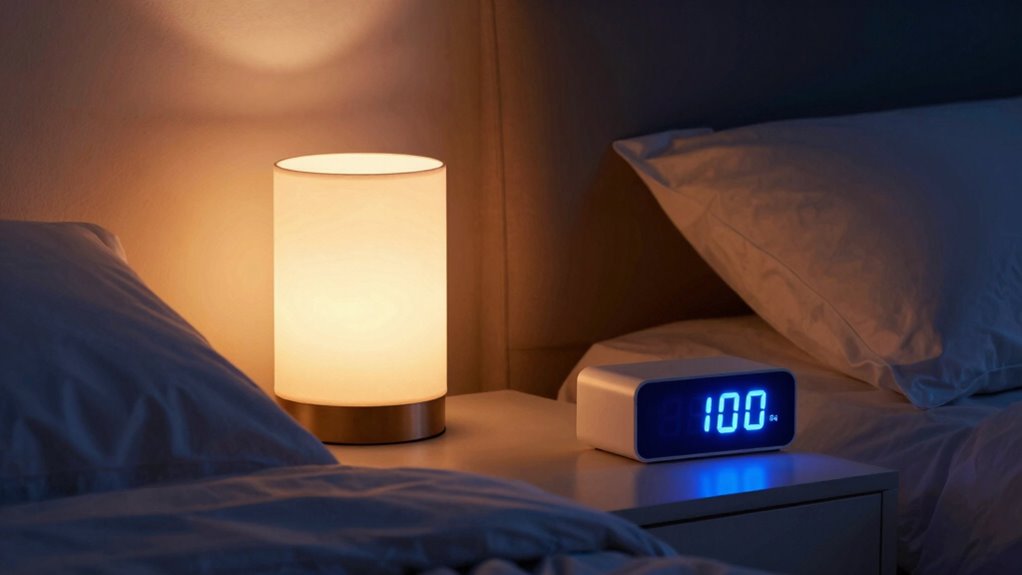
Light brightness is only part of creating a sleep-friendly environment; the color temperature of your lights plays a significant role too. Cooler, blue-rich light can suppress your sleep hormones, like melatonin, making it harder to unwind. In contrast, warmer, red-toned light promotes relaxation and signals your body it’s time to rest. Understanding color temperature helps you set the right ambiance for winding down or waking up. Here’s a quick overview:
| Color Temperature | Effect on Sleep | Best Used For |
|---|---|---|
| 2000K – 3000K | Relaxation | Bedtime, evening |
| 3000K – 4000K | Neutral | General use |
| 4000K – 5000K | Alertness | Morning routines |
| 5000K+ | Stimulating | Workspaces |
| Dimmable options | Flexible | Adjust for mood/weather |
Choosing the right color temperature helps support your natural sleep cycle and enhances overall rest, especially when considering light spectrum and the importance of color temperature to optimize your environment. Additionally, recent AI discoveries in lighting technology are enabling more personalized and adaptive lighting solutions to improve sleep quality. For example, advancements in adaptive lighting systems are making it easier to tailor light settings to individual circadian rhythms.
How to Choose the Best Brightness Level for Better Sleep
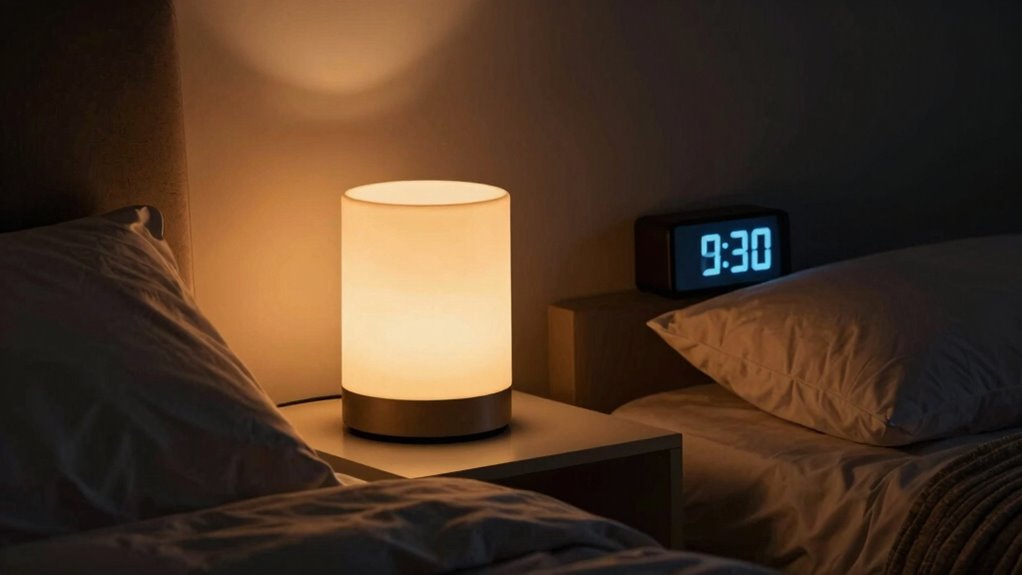
Finding the right brightness level is essential for creating an environment that promotes restful sleep. Too bright, and you risk disrupting your melatonin production; too dim, and it may cause eye strain or mood disturbances. To optimize your sleep environment, consider these tips:
Finding the right brightness fosters restful sleep and healthy mood.
- Use dimmer switches to adjust brightness easily
- Opt for softer light in the evening to enhance mood
- Avoid overly bright lights that drain energy and increase alertness
- Balance brightness to conserve energy while maintaining comfort
- Choose adjustable fixtures to tailor light levels based on activity
- Incorporate lighting controls that allow precise adjustment of brightness and color temperature throughout the night
Additionally, selecting smart lighting systems can automate these adjustments for optimal sleep conditions without manual intervention. Proper light level calibration is crucial for maintaining a healthy sleep cycle and supporting overall well-being. Adjusting the light intensity can also help in mimicking natural light patterns, which supports circadian rhythms and enhances sleep quality. Furthermore, understanding how color temperature influences mood and alertness can help you select the most suitable lighting for various times of the day, promoting better sleep hygiene.
Selecting the appropriate brightness supports mood enhancement and helps conserve energy throughout the night. Adjusting your night lights thoughtfully can foster a calming atmosphere, making it easier to relax and fall asleep faster.
Which Color Temperature Promotes Deeper Rest?

Choosing the right color temperature for your night light can considerably impact your ability to rest deeply. Cooler temperatures, like blue or white light, can interfere with your circadian rhythm and suppress melatonin production, making it harder to fall asleep. On the other hand, warmer tones—such as amber or soft red—are more conducive to relaxation and promote deeper rest. Light therapy with warmer hues can help signal to your body that it’s bedtime, aligning your circadian rhythm properly. By avoiding blue-rich lighting before sleep, you reduce disruptions to your biological clock, helping you fall asleep faster and enjoy more restorative sleep. Using appropriate lighting choices is essential for creating a sleep-friendly environment that supports your natural sleep-wake cycle. Understanding light’s influence on sleep can empower you to make better lighting choices for optimal rest. Adjusting the brightness levels of your night light can further enhance sleep quality by preventing overstimulation during bedtime.
Easy Tips to Set Your Night Light for Restful Nights
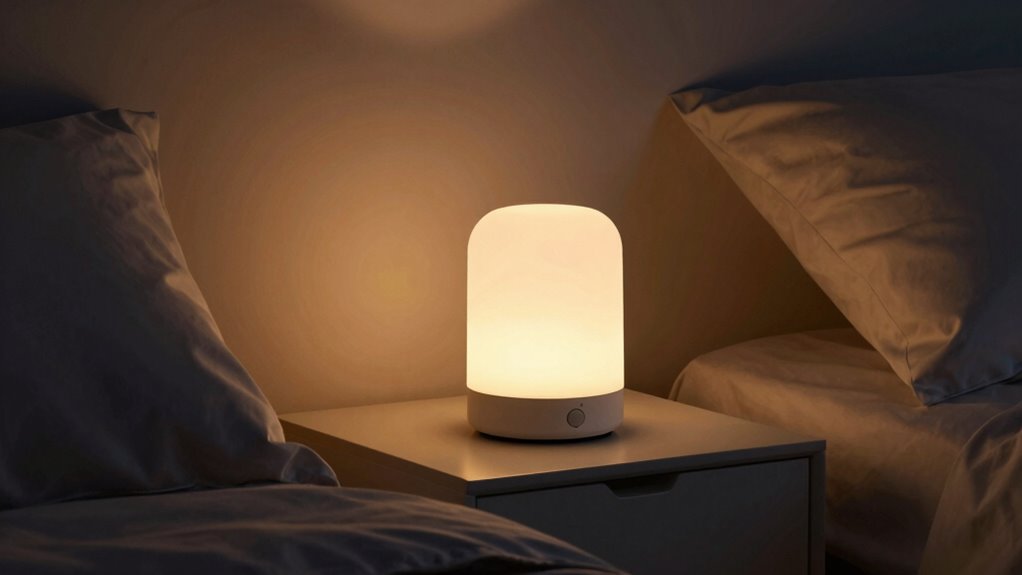
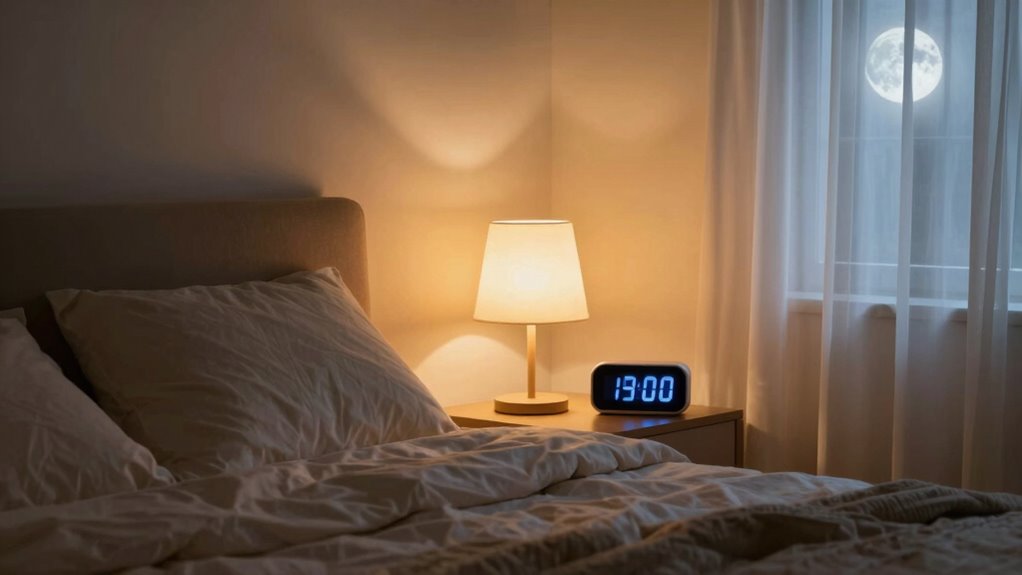
To set your night light for ideal rest, start by selecting a warm-colored bulb, such as amber or soft red, which helps signal to your body that it’s time to wind down. Proper lamp placement is key—place it low and away from your eyes to avoid direct glare. Keep brightness levels low to prevent disrupting your sleep cycle, and choose energy-efficient LED bulbs to save power. Adjust the light’s position so it illuminates your space without shining directly into your face. Additionally, consider timers or smart plugs to automate lighting, ensuring the light turns off when you’re asleep. By optimizing lamp placement and choosing the right bulb, you create a calming environment that promotes restful nights while maintaining energy efficiency. Implementing lighting control systems can further enhance your ability to manage light exposure seamlessly. Incorporating light brightness adjustment options allows for more personalized control over your sleep environment, further supporting restful nights. Utilizing circadian lighting principles can help align your lighting setup with natural sleep rhythms, promoting better rest. Being mindful of natural light patterns throughout the day can also improve your overall sleep quality.
Frequently Asked Questions
How Does Blue Light From Night Lights Impact Melatonin Production?
Blue light from night lights can cause melatonin suppression, making it harder for you to fall asleep. When exposed to blue light, your body experiences circadian disruption, which can shift your internal clock and reduce sleep quality. To protect your sleep, use night lights with warmer tones or dimmer brightness levels, especially before bed. This helps minimize blue light exposure and supports natural melatonin production for better rest.
Can Adjustable Night Lights Improve Sleep Quality for Different Users?
Yes, adjustable night lights can improve your sleep quality by allowing you to customize brightness and color temperature based on your sleep position and night light placement. When you position the light carefully, it minimizes disruptions and reduces blue light exposure, helping melatonin production. By adjusting the light to a softer, warmer hue, you create a cozy environment that promotes better sleep for different users.
What Are the Best Sleep Environments Besides Night Lighting?
You can improve your sleep environment by controlling ambient noise and room temperature. Use white noise machines or earplugs to block disruptive sounds, creating a calming atmosphere. Keep your room cool, ideally between 60-67°F (15-19°C), to promote deep sleep. Dark, clutter-free spaces also help. These adjustments, combined with a comfortable mattress and minimal disturbances, make your sleep environment more conducive to restful, uninterrupted sleep.
Are There Health Risks Associated With Certain Night Light Colors?
Certain night light colors can pose health risks, especially if they’re too bright or emit blue or white light. These colors can cause eye strain and circadian disruption, making it harder for you to fall asleep or stay asleep. To minimize risks, choose warmer, dimmer lights that reduce blue wavelengths. This way, you protect your eyes and support your natural sleep cycle.
How Long Should You Keep a Night Light on During Sleep?
Imagine your sleep as a delicate garden needing just the right light to flourish. You should keep your night light on for about 30 minutes to an hour, allowing your body to adjust without disrupting your sleep duration. If you’re light sensitive, turning it off sooner helps prevent interference with your circadian rhythm. Too much light can hinder deep sleep, so use your night light sparingly to protect your restful garden.
Conclusion
By understanding how brightness and color temperature impact your sleep, you hold the power to transform your nights. But did you know that the perfect setting might be just a switch away? As you experiment with your night light, stay alert—your ideal sleep environment could be closer than you think. Are you ready to reveal the secret to truly restful nights? The next step could change everything you thought you knew about sleep.