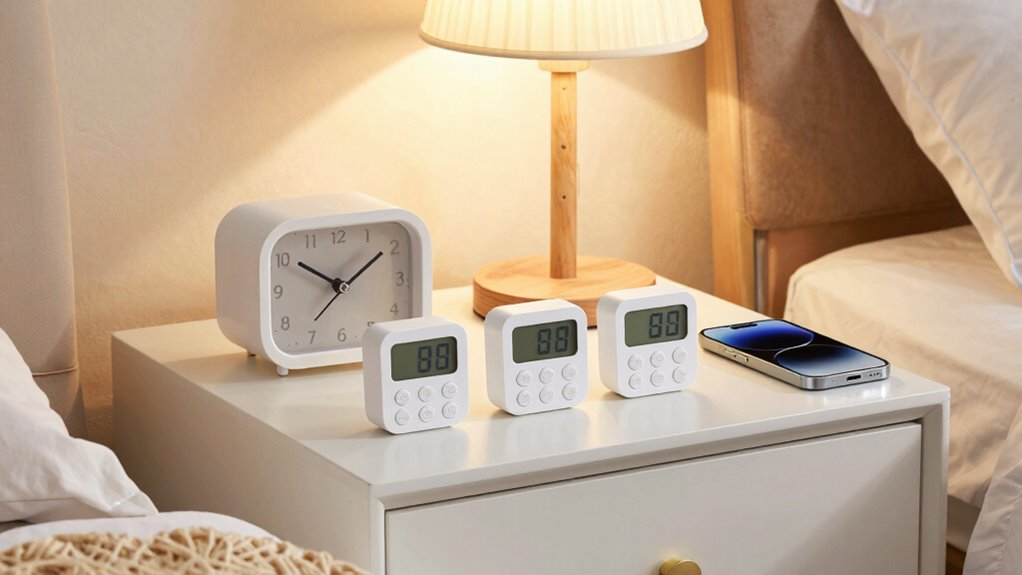

Looking for reliable plug in timers for bedroom devices? The best overall pick is the Dewenwils Indoor 24 Hour Programmable Digital Timer Outlet, praised for its versatility and ease of programming. The BN-LINK Indoor Countdown Timer stands out for its simple countdown feature, ideal for specific device scheduling, while the GE 24-Hour Mechanical Outlet Timer offers a straightforward, no-fuss option for basic needs. These devices often face tradeoffs like limited programming options versus ease of use, or digital precision against mechanical simplicity. Keep reading for a detailed breakdown to help you find the perfect timer for your bedroom setup.
Key Takeaways
- The top-ranked timers balance ease of programming with reliable performance, making them suitable for everyday bedroom use.
- Digital timers generally offer more precise and customizable schedules, but mechanical options excel in simplicity and durability.
- Multi-outlet timers provide convenience for controlling several devices simultaneously, but often come at a higher price point.
- Power handling capacity is crucial; choosing a timer that supports your device’s wattage prevents overload issues.
- User interface varies widely; intuitive controls are essential for those unfamiliar with digital programming or mechanical timers.
| Dewenwils Indoor 24 Hour Programmable Digital Timer Outlet (2 Pack) |  | Best Overall Digital Timer for Indoor Use | Number of outlets: 1 per timer | Programmable schedules: 3 sets daily | Memory retention: up to 3 months | VIEW ON AMAZON | See Our Full Breakdown |
| DEWENWILS Indoor Countdown Timer Outlet 2 Pack |  | Best for Flexible Countdown and Always-On Control | Number of Packs: 2 | Voltage: 125V | Current: 15A | VIEW ON AMAZON | See Our Full Breakdown |
| BN-LINK Indoor Countdown Timer with Repeat Function, 3-Prong Outlet Timer |  | Best for Adjustable Short-Duration Scheduling | Countdown Range: Up to 6 hours | Power Rating: 125V, 60Hz, 1875W/15A | UL Standard: UL Std. no. 917 | VIEW ON AMAZON | See Our Full Breakdown |
| BN-LINK 24-Hour Heavy Duty Mechanical Timer Outlet, Indicator Light, 3-Prong |  | Best Heavy-Duty Mechanical Timer for Frequent Scheduling | Voltage: 125VAC | Frequency: 60Hz | Wattage: 1875W | VIEW ON AMAZON | See Our Full Breakdown |
| TiFFCOFiO Indoor Mechanical Outlet Timer, 3 Prong, 24-Hour Programmable Plug-in Light Timer (2 Pack) |  | Best for Simple, Customizable Daily Schedules | Number of timers: 2 | Timer type: Mechanical | Power: 3 Prong | VIEW ON AMAZON | See Our Full Breakdown |
| BN-LINK Indoor 7-Day Programmable Digital Timer Outlet, 2 Outlets |  | Best Overall for Customizable Control and Versatility | Number of Outlets: 2 | Programs: 8 on/off programs | Max Load: 15A/1875W | VIEW ON AMAZON | See Our Full Breakdown |
| Fosmon 24 Hour Programmable Digital Timer Outlet (2 Pack), 125V 15A, Indoor, LCD Display |  | Best for Simplicity and Easy Programming | Voltage: 125V | Current: 15A | Number of Packs: 2 | VIEW ON AMAZON | See Our Full Breakdown |
| GE 24-Hour Mechanical Outlet Timer Switch, Single Polarized Plug-in Control for Indoor Lighting and Decor (1 Pack), 15119 |  | Best for Reliable, App-Free Control | Timer Cycle: 24 hours | Control Type: Mechanical pushpin | Interval: 30 minutes | VIEW ON AMAZON | See Our Full Breakdown |
| BN-LINK Indoor 24H Programmable Digital Timer Outlet, 2 Pack |  | Best for Compact, Multi-Device Indoor Scheduling | Rated Voltage: 125V | Rated Current: 15A | Power Capacity: 1875W | VIEW ON AMAZON | See Our Full Breakdown |
| BN-LINK U47 Indoor Mini 24-Hour Mechanical Outlet Timer, 3-Prong, 2-Pack |  | Best for Versatile Mechanical Control & Multiple Locations | Voltage: 125V | Frequency: 60Hz | Amperage: 15A | VIEW ON AMAZON | See Our Full Breakdown |
| Intermatic TN111K 15-Amp Indoor Timer |  | Best for Simple, Reliable Indoor Lighting Control | Amperage: 15-Amp | Control: 24-hour mechanical timer | Settings: Up to 2 On/Off per day | VIEW ON AMAZON | See Our Full Breakdown |
| HBN Indoor Mini 24-Hour Mechanical Outlet Timer, 2-Pack |  | Best for Multiple Small Devices and Budget-Friendly Automation | Voltage: 125 Volt | Frequency: 60 Hz | Amperage: 15 Amp | VIEW ON AMAZON | See Our Full Breakdown |
More Details on Our Top Picks
Dewenwils Indoor 24 Hour Programmable Digital Timer Outlet (2 Pack)
This compact digital timer stands out for its user-friendly interface, offering three daily repeat schedules with a large display that makes programming straightforward. Compared with the BN-LINK 24-Hour Mechanical Timer, it provides more precise scheduling and easier adjustments, especially for those who prefer digital controls. Its memory retention ensures settings aren’t lost during outages, which is essential for reliable bedroom automation. However, it’s limited to indoor environments and lacks remote access, meaning it’s less flexible for those wanting control from afar. Its sleek, unobtrusive design makes it blend seamlessly into home decor, while silent operation keeps bedrooms free of noise disturbances.
Pros:- Easy to program with multiple daily schedules
- Compact and stylish design
- Memory function preserves settings during power outages
- Silent operation ideal for bedrooms
Cons:- Limited to indoor use only
- No remote control or smart features
Best for: Light or electronics users who want reliable, easy-to-program digital scheduling without smart home integration
Not ideal for: People seeking remote control or smart features, or planning to use it outdoors
- Number of outlets:1 per timer
- Programmable schedules:3 sets daily
- Memory retention:up to 3 months
- Voltage:125V
- Frequency:60Hz
- Current:15A
- Power:1000W
- Prongs:3 prongs
Our verdict“This pick is perfect for users who want dependable, straightforward digital scheduling for indoor devices.”
DEWENWILS Indoor Countdown Timer Outlet 2 Pack
This pack offers versatile preset modes, including countdowns of 1, 2, 4, or 8 hours, and options for always-on or off, making it ideal for controlling appliances with simple push-button operation. Unlike the Dewenwils digital timer, which excels in scheduled routines, this timer focuses on quick, manual control over device power at specific intervals, perfect for short-term automation. Its straightforward operation suits users who prefer physical controls over digital screens. The maximum power limit of 1000W may restrict use with high-wattage devices, and it does not support remote or Wi-Fi connectivity, limiting flexibility. Its UL certification reassures safety for everyday household use.
Pros:- Simple button controls
- Multiple preset timer modes
- Automatic shut-off for energy saving
- UL certified safety
Cons:- Limited to 1000W power capacity
- No remote or smart features
Best for: Households needing quick, manual control of appliances, like fans or heaters, with simple setup
Not ideal for: Tech-savvy users seeking remote or programmable schedules for bedroom devices
- Number of Packs:2
- Voltage:125V
- Current:15A
- Power Capacity:1000W
- Timer Modes:1h, 2h, 4h, 8h, always on, off
- Certification:UL
Our verdict“Ideal for users who want straightforward, manual timing options without digital complexity.”
BN-LINK Indoor Countdown Timer with Repeat Function, 3-Prong Outlet Timer
Compared to the Dewenwils digital timer, the BN-LINK Countdown Timer offers a simple, dedicated button interface with a maximum setting of 6 hours, making it easy to set up quick energy-saving cycles. Its repeat function adds convenience for daily routines, making it suitable for lights or small appliances. While it lacks digital display or remote features, its straightforward design appeals to users who prefer mechanical controls. The 6-hour limit could be restrictive for longer schedules, and it’s strictly for indoor use, similar to other timers in this roundup. Overall, this timer balances ease of use with effective short-term scheduling, especially for those who don’t need digital customization.
Pros:- Simple button operation
- Versatile for many appliances
- Energy-efficient and cost-effective
- UL listed safety standard
Cons:- Limited to 6-hour maximum duration
- No digital display or remote control
Best for: Users seeking quick, adjustable, short-duration control for indoor devices
Not ideal for: People needing longer or more complex schedules or remote operation
- Countdown Range:Up to 6 hours
- Power Rating:125V, 60Hz, 1875W/15A
- UL Standard:UL Std. no. 917
- Outlet Type:3-prong
Our verdict“This timer is best suited for those who want quick, reliable short-term control without digital complexity.”
BN-LINK 24-Hour Heavy Duty Mechanical Timer Outlet, Indicator Light, 3-Prong
This mechanical timer features a large pin dial for programming up to 96 ON/OFF cycles with 15-minute intervals, making it highly adaptable for controlling multiple devices like lamps, fans, or aquarium equipment. Its sturdy, heavy-duty design and safety certification make it suitable for demanding environments. However, using mechanical dials means less precise control compared to digital timers, and programming can be more time-consuming. Compared to the TiFFCOFiO mechanical timer, which offers similar features, the heavier build and safety certification make it a strong choice for long-term or frequent use where durability matters most. Its indoor use limitation applies here as well, but for heavy-duty needs, it’s a solid option.
Pros:- Large pin dial for easy programming
- Up to 96 ON/OFF cycles
- Heavy-duty and safety-certified
- Suitable for demanding environments
Cons:- Less precise than digital timers
- Time-consuming to program multiple cycles
Best for: Home or office users needing robust, frequent scheduling for multiple devices
Not ideal for: Users seeking digital or remote control options, or precise timing down to the minute
- Voltage:125VAC
- Frequency:60Hz
- Wattage:1875W
- Current:15A
- Number of Programs:96
- Interval:15 minutes
- Prong Type:3-prong
- Safety Listing:ETL
Our verdict“This mechanical timer excels for heavy-duty, frequent scheduling where durability and multiple cycles are needed.”
TiFFCOFiO Indoor Mechanical Outlet Timer, 3 Prong, 24-Hour Programmable Plug-in Light Timer (2 Pack)
The TiFFCOFiO mechanical timer provides 48 ON/OFF settings over 24 hours with 30-minute pin intervals, making it ideal for users who want flexible daily schedules without digital interfaces. Unlike the Dewenwils digital timer, it relies on manual pin adjustments, which can be quicker for simple routines but less precise for minute-by-minute control. Its compact design makes it unobtrusive, suitable for bedroom lamps or small appliances. The lack of remote control or digital display limits its use for those seeking remote management or detailed scheduling. Compared with the BN-LINK 24-Hour Mechanical Timer, it offers a similar level of customization but with slightly finer intervals, making it a good choice for basic automation needs.
Pros:- Easy pin-based setting
- Flexible 24-hour schedule
- Compact and space-saving
- ETL listed for safety
Cons:- Mechanical timer less precise than digital options
- Limited to 30-minute intervals
- No remote control
Best for: People desiring straightforward, customizable daily schedules with mechanical controls
Not ideal for: Tech-savvy users wanting digital or remote features, or complex scheduling needs
- Number of timers:2
- Timer type:Mechanical
- Power:3 Prong
- Programmable:24-Hour
- Pin intervals:30 minutes
- ETL Listed:Yes
Our verdict“Perfect for users who want simple, customizable daily automation without digital complexity.”
BN-LINK Indoor 7-Day Programmable Digital Timer Outlet, 2 Outlets
This timer stands out for its ability to handle multiple devices with its 8 programmable on/off settings, making it ideal for managing complex schedules. Compared to the simpler GE mechanical timer, it offers detailed control but requires a bit more setup and understanding. Its backup battery ensures settings are retained during power outages, which is essential for reliable operation. However, it’s limited to just two outlets and lacks Wi-Fi or remote features, which might restrict convenience for some users. The inclusion of vacation mode and safety certification (ETL) makes it suitable for those who prioritize energy savings and safety.
Pros:- Customizable 8 on/off programs for multiple devices
- Backup battery preserves settings during outages
- Vacation mode simulates occupancy for security
- ETL safety listing
Cons:- Limited to 2 outlets, restricting device connections
- Requires understanding of programming setup
- No remote or app control
Best for: Homeowners who want detailed scheduling for multiple devices and don’t mind manual programming.
Not ideal for: Users seeking remote control or app-based scheduling, as this timer lacks Wi-Fi features.
- Number of Outlets:2
- Programs:8 on/off programs
- Max Load:15A/1875W
- Voltage:120V
- Frequency:60Hz
- Backup Battery:Yes
Our verdict“Ideal for those needing flexible, multi-device control without remote access but with safety and backup features.”
Fosmon 24 Hour Programmable Digital Timer Outlet (2 Pack), 125V 15A, Indoor, LCD Display
This pick excels in user-friendly operation with its clear LCD display and straightforward programming, making it suitable for those new to timers. Unlike the BN-LINK 7-day model, it offers only a 24-hour schedule but simplifies the setup process, ideal for daily routines like lamps or small appliances. Its backup battery maintains settings for over 100 hours, but it’s limited to indoor use only and can face occasional connectivity hiccups. Its space-saving design with side outlets makes it a practical choice for tight spaces, though it lacks remote control features, which might bother tech-savvy users.
Pros:- Intuitive LCD display for simple setup
- Backup battery keeps settings over 100 hours
- Compact, space-efficient side outlet design
- ETL, FCC, RoHS certifications for safety
Cons:- Limited to indoor use only
- Manual setup required for complex schedules
- Possible connectivity issues reported by some users
Best for: Beginners or anyone looking for a reliable, easy-to-set timer for daily indoor routines.
Not ideal for: Those needing complex weekly schedules or remote access, as this device is solely manual and indoor-focused.
- Voltage:125V
- Current:15A
- Number of Packs:2
- Battery Type:NiMH
- Certification:ETL, FCC, RoHS
- Display:LCD
Our verdict“Best suited for users who prioritize ease of use and basic daily scheduling without remote control needs.”
GE 24-Hour Mechanical Outlet Timer Switch, Single Polarized Plug-in Control for Indoor Lighting and Decor (1 Pack), 15119
This mechanical timer offers a straightforward, no-fuss solution for daily lighting and decor automation. Its pushpin programming with 30-minute intervals provides reliable timing without the need for digital interfaces or Wi-Fi, making it ideal for those who prefer manual control. When compared to the BN-LINK digital options, it lacks digital precision but shines in durability and simplicity. Its limited interval options and single polarized outlet restrict its flexibility, and it only supports two-prong devices, which may not suit modern electronics. Still, its override switch adds quick manual control, making it a practical choice for basic needs.
Pros:- Easy pushpin programming with 30-minute intervals
- No reliance on Wi-Fi or apps, offering reliability
- Compact design fits most outlets
- Built-in override switch for manual control
Cons:- Limited to indoor use only
- No digital or complex scheduling options
- Supports only two-prong devices
Best for: Users seeking a durable, no-setup-needed timer for simple indoor lighting or seasonal decor.
Not ideal for: People who want detailed scheduling or remote management, as this timer is purely mechanical.
- Timer Cycle:24 hours
- Control Type:Mechanical pushpin
- Interval:30 minutes
- Outlet Type:Single polarized
- Indoor Use:Yes
- ETL Listed:Yes
Our verdict“Perfect for those who value straightforward, dependable mechanical control over basic indoor devices.”
BN-LINK Indoor 24H Programmable Digital Timer Outlet, 2 Pack
This set offers two slim digital timers, making it easier to control multiple indoor devices like lamps and holiday lights. Its 2 daily programs and clear digital display streamline setup compared to the more complex 7-day models, but it’s limited to indoor environments and non-grounded outlets, which could be a concern for some users. The backup memory is a plus for maintaining schedules during outages, yet moderate customer satisfaction ratings suggest some users experience glitches or difficulty with programming. Compared to the Fosmon model, it’s less space-efficient but offers a similar straightforward digital experience.
Pros:- Easy to set up with digital display
- Supports multiple daily programs
- Compact, slim design prevents outlet blocking
- Backup memory preserves schedules during outages
Cons:- Limited to indoor use only
- Non-grounded 2-prong design may not suit all devices
- Moderate customer satisfaction indicates possible issues
Best for: Indoor users who need simple, multiple daily schedules at an affordable price, especially in tight spaces.
Not ideal for: Users seeking complex weekly routines or outdoor durability, as it’s meant strictly for indoor use and has moderate reviews.
- Rated Voltage:125V
- Rated Current:15A
- Power Capacity:1875W
- Backup Battery:Yes
- Outlet Type:Side-facing, 2-prong
- ETL Listed:Yes
Our verdict“Suitable for indoor users wanting simple, multiple daily schedules without complex features or outdoor use.”
BN-LINK U47 Indoor Mini 24-Hour Mechanical Outlet Timer, 3-Prong, 2-Pack
This set provides two compact mechanical timers with 24 settings per day, suitable for various lighting and small appliances. Its manual pin setup makes it flexible for different schedules, but the mechanical nature means less precision and more effort compared to digital timers like Fosmon or BN-LINK’s digital 24-hour models. The 3-prong design allows grounding, increasing safety for certain appliances, but the timer’s capacity is limited to 125V and 15A. Its ease of use is appealing for those who prefer manual control, yet it requires regular pin adjustments for changing schedules, which can be less convenient than digital alternatives.
Pros:- Easy to set with clear ON/OFF pins
- Supports up to 24 settings per day
- Includes two timers for multiple locations
- Grounded 3-prong plug for safety
Cons:- Mechanical timer less precise than digital options
- Requires manual pin setting for each schedule change
- Limited to 125V and 15A capacity
Best for: People who want a rugged, manual timer for multiple locations or appliances and don’t mind periodic pin adjustments.
Not ideal for: Users seeking digital precision, remote control, or complex scheduling, as this is purely mechanical.
- Voltage:125V
- Frequency:60Hz
- Amperage:15A
- Resistive Wattage:1875W
- Tungsten Wattage:1000W
- Number of Timers:2
Our verdict“Best for users who prefer manual, durable timers for multiple appliances and locations without digital complexity.”
Intermatic TN111K 15-Amp Indoor Timer
This mechanical timer excels for users who prefer straightforward, no-fuss operation. Its easy-to-program design with up to two daily On/Off settings makes it a practical choice for lamps and seasonal lights. Compared with digital options like the Dewenwils Digital Timer, this model offers fewer customization features but benefits from durability and simplicity. The manual override is a major plus, allowing immediate control without reprogramming. However, its mechanical nature means less precise timing and limited flexibility—just two settings per day. This pick makes the most sense for those prioritizing straightforward, reliable operation over advanced features or digital precision.
Pros:- Easy to program with up to 2 customizable settings
- Manual override for instant control
- Durable mechanical design suitable for indoor use
Cons:- Limited to only 2 On/Off settings per day
- Less precise timing compared to digital timers
Best for: Homeowners seeking a simple, dependable timer for indoor lighting or seasonal decor
Not ideal for: Tech-savvy users wanting multiple schedules or remote control capabilities
- Amperage:15-Amp
- Control:24-hour mechanical timer
- Settings:Up to 2 On/Off per day
- Design:Single 2-prong plug
- Application:Indoor lighting and appliances
- Type:Mechanical
Our verdict“This timer is ideal for users who want straightforward, reliable control of indoor lighting without digital complexity.”
HBN Indoor Mini 24-Hour Mechanical Outlet Timer, 2-Pack
This set of two mini timers provides flexible scheduling for small appliances, lamps, and holiday lights, making it a strong choice for those managing multiple devices. With the ability to schedule up to 24 on/off intervals daily in 30-minute increments, it surpasses the simplicity of the Intermatic TN111K by offering more frequent cycles. Compared to digital timers like the Fosmon Digital Timer, these mechanical models lack remote control and digital displays but excel in affordability and straightforward setup. The need to manually adjust pins for each cycle can be time-consuming, especially if your schedule varies frequently. This product suits buyers who want multiple timers for different locations and don’t mind manual setup over digital convenience.
Pros:- Includes two timers for versatile placement
- Allows up to 24 on/off cycles daily in half-hour steps
- Simple pin-based setup for basic scheduling
Cons:- Pins require manual adjustment for each cycle, which can be tedious
- Limited to indoor use only
- No digital or remote control features
Best for: Budget-conscious users with multiple small devices or lighting setups needing frequent on/off cycles
Not ideal for: Users seeking digital control, remote scheduling, or minimal manual adjustments
- Voltage:125 Volt
- Frequency:60 Hz
- Amperage:15 Amp
- Resistive Power:1875 Watt
- Tungsten Power:8 Amp, 1000 Watt
- Ballast Power:5 Amp
- Cycle Frequency:24 per day in 30-minute increments
Our verdict“This set offers flexible scheduling for multiple devices at an affordable price but demands manual effort for each cycle.”

How We Picked
The products were evaluated based on key factors such as reliability, ease of use, programmability, build quality, and value. We prioritized timers that offer straightforward setup, consistent performance, and broad compatibility with common bedroom devices. Devices with flexible scheduling options and durable construction ranked higher, as they provide better long-term value. Our ranking also considers user feedback regarding durability and interface clarity, ensuring recommendations are practical for a range of users—from tech-savvy to beginners.Factors to Consider When Choosing Plug In Timers For Bedroom Devices
Choosing the right plug in timer for bedroom devices involves several considerations beyond basic features. Understanding your specific needs, such as whether you want simple on/off control or complex scheduling, helps narrow options. Budget also plays a role, as more advanced digital timers tend to cost more but offer greater flexibility. Compatibility with your devices’ wattage and plug types prevents potential overloads or connectivity issues. Lastly, user interface and installation ease are critical—timers should be straightforward to set up and operate, especially if you’re not tech-savvy.Programming Options
Consider whether you need a timer with simple repeat cycles or more complex schedules. Digital timers often allow for detailed programming, including multiple on/off times, while mechanical models are usually limited to a single daily cycle. Think about how often you need to change settings; frequent adjustments may favor digital timers with easy-to-use interfaces. Avoid overly complicated models if you prefer quick setup, but don’t sacrifice flexibility if your routine varies daily.
Ease of Use
For many bedroom users, a straightforward interface is key. Mechanical timers are typically easier for those who dislike digital setups, offering simple dials and switches. Digital timers with LCD screens and buttons provide more customization but can be intimidating for some. Look for models with clear labels, intuitive controls, and minimal steps for programming. A timer that’s easy to operate reduces setup errors and frustration over time.
Build Quality and Durability
The longevity of a timer depends on its construction and materials. Cheaper plastic models may break or malfunction after a short period, especially if frequently unplugged or exposed to bedroom conditions like dust or humidity. Well-built timers with sturdy outlets and reliable switches tend to last longer, offering better value. If you plan to use the timer regularly, investing in a durable model can save money and hassle later.
Power Capacity and Compatibility
Always verify that the timer supports the wattage and amperage of your devices. Overloading a timer can cause failures or safety hazards. Many bedroom devices—like lamps, small fans, or humidifiers—have different power requirements, so select a timer rated accordingly. Compatibility also extends to plug type; ensure the timer fits your outlet configuration without blocking adjacent sockets.
Cost and Value
While budget models are tempting, they often lack features like precise scheduling or durability. Conversely, premium timers tend to offer advanced programmability and longer lifespan but come at a higher price. Assess your needs carefully—if you only want to turn a light on/off nightly, a basic model may suffice. For more complex routines, investing in a mid-range or higher-end timer can provide better long-term value and flexibility.
Frequently Asked Questions
Can I use a timer to control multiple bedroom devices at once?
Yes, many timers come with multiple outlets, allowing you to automate several devices simultaneously. Multi-outlet timers are convenient for controlling lamps, alarms, or humidifiers together, saving setup time and ensuring synchronized operation. Just ensure the combined wattage of your devices does not exceed the timer’s rated capacity, to avoid safety issues or device failure. If you need individual control over each device, separate timers may be a better choice.
Are digital timers more reliable than mechanical ones?
Digital timers generally provide more precise and customizable scheduling options, which makes them popular for complex routines. However, mechanical timers are praised for their simplicity and durability, often lasting longer under heavy use. The choice depends on your comfort with digital controls and the level of schedule complexity needed. For straightforward on/off cycles, a mechanical timer can be just as reliable and easier to operate.
What wattage should I check before buying a timer?
Always verify the timer’s maximum wattage or amperage rating against your device’s power draw. Overloading a timer can cause malfunctions or safety hazards, such as overheating. For typical bedroom devices like lamps or small fans, a timer rated at 15A or 1250W is usually sufficient. For high-wattage appliances, choose a heavy-duty timer with a higher capacity to ensure safe and reliable operation.
Can I program timers to turn devices on/off at different times during the day?
Most digital timers allow for multiple on/off settings within a 24-hour period, making them suitable for varied schedules. Mechanical timers typically support a single on/off cycle per day, which may be limiting if your routine varies. When selecting a timer, consider your scheduling needs—if you require complex timing, opt for a digital model with multiple program slots. This flexibility ensures your devices operate exactly when needed without manual intervention.
Is it worth paying more for a timer with remote control features?
Timers with remote control functionality offer added convenience, especially if you want to adjust settings without unplugging or walking to the outlet. However, they tend to be more expensive and may require Wi-Fi or Bluetooth connectivity, which can introduce additional points of failure. For basic bedroom lighting automation, a standard timer usually suffices. Consider a remote feature only if you want to frequently modify schedules from a distance or automate via smart home systems.
Conclusion
For general bedroom automation, the Dewenwils Indoor 24 Hour Programmable Digital Timer Outlet remains the best overall choice thanks to its balance of features and ease of use. Budget-conscious buyers or those seeking simplicity should consider mechanical models like the GE 24-Hour Mechanical Outlet Timer. If you’re willing to spend more for advanced scheduling and remote control, premium options with smart integrations are ideal. Beginners will benefit from straightforward, mechanical timers, while more tech-savvy users should prioritize digital timers with extensive programmability. Ultimately, selecting the right timer depends on your specific needs, routine complexity, and budget.