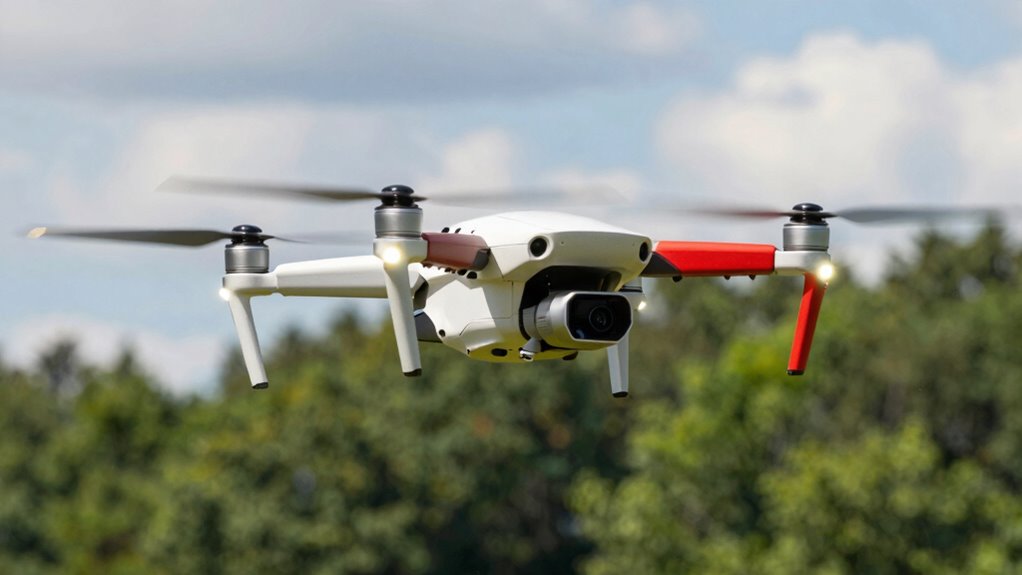

If you want a drone with obstacle avoidance under 249g, the strongest all-around fit in this lineup is the SKYROVER X1 with a 5.5-inch screen controller, combining 360-degree avoidance, 4K/60fps video, and three batteries. For a simpler screen-controller setup, the GPS Drone with 4K Camera and 360° Obstacle Avoidance is another standout, while the GPS Drone with a 3-axis gimbal better suits buyers who prioritize steadier footage. The main tradeoff is that compact, beginner-friendly designs may have less capable sensing or camera stabilization than feature-rich GPS models. Obstacle avoidance also varies in coverage and should not be treated as a substitute for attentive piloting. Read on for the full breakdown and advice on matching the right drone to your flying style.
Key Takeaways
- The SKYROVER X1 with 5.5-inch screen controller ranks first for pairing 360-degree obstacle avoidance with 4K/60fps video, a built-in viewing screen, and three batteries.
- A 3-axis gimbal matters more for smooth footage than a headline camera resolution; the GPS model with a gimbal is the clearest fit for buyers focused on video stability.
- Screen controllers appear across several picks, but they are not interchangeable advantages: compare screen size and the drone’s camera and sensing features, not just the presence of a display.
- Under-249g claims recur across the lineup, including camera-focused GPS models and the S166MAX, but a lighter design alone does not indicate better obstacle sensing or video quality.
- The TT19LCD models and other compact FPV options favor accessible, simple flying, while the more feature-rich GPS models are better suited to buyers seeking navigation and return functions.


| drone with obstacle avoidance under | Obstacle avoidance | Weight |
|---|---|---|
| SkyRover X1 Drone with Camera | 360° sensing with Smart Return-to-Home | Under 249 g |
| FPV Drone with Camera | 270° | — |
| 8K Drone with Obstacle Avoidan | 360° laser sensor | 249 g |
| GPS Drone with 4K Camera for A | 360° | Less than 249 g |
| SKYROVER X1 Drone with 5.5" Sc | 360° sensing | Under 249 g |
| GPS Drone with 4K Camera | 360° | Under 249 g |
| TT19LCD Foldable RC Drone with | 270° | — |
| GPS Drone with 4K Camera for A | 360° laser sensing | — |
| S166MAX Foldable Drone with 72 | — | Under 249 g |
| TT19LCD FPV Drone with LCD Scr | 270° intelligent sensing | Under 250 g |
More Details on Our Top Picks
SkyRover X1 Drone with Camera
I’d put the SkyRover X1 first for buyers who want obstacle avoidance without giving up serious camera capability. Its 360° sensing is paired with a 1/1.32-inch sensor, 4K/60fps HDR video, and a 3-axis gimbal, giving it a stronger imaging profile than the 1080p FPV Drone with LCD Screen. Under-249g weight and up to 32 minutes per battery also make it easier to pack for trips, while three batteries extend the stated total flight time to 96 minutes. The tradeoff is a phone-dependent setup: the product data calls out careful Bluetooth pairing and connected-device reliance, unlike the LCD-equipped FPV model. I’d also want a separate storage plan, since built-in storage is not specified. It makes the most sense for camera-focused flyers who value obstacle sensing and portability over a self-contained controller.
Pros:- 360° obstacle sensing is paired with Smart Return-to-Home.
- 1/1.32-inch CMOS sensor, f/1.7 aperture, and 3-axis gimbal support detailed, stabilized footage.
- Captures 4K/60fps HDR video and 48MP photos.
- Three batteries provide up to 96 minutes of stated total flight time.
Cons:- Bluetooth pairing and app setup may take extra care.
- Built-in storage is not specified, and media capture relies on a connected device.
- The 32-minute maximum per battery is shorter than the 50-minute claim for the 8K Drone with Obstacle Avoidance.
Best for: Travel and outdoor photography enthusiasts seeking 360° obstacle sensing, stabilized 4K footage, and a sub-249g aircraft.
Not ideal for: Buyers who want to fly without a smartphone or prefer confirmed onboard storage and a simpler setup.
- Weight:Under 249 g
- Camera sensor:1/1.32-inch CMOS
- Aperture:f/1.7
- Video:4K/60fps HDR; up to 4K/100fps slow motion
- Photos:48 MP
- Obstacle avoidance:360° sensing with Smart Return-to-Home
- Gimbal:3-axis stabilization
- Flight time:Up to 32 minutes per battery; 96 minutes total with three batteries
- Transmission range:9.32 miles
Our verdict“Choose the SkyRover X1 if camera quality, 360° sensing, and compact travel weight matter more than phone-free operation.”
FPV Drone with Camera, LCD Screen, Foldable Mini Design, Brushless Motor, 270° Obstacle Avoidance, Supports up to 32GB SD Card
The clearest reason to choose this FPV model is its built-in 2.8-inch LCD: beginners can view the camera feed without relying on a phone, a practical distinction from the SkyRover X1, which depends on a connected device. Its 270° obstacle avoidance offers some collision awareness, but it does not match the X1’s 360° coverage or the 8K Drone’s stated 360° laser sensing. The foldable design and adjustable 90° camera make it a convenient starter for short-range practice, and brushless motors are part of the listed configuration. The compromise is reach: the stated maximum range is only 80 meters, so it suits nearby flying rather than wide-area exploration. Video is 1080p, and storage is limited to a supported 32GB SD card with no internal memory listed.
Pros:- Built-in 2.8-inch LCD shows live video without a smartphone.
- 270° obstacle avoidance adds a layer of protection during beginner flights.
- Foldable modular arms make the drone easier to pack and store.
- 90° electrically adjustable camera angle helps frame different views.
Cons:- 80-meter maximum range limits flights to nearby areas.
- 1080p video is a step down from the 4K capture offered by both SkyRover X1 models.
- Storage is limited to a supported 32GB SD card, with no internal memory specified.
Best for: First-time pilots who want a foldable practice drone with a built-in screen and do not want to use a smartphone as the live-view display.
Not ideal for: Aerial photographers seeking 4K capture, long-range flights, or full 360° obstacle sensing.
- Video resolution:1080p
- Obstacle avoidance:270°
- Display:Built-in 2.8-inch LCD
- Camera adjustment:Electrically adjustable 90° lens
- Maximum range:80 meters
- Connectivity:Wi-Fi
- Battery capacity:1500 mAh
- Storage support:Up to 32GB SD card
- Motor:Brushless
Our verdict“Pick this model for nearby beginner flying with a self-contained screen, not for high-resolution footage or expansive range.”
8K Drone with Obstacle Avoidance, Under 249g, 2000m Range, Dual Batteries
This foldable model stands apart with a 4.5-inch screen built into the controller and a stated 50 minutes of flight time using two batteries. That makes it a better fit for pilots who want extended sessions without a smartphone than the phone-dependent SkyRover X1. It also lists 360° laser obstacle avoidance, GPS return modes, and optical-flow positioning, a broader collection of assistance features than the FPV Drone’s 270° system. The 8K label and dual cameras sound ambitious, but the listed 2-axis gimbal differs from the X1’s 3-axis stabilization, and the range figures conflict: remote control is claimed at 2,000 meters while maximum wireless range is listed as 1,200 meters. I’d treat those claims cautiously and choose it for its screen and flight-time proposition, not unverified range or headline resolution.
Pros:- Built-in 4.5-inch HD remote screen supports phone-free viewing.
- Two batteries are listed for up to 50 minutes of flight time.
- 360° laser obstacle avoidance is paired with GPS return modes and optical-flow positioning.
- Foldable design and 249g listed weight support portability.
Cons:- The stated 2,000-meter control range conflicts with the listed 1,200-meter maximum wireless range.
- Its 2-axis gimbal provides fewer stabilization axes than the 3-axis gimbals listed for both SkyRover X1 models.
- The 8K camera claim is not accompanied by a detailed video frame-rate specification.
Best for: Flyers who want a built-in controller display, longer stated flight sessions, and GPS-assisted modes in a foldable aircraft.
Not ideal for: Buyers who need consistent published range figures or prefer a clearly specified 3-axis gimbal for stabilized footage.
- Camera resolution:8K
- Camera setup:Dual cameras
- Gimbal:2-axis mechanical
- Obstacle avoidance:360° laser sensor
- Remote display:4.5-inch HD screen
- Flight time:Up to 50 minutes with two batteries
- Weight:249 g
- Range claims:2,000 m remote control range; 1,200 m maximum wireless range listed
- Positioning and return:GPS smart return modes and optical-flow positioning
Our verdict“Choose this drone for its large built-in display and longer stated flight time, while treating its range and camera claims with caution.”
GPS Drone with 4K Camera for Adults – Obstacle Avoidance – Under 249 g
I’d shortlist this GPS model for new pilots who put return-to-home and spare batteries ahead of camera refinements. Its 360° obstacle avoidance and GPS auto-return provide a more safety-focused feature set than the FPV Drone’s 270° avoidance, while three batteries give it up to 75 minutes of stated flight time across a session. The 90° remotely adjustable camera angle also helps users change framing without repositioning the aircraft. Compared with the SkyRover X1, however, the product data gives no sensor size, frame rate, or gimbal details, so I would not pick it for demanding footage; its per-battery flight time is capped at 25 minutes. A built-in screen controller removes the need for a phone for basic flying, but advanced features such as gesture photography and intelligent follow still require a smartphone.
Pros:- 360° obstacle avoidance supports safer beginner flying.
- GPS auto-return adds a recovery aid if the aircraft needs to return to its starting point.
- Three rechargeable batteries provide up to 75 minutes of stated total flight time.
- Built-in screen controller supports flying and viewing without a smartphone.
Cons:- Each battery provides up to 25 minutes, less than the stated 32 minutes per battery for the SkyRover X1.
- Sensor size, video frame rate, and gimbal specifications are not provided.
- Gesture photography and intelligent follow still require a smartphone.
Best for: New recreational pilots who want GPS auto-return, broad obstacle sensing, and multiple batteries for practice sessions.
Not ideal for: Content creators who need detailed camera specifications, advanced stabilization, or smartphone-free access to every intelligent feature.
- Weight:Less than 249 g
- Camera resolution:4K
- Camera angle adjustment:90° remote adjustment
- Obstacle avoidance:360°
- GPS auto-return:Yes
- Battery count:Three rechargeable batteries
- Flight time per battery:Up to 25 minutes
- Total flight time:Up to 75 minutes across three batteries
- Controller:Built-in screen controller
Our verdict“Pick this GPS drone for beginner-friendly return features and multi-battery practice, rather than for fully specified camera performance.”
SKYROVER X1 Drone with 5.5″ Screen Controller, 4K/60fps Video, 360° Obstacle Avoidance, Under 249g, 96-Min Flight Time (3 Batteries)
This version pairs the SkyRover X1’s 4K/60fps HDR camera and 360° sensing with a 5.5-inch touchscreen controller, making it the most self-contained camera-focused option here. Compared with the similarly named SkyRover X1 without a screen, it avoids dependence on a connected phone for the controller display; compared with the 8K Drone, it specifies a 3-axis gimbal and a 1/1.32-inch sensor with f/1.7 aperture. The stated 96-minute total flight time across three batteries and 9.32-mile transmission range also suit longer outings. The catch is that the flight-time figure is a combined total, not a single-battery duration, and battery charging time and weights are not supplied. It is a stronger fit for phone-free filming than the lower-spec FPV model, but buyers should still check their preferred storage and media workflow.
Pros:- 5.5-inch, 700-nit touchscreen controller avoids relying on a smartphone for the display.
- 1/1.32-inch CMOS sensor, f/1.7 aperture, and 3-axis gimbal support the specified 4K/60fps HDR capture.
- 360° sensing is paired with Smart Return to Home.
- Three batteries provide up to 96 minutes of stated combined flight time.
Cons:- The 96-minute figure is total flight time across three batteries, not per battery.
- Battery charging time and individual battery weights are not specified.
- Compared with the smaller FPV Drone with LCD Screen, this camera-focused setup has more advanced features than casual practice flights may require.
Best for: Traveling photographers who want 360° obstacle sensing, stabilized 4K capture, a bright built-in controller screen, and multiple batteries.
Not ideal for: Buyers seeking a lightweight starter setup with fully specified battery details or those who do not need a controller display and advanced camera system.
- Weight:Under 249 g
- Sensor and aperture:1/1.32-inch CMOS; f/1.7
- Video:4K/60fps HDR
- Photos:48 MP
- Controller:5.5-inch HD touchscreen; 700-nit brightness
- Obstacle avoidance:360° sensing
- Stabilization:3-axis gimbal
- Flight time:Up to 96 minutes with three batteries
- Transmission range:9.32 miles
Our verdict“Choose this version if you want the SkyRover X1’s camera and obstacle-sensing features with a large built-in screen instead of phone-based viewing.”
GPS Drone with 4K Camera, 360° Obstacle Avoidance, and 5G Screen Controller
Three included batteries and 360° obstacle avoidance make this a practical pick for beginners who want more flying time between charging breaks. Its built-in screen controller also avoids relying on a phone for basic piloting, while GPS auto-return and optical-flow hover add useful safeguards when practicing. Compared with the TT19LCD, this model offers a stated 4K camera and full-around obstacle sensing rather than HD imaging and 270° coverage. The tradeoff is that the 75-minute figure is total time across three batteries, not one uninterrupted flight, and advanced functions such as gesture photography still require a smartphone. Its plastic construction also gives less reassurance against knocks than a sturdier build. I’d choose it for extended casual sessions, not for a phone-free setup in every mode.
Pros:- Three batteries provide up to 75 minutes of stated combined flight time.
- 360° obstacle avoidance pairs with GPS auto-return for added flight safeguards.
- Built-in screen controller supports smartphone-free basic operation.
- Under-249g weight and optical-flow hover suit beginner practice.
Cons:- The 75-minute total is split across three batteries rather than a single flight.
- Advanced gesture and follow features still require a smartphone connection.
- Plastic construction may be less resistant to impact than sturdier alternatives.
Best for: Beginner flyers planning longer casual sessions who want GPS return, a built-in screen, and spare batteries in the kit.
Not ideal for: Buyers who need a durable crash-resistant airframe or want gesture and follow features to work without a smartphone.
- Weight:Under 249 g
- Camera:4K video; 33 MP stills
- Total flight time:Up to 75 minutes across 3 batteries
- Battery capacity:3000 mAh
- Obstacle avoidance:360°
- Controller:Remote control with built-in screen
- Flight aids:GPS auto-return, optical-flow hover, Follow Me, gesture photography
Our verdict“Choose this model for multi-battery flying sessions and 360° sensing, provided you accept plastic construction and phone-dependent advanced features.”
TT19LCD Foldable RC Drone with LCD Controller, HD FPV Camera, Brushless Motor, and 270° Obstacle Avoidance
The included 2.8-inch LCD controller makes this TT19LCD a straightforward choice for beginners who would rather not mount a phone to fly. Its 270° obstacle avoidance, optical-flow positioning, propeller guards, and carrying case add practical support for early practice, while the 32GB card means storage is ready to use. Compared with the GPS 4K model with 360° avoidance, this one gives up full-around sensing and GPS features but includes a more complete beginner-oriented kit. The camera is described as HD, without a precise resolution, so it is a weaker choice for buyers prioritizing sharp aerial footage. Flight time and range are also unspecified in the supplied product information, making it harder to plan sessions. I’d favor it for casual learning over photography-focused flying.
Pros:- 2.8-inch LCD controller provides FPV viewing without a smartphone connection.
- 270° obstacle avoidance and optical-flow positioning support beginner flying.
- Foldable design, propeller guards, and carrying case suit portable practice.
- Includes a 32GB SD card and brushless motors.
Cons:- Camera is specified only as HD, with no exact resolution provided.
- Flight time and maximum range are not stated in the supplied product details.
- Obstacle sensing covers 270°, not the full 360° offered by some alternatives.
Best for: First-time pilots and families seeking a foldable starter drone with a screen controller, propeller guards, and included storage.
Not ideal for: Aerial-photography buyers who need a clearly specified high-resolution camera, or pilots who need confirmed flight-time and range figures.
- Model:TT19LCD
- Camera:HD FPV; 90° electrically adjustable lens
- Controller display:2.8-inch HD LCD
- Obstacle avoidance:270°
- Weight class:Under 250 g
- Motors:Brushless
- Included storage:32GB SD card
- Design and protection:Foldable arms, propeller guards, carrying case
Our verdict“Pick this TT19LCD for a ready-to-carry beginner kit and phone-free FPV, but skip it if camera detail or published flight limits matter most.”
GPS Drone with 4K Camera for Adults – 3-Axis Gimbal, Dual Camera, 360° Obstacle Avoidance, 4.3-inch Screen on Controller, Follow Me, Auto Return, 40 min Flight Time, Foldable Under 249 g
A mechanical 3-axis gimbal is the standout here: it is designed to steady footage physically, giving this model a clearer camera-first role than the TT19LCD, whose camera is specified only as HD. It also combines 360° laser obstacle avoidance, GPS auto-return, and a 4.3-inch controller screen, so the safety and viewing setup is more ambitious than the simpler 270° TT19LCD. The listed flight time is up to 40 minutes across two hot-swap batteries, which is less total time than the three-battery GPS 4K model above. There is also a major specification conflict: the title and description claim under 249g, while the listed item weight is 600g. I would not rely on the lighter claim without confirming the actual weight; that uncertainty complicates portability and regulatory planning.
Pros:- Mechanical 3-axis gimbal is designed to steady 4K video.
- 360° laser obstacle avoidance and GPS auto-return provide broad flight assistance.
- Built-in 4.3-inch controller screen avoids phone-dependent viewing.
- Two hot-swap batteries provide up to 40 minutes of stated flight time.
Cons:- Product data conflicts: the listing claims under 249g but gives an item weight of 600g.
- Stated combined flight time is lower than the 75 minutes offered by the three-battery GPS model.
- The weight discrepancy makes portability and regulatory expectations uncertain.
Best for: Buyers prioritizing stabilized 4K footage, a large controller display, and full-around sensing who can verify the drone’s actual weight before flying.
Not ideal for: Pilots who need dependable sub-249g weight information or want longer stated total flight time than 40 minutes.
- Camera:Dual 4K cameras; 90° adjustable angle; 5× digital zoom
- Stabilization:Mechanical 3-axis gimbal
- Obstacle avoidance:360° laser sensing
- Controller display:4.3-inch HD screen
- Flight time:Up to 40 minutes with 2 hot-swap batteries
- Maximum range:500 meters
- Weight information:Under 249 g claimed; listed item weight is 600 g
- Model:CHGLT RG808MAX
Our verdict“Consider this for gimbal-stabilized 4K and 360° sensing only after confirming its true weight and flight-time details.”
S166MAX Foldable Drone with 720P Camera, Brushless Motors, Under 249g (Black)
Simple controls and a built-in 4.3-inch screen give the S166MAX a beginner-friendly setup without requiring a phone for FPV viewing. Its foldable body, carrying case, altitude hold, and obstacle avoidance suit basic practice, while two batteries provide up to 30 minutes of combined flight. Compared with the 4K GPS model with 360° avoidance, this drone is a much simpler camera choice: its stated resolution is 720P HD, and the product data says only “obstacle avoidance,” without specifying coverage. That makes it better suited to learning controls than capturing detailed footage or flying near obstacles with confidence. The 30-minute total also means roughly 15 minutes per battery, so swaps interrupt longer sessions. I’d shortlist it for uncomplicated practice, not for buyers drawn by the title’s 4K wording.
Pros:- Built-in 4.3-inch screen remote supports FPV without a phone.
- Two batteries provide up to 30 minutes of stated combined flight time.
- Brushless motors, altitude hold, and one-key controls suit entry-level practice.
- Foldable design and protective case make it easy to carry.
Cons:- Camera resolution is 720P HD, not 4K.
- Obstacle avoidance coverage is not specified in the supplied details.
- Each battery provides about 15 minutes, requiring swaps during longer sessions.
Best for: New pilots who want a foldable practice drone with a screen controller, basic flight aids, and two batteries.
Not ideal for: Buyers seeking 4K footage, a clearly defined obstacle-sensing range, or longer uninterrupted flights.
- Weight:Under 249 g
- Camera resolution:720P HD
- Lens:90° adjustable wide-angle
- Total flight time:Up to 30 minutes across 2 batteries
- Battery capacity:2 × 4800 mAh
- Motor type:Brushless
- Controller display:4.3-inch screen; 5GHz FPV
- Design and accessories:Foldable; protective carrying case
Our verdict“Choose the S166MAX for straightforward practice and a screen-equipped remote, not for high-resolution footage or well-documented obstacle coverage.”
TT19LCD FPV Drone with LCD Screen Controller, Foldable Mini Quadcopter with Brushless Motor and Obstacle Avoidance
Compact, foldable construction and a 2.8-inch LCD controller make this TT19LCD a convenient fit for casual indoor practice or outings where carrying a phone mount is a nuisance. Its 270° intelligent obstacle sensing and brushless motors give it more beginner-focused assistance than the S166MAX, whose obstacle coverage is not specified. The comparison also reveals the TT19LCD’s limits: like the other TT19LCD in this lineup, it has an HD FPV camera with no stated resolution, while several GPS models specify 4K cameras and 360° sensing. The smaller screen may be hard to see in bright outdoor light, and the product information does not state flight time or range. I’d choose this version for portability and phone-free viewing, but not for detailed aerial images or planning longer flights.
Pros:- 2.8-inch LCD controller enables FPV viewing without a smartphone.
- 270° intelligent obstacle sensing supports beginner practice.
- Foldable arms and under-250g design favor portability.
- Brushless motors and modular quick-install battery simplify everyday use.
Cons:- Camera is described as HD without a precise resolution.
- The small controller screen may be difficult to view in bright sunlight.
- Flight time and maximum range are not provided.
Best for: Casual beginners who want a small foldable drone with an integrated screen for short indoor or nearby outdoor practice.
Not ideal for: Outdoor pilots who need a bright, easy-to-read display, specified camera resolution, or published flight-time and range figures.
- Model:TT19LCD
- Camera:HD FPV with 90° adjustable lens
- Controller:2.8-inch HD LCD screen
- Obstacle avoidance:270° intelligent sensing
- Weight:Under 250 g
- Motor type:Brushless
- Storage:Supports up to 32GB TF/SD card
- Battery and design:Rechargeable modular lithium battery; foldable arms
Our verdict“Pick this TT19LCD for compact, phone-free practice, but choose a specified 4K model if footage quality or full-around sensing is the priority.”

How We Picked
I ranked these drones by how well their stated features answer the specific request for obstacle avoidance in a compact drone. I gave more weight to clearly stated sensing coverage, practical controls, GPS functions, usable camera support, battery configuration, and the value of features that make flights easier to manage. A 360-degree system offers broader stated coverage than a 270-degree system, but neither description alone tells a buyer how reliably the drone detects obstacles in every setting.
The ranking favors models that combine avoidance with useful flight and camera features rather than relying on a single spec. That puts the SKYROVER X1 screen-controller model first for its mix of 360-degree sensing, 4K/60fps video, and three batteries; the gimbal-equipped GPS model earns a distinct place for steadier footage. Simpler FPV and mini options rank lower because their listed features are more limited or overlap heavily with near-duplicate models. Product names and supplied specifications do not establish real-world sensing performance, so I treat them as claims to verify before purchase.
Factors to Consider When Choosing Drone With Obstacle Avoidance Under
Obstacle avoidance is only one part of a safe, satisfying flight. I would match the drone’s sensing layout to where I plan to fly, then check whether its controls, camera, battery setup, and portability suit the same use. These broader checks can prevent a common mistake: choosing by the biggest number in a product title instead of by the limitations that will matter after takeoff.
Check Which Directions the Sensors Cover
A label such as 270-degree or 360-degree avoidance describes claimed coverage, not a guarantee that the drone can detect every hazard. Look for a clear explanation of which sides are sensed and whether protection works during forward flight, sideways movement, or both. A drone with blind spots may still need wide clearance around trees, wires, glass, and thin branches. Avoidance features can also react differently to surfaces, lighting, and movement speed. I would choose broader documented coverage for cluttered spaces, but fly slowly and leave room to maneuver regardless of the advertised angle.
Treat Obstacle Avoidance as Assistance, Not Autopilot
Obstacle sensing can reduce some collision risks, but it cannot replace a pilot’s attention or guarantee safe flight. Small or thin objects may be difficult for sensors to detect, and a drone may not stop in time if it is moving quickly. Wind, low light, and reflective or visually uniform surfaces can also affect sensing systems. Before relying on avoidance, check the manual for supported flight modes and any conditions that disable the feature. New pilots should practice in an open area rather than using a sensor-equipped drone to fly through tight spaces.
Prioritize Camera Stabilization Over Resolution Claims
Resolution and stabilization solve different problems: a high-resolution label describes image detail, while a gimbal helps keep footage steady as the drone moves. If smooth video matters, check whether the camera has mechanical stabilization, electronic stabilization, or neither. A 3-axis gimbal can be a more meaningful feature for moving shots than a larger resolution number on its own. Also check whether the camera records to a supported card and whether that card is included. Buyers who mostly want a live view may value a screen controller more than advanced recording features.
Compare Controller Screens With Your Phone Setup
A built-in LCD controller can simplify setup by avoiding a phone mount and reducing dependence on a compatible mobile app. But screen size, brightness, visibility outdoors, and the controller’s battery life affect how useful it is. A phone-based setup may offer a larger or sharper display if your phone works with the app, but it adds setup steps and uses phone power. Check whether a screen controller shows a live camera feed, flight data, or both. Do not assume that two controllers described as having screens offer the same viewing experience.
Read Under-249g Claims in Context
A drone listed as under 249g may be easier to carry, but the stated weight can depend on the battery, guards, or other installed accessories. Check the manufacturer’s specified takeoff weight in the configuration you plan to fly. Weight rules vary by location and can change with local requirements, registration rules, and intended use, so confirm the current rules where you live. Do not choose a model solely to meet a threshold if it lacks the camera, controls, or flight features you need. Portability is useful only when the drone is still practical for your kind of flying.
Compare Battery Claims With Your Actual Flight Needs
Battery count and advertised flight time are not the same measure: multiple batteries can extend a session, while a single-flight estimate describes one battery under stated conditions. Wind, temperature, flight speed, and repeated maneuvers can reduce time in the air. Check whether spare batteries are included, how they charge, and whether replacements are available. A three-battery bundle may suit longer outings, while a lighter single-battery setup can be easier to pack for casual use. Leave enough reserve to return and land rather than planning to use every advertised minute.
Frequently Asked Questions
Can I rely on obstacle avoidance to keep a beginner drone from crashing?
No obstacle avoidance system should be treated as a crash-proof guarantee. Sensing coverage can leave blind spots, and small branches, wires, reflective surfaces, or poor lighting may challenge detection. A new pilot should begin in an open area, use slow controls, and keep the drone in sight. Check which flight modes activate the sensors, since avoidance may not work in every mode. The feature is best viewed as an added layer of help, not a replacement for practice and clearance.
Is 360-degree obstacle avoidance worth choosing over 270-degree avoidance?
Broader stated coverage can be useful when the drone needs to move in several directions near obstacles. However, the angle alone does not reveal sensor quality, detection distance, or performance in difficult conditions. A well-suited 270-degree system may be enough for open forward flight, while neither configuration makes tight indoor flying risk-free. Compare the sensor layout and operating limits in the product manual. I would pay extra for broader coverage only if the flight environment makes that coverage useful.
Should I choose a 4K camera drone or one with a 3-axis gimbal?
Choose based on the footage you want, since resolution and stabilization address different needs. A 4K label can provide more recorded detail, but shaky footage may still be hard to watch. A 3-axis gimbal helps stabilize the camera as the drone moves, which can matter more for smooth aerial video. Check whether the listed camera resolution applies to recorded video or another camera mode. If both image detail and stable motion matter, look for a model that clearly specifies both rather than assuming one feature implies the other.
Does an under-249g drone always stay below that weight when ready to fly?
Not necessarily: the final takeoff weight can depend on the battery and any installed accessories. Confirm the manufacturer’s weight figure for the exact flight configuration, including propeller guards or other add-ons if you plan to use them. Weight thresholds and related rules vary by jurisdiction and intended activity. Check your local aviation authority’s current guidance before flying. A product title by itself is not a substitute for confirming the ready-to-fly weight and applicable rules.
Is a controller with a built-in screen better than using a phone?
A built-in screen can reduce setup steps and keeps the flight display on the controller, which some buyers may find more convenient. A phone may offer a larger or clearer picture, depending on the device and app, but compatibility and battery use become part of the setup. Screen controllers also differ in size, visibility in sunlight, and what information they display. Check whether the controller screen provides a live camera feed and whether the app or phone is still needed for setup. The better choice depends on your existing phone and how much you value a self-contained control system.
Conclusion
For the best overall balance, I would start with the SKYROVER X1 with a 5.5-inch screen controller: it combines stated 360-degree avoidance, 4K/60fps video, and three batteries. The best premium fit for video-focused buyers is the GPS drone with a 3-axis gimbal, dual camera, screen controller, and 360-degree avoidance, though buyers should verify its exact camera and sensing specifications. For beginners seeking a simpler FPV setup, the TT19LCD models are the more approachable compact-style options, while the GPS Drone with 4K Camera and 360° Obstacle Avoidance makes more sense for someone who wants GPS features and an onboard screen. For best value in a lightweight basic pick, the S166MAX suits buyers who put compactness and brushless motors ahead of advanced camera features. Choose the feature set you will use, confirm the product’s sensor limits and ready-to-fly weight, and treat avoidance as assistance rather than a reason to fly close to obstacles.