

To separate opinion from evidence, look for qualifying words like “probably” or “maybe,” which show uncertainty and personal views. Watch for emotional language and subjective judgments—these often reveal bias. Ask yourself if the statement is backed by credible, recent sources or just personal beliefs. Cross-check facts with reputable sites to confirm accuracy. By exploring these clues further, you’ll develop sharper skills to identify what’s true and what’s opinion.
Key Takeaways
- Look for qualifying words like “probably,” “maybe,” or “suggests” indicating opinion or uncertainty.
- Check if statements are supported by credible, verifiable evidence or credible sources.
- Identify emotional language or subjective adjectives that reveal personal judgments.
- Cross-reference facts with multiple reputable sources to verify accuracy and reliability.
- Distinguish personal beliefs from objective facts by evaluating the source’s credibility and potential biases.
Why It’s Easy to Mistake Opinion for Evidence: and How to Avoid It
It’s common to confuse opinion with evidence because opinions often feel convincing and are presented confidently. Writers use persuasive language and emotional appeals to sway your feelings, making their opinions seem like facts. They might share personal stories or use strong adjectives to strengthen their point. This emotional pull can cloud your judgment, leading you to accept opinions as proof. To avoid this, watch for language that appeals to feelings rather than facts. Ask yourself if what’s being said is supported by solid evidence or just a perspective meant to persuade. Recognizing these tactics helps you distinguish between genuine evidence and opinion-based statements, so you can think critically and avoid being misled by emotional appeals. Additionally, understanding the difference between facts and opinions is crucial for developing a critical thinking mindset that evaluates the credibility of information. Being aware of perceptual cues and other sensory signals can also help you discern factual information from misconceptions or exaggerations. Being mindful of cognitive biases can further improve your ability to evaluate claims objectively and prevent emotional reasoning from skewing your judgment. Moreover, understanding how scientific evidence is gathered and validated can help you differentiate between credible research and unsupported claims.
How to Recognize Opinion Indicators in Media and Texts

To spot opinions in media and texts, look for qualifying words like “probably” or “essentially” that suggest uncertainty. Check for subjectivity clues, such as emotional language or personal judgments, that reveal bias. Recognizing these indicators helps you distinguish opinions from factual evidence more easily. Additionally, understanding the different Auditory Processing Test Components and their reputation can guide you in assessing whether information is based on credible data or subjective claims. For example, knowing about biography details can help you verify the authenticity of claims about public figures and avoid confusing speculation with factual information. Being aware of Rhythm Failure and its themes can also assist in differentiating between artistic expression and factual reporting. Moreover, examining filtering and pump protection details can help identify technical accuracy in product descriptions and reviews.
Look for Qualifying Words
How can you tell if a statement is an opinion rather than a fact? Look for qualifying words that signal opinion indicators. Words like “probably,” “maybe,” “seems,” or “suggests” show the speaker’s uncertainty or personal view, not a solid fact. These qualifying words help you spot opinions disguised as facts. Recognizing opinion indicators makes it easier to evaluate media and texts critically. Here’s a quick guide:
| Qualifying Words | Opinion Indicators |
|---|---|
| probably | Expresses uncertainty or possibility |
| maybe | Indicates doubt or speculation |
| seems | Shows an impression rather than fact |
| suggests | Implies a personal view or opinion |
Use this table to stay alert for these cues and better differentiate fact from opinion. Additionally, understanding media literacy can help you analyze the credibility of sources and distinguish between factual reporting and subjective viewpoints. Developing critical thinking skills enables you to interpret information more accurately and avoid being misled by biased or incomplete data.
Check for Subjectivity Clues
Recognizing opinion indicators in media and texts involves paying attention to subjectivity clues that reveal personal feelings or biases. Look for subjectivity signals like emotional language or exaggerated statements, which often indicate opinions rather than facts. Opinion markers such as “best,” “worst,” “amazing,” or “should” also signal subjectivity. These cues help you distinguish between objective information and personal viewpoints. When you see these subjectivity signals or opinion markers, question whether the statement is based on evidence or simply someone’s personal judgment. Being aware of these cues allows you to critically evaluate the content and better identify where opinions may be presented as facts. Detecting passive voice can also improve clarity by highlighting whether the focus is on the subject performing the action. This skill is essential for understanding what’s real versus what’s influenced by bias. Additionally, understanding concepts like credit card terms can help you assess whether financial information is factual or subjective opinion. Recognizing the objectivity versus subjectivity in a statement is crucial for accurate interpretation. Moreover, familiarizing yourself with relationship dynamics can help you identify when personal opinions are being mistaken for objective truths. Developing an awareness of media literacy techniques further enhances your ability to discern factual reporting from subjective commentary.
What’s the Difference Between Opinion and Evidence?

What sets opinion apart from evidence? Opinions are subjective, influenced by personal bias and feelings, while evidence relies on observable facts. Evidence can be tested and validated through fact validation techniques, helping you distinguish truth from bias. Recognizing the importance of credibility can further enhance your understanding of trustworthy information. Being aware of source reliability is also crucial in evaluating the material you encounter. Imagine these elements as two sides of a coin: affiliate relationships can sometimes influence how information is presented, so being aware of the distinction is important. Understanding how scientific consensus is formed can also aid in assessing the robustness of evidence.
How to Tell if Evidence Is Reliable and Credible

When evaluating evidence, it’s important to determine whether it’s trustworthy and accurate. Start with fact-checking methods to verify the information’s validity. Cross-reference facts with reputable sources and look for consistent details across multiple reports. Source evaluation is also vital; consider who produced the evidence, their expertise, and potential biases. Reliable evidence often comes from experts, peer-reviewed studies, or established institutions. Be cautious of sensational headlines or sources with a clear agenda. Check the date of the evidence to verify it’s current and relevant. If multiple fact-checking methods confirm the information, and the source is credible, you can trust that the evidence is reliable. This careful scrutiny helps you distinguish solid evidence from misinformation. Additionally, understanding the role of AI ethicists in assessing information can enhance your ability to evaluate complex sources. Recognizing the importance of scientific consensus can also guide you toward more accurate judgments.
Key Questions to Ask When Checking the Credibility of Information
When evaluating information, you need to ask if the source is trustworthy and well-regarded. Check if the evidence directly supports the claims made, and consider any potential biases or perspectives that might influence the content. Asking these key questions helps you determine if the information is credible and worth relying on.
Source Reliability Check
Evaluating the credibility of a source is essential to separating fact from opinion. During your source evaluation, ask key questions to guarantee reliability.
- Is the source reputable and well-known in this field?
- Are the author’s credentials and expertise clear?
- Does the source have a history of accuracy and transparency?
- Are there any conflicts of interest or biases present?
Evidence Supporting Claims
Once you’ve assessed a source’s credibility, it’s important to verify whether the evidence it provides genuinely supports its claims. Look for references to scientific studies that back up statements, ensuring they are recent and reputable. Check if the evidence is detailed and directly relevant to the claim being made. Expert testimony can strengthen an argument, but consider the expert’s qualifications and potential biases. Be cautious of vague or anecdotal evidence that doesn’t cite specific studies or data. Ask yourself if the scientific studies cited have undergone peer review and if their conclusions are consistent with consensus in the field. Reliable evidence clearly connects to the claim and is transparent about its sources, helping you distinguish well-supported information from unsupported opinions.
Bias and Perspective
To assess the credibility of information, it is important to take into account the bias and perspective behind it. Recognize that confirmation bias can lead you to favor information that supports your existing beliefs. Ask yourself these key questions:
- Does the source reflect a particular perspective or agenda?
- Has a perspective shift occurred that might influence the message?
- Is there evidence that the author is biased or has conflicts of interest?
- How might my own biases affect my interpretation of this information?
Techniques for Verifying Facts and Cross-Checking Sources

Verifying facts and cross-checking sources are essential steps to guarantee you’re working with accurate information. Start by applying fact checking techniques, such as consulting multiple reputable sources to confirm details. Look for consistency across reports, official documents, and expert opinions. When evaluating sources, consider their credibility, potential biases, and authority on the subject. Use source evaluation to determine if the information comes from experts or organizations with a proven track record. Avoid relying on a single source, especially if it’s biased or outdated. Cross-check facts with fact-based platforms or primary sources whenever possible. By systematically verifying facts and carefully evaluating sources, you strengthen the integrity of your information and ensure your conclusions are based on solid evidence.
Practical Strategies to Separate Your Personal Beliefs From Factual Reporting

Separating your personal beliefs from factual reporting can be challenging, especially when emotions or biases influence how you interpret information. To practice effective critical thinking and enhance media literacy, try these strategies:
Distinguish facts from feelings by questioning assumptions and exploring multiple perspectives.
- Question your assumptions before accepting information as fact.
- Seek out diverse sources to gain multiple perspectives.
- Distinguish between subjective opinions and objective evidence.
- Reflect on how your beliefs might color your interpretation.
How Formatting and Visual Cues Help Differentiate Evidence From Opinion
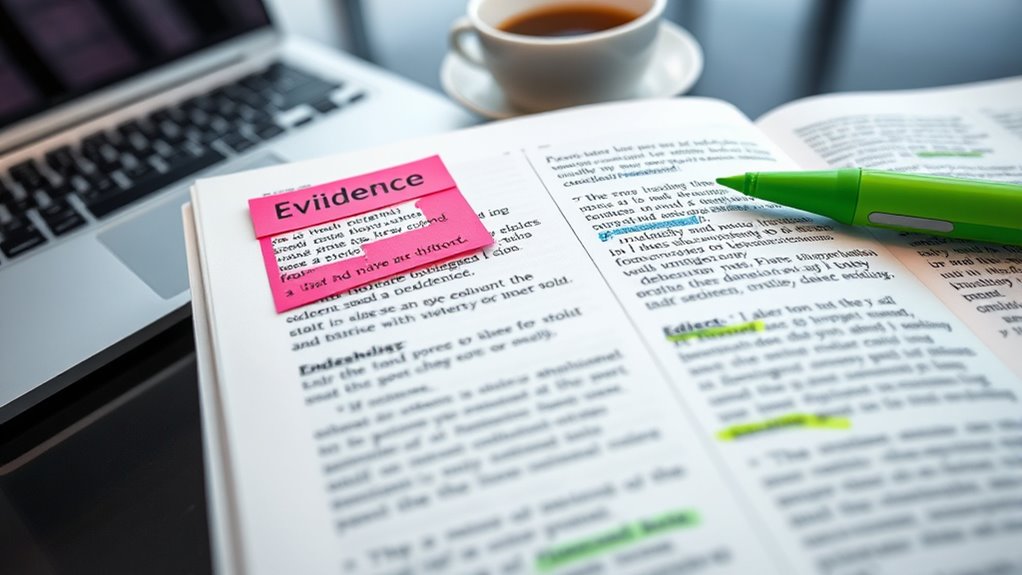
Formatting and visual cues play a crucial role in helping you distinguish between evidence and opinion in texts. They guide your eye and make it easier to identify factual information versus personal perspectives. For example, bold headings, bullet points, and italics can highlight key evidence, while quotation marks or italics might indicate opinions or quotes. Color coding is another effective formatting technique, where different colors signal different types of information. Charts, graphs, and tables visually present evidence, making it clear what’s backed by data. Recognizing these visual cues allows you to quickly assess the credibility of the content and separate facts from opinions. By paying attention to formatting techniques, you become a more critical reader, better equipped to evaluate what you’re reading.
Applying These Skills to Make Smarter Decisions and Share Accurate Information

By applying your ability to distinguish evidence from opinion, you can make smarter decisions and share more accurate information. Developing strong critical thinking and information literacy skills helps you evaluate sources effectively. To do this:
Enhance your decisions and sharing by mastering evidence versus opinion.
- Question the credibility of the source before accepting information as true.
- Cross-check facts with multiple reputable sources to verify accuracy.
- Recognize biases or emotional language that may cloud judgment.
- Communicate your findings clearly, backing up claims with solid evidence.
These steps empower you to filter out misinformation and avoid spreading opinions disguised as facts. With practice, you’ll become more confident in your decision-making, and others will trust your insights. Ultimately, sharpening your critical thinking and information literacy leads to better choices and more reliable sharing of information.
Frequently Asked Questions
How Can I Identify Bias in Sources Claiming to Provide Evidence?
To identify bias in sources claiming to provide evidence, focus on source credibility and bias detection. Check the author’s credentials, publication reputation, and funding sources. Look for emotional language, one-sided arguments, or selective evidence that favor a particular view. Question whether the evidence is balanced and supported by multiple reputable sources. By actively analyzing these aspects, you can better spot bias and determine if the source’s claims are trustworthy.
What Common Mistakes Lead to Confusing Opinion With Factual Evidence?
Did you know that 70% of readers struggle to distinguish opinion from fact? One common mistake is blending subjective bias with evidence, making claims seem more credible than they are. You also often fall into the trap of emotional language, which can sway opinions and obscure facts. To avoid this, focus on verifying sources and separating personal feelings from the data, ensuring your arguments stay grounded in objective evidence.
How Do Cultural Differences Influence Perceptions of Evidence and Opinion?
Cultural perceptions shape how you interpret evidence and opinion, often leading to bias recognition differences. You might see some ideas as factual based on your background, while others view the same as opinion. To avoid confusion, you should be aware of your cultural influences and question whether your biases affect how you assess evidence. Recognizing these differences helps you distinguish between what’s genuinely supported and what’s opinion.
Can Personal Experience Be Considered Reliable Evidence?
Personal experience can be considered anecdotal evidence, but it isn’t always reliable because it reflects subjective opinions. You might find it compelling, but it’s limited by personal bias and lack of broader context. To strengthen your argument, rely on multiple sources and empirical data. Recognize that while anecdotal evidence offers insight, it shouldn’t be the sole basis for factual claims, as it may not represent the larger truth.
How Should I Handle Conflicting Evidence From Different Sources?
Did you know that 65% of people struggle with conflicting data? When handling conflicting evidence from different sources, prioritize source credibility. Cross-check facts, consider the author’s expertise, and look for supporting evidence. Don’t accept everything at face value—question inconsistencies and assess which source offers the most reliable, well-supported information. This approach helps you navigate conflicting data confidently, ensuring you base your conclusions on solid, credible evidence.
Conclusion
By mastering these skills, you become a detective of truth, uncovering facts hidden beneath opinions. Remember, just like a lighthouse guides ships safely through fog, clear questioning and keen eye help you navigate the sea of information. Stay curious, ask the right questions, and don’t let opinions steer your understanding. With these tools, you’ll confidently separate what’s real from what’s just rhetoric, ensuring your voice adds clarity, not confusion.