Using smell tests and simple off-gassing steps can help you assess new products, but don’t rely on smell alone. Ventilate the item in a well-ventilated space, seal it to concentrate fumes, and monitor odors over several days. Recognize that strong chemical odors often indicate higher VOC levels, but low or no smell doesn’t guarantee safety. For better accuracy, explore additional detection methods—continue to learn more about safeguarding your indoor air quality.
Key Takeaways
- Smell tests can help identify strong chemical odors but are unreliable for detecting harmful VOC levels.
- Proper testing involves sealing the product in a ventilated space and monitoring odor changes over time.
- Ventilation with open windows and fans reduces VOC concentration and improves test accuracy.
- Physical symptoms like headaches or respiratory irritation indicate potential chemical exposure beyond smell detection.
- Using VOC detectors or professional air quality testing provides objective, quantitative safety assessments for new products.
What Is Off-Gassing and Why Should You Care When Buying New Products?

Off-gassing happens when new products release volatile organic compounds (VOCs) into the air, often resulting in a noticeable smell. These chemical emissions come from materials like plastics, paints, and furniture, which can emit gases even after they’re installed. The health impacts of these emissions vary; some VOCs can cause headaches, eye irritation, or respiratory issues, especially if you’re sensitive or exposed for long periods. Understanding off-gassing helps you make smarter choices when buying new products, as it allows you to assess potential risks before bringing items into your home. Being aware of chemical emissions can help you identify products with lower VOC levels, supporting a healthier environment. Additionally, selecting products with low VOC content can significantly reduce indoor air pollution. Recognizing emission levels during the purchasing process is essential for maintaining good indoor air quality. Paying attention to air quality indicators can further guide you toward healthier choices. By being aware of chemical emissions, you can reduce your exposure and create a healthier living environment. Paying attention to off-gassing is a simple step toward safer, more informed purchasing decisions. Understanding indoor air quality can also help you implement effective ventilation strategies to further reduce chemical buildup.
How Can You Perform a Simple Off-Gassing Test at Home?

To test for off-gassing at home, start by placing the product in a well-ventilated space to let any fumes escape. Make sure to seal the item properly and check it regularly over a few days. Keep an eye on any smells that develop, and note how long they linger. Additionally, observe the presence of any indoor air pollutants that may affect your health and the overall air quality in your home. You can also monitor for volatile organic compounds (VOCs) that are often released from new products and may impact air quality. Ensuring proper air purifier maintenance during this process can help improve your indoor air environment. It’s also beneficial to consider the off-gassing potential of products that contain plastics or synthetic materials, as these are common sources of VOCs. Being aware of product safety standards can help you choose items with lower emissions and safer materials.
Choose a Well-Ventilated Space
Choosing a well-ventilated space is essential for accurately performing a simple off-gassing test at home. Proper ventilation helps you assess chemical exposure risks by ensuring fresh indoor air circulates, preventing stale or concentrated fumes. To set up, consider these steps:
- Open windows and doors to create cross-ventilation, reducing potential indoor air contamination.
- Avoid enclosed or poorly ventilated areas where fumes can accumulate, skewing test results.
- Use fans or exhaust vents to increase airflow, helping to disperse any off-gassing odors quickly.
- Regularly monitor indoor air quality during the test to ensure the environment remains safe and representative. Ensuring good airflow also supports air circulation, which is vital for accurate testing and safety.
- Additionally, being aware of cultural symbols of strength can help you understand the significance of safe environments in various traditions and communities.
- Incorporating ventilation strategies can further improve the accuracy of your off-gassing assessment by maintaining consistent air exchange throughout the testing period.
This process ensures you’re testing in a space that reflects real-world conditions, giving you a clearer picture of the product’s impact on indoor air quality. Good ventilation is key to safer, more accurate off-gassing assessments at home.
Seal the Product Properly
Sealing the product properly is essential for an accurate off-gassing test because it contains any fumes and prevents external air from diluting or masking odors. Use a tight-fitting container or sealable bag to guarantee effective product sealing. Proper odor containment means no outside air enters, which could interfere with the test results. Make sure the seal is secure and free of gaps, so the product’s natural scent isn’t compromised. This step helps you accurately detect any off-gassing odors without external influence. If the seal isn’t tight, fumes might escape or mix with ambient air, skewing your observations. Prioritize airtight sealing for consistent, reliable results. Effective product sealing ensures your off-gassing test reflects true odor levels, giving you peace of mind about your new product’s safety. Additionally, understanding the ventilation considerations can help improve the accuracy of your overall testing process.
Observe and Smell Regularly
Regularly observing and smelling your product is a simple yet effective way to monitor off-gassing at home. By paying attention to chemical emissions and odor perception, you can catch potential issues early. Here’s how to do it:
- Keep the product in a well-ventilated area and check it daily.
- Smell near the surface for any unusual or strong odors, noting any changes over time.
- Record your observations, especially if the odor intensifies or new chemical emissions appear.
- Be aware that vetted security zone info emphasizes the importance of safety and reliability in new products, making routine off-gassing tests a valuable practice.
This routine helps you identify lingering or increasing off-gassing, ensuring that any harmful emissions are detected quickly. Consistent observation allows you to assess if the product’s smell diminishes or persists, helping you make informed decisions about its safety.
What Do Different Odors Indicate About Your New Items?

When you notice a new item emitting a strong or unusual odor, it often signals that materials like adhesives, paints, or plastics are off-gassing. These chemical emissions come from various odor sources, indicating different levels of concern. A sharp, chemical smell might suggest harmful VOCs, while a mild, plastic-like odor could be less worrisome. Understanding these odors helps you assess safety. Here’s a quick guide:
| Odor Type | Possible Implication |
|---|---|
| Strong chemical | High levels of harmful chemical emissions |
| Sweet or fruity | Possible low-level VOCs, less dangerous |
| Musty or moldy | Indicates mold or mildew, potential hazard |
Are There Easy Ways to Detect Harmful VOCs Besides Smell Tests?
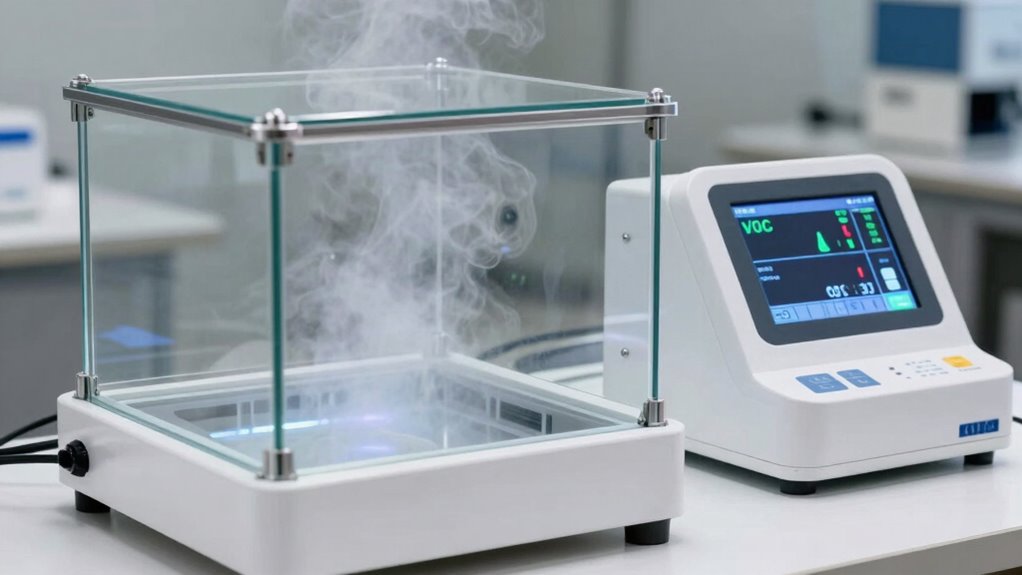
You can use VOC detectors to identify harmful gases quickly and accurately. Conducting air quality tests offers a more extensive understanding of indoor pollutants. Additionally, paying attention to physical reactions like headaches or respiratory issues can signal the presence of dangerous VOCs. High-quality home decor products often undergo testing to ensure safety from harmful emissions.
Use VOC Detectors
While relying on smell alone can sometimes help identify VOC presence, it isn’t a reliable method for detecting harmful levels. Using VOC detectors offers a more accurate way to assess VOC levels in indoor air. These devices can quickly alert you to unsafe concentrations, ensuring better indoor air quality. Here are three ways VOC detectors help: 1. Provide real-time readings of VOC levels, so you know immediately if air quality drops. 2. Help identify sources of off-gassing, enabling targeted ventilation or removal. 3. Offer a safer alternative to subjective smell tests, especially with low odor products that still emit harmful VOCs. Additionally, energy-efficient options in products like electric fireplaces can reduce overall emissions and improve indoor air safety. Incorporating indoor air quality monitoring into your routine can further enhance safety by providing continuous oversight. Regularly checking VOC levels can help maintain a healthier environment and prevent potential health issues caused by prolonged exposure. Understanding the off-gassing process can also help you better assess the safety of new products before bringing them into your home. Being aware of product emissions and how they impact indoor air can empower you to make safer choices for your living space.
Conduct Air Quality Tests
Conducting air quality tests provides a straightforward way to detect harmful VOCs beyond relying on smell alone. By testing your indoor air, you can identify elevated VOC levels that might pose health risks, ensuring better product safety. Portable air quality monitors are easy to use and can give real-time readings, alerting you to potential hazards in your environment. Professional testing services can analyze air samples for specific VOCs, offering detailed insights. Regular testing helps you monitor indoor air quality over time, especially after bringing new products into your space. This proactive approach allows you to take timely action, reducing exposure to harmful chemicals and promoting a healthier environment for everyone. Additionally, trustworthy information can help you interpret test results accurately and take appropriate steps to improve your indoor air quality. Being aware of VOC off-gassing patterns from new products can further assist you in making safer choices for your home. Understanding air quality standards can guide you in assessing whether your indoor environment meets safety benchmarks. Ultimately, air quality tests empower you to make safer choices for your home.
Observe Physical Reactions
Detecting harmful VOCs doesn’t have to rely solely on smell tests; your body can sometimes signal exposure through physical reactions. When chemicals off-gas, they may trigger observable physical changes or reactions.
Here are some signs to watch for:
- Sudden headaches or dizziness, indicating your body reacting to chemical exposure.
- Skin irritation or rashes, which can result from direct contact or airborne chemicals.
- Respiratory discomfort, such as coughing or shortness of breath, caused by chemical reactions within your respiratory system.
These physical changes serve as warning signs that harmful VOCs might be present. By paying attention to these signals, you can identify potential hazards without solely relying on smell tests, ensuring a safer environment.
How Can You Minimize Off-Gassing and Choose Safer Products?

To minimize off-gassing and choose safer products, start by researching materials labeled as low or zero VOC (volatile organic compounds). These products emit fewer chemical emissions, reducing potential health risks and improving overall product safety. Look for certifications like Green Seal or GREENGUARD, which indicate safer, low-emission options. Avoid items made from pressed wood with formaldehyde or synthetic materials known for higher emissions. Ventilate your space well during and after installation, allowing off-gassing to dissipate before use. Opt for natural or organic alternatives when possible, as they typically emit fewer chemicals. Incorporating whole-house water filtration systems can also help reduce chemical exposure from tap water. By making informed choices and prioritizing low-emission products, you help create a healthier environment and minimize exposure to harmful chemical emissions.
When Should You Seek Professional VOC Testing or Further Evaluation?

If you notice persistent or strong chemical odors despite choosing low-VOC products and ventilating your space, it may be time to contemplate professional VOC testing. Prolonged exposure can affect your health, especially if indoor plants and air purifiers don’t seem to reduce odors effectively. Consider seeking testing if:
Persistent chemical odors may signal hidden VOCs; consider professional testing for peace of mind and health.
- The smell lingers for weeks despite efforts to ventilate.
- You experience symptoms like headaches, dizziness, or respiratory issues.
- Indoor air quality remains poor even with air purifiers running and plants placed around.
Professional testing can identify hidden VOC sources and help you decide on the next steps. It’s especially useful if you suspect ongoing off-gassing that isn’t visible or detectable through smell alone.
Frequently Asked Questions
How Long Does It Typically Take for New Products to Off-Gas Completely?
It typically takes anywhere from a few days to several weeks for new products to off-gas completely, depending on the chemical duration involved. To speed up the process, guarantee proper ventilation by opening windows and using fans. Keep the area well-ventilated and avoid close contact with the product during this period. Regularly airing out the space helps reduce odors and minimizes chemical exposure, making your environment safer more quickly.
Are There Specific Materials That Off-Gas More Than Others?
Certain materials tend to off-gas more than others, especially those with high VOC emission rates. You should watch out for synthetic plastics, pressed wood products, and foam cushions, as they often release stronger odors. Material sensitivity differs, so some people might notice off-gassing sooner. To stay safe, check labels for VOC content and give new items proper off-gassing time before use, especially if you’re sensitive to chemical smells.
Can Off-Gassing Affect People With Allergies or Asthma Differently?
An ounce of prevention is worth a pound of cure. Off-gassing can affect your allergy sensitivity and asthma triggers differently; some people might experience more severe reactions, while others notice little to no effect. If you’re sensitive, avoid products with strong odors or chemical smells, and always test new items in well-ventilated areas. Being cautious helps minimize risks and keeps your airways healthier.
Is There a Safe Level of VOCS for Indoor Environments?
Yes, there is a safe level of VOCs for indoor environments, guided by VOC standards that aim to protect your indoor air quality. You should aim to keep VOC levels below these standards to minimize health risks, especially if you have allergies or asthma. Regular testing and proper ventilation help you maintain safe VOC levels, ensuring your indoor air stays healthy and comfortable for everyone.
How Often Should I Re-Test Items After Initial Off-Gassing?
You should re-test your items regularly, especially if they’re exposed to new environments or conditions. Conduct product testing every few weeks initially, then extend intervals once no new odors or VOCs are detected. Monitoring air quality helps guarantee safety, so stay vigilant—re-test after significant changes, or if symptoms like headaches or allergies occur. Consistent testing maintains a healthy indoor space and guarantees your environment stays safe and fresh.
Conclusion
By paying attention to odors and performing simple tests, you hold the power to protect your health. Think of off-gassing as a silent whisper—ignoring it risks letting harmful fumes linger. Stay vigilant, trust your senses, and choose products wisely. After all, isn’t it better to breathe easy in a world where you control what’s in your space? Take charge now—your lungs will thank you for it.