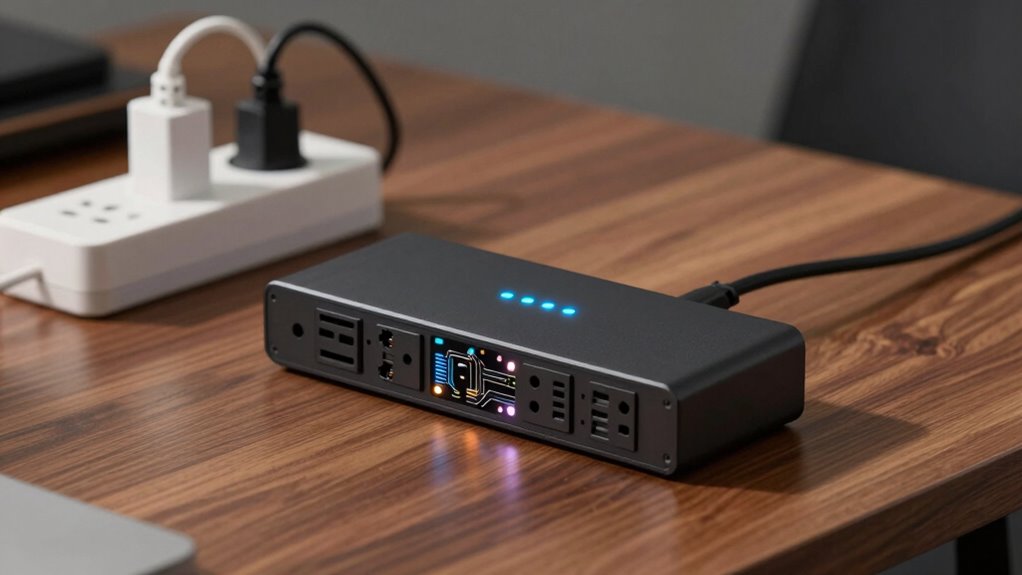

Surge protectors and power strips may look alike, but they serve different purposes. Power strips simply expand outlets for plugging in multiple devices, offering no surge protection. Surge protectors, on the other hand, include components like MOVs that divert excess voltage away from your electronics, shielding sensitive gadgets from power surges. Knowing these differences can save your devices from damage—keep going to discover how to choose the right one for your needs.
Key Takeaways
- Surge protectors include components that divert excess voltage and safely ground surges, while power strips simply expand outlets without surge protection.
- Surge protectors absorb and dissipate surge energy, protecting sensitive electronics; power strips do not offer surge absorption features.
- Key ratings like Joule capacity and clamp voltage determine the level of surge protection, with higher ratings offering better safety.
- Power strips are suitable for non-sensitive devices; surge protectors are essential for protecting computers and home theater systems.
- Regular maintenance and timely replacement of surge protectors ensure continued protection against electrical surges.
What’s the Difference Between Surge Protectors and Power Strips?
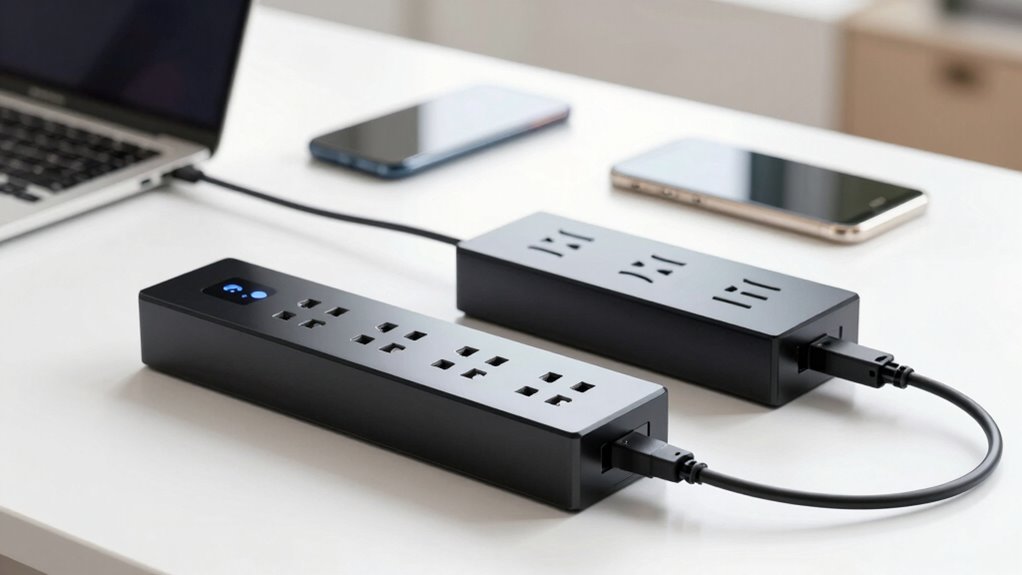
Ever wondered what truly sets surge protectors apart from power strips? The key difference lies in their features and grounding techniques. Surge protectors are designed with components that divert excess voltage away from your devices, often incorporating various surge protector types like MOVs (Metal-Oxide Varistors) and TVS diodes. They also utilize grounding techniques to safely channel surges into the ground, preventing damage. High-quality components ensure effective protection during voltage spikes. Additionally, the grounding method used in surge protectors is crucial for safety and effectiveness, as improper grounding can diminish their protective capabilities. Proper electrical safety measures further enhance their reliability. Surge protectors typically include a clamping voltage, which determines how much voltage the device will allow before activating to protect connected electronics. Power strips, on the other hand, simply provide extra outlets without any built-in surge protection—making them more basic and less effective against voltage spikes. Choosing the right device depends on understanding these distinctions. Surge protectors offer added safety through specialized components and grounding, ensuring your electronics stay protected during voltage fluctuations.
How Do Surge Protectors Protect Your Devices From Power Surges?
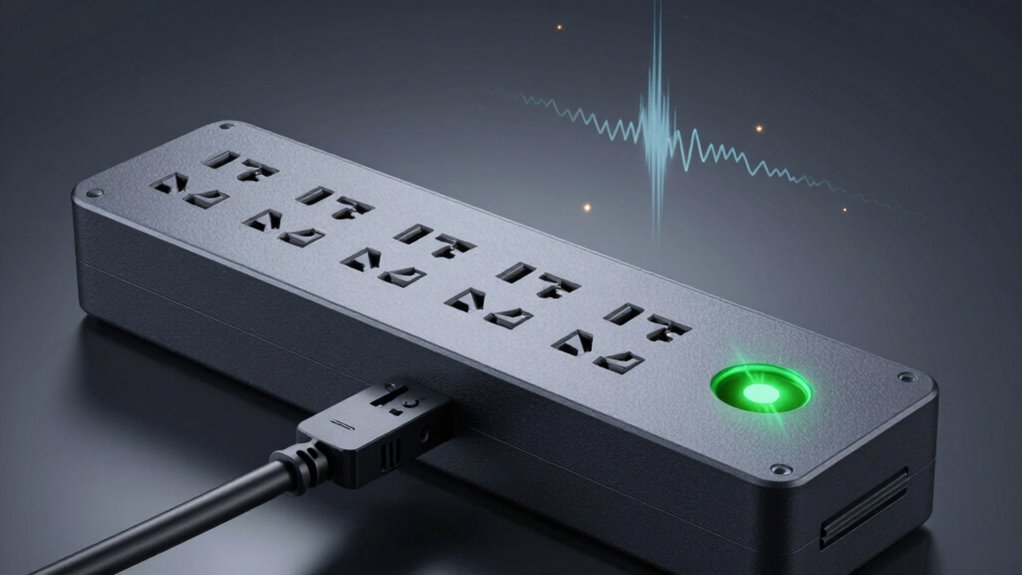
Surge protectors shield your devices by absorbing excess voltage through their surge absorption mechanism, preventing damage. They also feature voltage regulation to keep power levels steady during fluctuations. These combined features work together to keep your electronics safe from unexpected power surges. Properly installing surge protectors can further enhance their effectiveness in safeguarding your devices. Trusted businesses and services often recommend using surge protection to safeguard valuable electronics from power fluctuations. Additionally, understanding the difference between surge protectors and power strips can help you choose the most appropriate device for your needs. Recognizing the importance of electrical safety measures ensures comprehensive protection for your home or office equipment. Being aware of electrical safety standards can further improve your overall protection strategy.
Surge Absorption Mechanism
When a power surge occurs, surge protectors act quickly to shield your devices by redirecting excess voltage away from sensitive components. The surge absorption mechanism is key to this process. It uses components like Metal Oxide Varistors (MOVs) to absorb and dissipate the excess energy. When a surge hits, the MOVs detect the increased voltage and shunt it safely to ground, preventing it from reaching your devices. Proper grounding is essential here; if grounding issues exist, the surge absorption mechanism won’t work effectively, and your devices could still be at risk. This process ensures that only a safe, controlled amount of energy reaches your electronics, protecting them from damage caused by sudden surges. Understanding this mechanism highlights the importance of a well-grounded surge protector.
Voltage Regulation Features
Voltage regulation features in surge protectors actively maintain a safe and stable power level by limiting excessive voltage spikes. When voltage fluctuations occur, these features work to keep the electrical stability of your devices intact, preventing damage caused by sudden surges. Unlike simple power strips, surge protectors with voltage regulation detect overvoltage conditions and quickly respond to reduce or block the excess voltage. This process ensures your electronics receive consistent, safe power without interruption. By stabilizing the voltage, these protectors help extend the lifespan of your devices and prevent potential malfunctions. If electrical stability is a priority, choosing a surge protector with voltage regulation features provides an added layer of security against unpredictable power surges and voltage fluctuations. Understanding how surge protectors work can help you make better choices for your home’s electrical safety.
Key Features to Look for in a Good Surge Protector

When choosing a surge protector, pay attention to its Joule rating, as higher numbers mean better protection. You should also consider how many outlets it offers and whether the cord length suits your setup. These features guarantee your devices stay safe and the protector fits your space comfortably. Additionally, selecting a surge protector with features like surge protection standards and certifications can ensure it meets industry safety requirements. Moreover, verifying the clamp voltage ensures the surge protector can respond effectively to sudden power spikes. Being aware of wave and wind patterns can also help you choose a protector that performs well in areas prone to power fluctuations caused by environmental factors. Understanding power fluctuation patterns can further help in selecting a surge protector suited for your specific environment.
Joule Rating Importance
Have you ever wondered how to determine a surge protector’s effectiveness? The key is understanding its joule rating, which indicates its electrical capacity to absorb energy from power surges. A higher joule rating means the surge protector can handle larger or multiple surges without failing, offering better protection for your devices. Think of it as the surge protector’s energy capacity—more joules mean more resilience. When shopping, look for a model with at least 600 joules for basic protection, but for more sensitive electronics, aim for 1,000 joules or higher. Don’t overlook this feature; it directly impacts how well your surge protector guards your valuable equipment against unpredictable electrical spikes. A well-rated surge protector ensures peace of mind and long-lasting protection. Additionally, understanding the Gold IRA markets can help you make informed decisions about protecting your investments and assets over the long term. To further optimize your electrical safety, consider the importance of electrical standards, which ensures your surge protector meets safety and performance benchmarks. Regularly checking the surge protector’s specifications can help you stay aware of its protective capabilities over time. Recognizing the 16PF personality traits can also aid in choosing the right device for your specific needs, especially if you prefer personalized or tailored safety solutions. Being aware of the component quality and its impact on durability can also help you select a surge protector that lasts longer and offers reliable protection.
Outlets and Cord Length
Choosing a surge protector with the right number of outlets and sufficient cord length is essential for effective device protection and convenience. Look for outlet configurations that accommodate all your devices without overcrowding, ensuring each has its own space. Consider surge protectors with multiple outlets if you have several electronics or appliances. Additionally, cord length options matter—you want enough length to reach your power source comfortably without excess slack that causes clutter or tripping hazards. A longer cord provides flexibility for placement, especially in larger rooms or behind furniture. Avoid overly short cords that restrict placement or excessively long ones that create tangled cords. The goal is to balance outlet capacity and cord management to optimize safety, accessibility, and ease of use. Properly outlet configuration ensures a more organized and safe setup for all your electronic devices. Incorporating features like built-in circuit breakers can further enhance protection and prevent overloads, adding an extra layer of security. Additionally, selecting surge protectors with energy efficiency features can help reduce power consumption and extend the lifespan of your devices. Being aware of power ratings and ensuring the surge protector’s capacity matches your needs can also prevent potential overloads and damage.
Common Myths About Power Strips and Surge Protectors Debunked

Many people believe that all power strips and surge protectors offer the same level of protection, but this isn’t true. Not all devices provide the same electrical safety or device compatibility. Some think a surge protector can handle any electrical surge, but many only protect against minor surges. Others assume power strips are just for convenience, ignoring safety risks. Here’s a quick comparison:
| Feature | Power Strip | Surge Protector |
|---|---|---|
| Electrical Safety | Basic, no surge protection | Includes surge protection |
| Device Compatibility | Varies, check ratings | Designed for sensitive electronics |
Knowing the facts helps you choose the right device for your safety and equipment. Understanding surge protection is crucial to ensure your electronics are properly safeguarded.
Do You Need a Surge Protector or a Power Strip?

Deciding whether you need a surge protector or a simple power strip depends on what devices you’re plugging in and the risks you want to avoid. If you’re connecting sensitive electronics like computers or home theater systems, a surge protector is essential because it uses grounding techniques and energy dissipation to guard against power surges. These devices help redirect excess voltage safely away from your equipment. On the other hand, if you just need additional outlets for non-sensitive devices like lamps or chargers, a basic power strip may suffice. Think about the level of protection you need and the potential impact of power fluctuations. For valuable electronics, investing in a surge protector can save you from costly damage caused by unexpected power spikes.
Limitations of Power Strips and Surge Protectors You Should Know
While power strips and surge protectors offer convenience and some level of safety, they have inherent limitations that you should be aware of. Power strip limitations include overheating risks, overloading, and the inability to protect against all power surges. They are often designed for low to moderate loads and can become dangerous if overloaded. Surge protector drawbacks include limited surge absorption capacity and eventual wear out, which reduces effectiveness over time. Many consumers assume surge protectors last forever, but the protective components can degrade after repeated power events. Additionally, not all surge protectors provide the same level of protection, leading to potential gaps in safety. Recognizing these limitations helps ensure you choose the right device for your needs and avoid false security.
How to Choose the Right Surge Protector for Your Needs
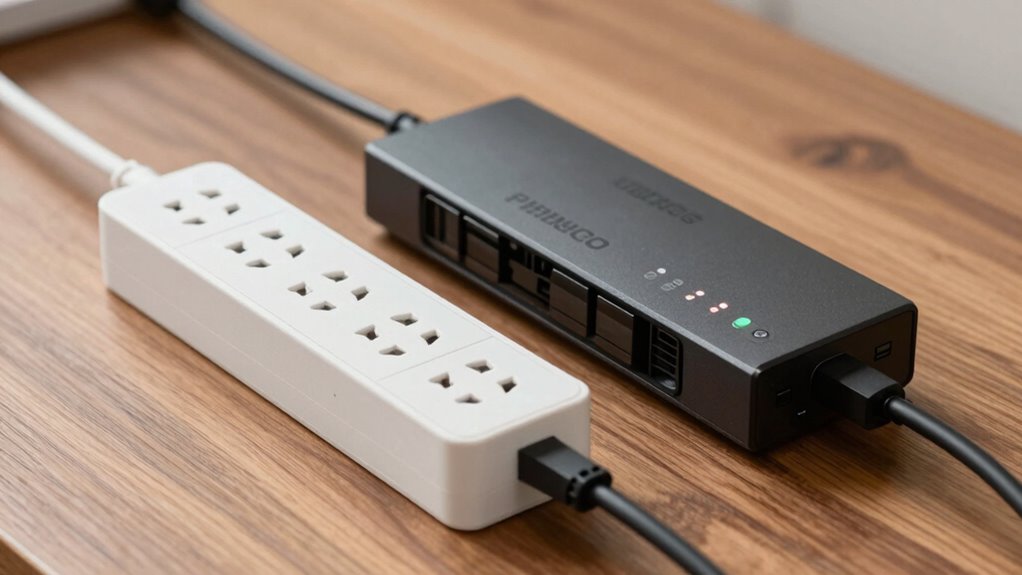
Choosing the right surge protector involves considering your specific power needs and the devices you want to safeguard. To guarantee electrical safety and appliance compatibility, focus on these factors:
- Joule Rating: Higher ratings offer better protection for sensitive electronics.
- Clamping Voltage: Lower levels mean quicker response to surges, protecting your devices more effectively.
- Number of Outlets: Match the quantity to your setup without overloading.
- Additional Features: Look for indicator lights, EMI filters, and dedicated circuits for enhanced safety and performance.
Tips for Maintaining and Replacing Your Surge Protection Devices

Regular maintenance and timely replacement of your surge protection devices guarantee they continue to provide effective safeguarding for your electronics. Check the status indicator regularly to verify the device is functioning properly and maintains good electrical safety standards. If your surge protector shows signs of wear, damage, or if it’s been hit by a power surge, replace it immediately to maintain device compatibility and protection. Keep in mind that surge protectors have a limited lifespan because their components degrade over time, reducing effectiveness. Avoid overloading your surge protection device and ensure it’s compatible with your devices’ power requirements. By staying vigilant with maintenance and replacement, you ensure continuous protection, helping prevent damage from electrical surges and maintaining electrical safety in your home or office.
Frequently Asked Questions
Can a Power Strip Also Serve as a Surge Protector?
A power strip can sometimes serve as a surge protector, but it’s important to check its features. Many power strips have limitations and don’t offer true surge protection, which means they don’t guard your devices against power surges effectively. Surge protectors have advantages like built-in components specifically designed to absorb surges. Relying solely on a basic power strip for surge protection isn’t enough—you need a dedicated surge protector for reliable safety.
Are There Specific Devices That Require Surge Protection?
Yes, your electronic devices and sensitive equipment need surge protection. Devices like computers, TVs, gaming consoles, and home theater systems are vulnerable to power surges that can damage their internal components. By using dedicated surge protectors, you safeguard your valuable electronics from voltage spikes caused by storms, outages, or electrical faults. Always guarantee your surge protector is rated appropriately for the devices you connect to prevent costly damage or data loss.
How Long Do Surge Protectors Typically Last?
Imagine you’ve had your surge protector for three years, and it suddenly stops protecting your devices. Typically, surge protectors last about 3 to 5 years, depending on usage and power surges. The surge protector lifespan can be influenced by frequent power spikes, which wear out the internal components. To guarantee device longevity and continued protection, it’s best to replace your surge protector every few years or after a significant surge event.
Is It Safe to Plug Multiple Surge Protectors Into One Outlet?
It’s not safe to plug multiple surge protectors into one outlet because it can cause electrical overload, increasing the risk of fire or damage. Doing so jeopardizes outlet safety and can overload the circuit. Instead, use a single surge protector with enough outlets, or consult an electrician for additional outlets. Always guarantee your electrical setup follows safety guidelines to prevent hazards and protect your devices from power surges.
What Are Signs Indicating My Surge Protector Needs Replacement?
Think of your surge protector like a guardian that wears out over time. When its lifespan nears, indicator lights may turn off or flicker, signaling it’s no longer reliable. You might also notice frequent tripping or a burning smell. If these signs appear, it’s time to replace your surge protector to guarantee your devices stay protected. Regular checks help keep your setup safe and functioning at its best.
Conclusion
Remember, not all power strips are created equal—knowing the difference can save your devices from damage. Invest in a quality surge protector to safeguard your valuable electronics, and don’t forget to replace it when needed. As the saying goes, “Better safe than sorry,” so choose wisely and maintain your surge protection devices regularly. Protecting your gear today keeps costly repairs away tomorrow.