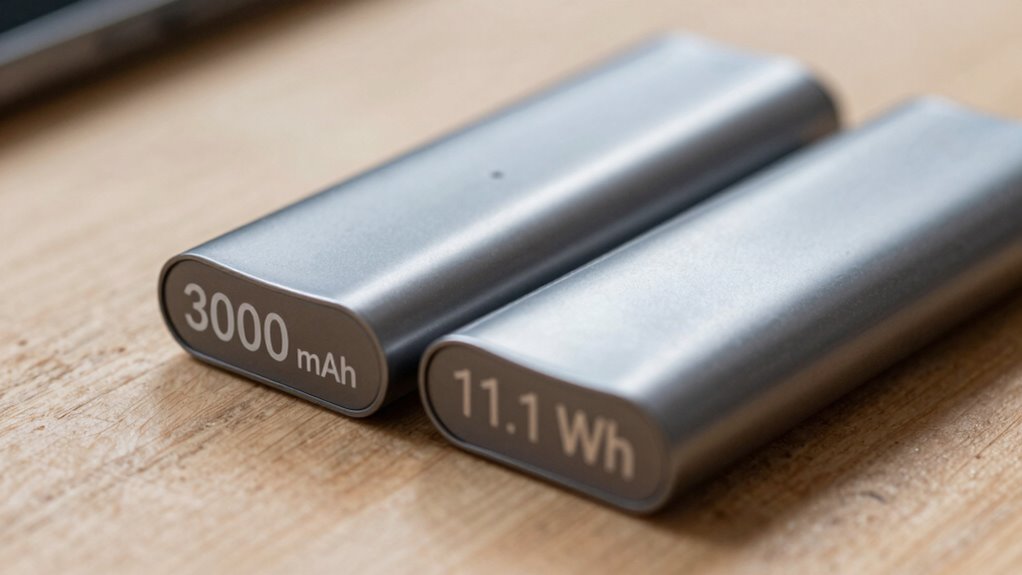

Many people mistakenly believe that higher mAh always means longer battery life, but that’s not entirely true. While mAh measures charge capacity, it doesn’t account for voltage or energy efficiency. Wh (watt-hours), on the other hand, combines voltage and capacity to show the actual energy stored. To fully understand a battery’s performance, you need to weigh both specs and how they relate. Continue to explore how these measurements influence real-world use.
Key Takeaways
- Wh accounts for both capacity (mAh) and voltage, providing a more accurate measure of total energy than mAh alone.
- Higher mAh does not guarantee longer battery life without considering voltage and device power consumption.
- Comparing battery specs requires understanding both mAh and Wh to assess true energy capacity.
- Voltage differences significantly impact energy content; batteries with higher voltage can store more energy even with lower mAh.
- Many people overlook voltage and focus solely on mAh, leading to misconceptions about battery performance and runtime.
What Do mAh and Wh Measure in Batteries?
Have you ever wondered what the numbers on your battery really mean? When you see mAh or Wh, they represent different aspects of your battery’s capacity. mAh, or milliamp-hours, measures how much charge your battery can hold, directly related to battery chemistry. It indicates how long your device can run before needing a recharge. Wh, or watt-hours, combine voltage and capacity, giving a clearer picture of energy stored. This helps compare batteries with different voltages accurately. Remember, battery chemistry influences how efficiently a battery uses its charge, affecting overall lifespan and performance. Charging cycles — the number of times a battery can be charged and discharged — also impact capacity retention over time. Additionally, understanding the battery chemistry can help you choose batteries that are more durable and better suited to your needs. The energy capacity of a battery determines how much power it can deliver over its lifetime. Grasping these measurements can also aid in understanding battery efficiency and how it affects device performance and longevity. Knowing the discharge rate is crucial for selecting batteries that meet your device’s power demands effectively. Moreover, proper maintenance can extend your battery’s lifespan and optimize its performance over time.
Do Higher mAh Batteries Last Longer? Common Myths Explored
Many believe that a higher mAh battery automatically means longer usage, but that’s not always true. Your device’s power consumption plays a big role in how long the battery lasts. So, a larger capacity doesn’t guarantee more runtime if the device uses energy quickly. Additionally, understanding battery technology can help you make more informed choices about which battery specs truly impact performance. Recognizing how energy efficiency affects battery life can further clarify why higher capacity isn’t always better. For example, power management features can significantly extend usage time regardless of capacity. Exploring battery chemistry can also reveal how different types influence overall battery health and performance over time. Moreover, factors like filtration in power supplies can impact how efficiently energy is transferred from the battery to the device.
Capacity Doesn’t Equal Runtime
While it’s tempting to assume that a higher mAh rating means your device will run longer, this isn’t always the case. Battery capacity isn’t the only factor affecting runtime; battery chemistry and charging cycles also play vital roles. A larger mAh doesn’t guarantee longer use if the battery degrades faster or isn’t compatible with your device’s power demands. For example, lithium-ion batteries with different chemistries have varying efficiencies and lifespans. Charging cycles impact how much the battery’s capacity diminishes over time. Here’s a quick comparison:
| Battery Chemistry | Charging Cycles | Typical Lifespan |
|---|---|---|
| Lithium-ion | 300-500 | 2-3 years |
| Lithium-polymer | 500-1000 | 3-4 years |
| Nickel-metal hydride | 500-1000 | 3-4 years |
Higher mAh doesn’t always mean better runtime—battery health matters most.
Power Consumption Matters
Although a higher mAh rating suggests a larger battery capacity, it doesn’t automatically guarantee longer device usage. Power consumption depends on how your device uses energy, influenced by factors like battery chemistry and efficiency. For example:
- Screen brightness and resolution drain power quickly, regardless of mAh.
- Background apps and processes increase energy use, shortening runtime.
- Battery chemistry affects how well the battery maintains capacity over charging cycles.
- Older batteries may hold less charge due to wear, even if they have high mAh ratings initially.
How Does Voltage Affect Battery Capacity and Energy?

Voltage plays a crucial role in determining a battery’s total energy capacity because it directly influences how much power the battery can deliver. The voltage impact affects the energy measurement, as higher voltage batteries can store more energy in the same capacity (mAh). For example, a 3.7V battery with 2000mAh provides less energy than a 4.2V battery with the same capacity. This is because energy depends on both capacity and voltage. When voltage increases, so does the total energy available, even if the mAh remains constant. Understanding voltage’s effect on energy is essential for making informed decisions about battery use and compatibility. Recognizing how voltage interacts with other specifications helps prevent misreading battery capacities and ensures you select the right power source for your needs. Battery chemistry can also influence voltage stability and overall energy output, which is important to consider. Additionally, voltage ratings can sometimes vary based on the battery’s design and chemistry, further impacting their energy output. Moreover, considering power management strategies can optimize how effectively a device utilizes the available energy. Ultimately, voltage isn’t just a number; it’s a key factor that shapes a battery’s overall energy potential.
When Is Watt-Hours More Important Than Milliamp-Hours?

Watt-hours become more important than milliamp-hours when you’re comparing batteries for energy capacity, especially across different voltage levels. This measurement accounts for both capacity and voltage, giving a clearer picture of actual energy stored. Consider these points:
- Different battery chemistries influence voltage, making Wh a better comparison metric.
- Devices with high voltage requirements rely on Wh to estimate runtime accurately.
- When evaluating batteries with varying charging cycles, Wh reflects long-term energy retention better.
- For portable devices, understanding Wh helps determine how much energy you’ll get over the battery’s lifespan, not just initial capacity.
- Recognizing battery chemistry differences is essential, as they directly impact voltage and energy calculations, emphasizing why Wh provides a more comprehensive understanding. Additionally, voltage variation can significantly affect performance and compatibility, further underscoring the importance of considering watt-hours over milliamp-hours.
- Voltage stability during operation can influence the actual energy delivery, making Wh a more reliable metric for assessing real-world performance. Being aware of voltage fluctuations can help users select batteries that maintain consistent power output over time. Moreover, understanding voltage regulation can assist in choosing batteries that deliver steady performance across different usage conditions.
How to Read Battery Labels and Compare Specs Effectively

To compare batteries accurately, you need to understand the units listed on their labels, like mAh and Wh. Look at the capacity ratings to see which battery offers more energy storage for your needs. Finally, interpret power specifications carefully to guarantee the battery matches your device’s requirements effectively.
Understanding Battery Units
Understanding battery labels is essential for comparing different devices effectively, but it can be tricky if you’re unfamiliar with the units used. To read labels accurately, you need to grasp a few key points:
- Battery chemistry influences capacity and longevity, affecting how energy is stored and discharged.
- mAh (milliamp-hours) measures the charge a battery can hold, mainly useful for small devices.
- Wh (watt-hours) accounts for voltage, giving a clearer idea of overall energy content, especially across different chemistries.
- Charging cycles impact battery lifespan, often related to chemistry, so consider how capacity might degrade over time.
- Understanding capacity can help you better interpret how long a device will last under typical use.
- When comparing batteries, it’s important to consider both capacity units because a higher mAh doesn’t always mean a longer-lasting device if the voltage differs.
Additionally, the voltage of a battery influences how its capacity units translate into real-world performance, making it crucial to consider both voltage and capacity for accurate comparisons.
Comparing Capacity Ratings
When comparing battery capacities, knowing how to read labels accurately helps you make informed choices across different devices. Look beyond mAh and Wh numbers; consider the battery chemistry, which affects performance and longevity, and the number of charging cycles it supports. Labels often list both mAh and Wh, but understanding their relationship is key to comparing capacity effectively. For example, a higher Wh indicates more energy storage, regardless of mAh. Additionally, understanding the voltage can help you better interpret how capacity ratings translate between different batteries.
Interpreting Power Specifications
Reading battery labels accurately is essential for comparing power specifications effectively. To interpret labels correctly, focus on key details:
- Battery chemistry – different chemistries affect capacity, lifespan, and safety.
- Voltage ratings – ensure voltage matches your device’s requirements.
- Capacity units – check if the label shows mAh or Wh to understand total energy.
- Charging cycles – consider how many cycles the battery can handle before capacity diminishes.
Why a Higher mAh Doesn’t Guarantee Longer Battery Life : Real Examples
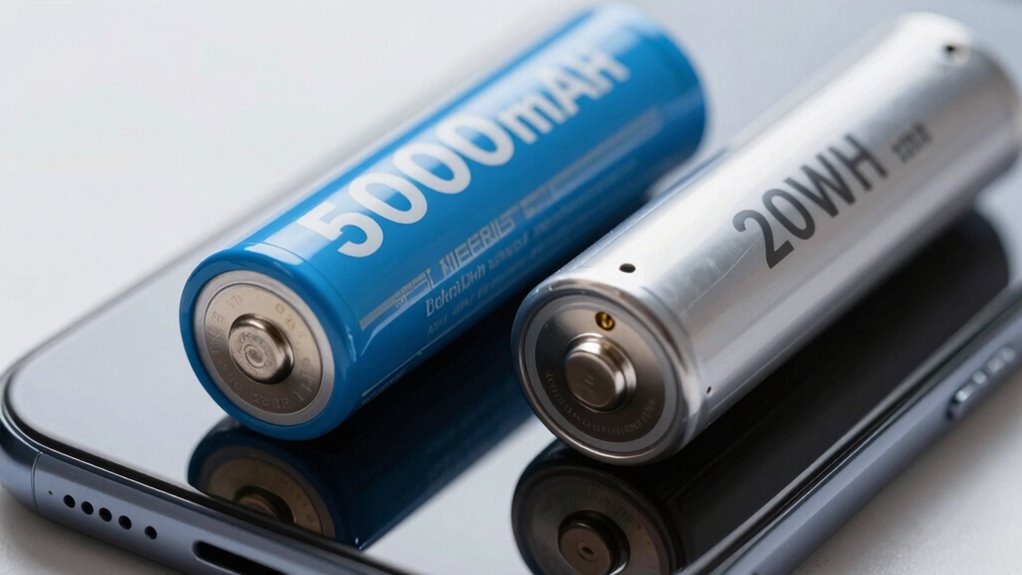
A higher mAh rating might seem like a straightforward way to get longer battery life, but in reality, it doesn’t guarantee it. Battery chemistry plays a big role in how long a battery lasts, regardless of capacity. For example, lithium-ion batteries with the same mAh can have different lifespans depending on their chemistry and how they’re used. Charging cycles also matter; a larger capacity doesn’t mean it can handle more cycles without degrading. You might have a 5000mAh battery that wears out faster than a smaller one if it’s built with lower-quality chemistry. So, don’t assume a bigger number equals longer-lasting power—consider the battery’s chemistry and how many cycles it can endure before performance drops. Battery chemistry significantly impacts overall battery longevity, beyond just capacity ratings. Additionally, factors like battery management systems can influence how effectively a battery performs and degrades over time.
How to Calculate True Battery Energy Using Voltage and Capacity
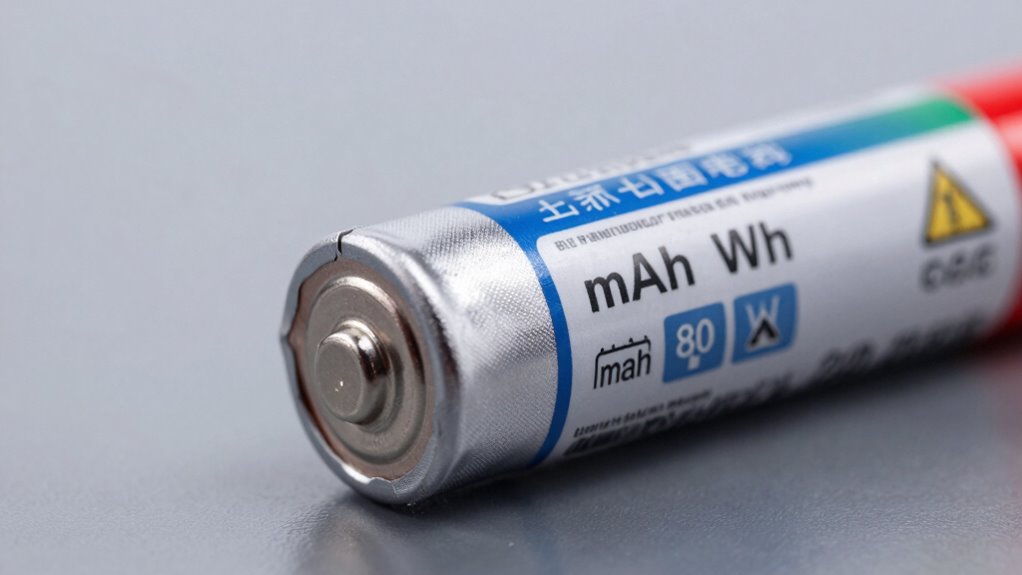
Understanding the true energy stored in a battery requires more than just looking at its capacity in mAh. To get an accurate measure, you need to take into account voltage and battery chemistry. Here’s how:
- Multiply the capacity (mAh) by the voltage (V) to get watt-hours (Wh).
- Convert mAh to Ah by dividing by 1,000.
- Recognize that different chemistries (Li-ion, NiMH) affect voltage stability over charging cycles.
- Remember that as batteries go through charging cycles, voltage may decline slightly, impacting total energy storage.
Choosing the Right Battery Specs for Your Device Needs
Choosing the right battery specs for your device depends on balancing capacity, voltage, size, and chemistry to meet your specific needs. Consider your device’s usage patterns and how battery chemistry impacts performance and longevity. For example, lithium-ion batteries are common for their high energy density and longer charging cycles, but they may degrade faster if overcharged or exposed to extreme temperatures. If you need a lightweight, compact power source, a smaller capacity might suffice, but remember it’ll require more frequent charging. Be mindful of the number of charging cycles your battery can handle, as this affects overall lifespan. Matching the right chemistry and capacity guarantees your device runs efficiently, lasts longer, and minimizes the need for replacements.
Frequently Asked Questions
How Do Battery Chemistry Types Influence Capacity and Energy?
Battery chemistry directly influences capacity variation and energy output. Different chemistries, like lithium-ion, nickel-metal hydride, or lithium-polymer, have unique energy densities, affecting how much power they store and deliver. You’ll notice that while two batteries may have similar mAh ratings, their energy capacity in Wh can differ markedly due to chemistry differences. Understanding these variations helps you choose batteries that meet your specific energy needs effectively.
Can Two Batteries With the Same Wh Have Different Runtimes?
Yes, two batteries with the same Wh can have different runtimes. Think of energy density as a treasure chest, holding different amounts of power in the same size box. A higher discharge rate acts like a swift horse, delivering power faster. So, even if their energy content matches, variations in energy density and discharge rate mean your device might run longer on one than the other.
What Safety Concerns Are Associated With High-Capacity Batteries?
High-capacity batteries pose safety risks like battery overheating, which can lead to fire hazards. You should handle and charge them carefully, avoiding exposure to extreme heat or damage. Use original chargers and don’t overcharge or leave devices unattended during charging. Regularly inspect for swelling or leaks, and follow manufacturer guidelines to prevent accidents. Proper safety measures help minimize the risk of overheating and potential fires associated with large-capacity batteries.
How Does Temperature Affect Battery Performance and Lifespan?
You’ll notice that temperature greatly impacts battery performance and lifespan. When temperatures stay within ideal thermal effects and below critical temperature thresholds, batteries operate efficiently and last longer. However, exposure to high temperatures accelerates chemical reactions, causing faster degradation, while cold temperatures reduce capacity and slow performance. To maximize your battery’s lifespan, avoid extreme heat or cold, and keep it within recommended temperature ranges for safe, reliable use.
Are There Industry Standards for Measuring and Labeling Battery Capacity?
You’ll find that industry standards guide how batteries are measured and labeled for consistency. These standards ensure that battery labeling, like capacity in mAh or Wh, is accurate and comparable across products. Organizations such as IEC and UL set these rules, promoting transparency and safety. When shopping or replacing batteries, look for labels following these standards to make certain you’re getting reliable, standardized information about your battery’s true capacity.
Conclusion
Now that you understand how mAh and Wh really work, you’ll never be fooled by flashy numbers again. Remember, a higher mAh isn’t always the superhero of battery life—voltage and energy matter just as much. By mastering these specs, you’ll avoid the pitfalls of misreading labels and pick batteries that truly power your devices longer than a rocket soaring to the stars. Stay sharp, and let your battery choices be nothing short of legendary!