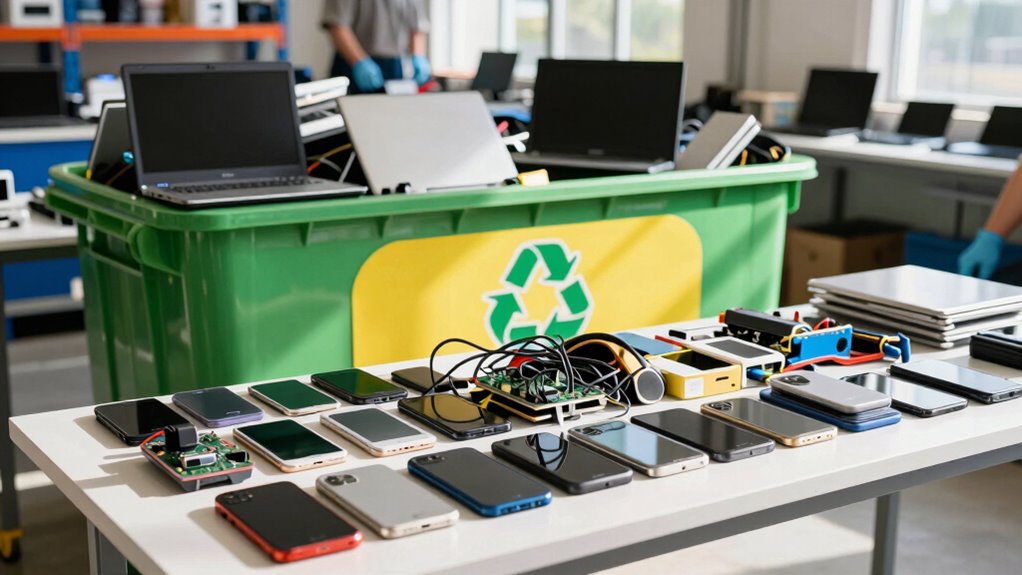

To dispose of electronics properly, always recycle at certified, authorized e-waste centers that follow environmental standards. Remove batteries, wipe personal data, and handle devices with care to prevent leaks or hazards. Consider donating or reselling devices to extend their life before recycling. Reducing e-waste can also mean repairing or sharing devices instead of discarding them. By following these steps, you help protect the environment and your health. Keep exploring to learn more about responsible e-waste disposal.
Key Takeaways
- Identify certified, environmentally compliant e-waste recycling facilities before disposal.
- Remove batteries and personal data, and clean devices to ensure safe and responsible disposal.
- Follow local regulations for e-waste handling, including proper disassembly and storage procedures.
- Reduce e-waste by repairing, donating, or reselling electronics instead of discarding.
- Properly recycle e-waste to prevent toxic chemicals from polluting the environment and harming health.
What Is E-Waste and Why Should You Care?
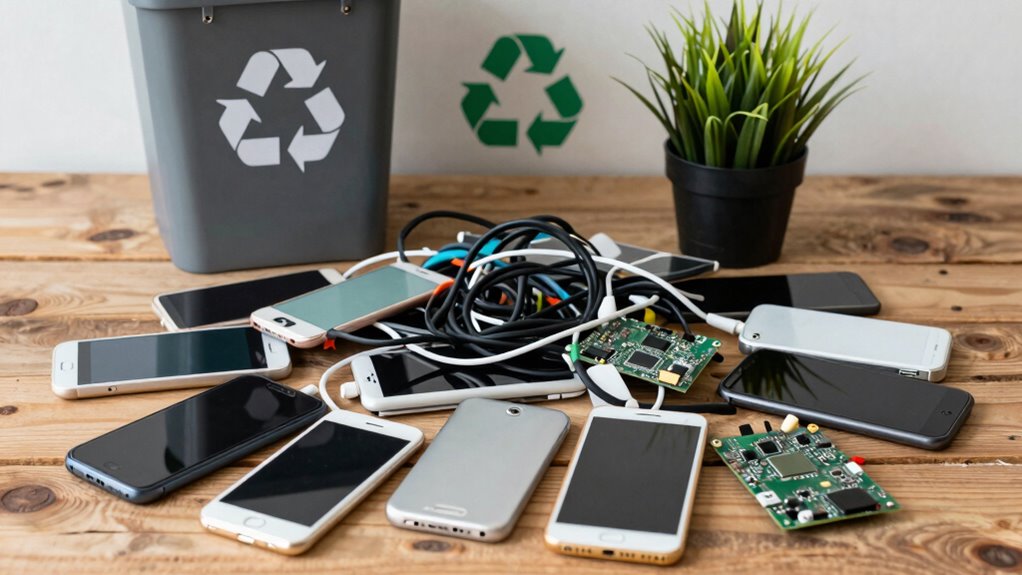
Have you ever wondered what happens to your old gadgets once you toss them out? E-waste includes discarded electronics like phones, computers, and TVs. Improper disposal can seriously harm the environment, releasing toxic chemicals into soil and water. These pollutants threaten wildlife and human health, highlighting the urgent need for responsible handling. Additionally, the recycling process of e-waste can recover valuable materials like gold and copper, reducing the demand for new resource extraction. Proper disposal methods ensure these hazardous substances don’t contaminate our ecosystems. Plus, e-waste isn’t just an environmental issue—it also raises data security concerns. If you don’t wipe your devices properly, sensitive information could fall into the wrong hands. Managing e-waste responsibly minimizes environmental impact and protects your personal data. Understanding the importance of art care and preservation can also help extend the lifespan of your devices and reduce waste. Being aware of hazardous substances found in electronics can motivate you to handle disposal more carefully. Recognizing the environmental impact of improper e-waste disposal underscores the importance of responsible practices. By understanding what e-waste is and why it matters, you can make better choices that support both environmental sustainability and your own data security.
What Types of Devices Create E-Waste?
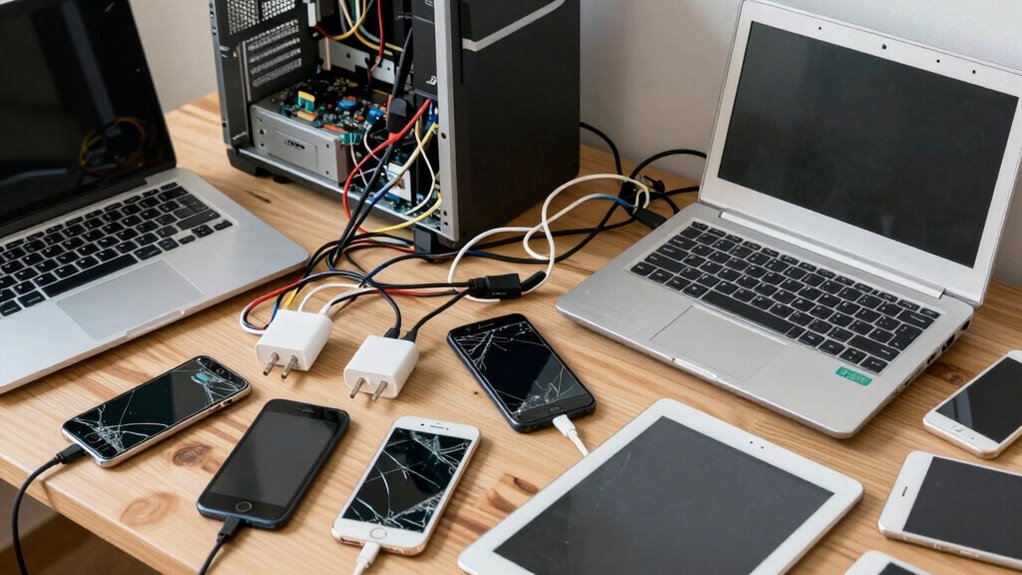
A wide range of electronic devices contribute to e-waste, reflecting how quickly technology evolves and becomes obsolete. You’ll find that rapid smartphone innovations lead to frequent upgrades, creating discarded devices. Wearable technology, like smartwatches and fitness trackers, also adds to e-waste as users replace outdated models. Additionally:
- Smartphones become obsolete as new features emerge, making old models unused.
- Wearable devices are discarded when batteries fail or newer versions arrive.
- Computers and tablets are replaced for performance upgrades or design changes.
- Dog accessories such as electronic pet gadgets and smart collars also contribute to e-waste when outdated or broken. Recognizing electronic waste trends helps in adopting responsible disposal methods and understanding the environmental impact of device disposal. Being aware of e-waste management strategies can further reduce environmental harm associated with electronic discard, especially as halal certification becomes relevant in the manufacturing of electronic components to ensure ethical sourcing.
Why Improper E-Waste Disposal Is Harmful
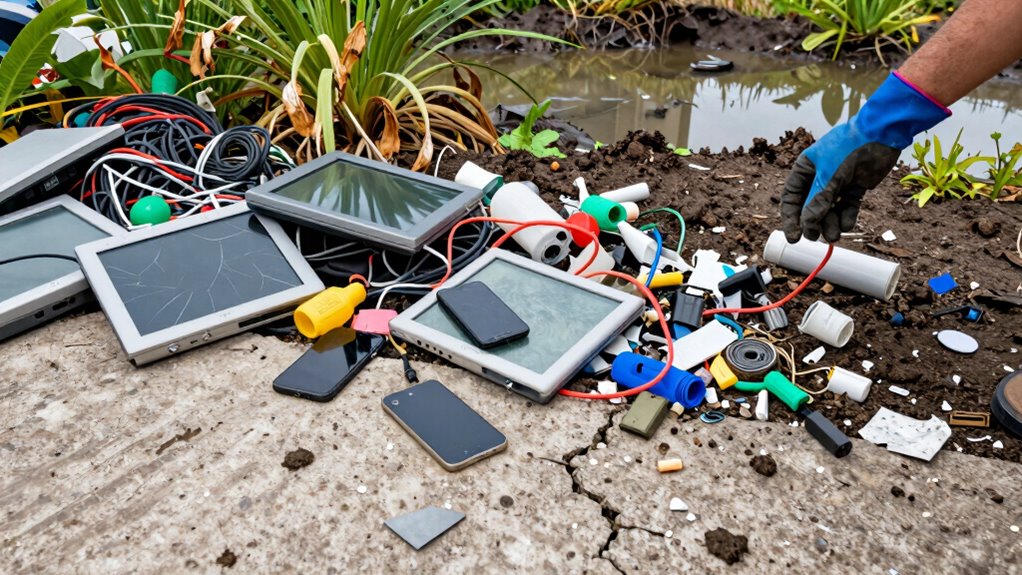
When e-waste is disposed of improperly, harmful chemicals like lead, mercury, and cadmium can leach into the soil and water, posing serious health risks. These hazardous materials threaten both human health and the environment. Exposure to these toxins can cause neurological issues, cancer, and reproductive problems. Your careless disposal contributes to pollution that contaminates water sources and damages ecosystems. Proper e-waste management can help prevent the release of hazardous chemicals into the environment. Additionally, using environmentally friendly disposal methods ensures that these toxic substances are handled safely and responsibly, minimizing their impact on our planet. Understanding clean-home systems can help you adopt better disposal practices and reduce environmental harm.
How to Recycle Your E-Waste Responsibly
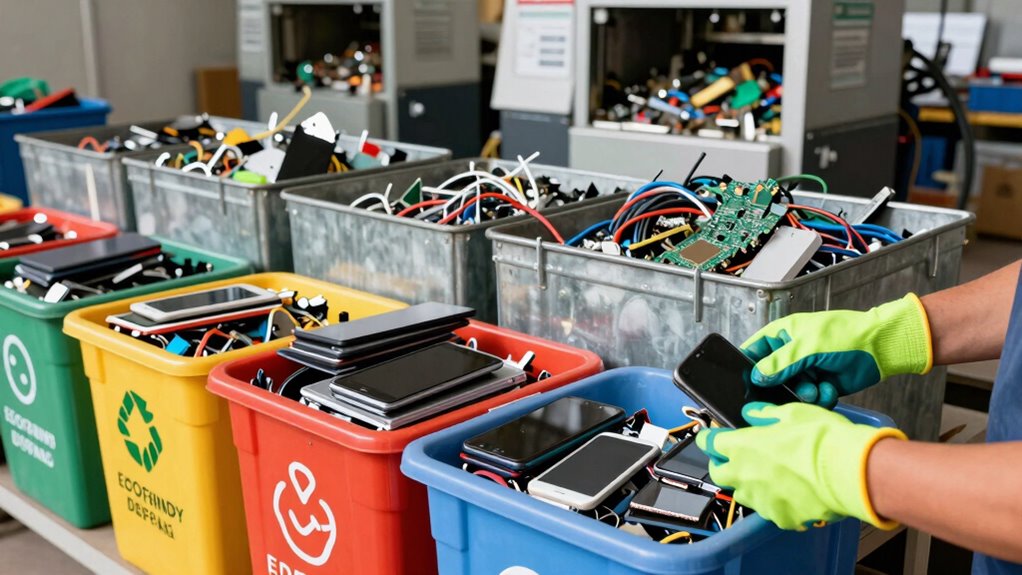
To recycle your e-waste responsibly, start by finding proper recycling facilities in your area. Always handle devices carefully and follow safe disposal practices to prevent environmental contamination. By doing so, you guarantee your e-waste is managed properly and keeps hazardous materials out of harm’s way. Additionally, understanding the importance of privacy policies can help you make informed decisions about how your data is handled during the recycling process. Being aware of environmental regulations can further ensure that your disposal methods comply with local laws and best practices. Regularly inspecting appliances for issues and adhering to appliance maintenance plans can also help prevent unnecessary e-waste from accumulating. Proper documentation and certification can ensure your e-waste disposal meets industry standards and minimizes legal risks. Familiarizing yourself with certification programs can provide additional assurance that your e-waste is disposed of responsibly.
Proper Recycling Facilities
Finding the right recycling facility is essential for disposing of your e-waste responsibly. Look for authorized drop-off locations that accept electronics and verify they hold proper recycling certifications. This guarantees your e-waste is handled safely and ethically. To find a suitable facility:
- Check if it’s an authorized drop-off site recognized by local or national authorities.
- Verify recycling certifications to ensure proper handling and environmental standards.
- Confirm the facility accepts your specific electronic devices and offers responsible recycling practices.
- Consider the cost‑of‑ownership of recycling options to make sustainable choices that fit your budget. Additionally, choosing facilities that participate in certified recycling programs helps ensure your e-waste is processed according to safety regulations.
Choosing certified, authorized drop-off locations protects the environment and prevents illegal disposal. It also ensures your e-waste is processed according to safety regulations. Responsible recycling helps reduce pollution and conserves valuable resources. Always do a quick online search or contact local waste management for trusted facilities in your area.
Safe Handling and Disposal
Once you’ve identified a certified recycling facility, handling and disposing of your e-waste properly becomes your next priority. Always prioritize battery safety by removing batteries before recycling, as they can pose fire risks if damaged. Handle hazardous components carefully, avoiding direct contact with substances like mercury or lead. Use gloves and protective eyewear if necessary, and store e-waste in secure containers to prevent leaks or accidents. Follow manufacturer instructions for disassembly when possible, and never force open devices. Proper disposal means following local regulations and choosing certified recycling centers. Additionally, understanding the importance of proper waste segregation helps ensure hazardous materials are processed correctly. Implementing proper e-waste handling practices reduces the likelihood of environmental contamination. Proper hazardous material management is essential to prevent toxins from entering the ecosystem. By respecting safety protocols, you minimize environmental impact and reduce health risks. Responsible handling ensures your e-waste is recycled efficiently, keeping hazardous materials out of landfills and safeguarding your community. Incorporating environmentally conscious disposal techniques further supports sustainability efforts and minimizes ecological damage. Safe disposal practices are essential to prevent environmental contamination and protect public health.
Where Can You Find Certified E-Waste Recycling Centers?
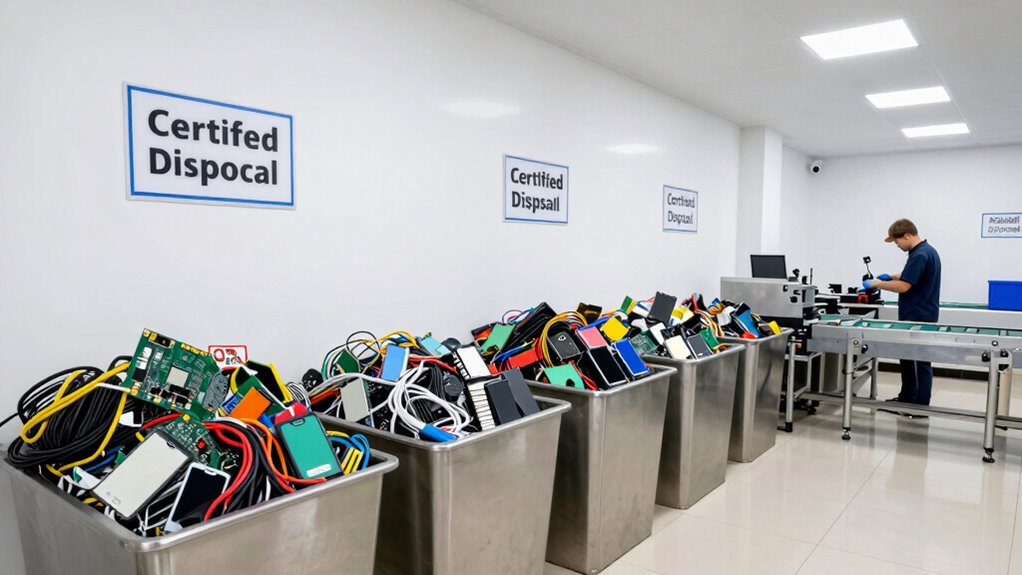
Wondering where to recycle your e-waste responsibly? Certified centers are your best recycling options, guaranteeing proper disposal and environmental safety. To find one, follow these steps:
- Check with local government websites for certified e-waste recycling centers in your area.
- Visit manufacturer websites, as many offer certified recycling programs for their products.
- Use online directories or apps dedicated to locating certified e-waste recycling options nearby.
- You can also consult trusted business directories to locate reputable certified recycling centers serving your community.
These centers are vetted to follow strict environmental standards and properly handle hazardous materials. By choosing certified centers, you ensure your electronics are recycled safely and responsibly. Always verify the certification status before dropping off your e-waste, and avoid unverified options to prevent improper disposal.
How Do You Prepare Your Electronics for Recycling?
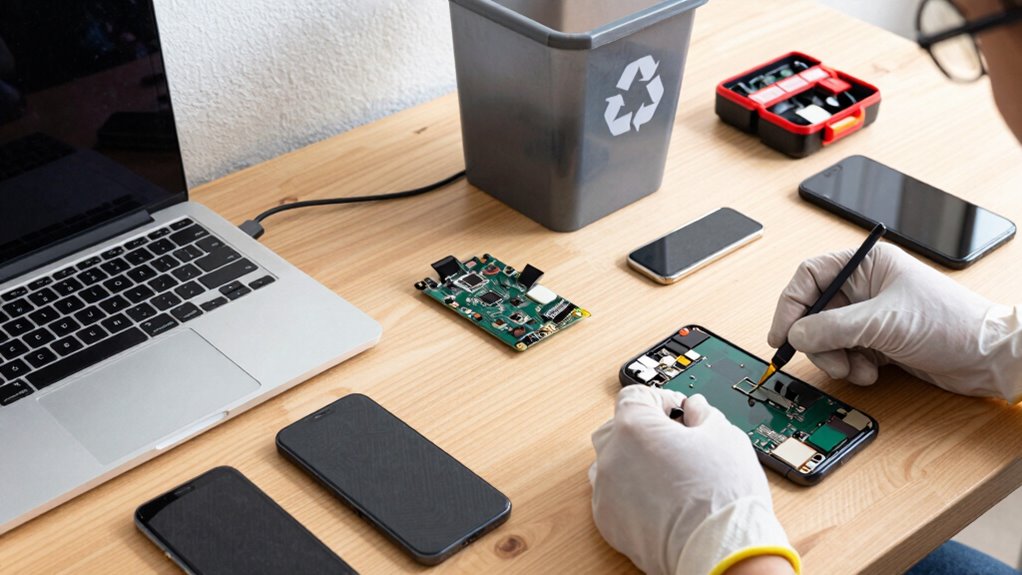
Before recycling your electronics, you need to prepare them properly to guarantee safe and efficient disposal. Start by performing electronics maintenance, such as deleting personal data and removing batteries if possible. This step protects your privacy and prevents potential hazards. Next, consider packaging considerations: use sturdy, anti-static bags or original packaging to prevent damage during transport. Wrap cords and accessories separately to avoid tangling or loss. Ensure all components are clean and free of debris. If your device contains sensitive information, back up data and then wipe it clean. Proper preparation minimizes risks for workers and guarantees your electronics are handled correctly. Taking these steps helps streamline the recycling process while safeguarding your personal information and reducing environmental impact.
Should You Donate or Resell Your Old Devices Before Recycling?
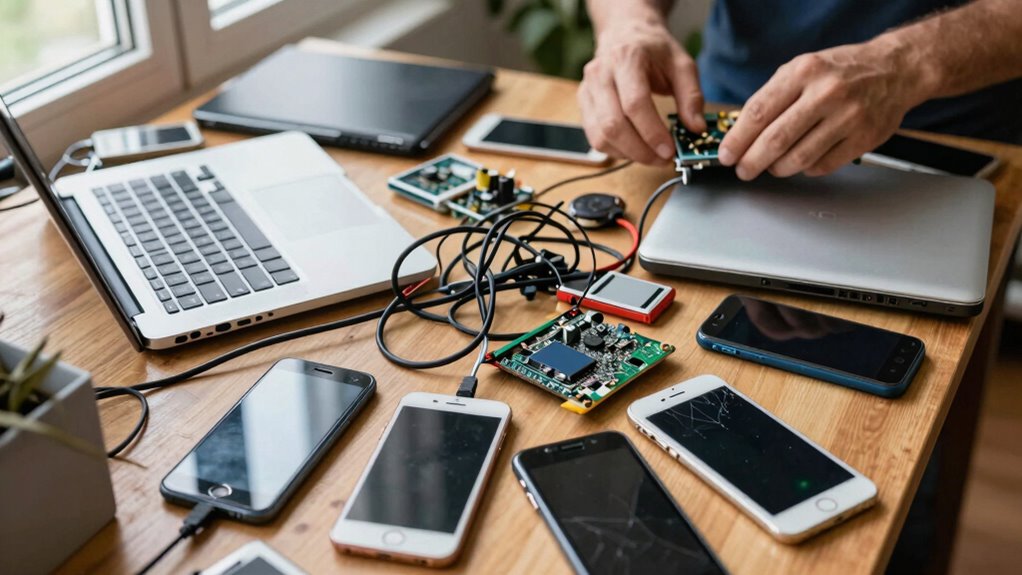
Deciding whether to donate or resell your old devices before recycling can maximize their value and benefit others. First, consider device resale, which allows you to recover some money and extends the device’s life. Second, think about donation benefits, as giving your electronics to charities or schools can help those in need and keep electronics out of landfills. Third, evaluate the device’s condition: if it’s still functional, reselling or donating makes sense; if it’s broken or outdated, recycling might be better. Resale can give you some return, while donation benefits the community and reduces waste. Both options help prevent e-waste buildup, making your disposal more environmentally friendly. Ultimately, choosing between donation and resale depends on your device’s condition and your priorities.
What Factors Should You Consider When Disposing of E-Waste?
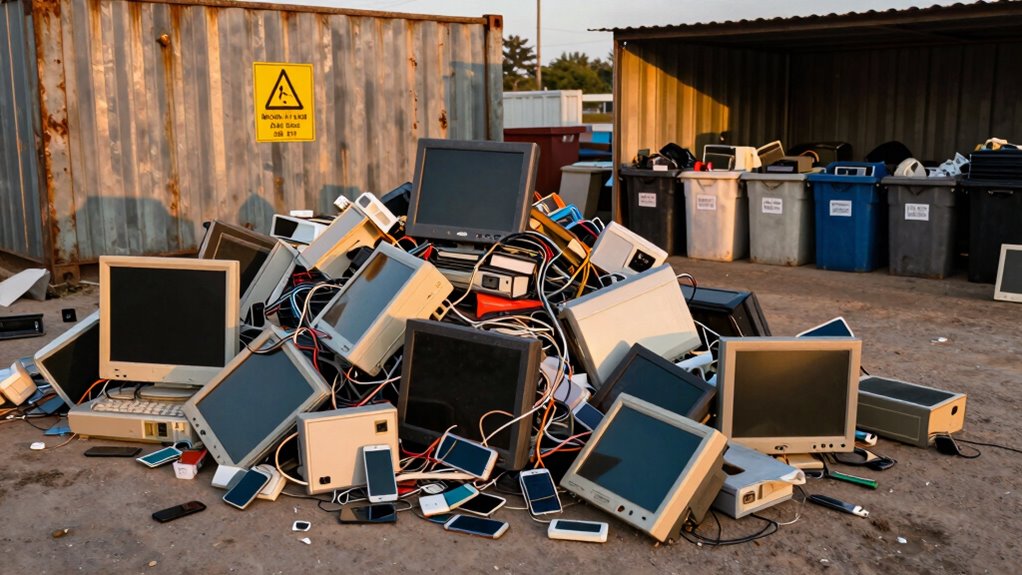
When choosing how to dispose of your e-waste, it’s important to weigh several factors to guarantee you’re making an environmentally responsible decision. First, consider battery safety—ensure batteries are properly removed or protected to prevent leaks, fires, or explosions during disposal. Next, prioritize data security by wiping or destroying your devices to prevent personal information from falling into the wrong hands. Confirm that the disposal method complies with local regulations and supports environmentally friendly practices. If you’re using a recycling facility, verify their credentials and commitment to responsible e-waste handling. Lastly, think about the facility’s ability to safely manage hazardous materials. Addressing these factors helps protect both the environment and your personal data.
How Can You Reduce E-Waste in Your Daily Life?
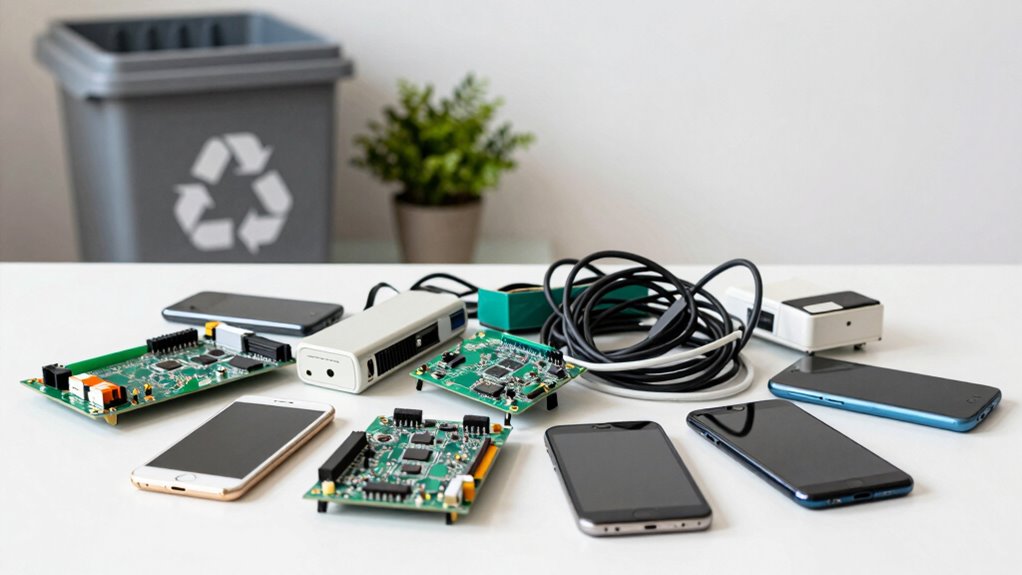
You can start by reducing unnecessary electronics use, like avoiding gadgets you don’t really need. When it’s time to replace devices, choose sustainable recycling options to guarantee proper disposal. Small changes in your daily habits can make a big difference in cutting down e-waste.
Reduce Unnecessary Electronics Use
Reducing unnecessary electronics use is one of the simplest ways to cut down e-waste in daily life. Your consumer habits shape the demand for new devices, so staying mindful can make a difference. To minimize waste, consider these steps:
- Limit upgrades by sticking to your current devices longer, resisting the urge for the latest tech innovation.
- Use devices to their full potential before replacing, repairing instead of discarding when possible.
- Share or donate electronics you no longer need, giving them a second life instead of adding to landfills.
Opt for Sustainable Recycling
Choosing sustainable recycling options is key to minimizing e-waste. When you recycle electronics, look for programs that prioritize the use of sustainable materials and eco friendly packaging. Many companies now offer recycling services that ensure your devices are broken down responsibly, reducing environmental impact. Opt for retailers or local centers that partner with certified e-waste recyclers committed to eco-conscious practices. By doing so, you help ensure hazardous materials are safely contained and valuable components are recovered for reuse. Additionally, supporting brands that use sustainable materials in their products encourages more eco-friendly manufacturing. Proper recycling not only keeps harmful substances out of landfills but also promotes a circular economy. Making these mindful choices makes a real difference in reducing your overall e-waste footprint.
Frequently Asked Questions
Are There Any Health Risks Associated With Improperly Handled E-Waste?
Yes, improperly handling e-waste can pose health hazards. You risk toxic exposure to hazardous materials like lead, mercury, and cadmium, which are often found in electronics. When e-waste isn’t disposed of correctly, these toxins can seep into the environment and enter your body through inhalation or skin contact. Protect yourself by following safe disposal methods, reducing exposure, and supporting proper e-waste recycling practices.
How Do E-Waste Recycling Processes Protect the Environment?
You’d think e-waste recycling was a superhero, right? It protects the environment by safely handling toxic chemicals and precious metals from circuit boards, preventing them from contaminating soil and water. Recycling facilities carefully extract valuable components, avoiding pollution. By doing so, they turn hazardous waste into useful materials, saving ecosystems and reducing the need to mine new resources—because, apparently, Mother Nature deserves a break from your gadgets.
Can Small Electronics Be Recycled Easily at Home?
Yes, you can do DIY recycling for small device disposal at home. Start by safely removing batteries and personal data, then check if your local recycling program accepts small electronics. You can disassemble devices carefully to recycle parts like batteries and circuit boards. Just make sure to follow safety guidelines, and consider consulting your local waste authority for proper disposal tips. DIY recycling helps reduce e-waste and protects the environment.
What Are the Legal Regulations for E-Waste Disposal in Different Regions?
Your e-waste disposal efforts can feel like steering a maze, but understanding regional regulations and international compliance is key. Laws vary wildly—some regions ban landfill dumping, while others require certified recycling. Always check local rules and international standards, as non-compliance can lead to hefty fines or environmental harm. Staying informed helps you responsibly manage electronics, protecting the planet and ensuring you’re on the right side of the law.
How Do I Identify if a Device Contains Hazardous Materials?
You can identify if a device contains hazardous materials by checking the device identification labels and user manuals for warnings about substances like lead, mercury, or cadmium. Look for symbols indicating hazardous components, such as the crossed-out wheelie bin. Research the device model online, as manufacturers often disclose hazardous materials used in their products. Being aware of these signs helps you handle e-waste responsibly and comply with disposal regulations.
Conclusion
Think of your electronics as seeds—you plant them today, and they grow into tomorrow’s waste. By recycling responsibly, you’re not just discarding gadgets; you’re nurturing a healthier planet. Remember, over 50 million tons of e-waste are generated worldwide each year, but your small action can prevent harmful toxins from contaminating our environment. Every device you recycle is a step toward a cleaner, greener future—like watering a garden that will bloom for generations.