
An accurate space heater thermostat responds precisely to changes in room temperature, helping you stay comfortable while saving energy. It uses high-quality sensors, proper placement away from drafts or heat sources, and regular calibration to maintain its precision. Features like smart connectivity and programmable schedules enhance control and consistency. Understanding what true accuracy looks like and how to maintain it can make a big difference in heating efficiency—discover more ways to optimize your system next.
Key Takeaways
- An accurate space heater thermostat responds quickly to temperature changes, maintaining consistent comfort without frequent cycling.
- Proper sensor placement away from drafts, sunlight, and heat sources ensures reliable temperature readings.
- Regular calibration and sensor maintenance prevent drift, ensuring the thermostat’s accuracy over time.
- Advanced thermostats feature precise sensors, digital controls, and remote access for better temperature management.
- Compatibility with heater type and correct installation are essential for the thermostat to accurately control heating.
What Does Space Heater Thermostat Accuracy Really Mean?
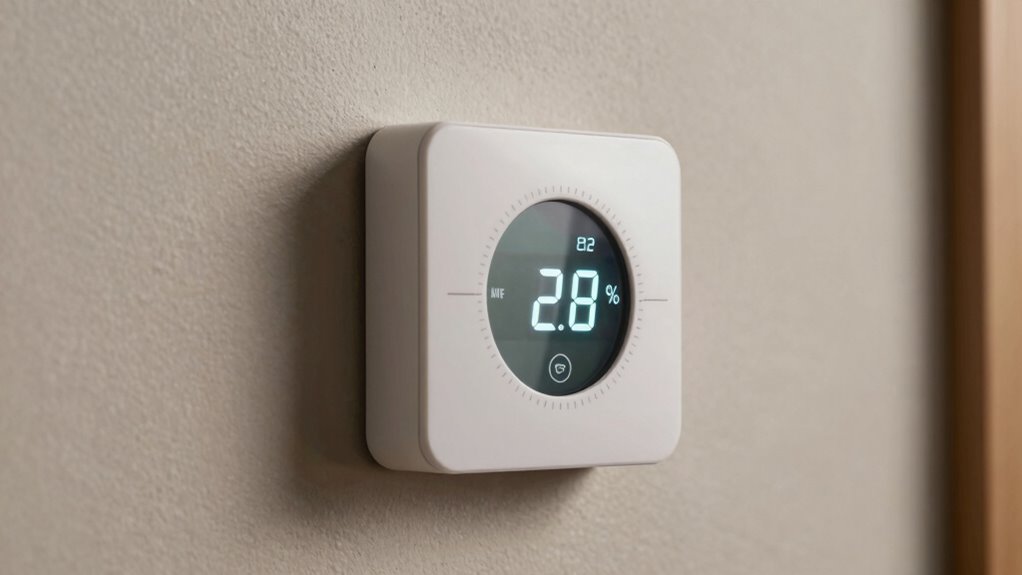
Understanding what space heater thermostat accuracy really means is crucial because it directly impacts how well your heater maintains your desired temperature. When your thermostat is precise, it can respond accurately to changes in your environment, helping to keep humidity levels stable and comfortable. If it’s off, your heater might cycle on and off more often, increasing power consumption and wasting energy. An accurate thermostat ensures consistent comfort without unnecessary energy use. It also prevents over- or under-heating, which can affect humidity levels, making your space less comfortable or even damaging furniture over time. The importance of calibration ensures that your thermostat maintains its accuracy over time, further supporting optimal climate control. Additionally, understanding sensor accuracy can help you identify when your thermostat may need recalibration or replacement to maintain reliable performance, ultimately contributing to energy efficiency in your heating system. Regular maintenance and temperature consistency are key to long-term reliability and comfort.
How Do Temperature Sensors Affect Thermostat Precision?
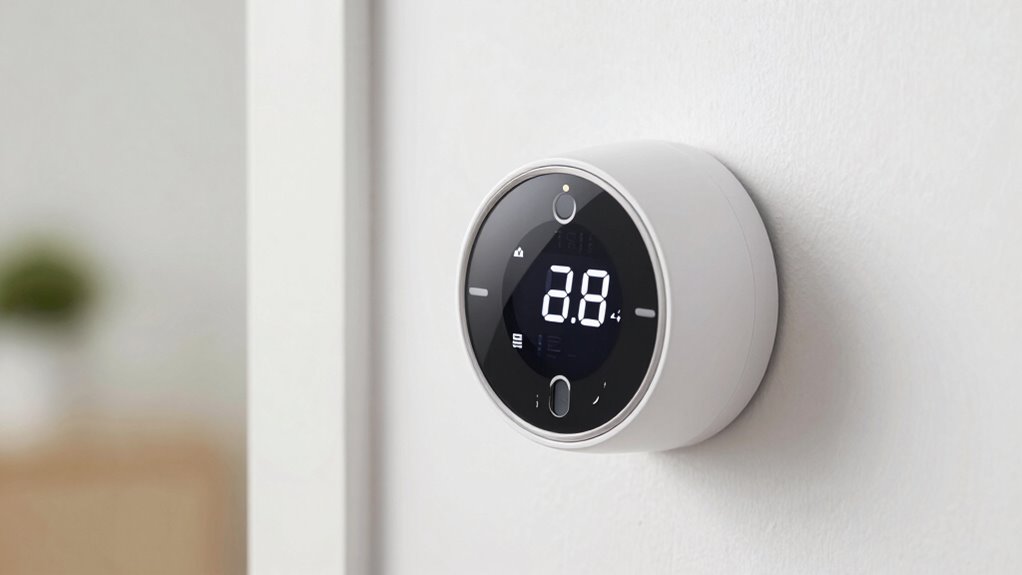
Temperature sensors are the core components that determine how accurately your thermostat can detect the room’s climate. Their placement and quality directly impact your thermostat’s ability to maintain consistent temperature and humidity control. If the sensor isn’t positioned correctly or is too sensitive, it may respond to drafts or sunlight, leading to uneven heating. Conversely, a well-placed, high-quality sensor provides precise feedback, ensuring your space heater reacts appropriately. This accuracy influences not only comfort but also energy efficiency. Additionally, the sensor’s design can affect the thermostat’s aesthetic appeal; sleek, integrated sensors blend better with modern decor. Ultimately, the effectiveness of your thermostat depends on how well the temperature sensor perceives the environment, making it a critical factor in achieving reliable, precise temperature regulation. Proper sensor placement is essential for optimal thermostat performance and consistent comfort.
Key Features That Make a Thermostat Highly Accurate
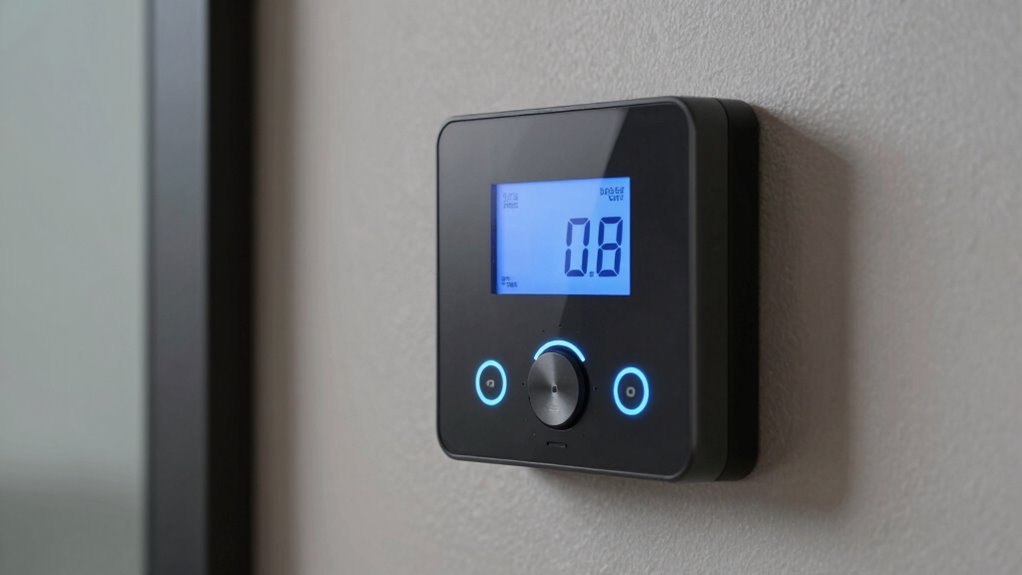
A thermostat’s accuracy largely depends on its key features that guarantee precise temperature regulation. For a smart home setup, look for models with advanced sensors that detect temperature changes quickly and reliably. Accurate readings are essential for consistent comfort and energy efficiency. Wireless connectivity is a vital feature, enabling real-time adjustments and remote control via smartphone apps. This assures you can fine-tune your space heater’s settings without being physically present, reducing errors and maintaining consistent comfort. Additionally, highly accurate thermostats often include programmable schedules and learning capabilities, adapting to your habits over time. These features help prevent temperature swings and save energy. When choosing a thermostat, prioritize those that seamlessly integrate with your smart home ecosystem, providing reliable data and control for peak heating performance. Empowering Informed Choices in selecting compatible and reliable hardware ensures your system operates smoothly and efficiently. Incorporating smart home integration enhances overall control and monitoring, making your heating system more responsive and efficient. Furthermore, selecting a thermostat with reliable sensors can significantly improve accuracy and responsiveness, ensuring your heating system maintains the desired temperature precisely. Additionally, choosing a model with robust build quality can improve durability and long-term performance.
Common Factors That Impact Thermostat Accuracy
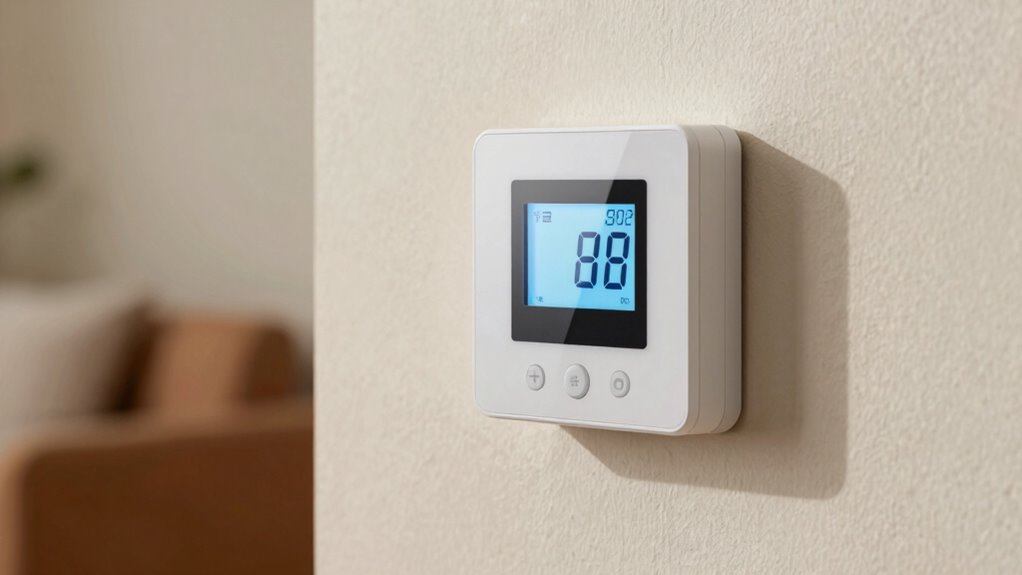
Your thermostat’s accuracy can be affected by where its sensors are placed and how well it’s calibrated. If sensors are located near heat sources or drafts, readings may be off. Regular maintenance and proper calibration help keep your thermostat functioning accurately. Ensuring thoughtfully curated essentials are used in your system setup can also enhance overall performance and reliability. Additionally, being aware of power consumption insights, such as standby power draw, can help in choosing the most efficient thermostat models for your space. Proper placement of sensors and understanding sensor location impacts can further improve measurement precision, especially when considering sensor placement best practices to optimize accuracy. Being mindful of sensor calibration routines ensures your thermostat remains reliable over time.
Sensor Placement Variability
Sensor placement considerably influences thermostat accuracy, as even small differences in location can cause temperature readings to vary. If your sensor is placed near drafts, windows, or heat sources, it may register inaccurate temperatures, leading to improper heating cycles. Environmental influences, like sunlight or nearby appliances, also affect sensor readings. For example, placing the sensor in a shaded corner versus a sunlit area can produce different temperature measurements, impacting how your space heater responds. Proper sensor placement is vital for consistent comfort and efficiency. To optimize accuracy, locate the sensor away from direct heat sources, drafts, and areas with fluctuating environmental influences. Ensuring a stable, representative reading helps your thermostat regulate temperature more precisely, preventing unnecessary energy use or discomfort.
Calibration and Maintenance
Regular calibration and maintenance are key to ensuring your thermostat remains accurate over time. Over months of use, sensor drift can cause your thermostat’s readings to become unreliable, leading to inconsistent heating. To combat this, you should regularly check and calibrate your thermostat using proper calibration tools. These tools help you compare your thermostat’s readings against a trusted temperature standard, allowing you to make precise adjustments. Keep an eye on the sensor’s condition, cleaning it if necessary, and replace it if it shows signs of wear or damage. Routine maintenance also includes inspecting wiring and connections, ensuring nothing interferes with accurate temperature detection. Additionally, understanding the field-of-view of your thermostat sensor can help you position it for the most accurate readings. By staying proactive with calibration and maintenance, you help guarantee your thermostat consistently provides accurate and comfortable heating.
Simple Tips to Calibrate and Maintain Your Thermostat
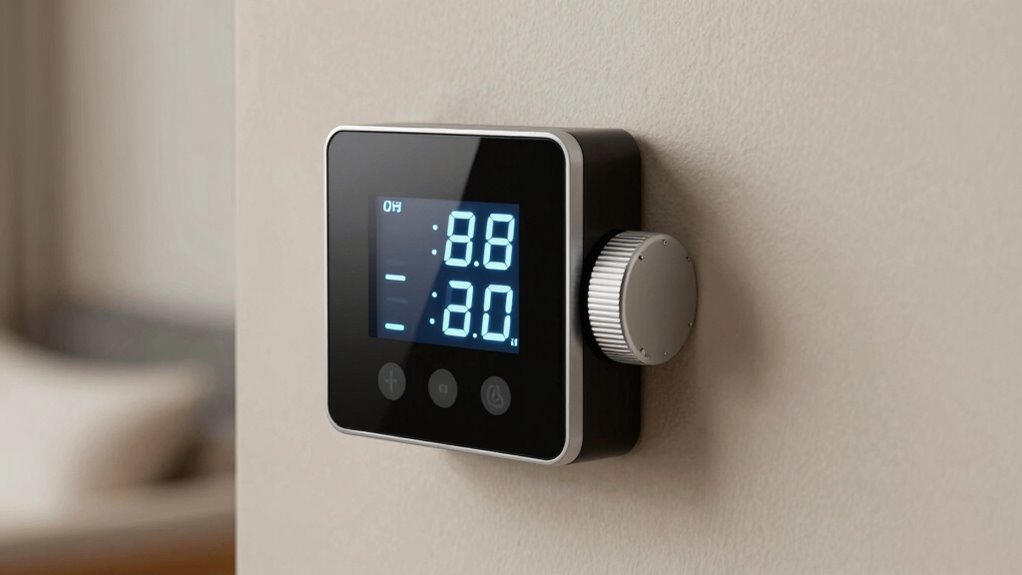
Calibrating and maintaining your space heater thermostat guarantees it functions accurately and keeps your space comfortable. Start by regularly checking the thermostat’s accuracy with a trusted thermometer and adjust the calibration as needed. Keep dust and debris away from the sensor to ensure precise readings. Consider energy efficient upgrades, such as replacing outdated thermostats with more responsive models, to improve accuracy and save energy. Integrate your thermostat into your smart home system for remote monitoring and control, making maintenance easier. Test your thermostat’s response by setting different temperatures and observing if the heater reacts appropriately. Regular maintenance, like tightening loose connections and updating firmware if applicable, prolongs its lifespan. Proper calibration and upkeep ensure your thermostat stays reliable and energy-efficient.
Debunking Myths About Thermostat Accuracy and Energy Use
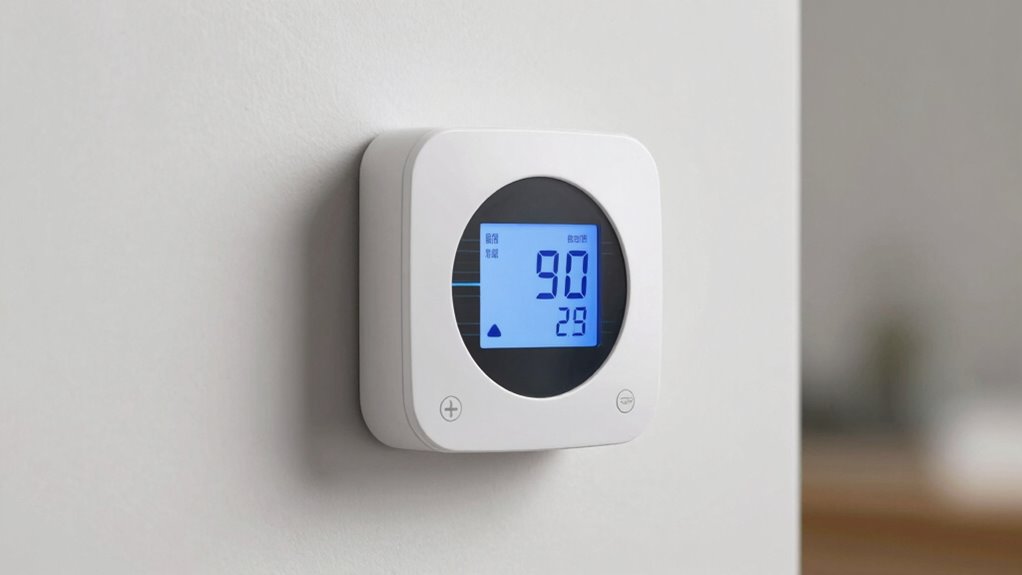
Many common beliefs about thermostat accuracy and energy consumption are actually myths. Some think that a more expensive thermostat always guarantees better accuracy, but smart technology offers precise control regardless of price. Others believe that setting your thermostat lower saves energy, yet frequent adjustments or large temperature gaps can reduce efficiency. Modern thermostats with smart features help optimize energy use by learning your habits and adjusting accordingly, debunking the idea that manual control is always best. Additionally, some assume that thermostats’ readings perfectly reflect room temperature, but factors like placement and calibration influence accuracy. Proper thermostat placement and regular calibration are essential for accurate readings and efficient operation. Moreover, understanding energy-saving features can help you choose devices that truly reduce consumption and improve comfort. Many models now incorporate learning algorithms that adapt to your schedule, further enhancing efficiency. For optimal performance, integrating local automation and routine adjustments ensures your heating system operates at peak efficiency. Being aware of calibration practices can further enhance thermostat accuracy and energy savings. Understanding these myths helps you make smarter choices, ensuring your space heater operates efficiently without wasting energy, and that your thermostat truly supports your comfort goals.
How to Choose the Right Thermostat for Your Space and Budget
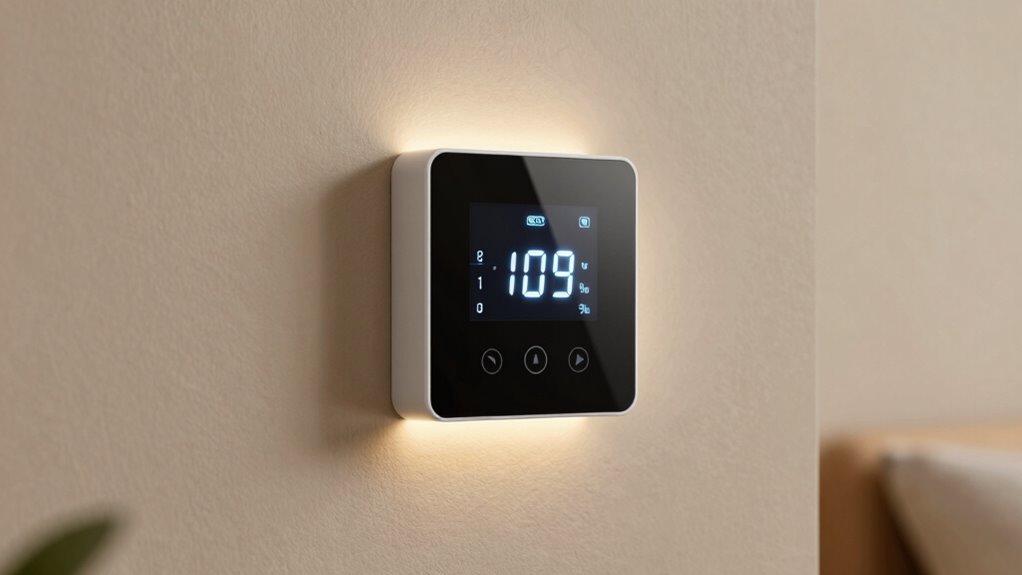
Choosing the right thermostat depends on your budget, heater compatibility, and desired control features. You’ll want to find options that fit your financial plan without sacrificing performance or ease of use. Consider which features matter most for your space to make the best choice. Additionally, understanding safe installation practices can help ensure your setup is both effective and secure. Knowing how to interpret temperature accuracy ratings can also guide you toward a device that maintains consistent comfort levels. Recognizing the importance of small system understanding can lead to more reliable and precise temperature control. Being aware of system compatibility ensures your thermostat works seamlessly with your existing heater setup, preventing potential issues. Familiarity with net worth figures can sometimes influence the features or brands you choose for your thermostat, especially if you’re investing in high-end models.
Budget-Friendly Thermostat Options
Finding an affordable thermostat that fits your space and budget doesn’t have to be complicated. There are plenty of budget-friendly options that still offer useful features like wireless connectivity, making it easy to control your heater remotely. Many affordable thermostats also boast sleek aesthetic designs, ensuring they blend seamlessly with your decor. Look for models that balance cost with essential functions, such as simple scheduling and temperature adjustment. You don’t need to spend a fortune to get a reliable device that helps manage your heating efficiently. Focus on options that provide the connectivity you need and a design that complements your space. With a bit of research, you can find a budget-friendly thermostat that delivers both practicality and style without sacrificing performance. Additionally, selecting a thermostat with a holistic approach can ensure it meets your overall comfort and family well-being.
Compatibility With Heaters
Selecting a thermostat that works seamlessly with your space’s heater is essential to guarantee efficient and reliable performance. First, check the heater’s compatibility with various thermostats to ensure proper thermostat integration. Some heaters require specific types of thermostats, such as digital, mechanical, or smart models, to operate correctly. Confirm that the thermostat you choose supports your heater’s power requirements and control mechanisms. If your heater has unique features, like a high wattage or specific voltage, verify that the thermostat can handle these specifications. Assure heater compatibility prevents malfunctions, improves energy efficiency, and extends the lifespan of your heater. Taking the time to match the right thermostat with your heater guarantees smooth operation and peace of mind.
Features for Precise Control
To achieve precise temperature control, you need a thermostat that offers the right features for your space and budget. Look for models with accurate sensor calibration to prevent temperature swings. A clear, intuitive user interface makes programming and adjustments straightforward, reducing errors. Consider thermostats with adjustable calibration settings to fine-tune sensor accuracy. Features like multiple scheduling options allow for tailored heating patterns. Some units offer remote control or smart connectivity, enhancing convenience and responsiveness. Prioritizing these features ensures your space heater maintains consistent comfort without overspending or complexity. Selecting a thermostat with precise sensor calibration and a user-friendly interface guarantees your heater responds accurately, saving energy and improving comfort.
Frequently Asked Questions
How Often Should I Calibrate My Space Heater Thermostat?
You should calibrate your space heater thermostat at least once a year, or if you notice temperature inconsistencies. External temperature influences can affect its accuracy, so check calibration regularly, especially during seasonal changes. To verify proper thermostat calibration, compare your heater’s display with a reliable thermometer. If they differ, recalibrate to maintain consistent comfort and energy efficiency. Regular calibration helps your heater respond accurately to your desired temperature.
Do Smart Thermostats Always Provide More Accuracy Than Manual Ones?
Think of a smart thermostat as a skilled navigator, constantly adjusting to changing weather, while a manual thermostat is like a static compass. A smart thermostat often provides more accuracy because it learns your habits and adapts, but it’s not always perfect. Manual thermostats can be just as reliable if calibrated correctly. Your choice depends on how much you value automation versus simplicity and direct control.
Can External Environmental Factors Affect Thermostat Accuracy?
External environmental factors like external temperature and humidity fluctuations can definitely affect your thermostat’s accuracy. When the outside air changes quickly, it can cause your space heater to over-heat or underheat, even if your thermostat isn’t signaling for it. Humidity fluctuations can also mislead your thermostat’s sensors, making it less reliable. To keep things consistent, consider a thermostat with better environmental compensation features or place it away from drafts and moisture.
What Is the Typical Lifespan of a Space Heater Thermostat?
Typically, your space heater thermostat lasts about five to ten years. During this time, it may need calibration to combat climatic changes and environmental influences that can cause inaccuracies. Keep an eye on performance, as wear and tear can weaken its reliability. Regular maintenance, including calibration checks, helps extend its lifespan, ensuring consistent comfort and conserving energy. Don’t delay in replacing aging thermostats for ideal operation.
Are There Specific Brands Known for Highly Accurate Thermostats?
You’ll find that brands like Honeywell and Dr. Infrared are known for highly accurate thermostats, thanks to their strong reputation and positive user reviews. These brands prioritize precision, ensuring your space heater maintains consistent temperature control. When choosing, look for customer feedback highlighting reliability and accuracy, as this indicates the thermostat’s performance. Investing in these reputable brands helps you achieve better comfort and energy efficiency in your home.
Conclusion
So, now you know what “accurate” really means—spoiler: it’s not just about fancy numbers. If you want your space heater to be the hero, not the villain, pick a thermostat that’s up to the task. Remember, no gadget’s perfect, but with a little calibration and common sense, you’ll keep cozy without turning your home into a science experiment. Who knew comfort could be so complicated? Just don’t forget to check that thermostat!